Free account. We'll finish the save once you're in. Already a member? Sign in.
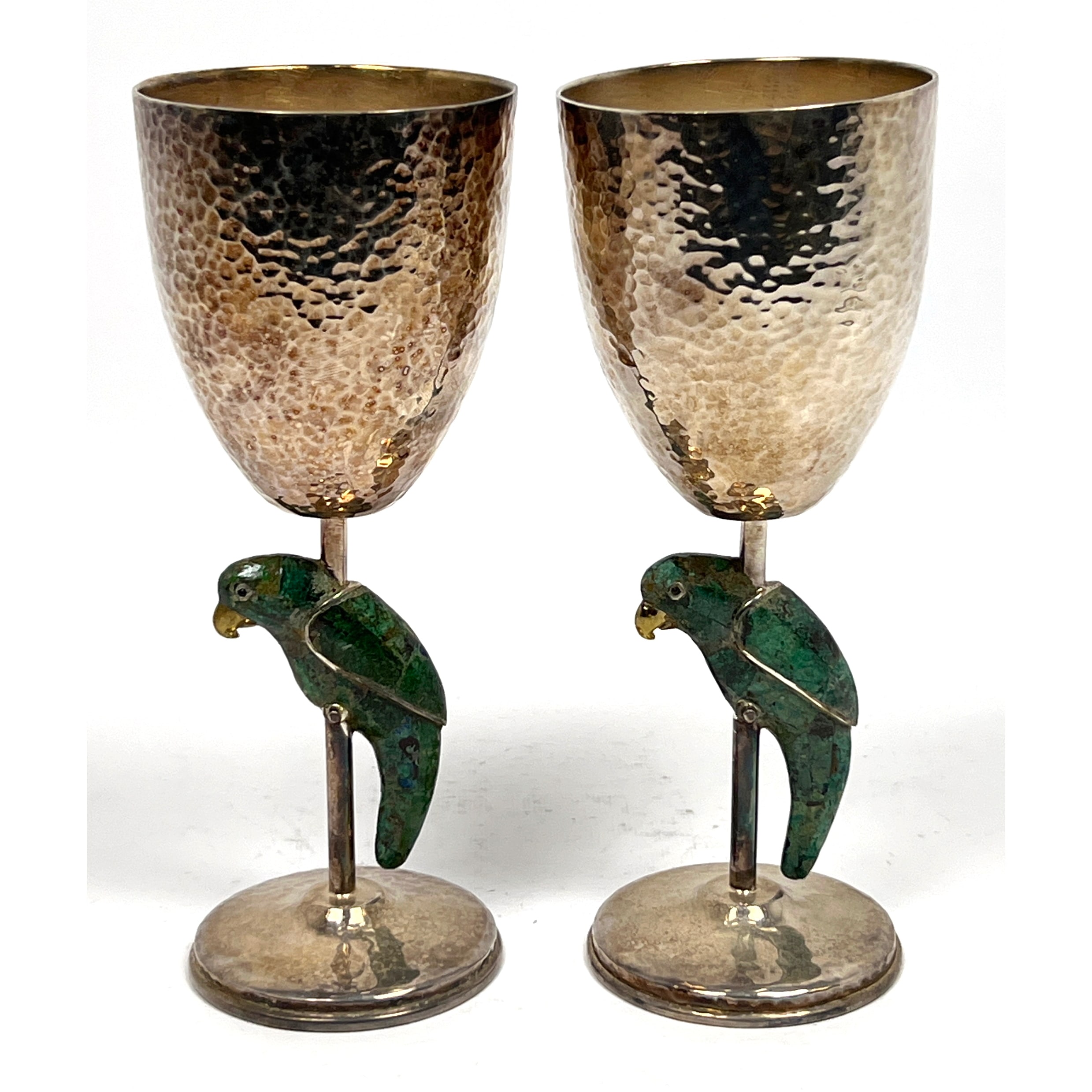
A hammered silver-plate goblet inlaid with stone and animated by a parrot figure brings together two of Los Castillo's most characteristic design impulses: a sustained engagement with Mexican fauna and the material richness of hard-stone set into polished metal. The parrot appears among the workshop's documented models — Morrill records a Parrot Head design in the bracelet line, assigned number 266 and dated to roughly 1940–45, establishing the bird as a recurring workshop figure rather than a one-off (Morrill, 1996, p. 163).
The hammered ground reflects the embutir tradition central to Taxco workshop practice: the silversmith drives a ball-ended embutador against silver sheet laid over a wooden or lead base, building the surface movement that gives life to the vessel walls (Morrill & Berk, 1994, p. 15). Stone inlay — crushed stone and onyx appear across the workshop's documented objects — enriches the surface and connects this goblet to a material vocabulary the Castillo family refined across decades of production (Morrill, 1996, p. 174). Silver plate rather than sterling positions the piece within the workshop's domestic decorative line, designed for daily life alongside its more celebrated sterling output.
This is a welcome example of Los Castillo hollowware beyond the studio's jewelry line.
See something wrong with this record? Suggest a correction and the piece details fill in automatically.