Saves instantly, no account needed. Already a member? Sign in.
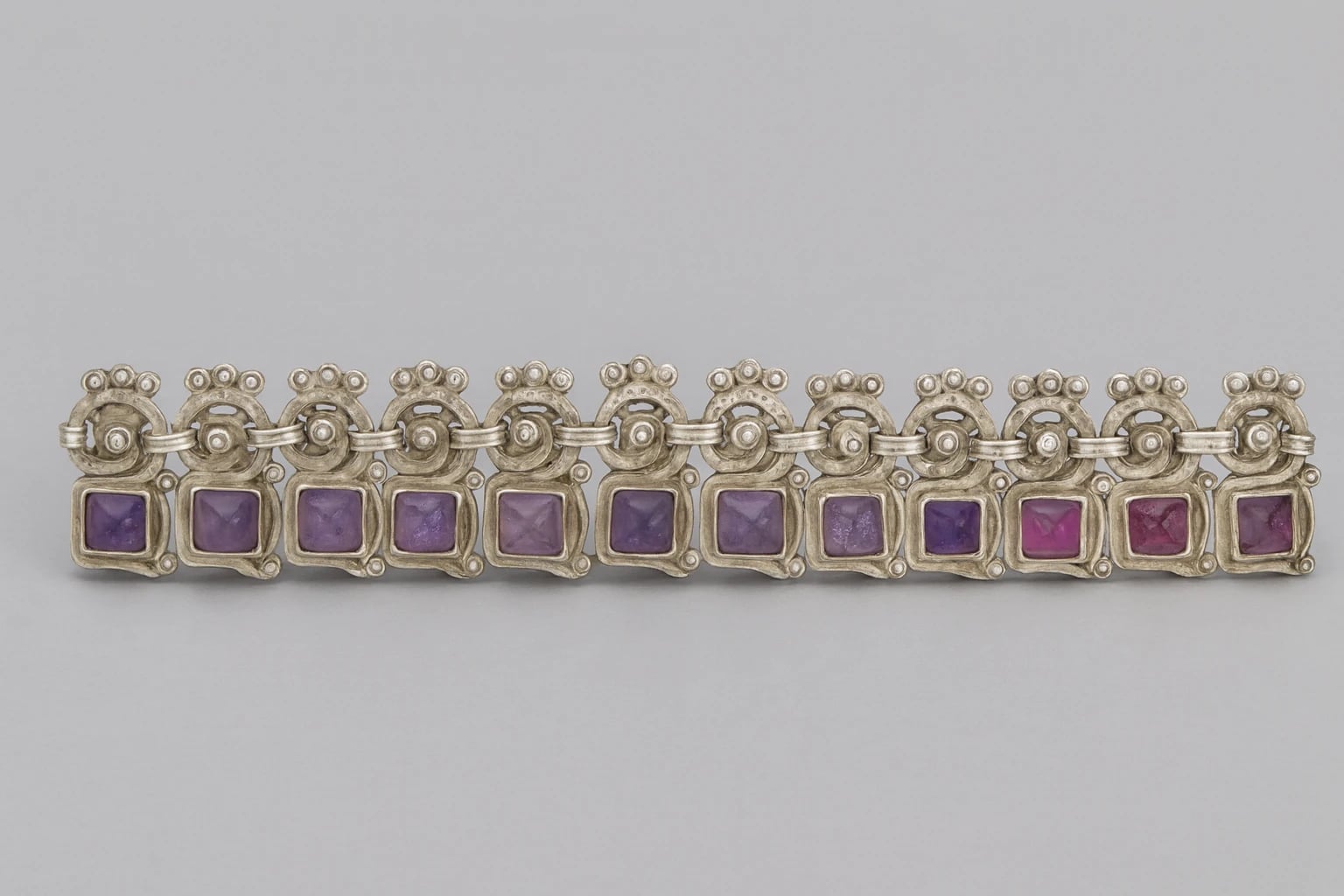
A dense field of turquoise, set in scrolling silver and closed into a continuous band of round links, gives this bracelet the character that has kept MATL jewelry recognizable for nearly a century. The stones are not isolated as precious accents. They cluster and repeat, filling the silverwork with color so that the metal reads as an armature for a mineral surface rather than a frame around a single gem. This is the MATL idea in a wearable, articulated form: ornament built up through profusion and small repeated units rather than through one commanding motif.
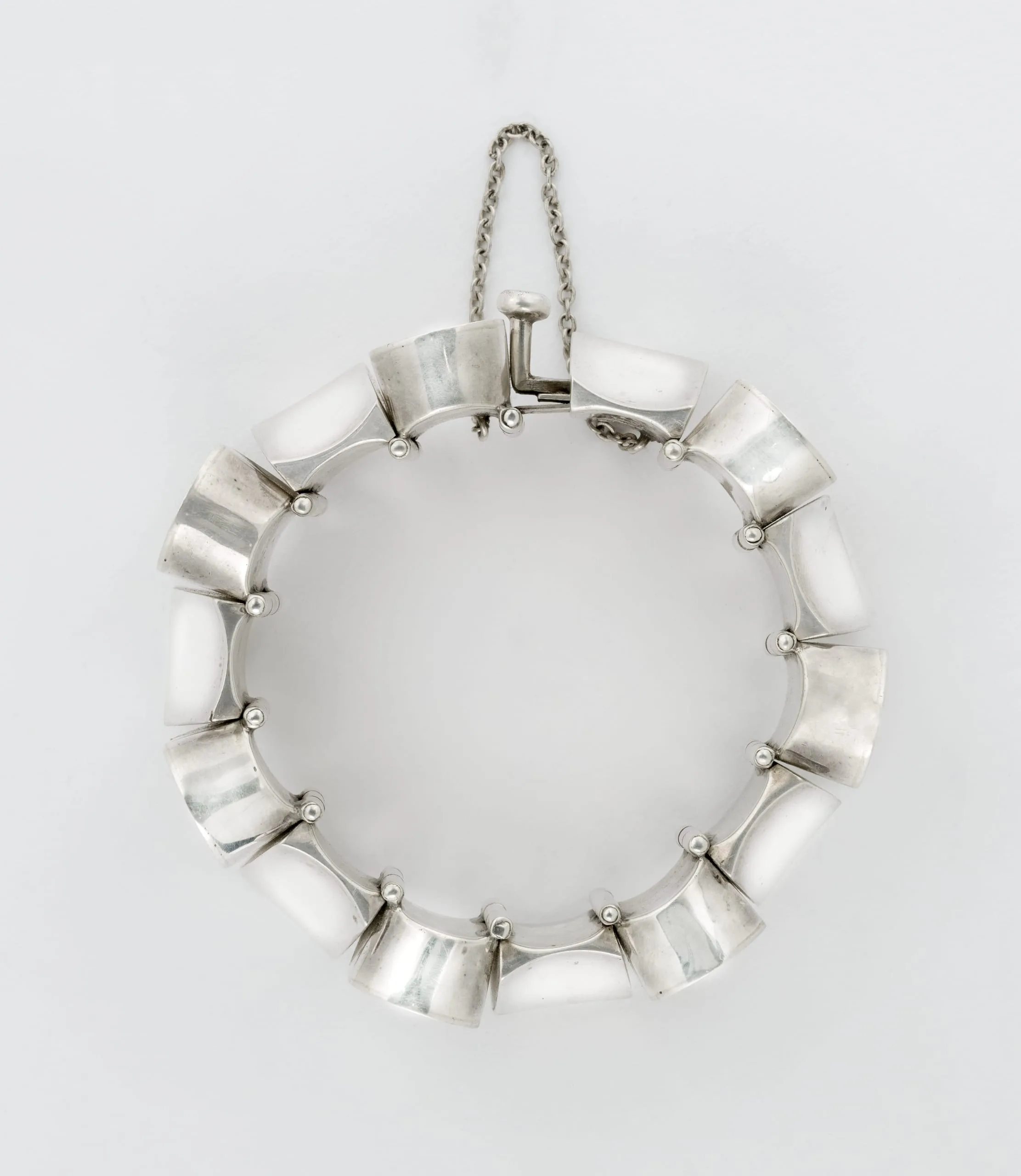
Each link is a self-contained composition of silver scrollwork carrying turquoise, and the links join into a flexible circuit that wraps and moves with the wrist. The round-link format matters to how the piece behaves. Where a rigid cuff would present one fixed face, this construction lets the ornamented units turn and catch light independently, so the color shifts as the hand moves. The scrolling silver settings recall the vocabulary of colonial and popular Mexican devotional metalwork, translated here into a decorative rhythm rather than a religious program. The turquoise supplies opacity and a saturated blue-green that holds against the pale metal, and the massed placement, rather than any single large stone, is what carries the design.
The MATL workshop was founded in Mexico City in 1934 by Matilde Poulat, a painter and designer trained at the San Carlos Academy, and its output stands somewhat apart from the streamlined modernism associated with Taxco in the same decades. Where much of the silver renaissance pursued reduction and geometric clarity, Poulat pursued a lush, folk-derived ornament rooted in Mexican popular and colonial sources, and she registered the "MATL" name, a variation of an Aztec word for water, as a trademark. The style proved durable through the workshop system: after Poulat's death in 1960 her nephew Ricardo Salas continued the MATL designs, at times supervising several dozen silversmiths, and the marks recorded in the hallmark literature (early fineness stamps, the script MATL, and the later registration form tied to number 142093) track that long continuity. Because the designs remained in production across decades, the specific hallmark on a given example, not the design vocabulary, is what situates it in time; a familiar MATL motif may belong to Poulat's own years or to the Salas continuation.
For a collection, this bracelet documents the alternative that MATL represented within the Mexican silver renaissance: a decorative, densely ornamented, color-driven approach that drew on devotional and popular sources instead of the pared modernism more often taken as the movement's signature. Its value lies less in singularity than in how clearly it embodies that workshop's governing idea, showing how one Mexican designer built a lasting jewelry language from repetition, scrollwork, and massed turquoise.
Museum of Mexican Silver. “Round-Link Bracelet with Turquoise.” Catalog no. MoMS-002262. https://museumofmexicansilver.com/pieces/matl-round-link-bracelet-with-turquoise
See something wrong with this record? Suggest a correction and the piece details fill in automatically.
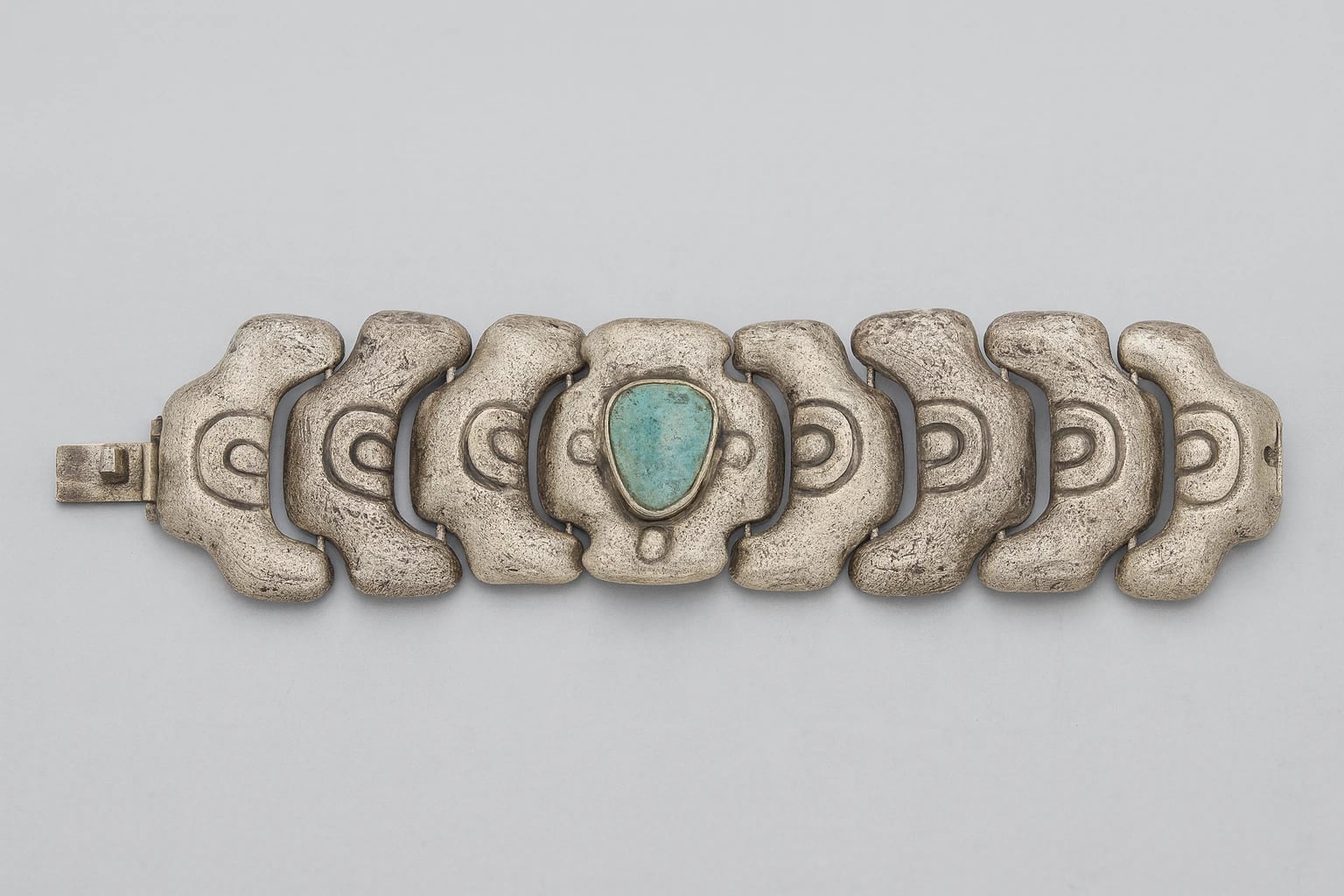
MATL (Matilde Poulat)
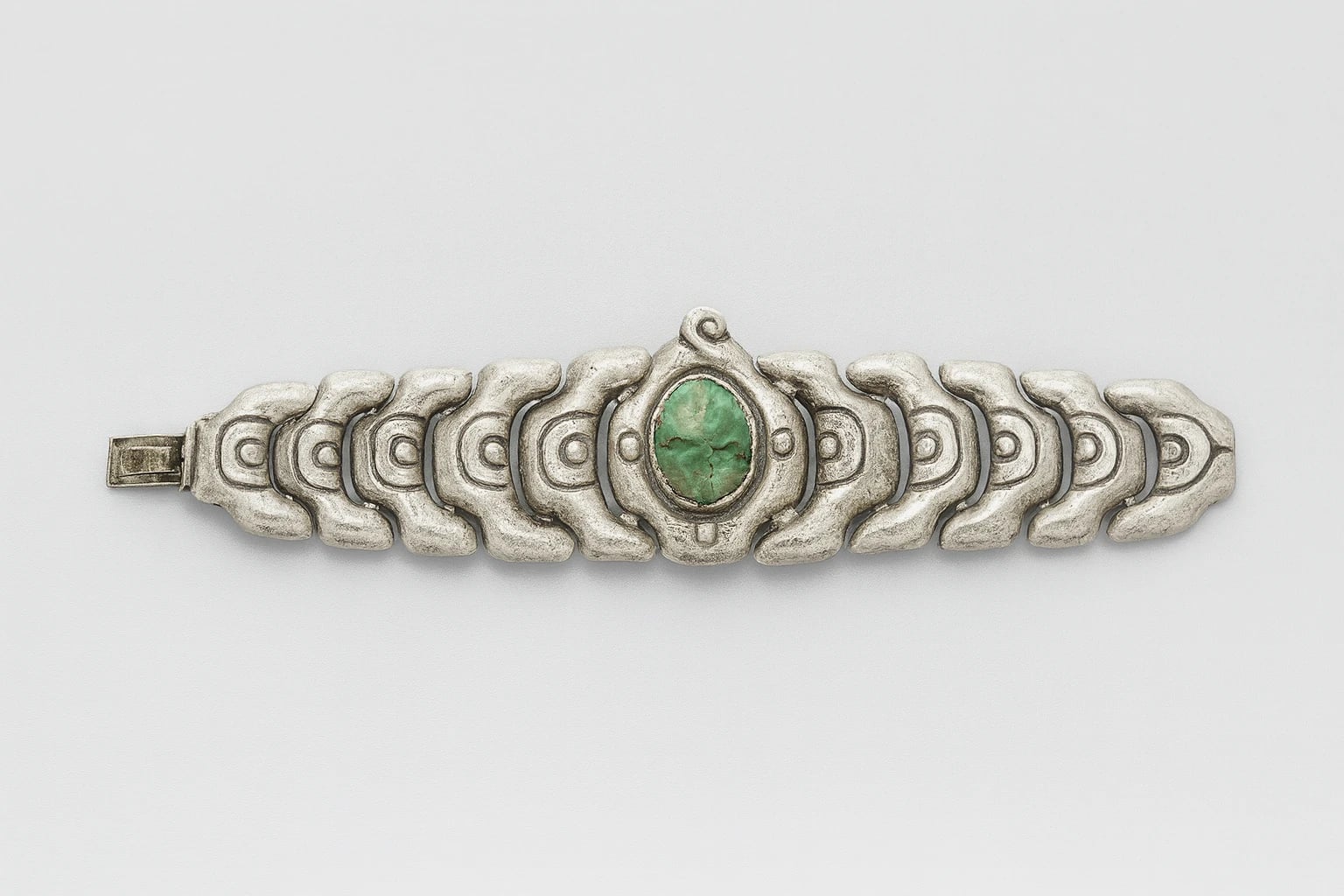
Scallop-Link Bracelet with Turquoise
1934 or later
Turquoise