Saves instantly, no account needed. Already a member? Sign in.
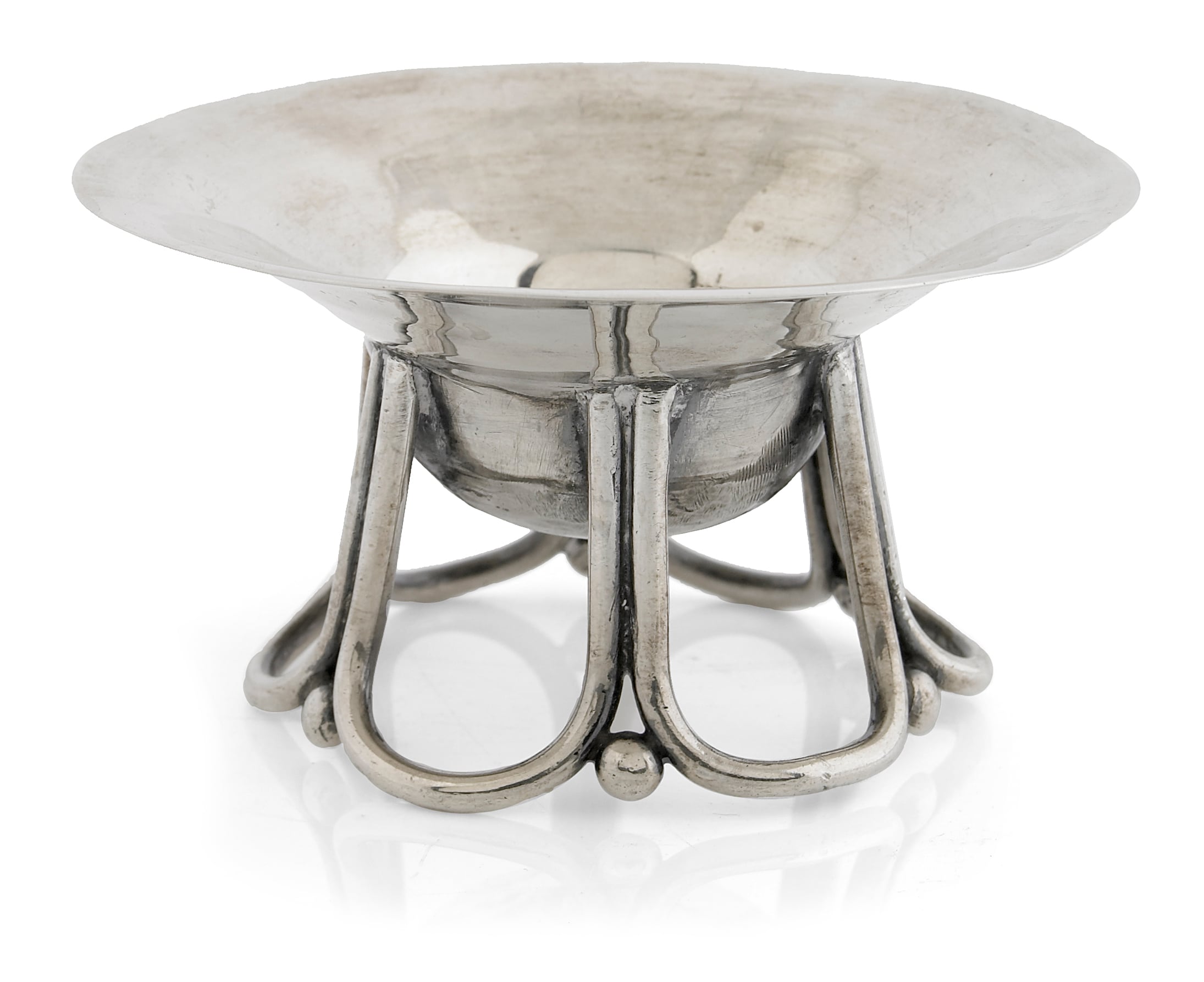
The wide, shallow bowl of this sterling salt cellar lifts clear of the table on four paired wire loops, each leg terminating in a polished ball where the wires converge at the foot. The open, architectural base transforms a practical object into a small sculpture, and the play of light across the burnished bowl against the darker patina of the structural framework beneath gives the piece a visual depth that belies its modest dimensions.
The design's catalogued dual identity — listed simultaneously as a master salt and as an ashtray in Spratling's own workshop catalogs — reflects the functional flexibility central to his First Design Period work between 1931 and 1946. That elasticity found a wide audience: Montgomery Ward included the piece as an ashtray in their 1943 Christmas Catalog, bringing a hand-fabricated Taxco design into a mainstream retail channel. The dish was conceived to pair with a matching individual pepper shaker, completing a table service in which craft and utility remained equally weighted.
That the design was subsequently reissued speaks to its lasting commercial appeal. Pieces traceable to the original First Design Period, made under Spratling's direct workshop supervision in Taxco, carry a particular historical grounding. The looped-leg base — minimal in material, architectural in effect — exemplifies the structural logic Spratling consistently brought to tabletop work: ornament not applied to the form but inherent in its construction.
Museum of Mexican Silver. “Looped Leg Salt Dish.” Catalog no. MoMS-000363. https://museumofmexicansilver.com/pieces/spratling-1003
See something wrong with this record? Suggest a correction and the piece details fill in automatically.
William Spratling
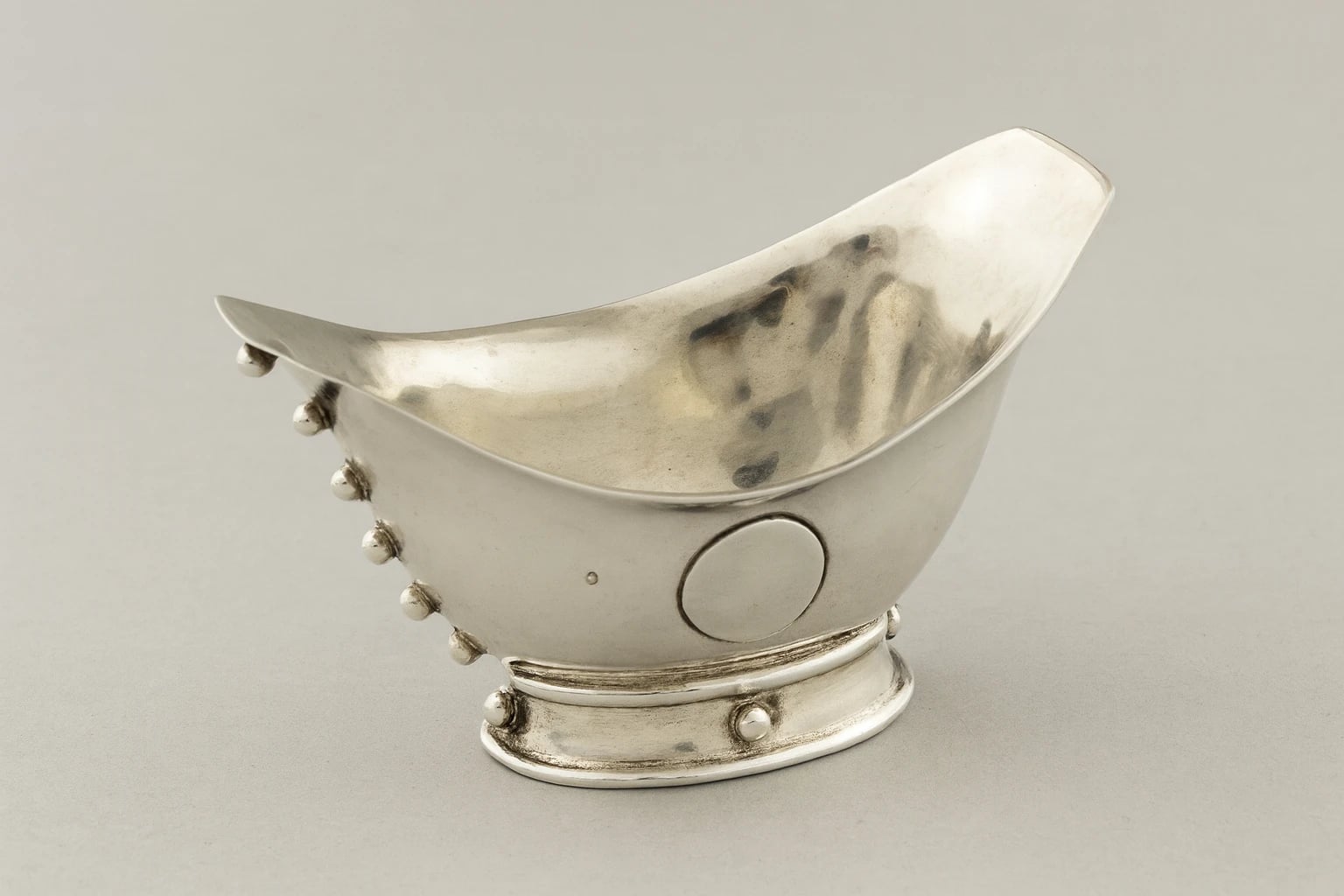
Salt Dish of "Discos" Pattern
Silver