Saves instantly, no account needed. Already a member? Sign in.
The combination of dark hardwood and sterling silver in a wide cuff places this bracelet within the most experimentally rigorous phase of Spratling's output. During the Second Design Period, from 1945 to 1951, his Taxco taller moved decisively away from the Pre-Columbian figuration of the early years toward a stripped formal language where material contrast carried the expressive weight that surface ornament had borne before.
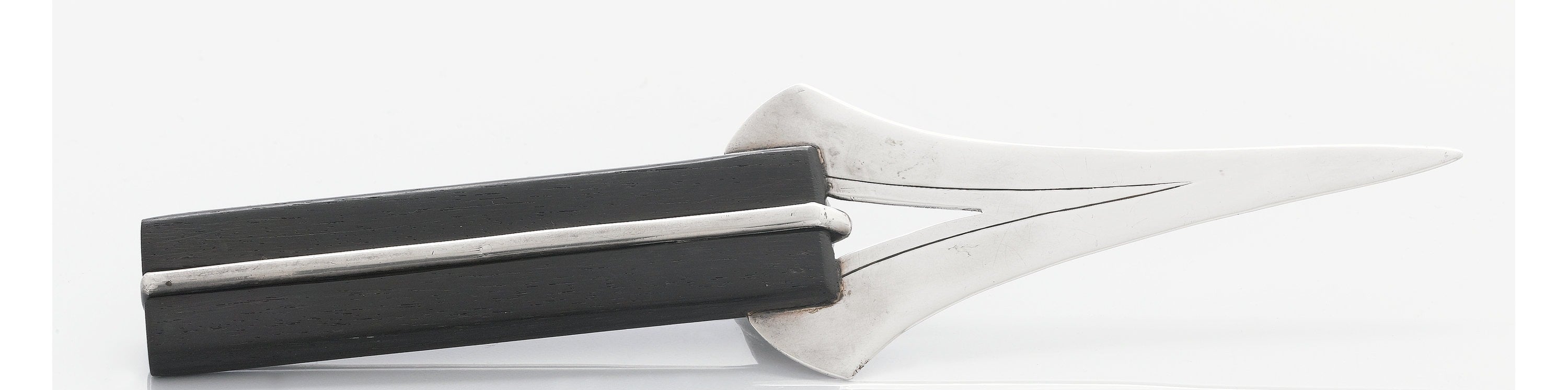
Two rectangular bars of dark hardwood run parallel through most of the band's length, separated and bound by a polished silver rail. At the terminal the composition shifts: the silver elements converge, then sweep outward into two elongated tongues that draw to near-knife-edge tips. The restraint of the banded section makes the flared, wing-like terminus the bracelet's sole dramatic gesture: quiet along the wrist, sudden at the point of resolution.
Morrill documents Spratling's sustained practice in this period of combining silver with dark organic materials, tortoiseshell and wood alike, and notes that the force of such work came from "the richness and textural contrast in the interplay" of the two, with objects characteristically "pared down to their simplest outline" (Morrill, Mexican Silver, 1994, p. 73).
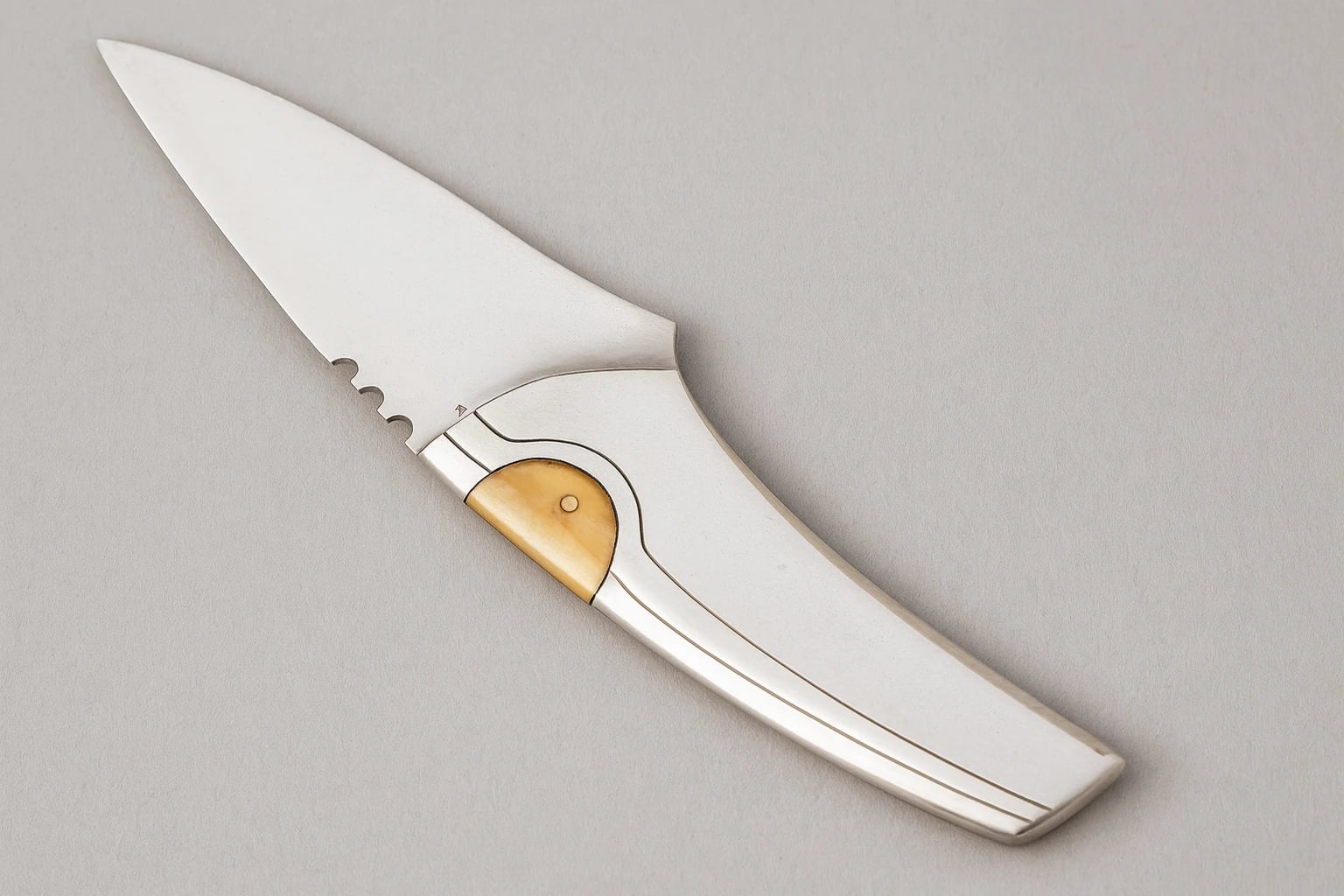
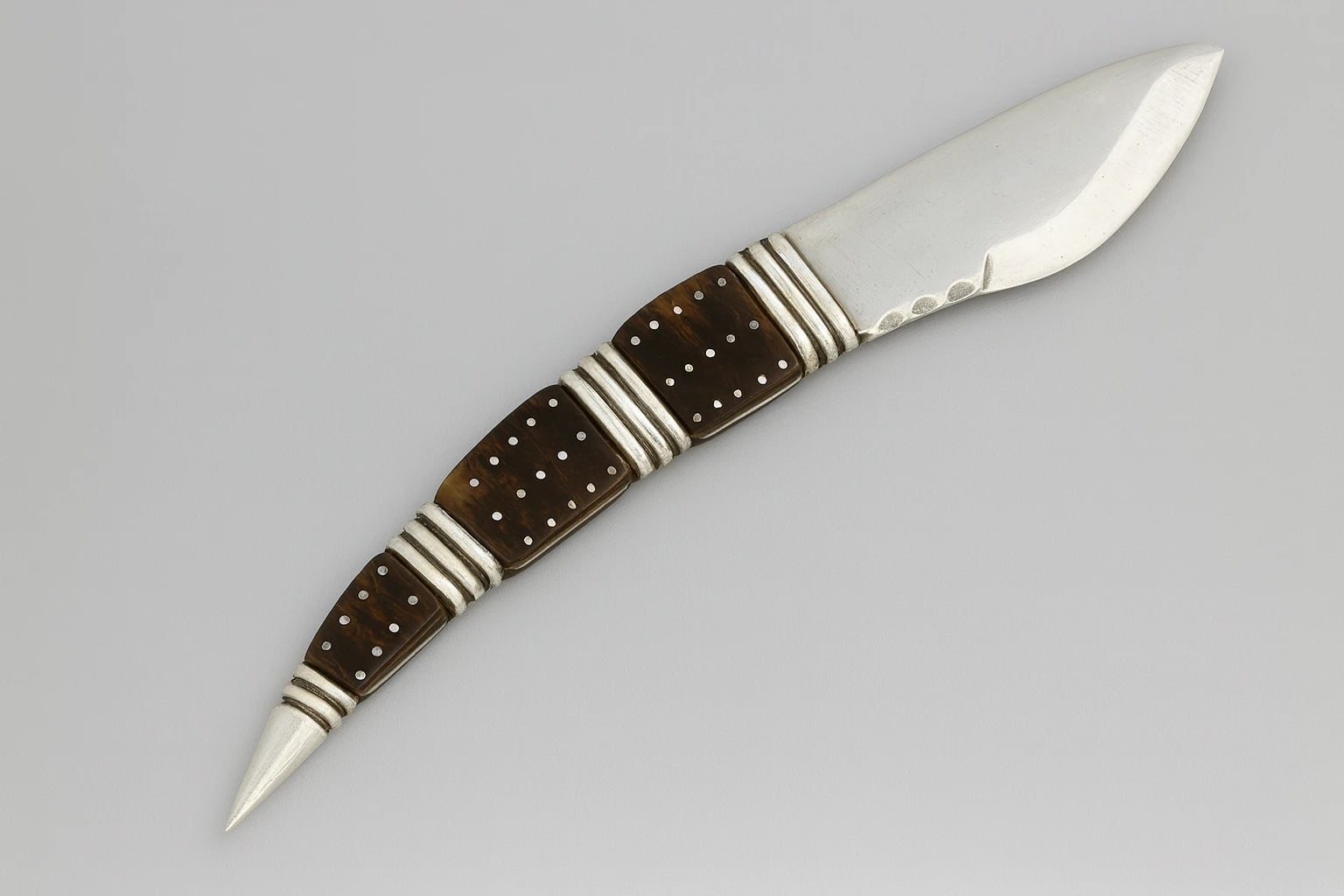
Museum of Mexican Silver. “Rosewood and Silver Letter Opener.” Catalog no. MoMS-000601. https://museumofmexicansilver.com/pieces/spratling-1542
See something wrong with this record? Suggest a correction and the piece details fill in automatically.
William Spratling
Letter Opener with Tortoise Shell Handle
First Design Period: 1931 - 1946
Silver