Saves instantly, no account needed. Already a member? Sign in.
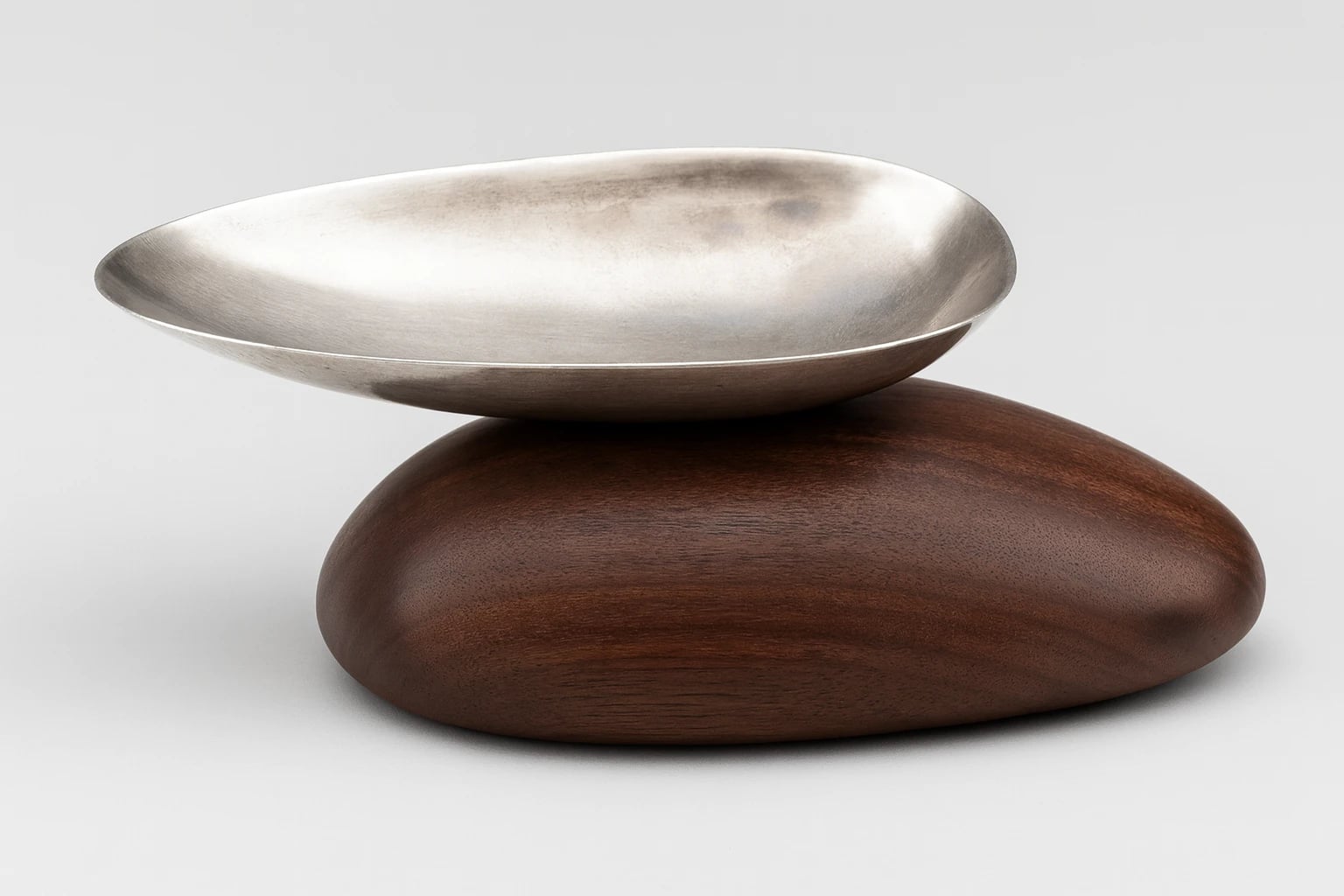
Two ovoids, one carved rosewood and one of matching silver, are joined into a single ashtray in which the warm wood and the bright metal answer each other in identical form: the design's elegance is its symmetry, the repeated shape across two contrasting materials. The pairing of silver with a dark tropical hardwood is a Spratling hallmark, and here it structures the whole object.
The ashtray belongs to the Third Design Period, 1951 to 1967. The existing record notes the earlier examples, like this one, were rosewood while later ones used ebony, and gives a 1967 wholesale price of $8.80. It was included in "The World of William Spratling," the exhibition that toured the United States from 1965; that show, organized by John Leeper of the McNay Art Institute, traveled to several museums and presented Spratling's silver objects alongside Pre-Columbian art from his own collection (Morrill, p. 77).
The piece is recorded in Penny C. Morrill and Carole A. Berk's Mexican Silver and in Phyllis M. Goddard's Spratling Silver: A Field Guide. An exhibited, well-documented hollowware design, it is among the more sought-after of the desk objects.
Museum of Mexican Silver. “Ovoid Rosewood Ashtray.” Catalog no. MoMS-000753. https://museumofmexicansilver.com/pieces/spratling-19
See something wrong with this record? Suggest a correction and the piece details fill in automatically.
William Spratling
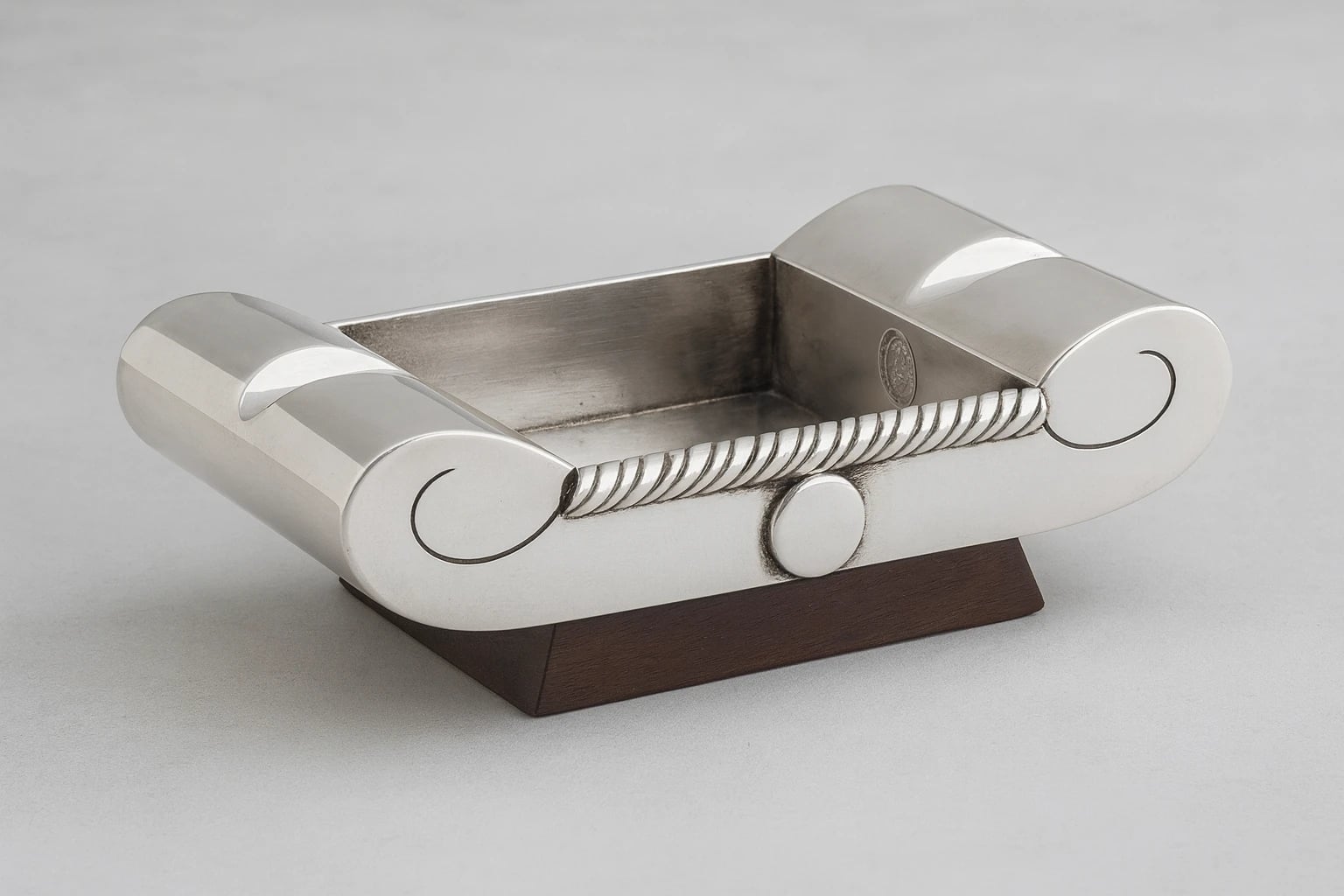
Rope and Circle Ashtray
First Design Period: 1931 - 1946
Silver