Saves instantly, no account needed. Already a member? Sign in.
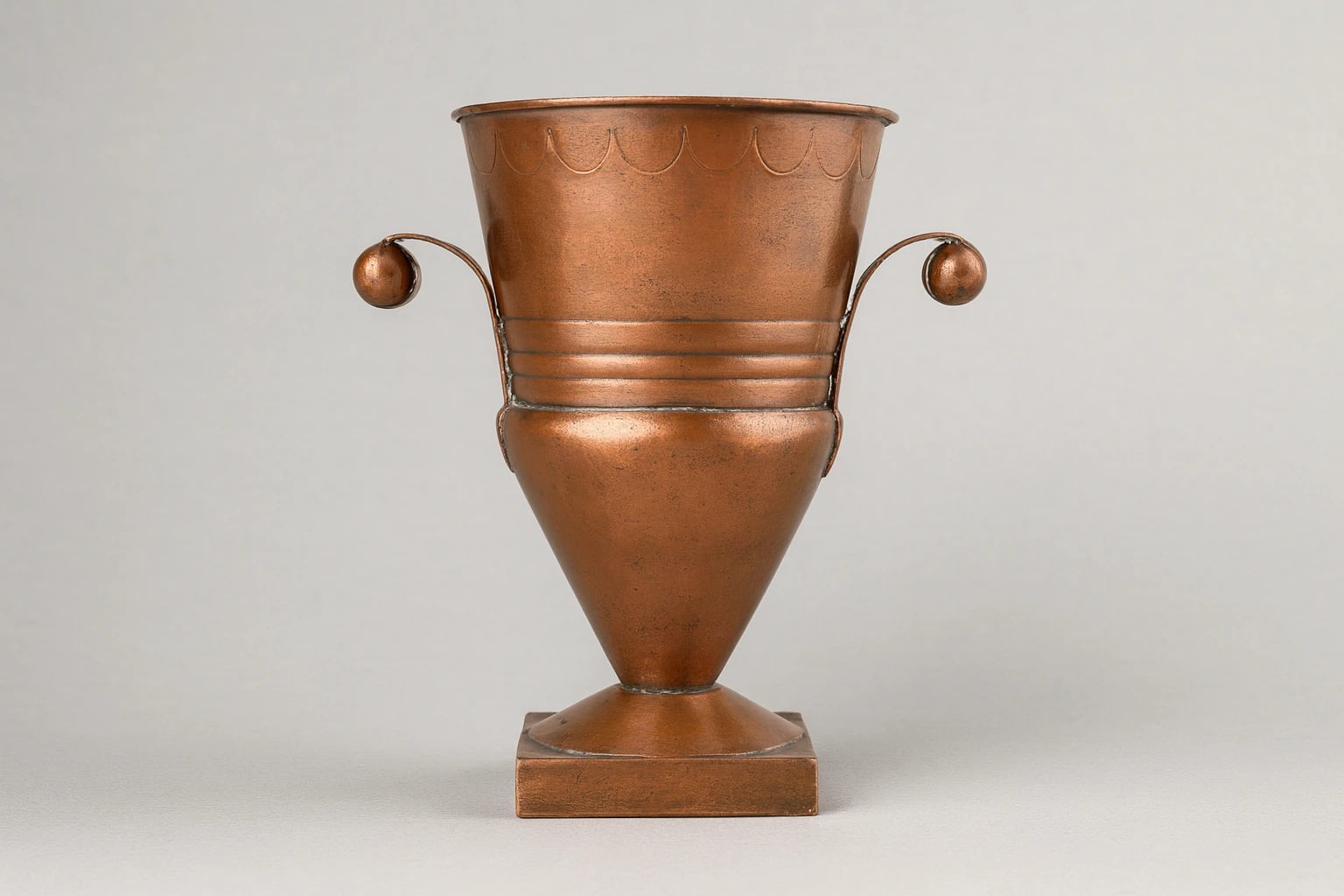
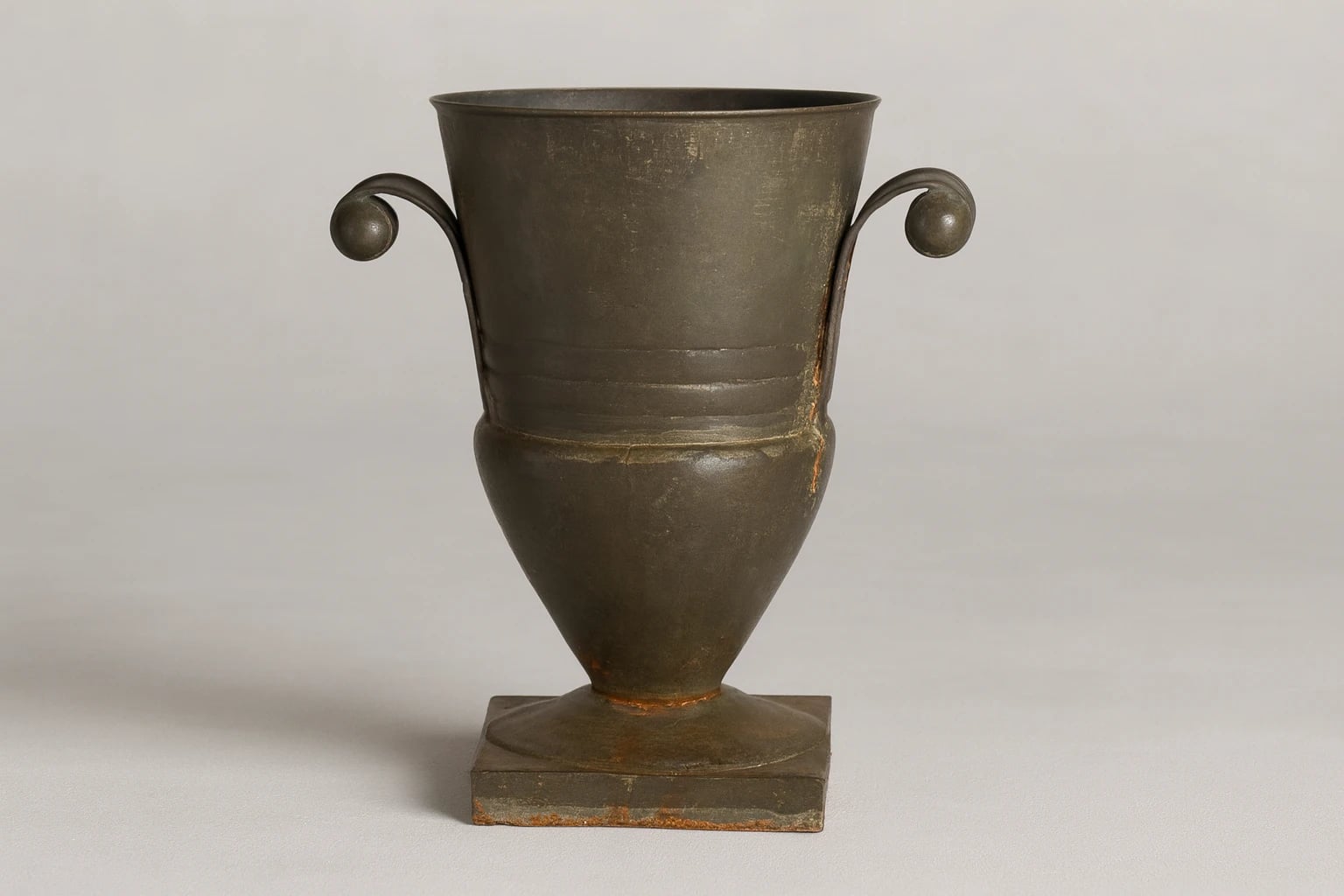
Worked in tin rather than silver, this vase carries a more provincial, folk character than the silver version made in a similar design slightly later: the humbler metal gives it a rougher, more vernacular presence, and a smiling face is impressed under the handle on each side. The expressive faces tie the object to Mexican folk tradition rather than to the refined hollowware.
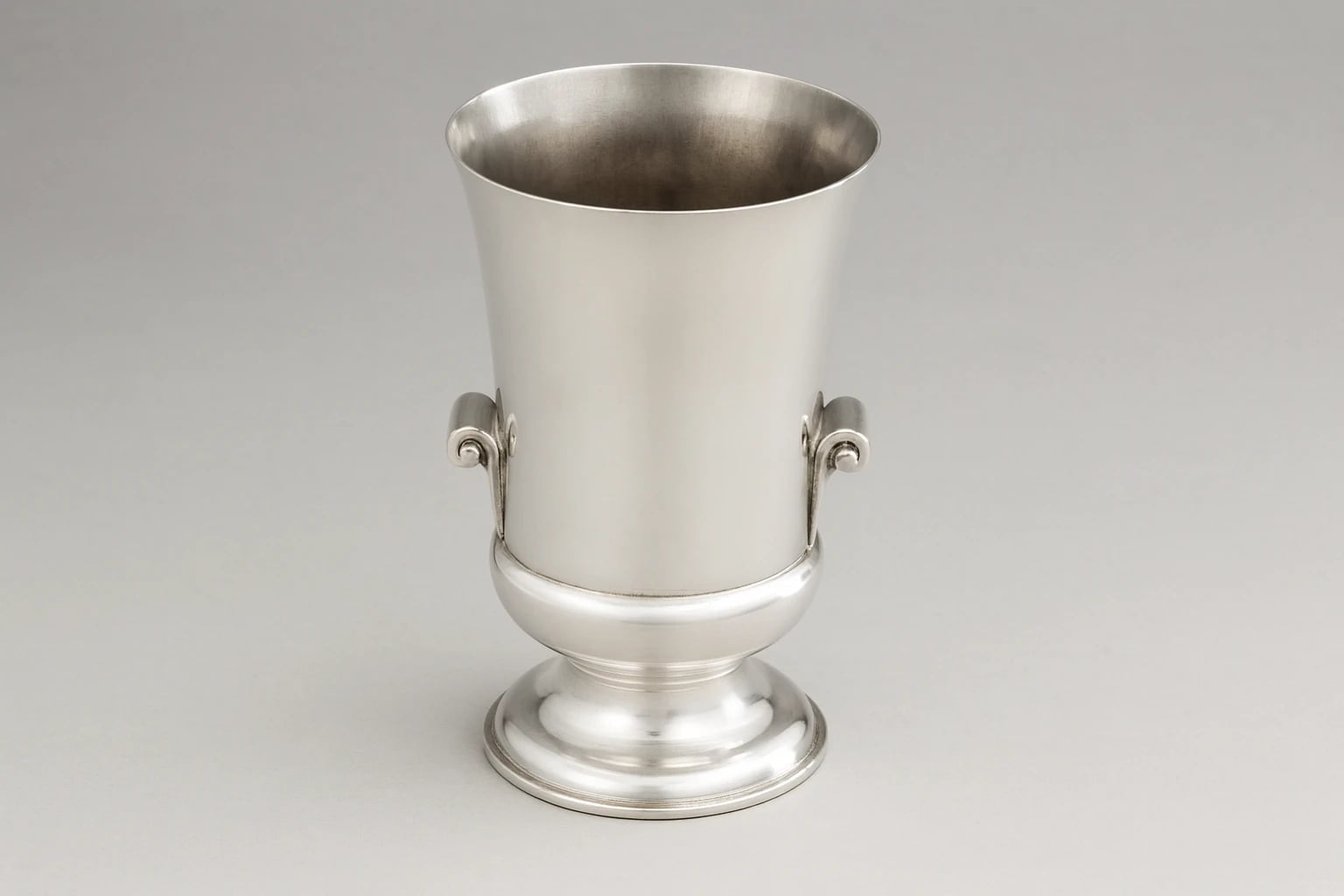
The vase belongs to the First Design Period, 1931 to 1946. That Spratling worked the same design in both tin and silver reflects the workshop's range across materials and price points, and the appetite for experimentation in metals that marks the Taxco school (Stromberg, p. 41). The tin version reads as the more rustic relative of its silver counterpart.
The piece is recorded in Phyllis M. Goddard's Spratling Silver: A Field Guide. Tin objects are a less common part of the output than the silver, and survive in small numbers.
Museum of Mexican Silver. “Provincial Tin Vase.” Catalog no. MoMS-000920. https://museumofmexicansilver.com/pieces/spratling-1970
See something wrong with this record? Suggest a correction and the piece details fill in automatically.
William Spratling
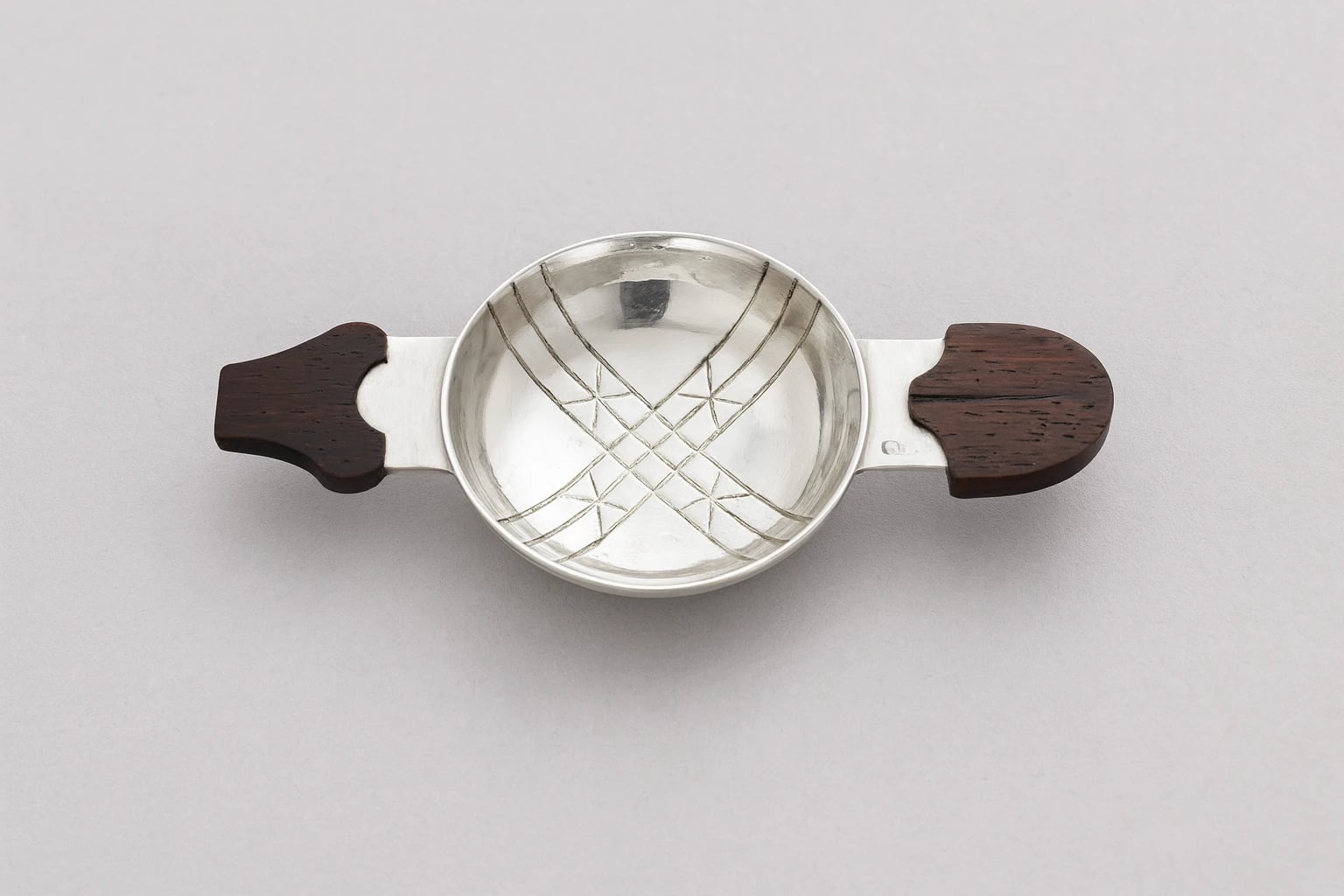
Rosewood Handled Tea Strainer
First Design Period: 1931 - 1946
Silver