Saves instantly, no account needed. Already a member? Sign in.
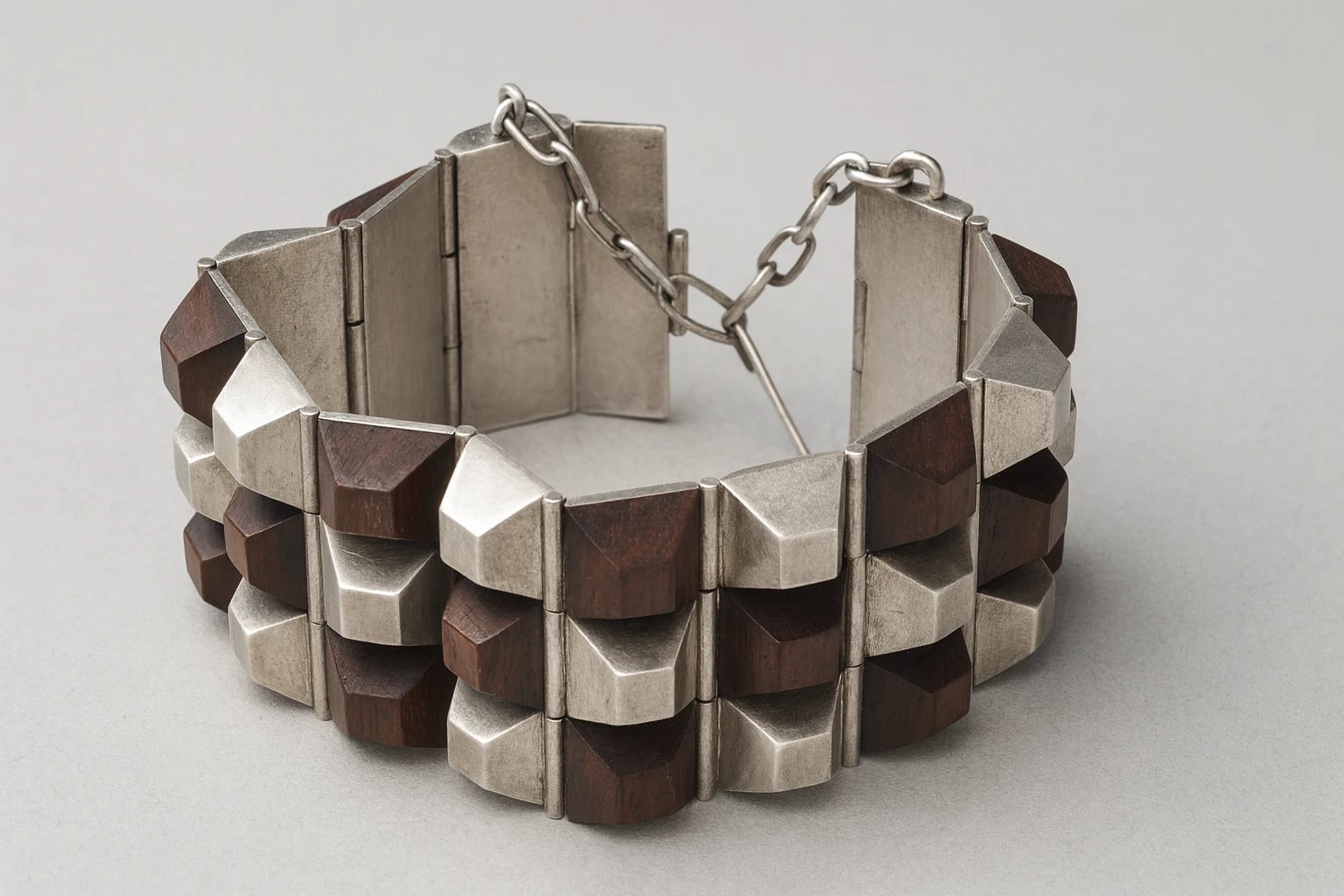
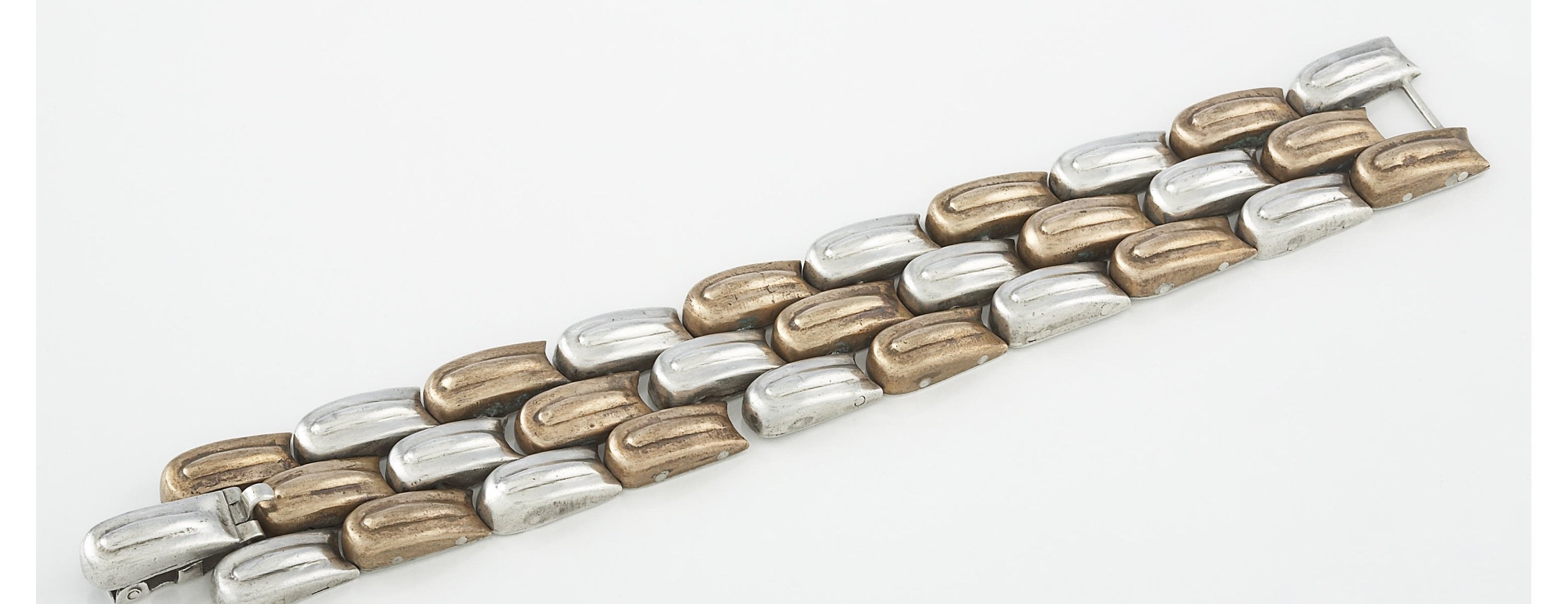
The wide, articulated cuff is among the more architecturally demanding forms in Spratling's jewelry vocabulary — it requires the workshop to resolve a problem that pendants and brooches avoid: distributing stone and silver across a moving, link-by-link structure while holding the geometry level across the wrist. This example answers that problem through a three-row grid of convex, cushion-shaped modules, each element rounded and smoothed, the silver and malachite alternating in a measured rhythm that gives the surface a tectonic, almost interlocking quality. Hallmarked for William Spratling, it reflects the Taxco workshop's sustained treatment of stone as a structural participant rather than applied ornament.
The construction joins the two materials at the module level: each cushion is contained within its row, the rows articulated so the bracelet flexes cleanly around the wrist. The resulting surface catches light differently across silver and stone — the polished silver bright and directional, the malachite absorptive and matte. Malachite recurs in Spratling's recorded production, a stone whose density and opacity he found useful where a smooth, polished face was preferred over a faceted one, as Morrill documents in connection with his wider body of stone-integrated work. At 1¾ inches wide and just under 1.9 troy ounces, the piece carries enough mass to read as architectural on the wrist without becoming unwieldy.
Examples in which the stone is integrated link by link into the body of the piece — module by module across the full width — rather than set as a single central element are among the more considered expressions of his stone-and-silver approach.
Museum of Mexican Silver. “Scales Bracelet.” Catalog no. MoMS-000203. https://museumofmexicansilver.com/pieces/spratling-3162
See something wrong with this record? Suggest a correction and the piece details fill in automatically.
William Spratling
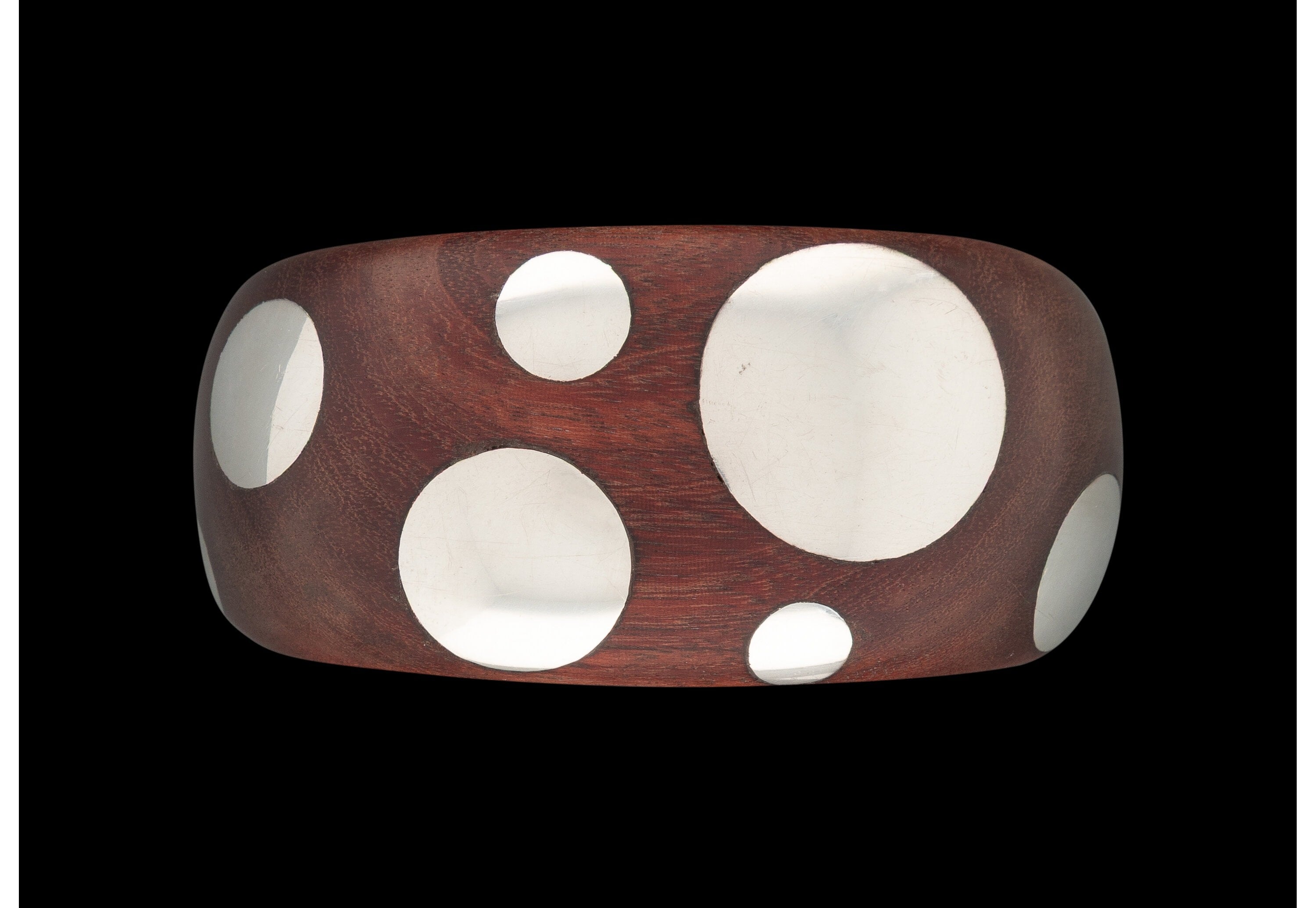
Silver Disc Ebony Bracelet
Third Design Period: 1951 - 1967
Ebony