Saves instantly, no account needed. Already a member? Sign in.
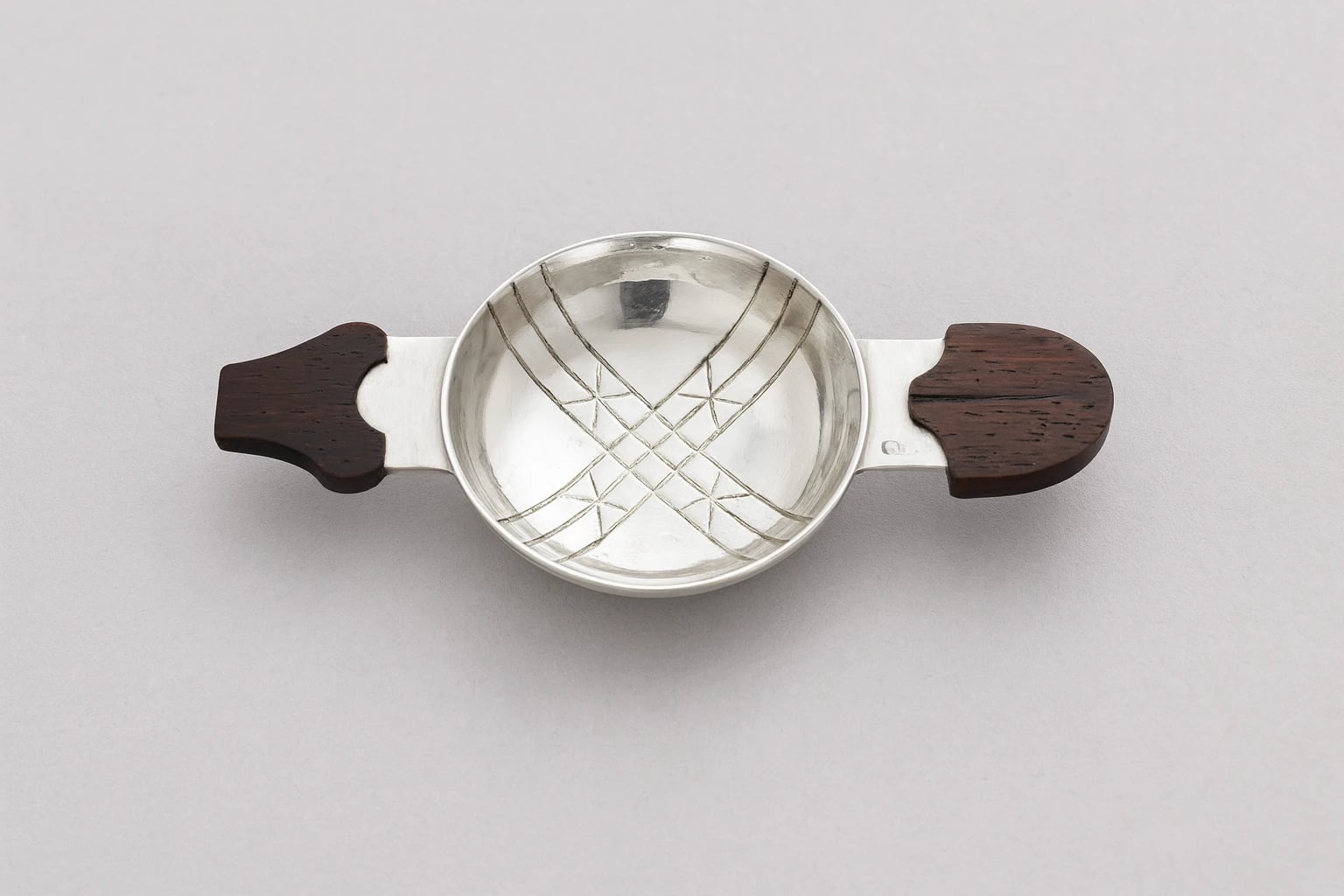
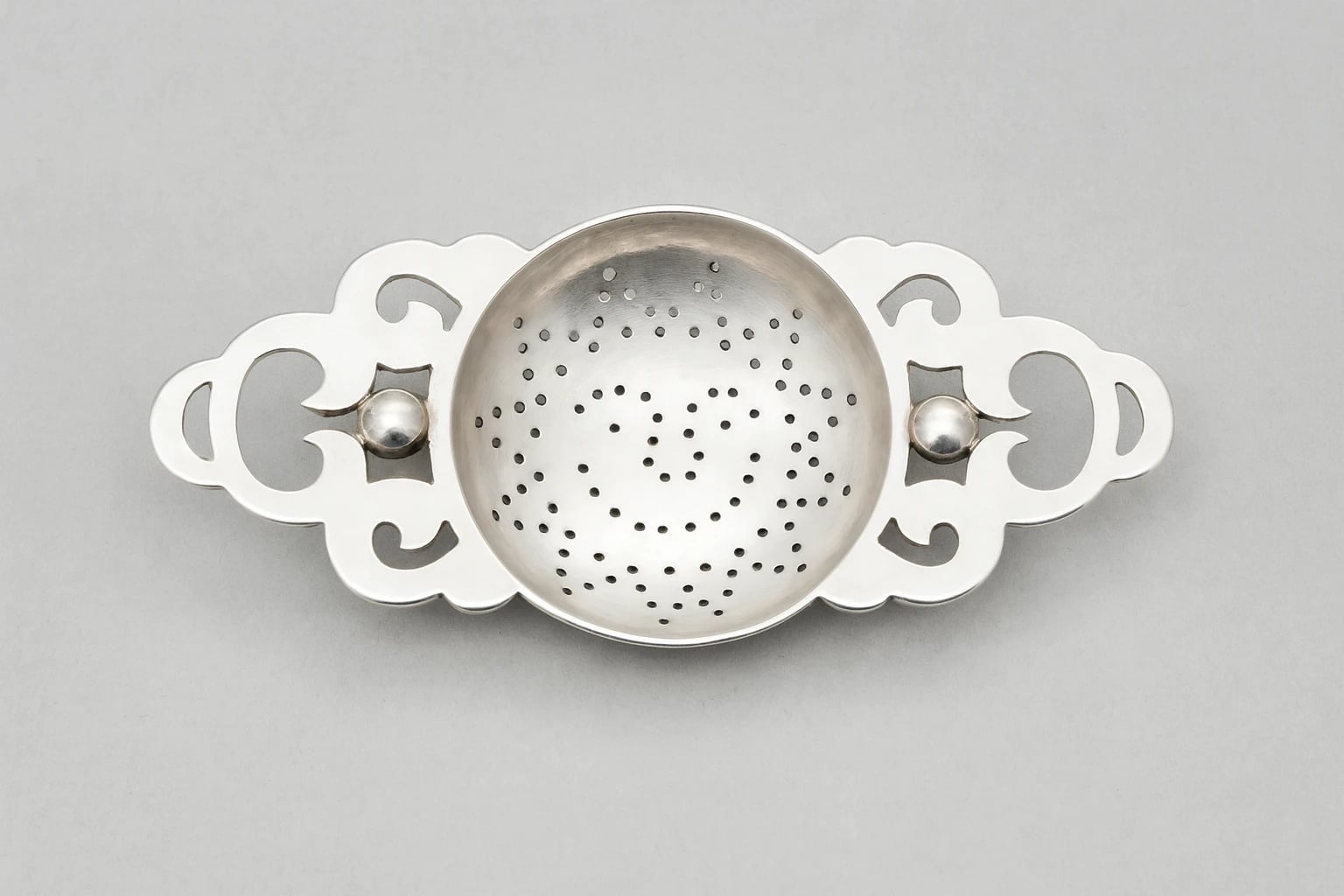
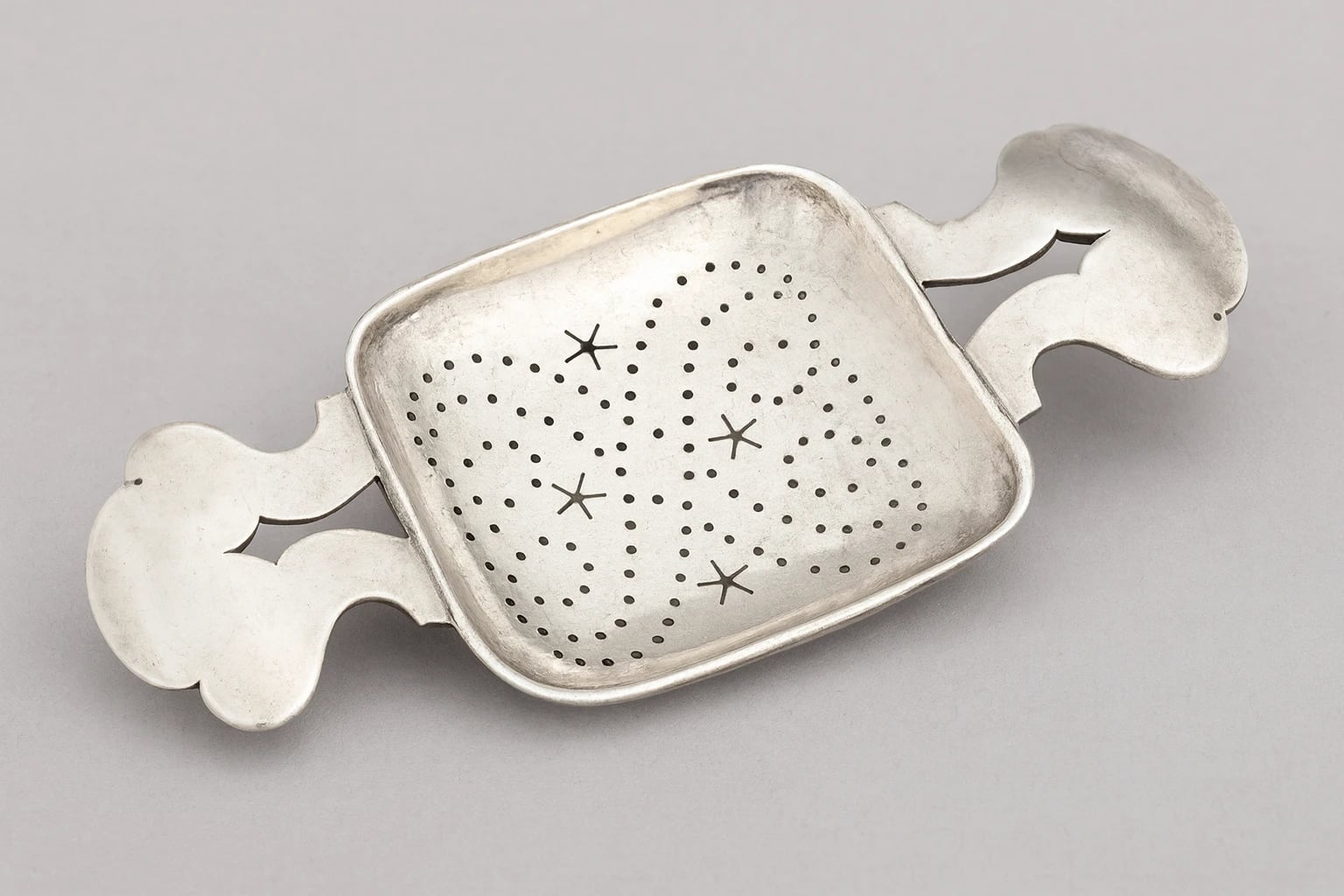
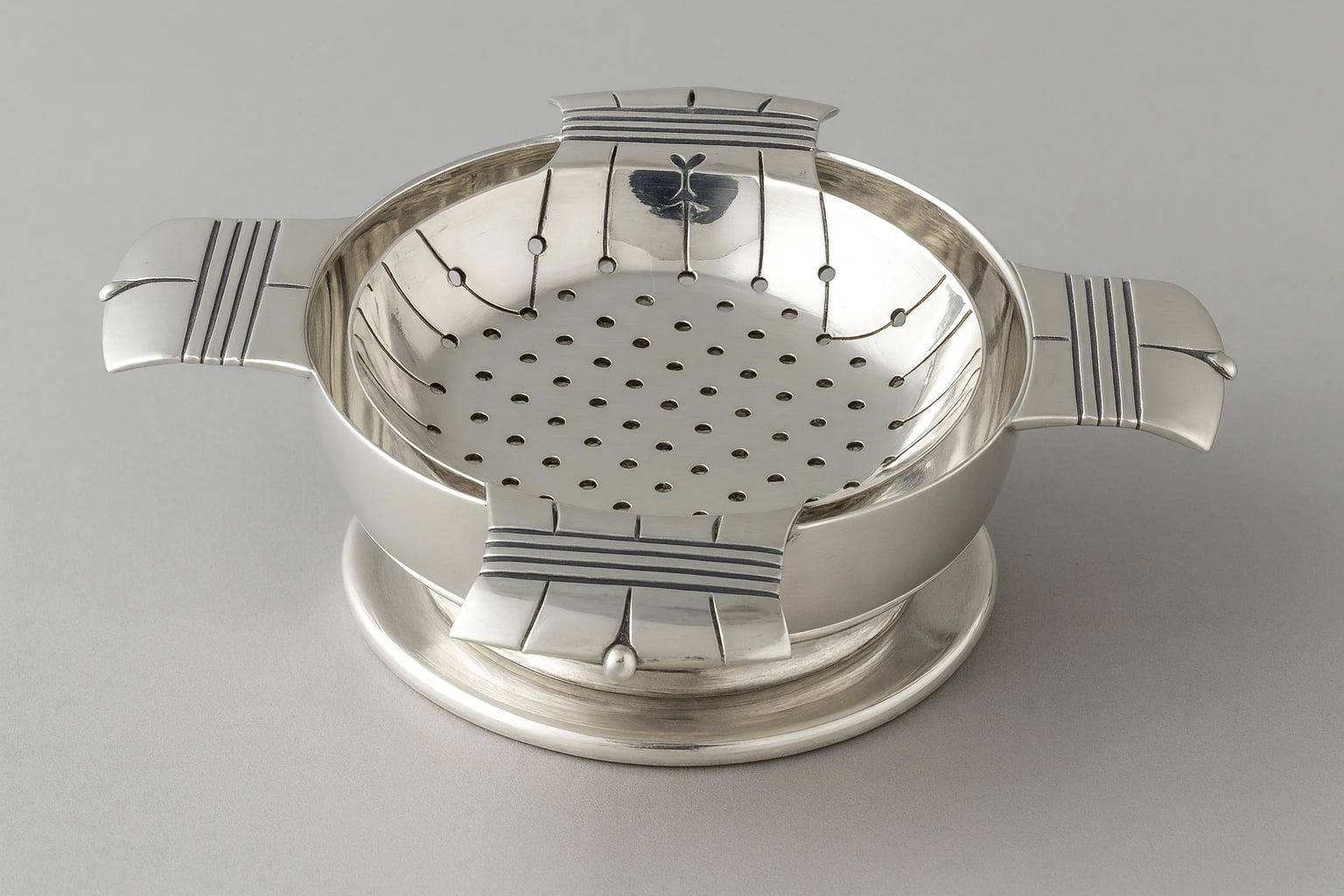
A tea strainer asks a designer to solve a domestic problem with almost no room for gesture, and this one meets that constraint by treating the strainer as part of a set rather than a single utensil. Its handles were made to match a companion tea bag holder or bowl, so the object was conceived as one element in a coordinated service rather than a stray accessory. That decision matters. It shows William Spratling extending the discipline of unified design, the idea that spoon, strainer, and vessel should speak a common visual language, into the smallest and most easily overlooked pieces on a Mexican table.
The strainer's logic is functional before it is decorative. A strainer must span the rim of a cup or pot, hold its bowl steady while liquid passes, and give the hand something secure to grip. Silver suits the task because it resists staining from tea and takes a clean finish that reads well against porcelain or against the silver of a matching bowl. The interest here lies in how the handles are treated, since they carry the whole burden of relating this piece to its companion. By repeating a handle profile across the strainer and the vessel it serves, Spratling turned a purely practical junction, the point where the hand meets the object, into the visual thread that binds the set together. Restraint is the design. Where a lesser strainer would add ornament to justify itself as silver, this one earns its silver through proportion and the discipline of matched form.
The piece belongs to Spratling's first design period, the years between the 1931 founding of the Taller de Las Delicias and the mid-1940s, when the workshop was defining what modern Mexican silver could be for the table as well as the body. This was collaborative work. Spratling supplied design authority and standards, while master smiths and specialists in the taller translated drawings into finished hollowware and flatware, a division of labor that let the designer concentrate on form while trained hands solved the fabrication. Hollowware and tableware were central to that program, not secondary to jewelry, because a coordinated tea service demonstrated that the taller could think in complete domestic systems. The same environment shaped a generation of designers who passed through or near Spratling's orbit, among them Antonio Pineda, Héctor Aguilar, and the Castillo brothers, each of whom went on to build talleres of his own. Reading this strainer as part of that first-period effort places it at the point where Taxco was still establishing the vocabulary that the wider silver renaissance would inherit.
Museum of Mexican Silver. “Tea Strainer with Matching Handles.” Catalog no. MoMS-000426. https://museumofmexicansilver.com/pieces/spratling-491
See something wrong with this record? Suggest a correction and the piece details fill in automatically.
Domestic silver from these years survives unevenly, since small serving pieces were used, worn, and often separated from the sets they were made to complete. A strainer that still carries the design relationship to its companion vessel therefore documents something a single object cannot: the intention that a Mexican tea service be seen and used as a whole. For a collection, the value lies in exactly that completeness of idea. It preserves evidence of how the Taller de Las Delicias thought about the table, and it lets the household side of the Mexican silver renaissance stand alongside the jewelry that has drawn most of the attention.
William Spratling
Square Pierced Tea Strainer
First Design Period: 1931 - 1946
Silver