Saves instantly, no account needed. Already a member? Sign in.
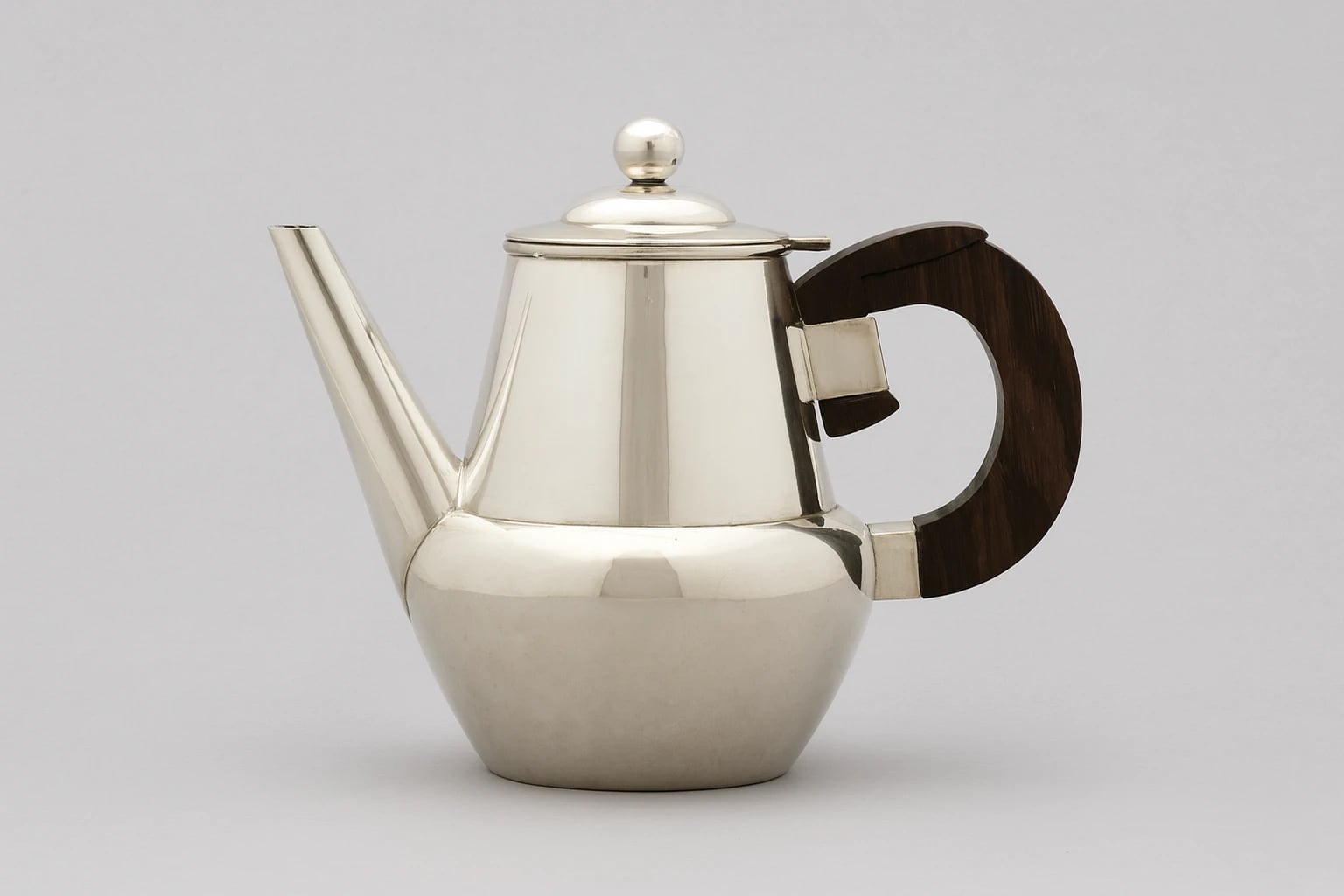
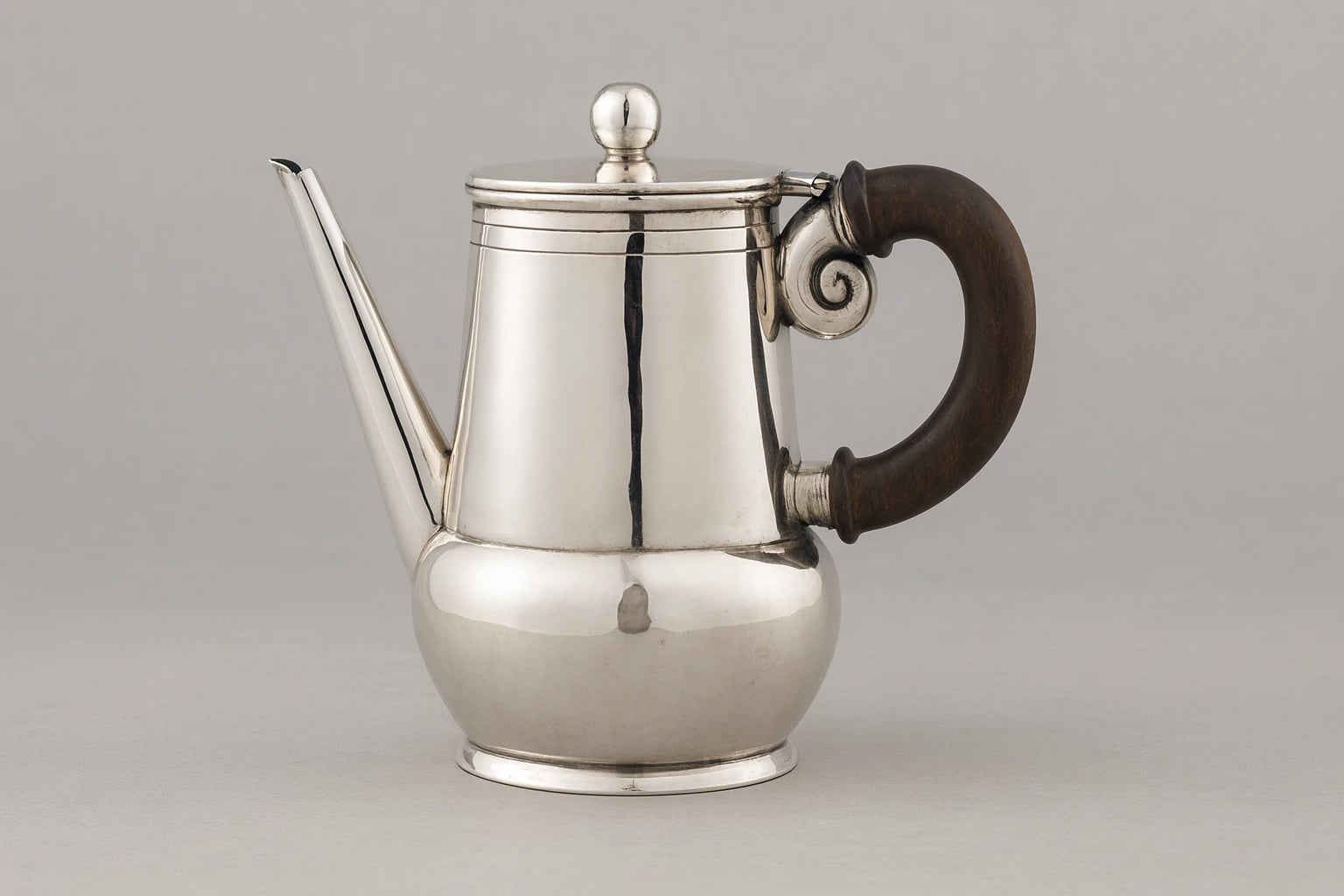
A teapot in the Ovalado pattern shows Spratling carrying his design discipline from jewelry into full hollowware: a pared, oval-section body whose single passage of ornament is the motif that secures the rosewood handle, here drawn from the cross section of a conch shell. The shell, scrolled and bifurcated, was a form Spratling returned to elsewhere in his work, and Morrill notes the same scrolled conch shell among the designs that circulated in the Taxco workshops (Morrill, p. 124).
The pairing of a smooth silver body with a warm rosewood handle is the material contrast that runs through Spratling's tableware, the union of metal with dense wood that Morrill links to the wider modernist current he worked within (Morrill, p. 224).
The teapot is recorded in Morrill's William Spratling and the Mexican Silver Renaissance: Maestros de Plata. As a First Design Period form, it should be read by its early hallmark; Morrill cautions that later Spratling silver has been counterfeited, with squat proportion and an oversized handle betraying the fakes (Morrill, p. 250).
Museum of Mexican Silver. “Ovalado Conch Motif Teapot.” Catalog no. MoMS-000417. https://museumofmexicansilver.com/pieces/spratling-509
See something wrong with this record? Suggest a correction and the piece details fill in automatically.
Early Teapot with Squared Rosewood Handle
First Design Period: 1931 - 1946
Silver