Saves instantly, no account needed. Already a member? Sign in.
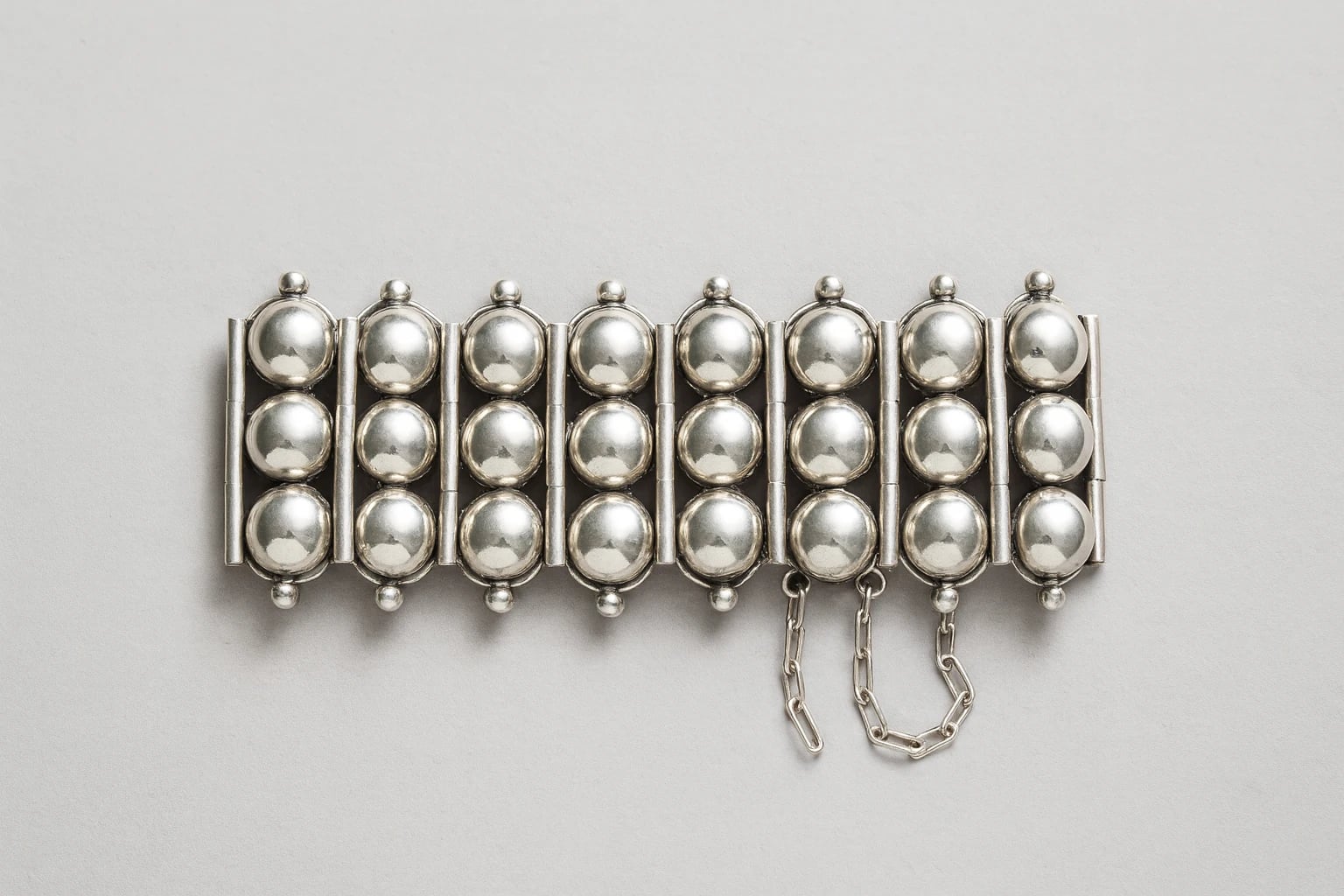
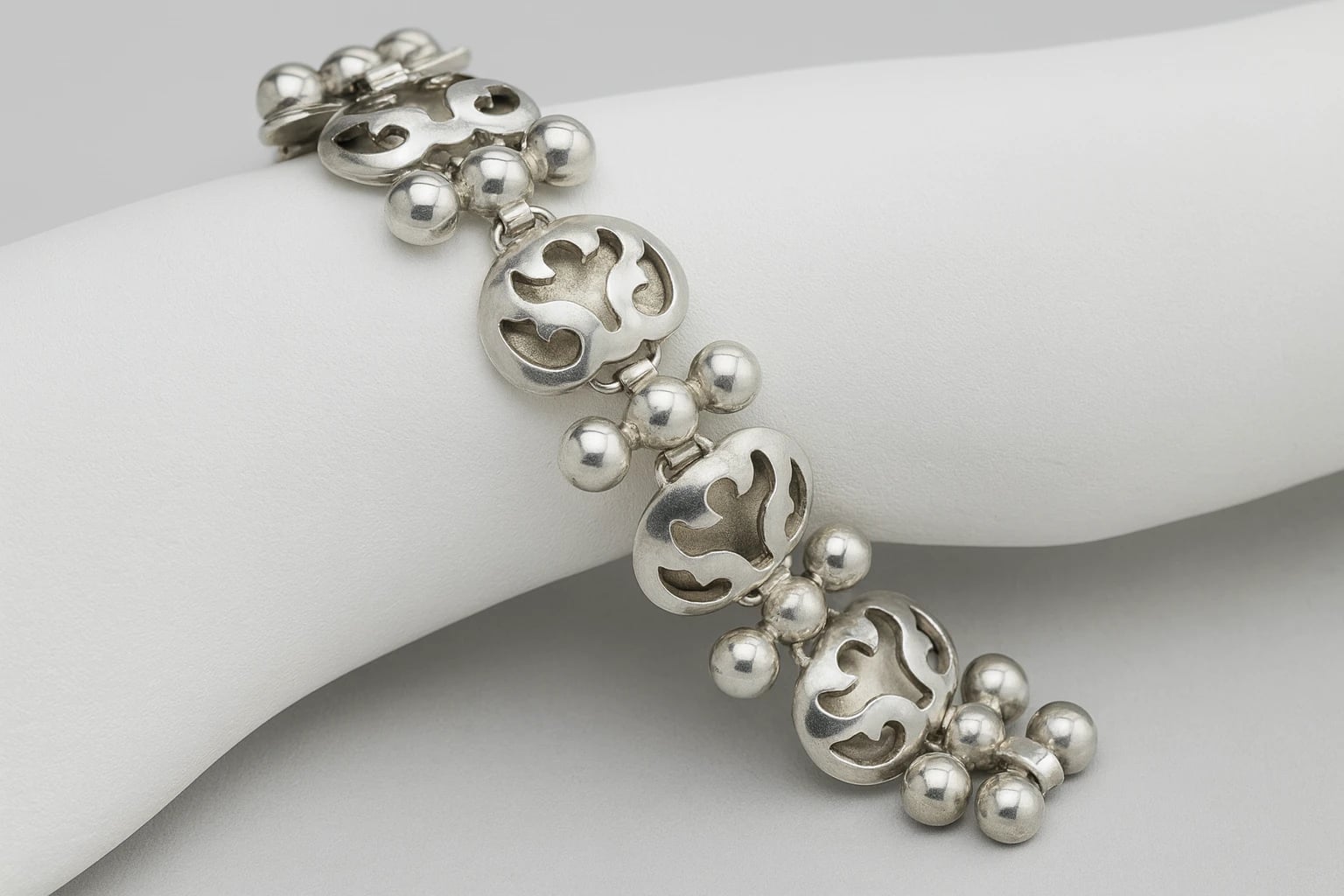
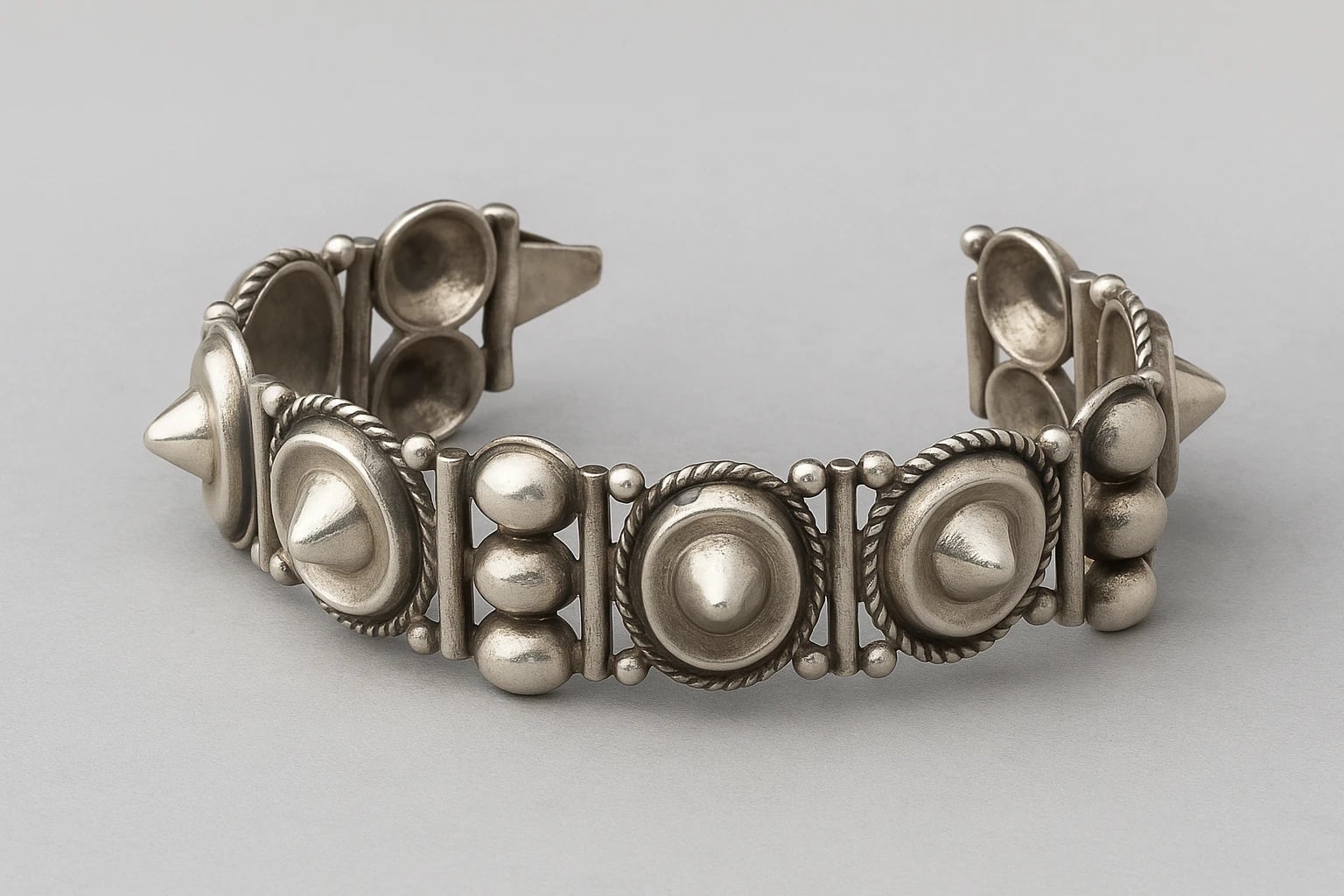
A row of six small hats marching between groups of three silver balls turns a wrist into a piece of quiet wit, the kind of figurative shorthand that ran through the earliest Taxco silver. The form belongs to Spratling's First Design Period, the years after he founded the Taller de Las Delicias in 1931 and set the template for a Mexican silver idiom built from native motifs and hand workmanship (Morrill, Mexican Silver, 1994, p. 14).
Spratling described his early sources plainly: design ideas in those years were "almost literal copies of Aztec and Colonial motives," with rings and buckles embodying cord patterns drawn from saddle ornaments, all meant as a point of departure for new work (Morrill, p. 156). A linked bracelet of repeated small forms, balanced by the rhythm of beaded spacers, sits squarely in that vocabulary of repetition and weight.
The piece is recorded in Penny C. Morrill and Carole A. Berk's Mexican Silver: 20th Century Handwrought Jewelry & Metalwork, the standard reference for the field.
Early Spratling jewelry of this kind comes to market only occasionally, and a figural link design carries the maker's foundational moment in Taxco with it.
Museum of Mexican Silver. “Hat Link Bracelet.” Catalog no. MoMS-000058. https://museumofmexicansilver.com/pieces/spratling-86
See something wrong with this record? Suggest a correction and the piece details fill in automatically.
William Spratling
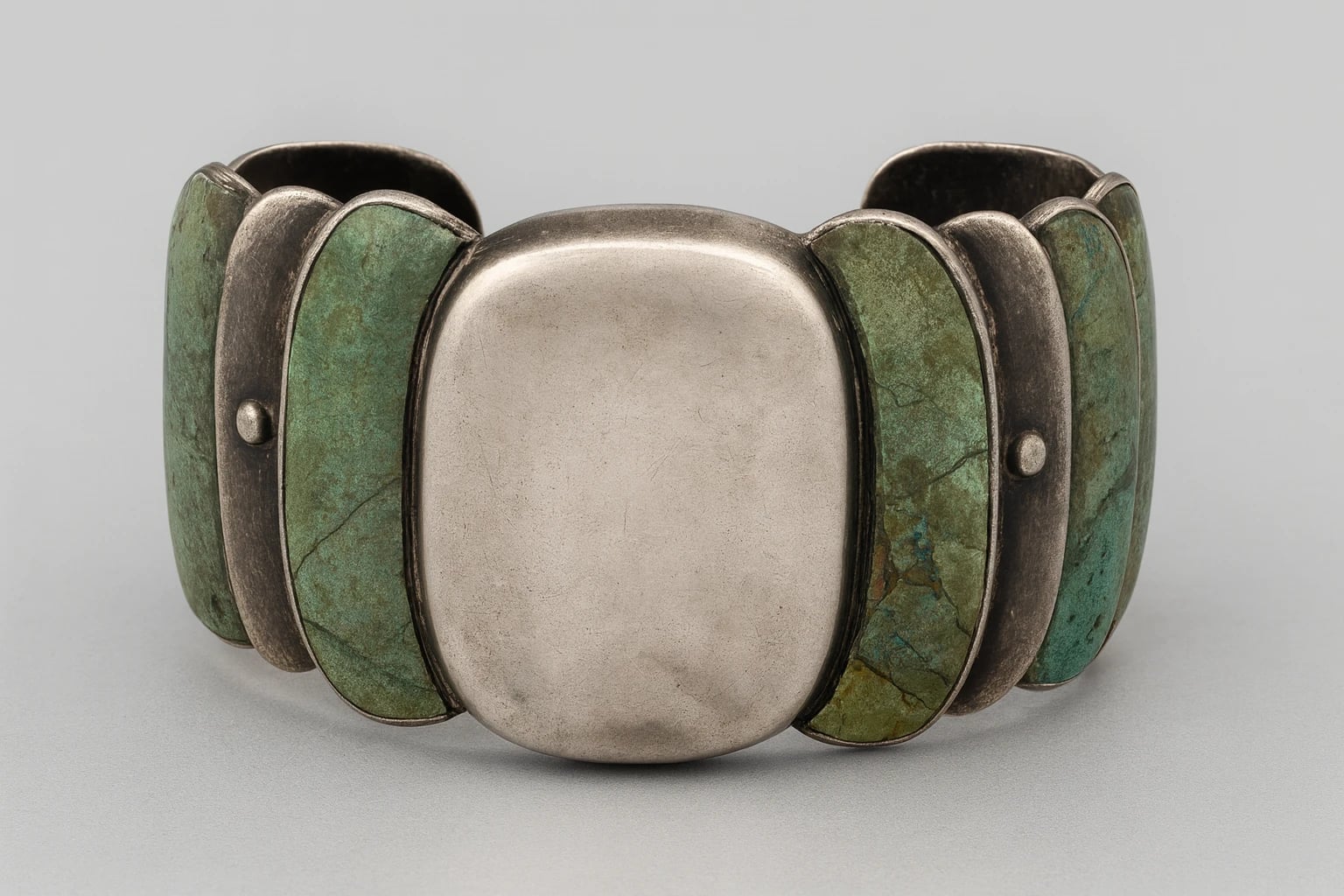
Azur Malachite Crescent Bracelet
First Design Period: 1931 - 1946
Silver