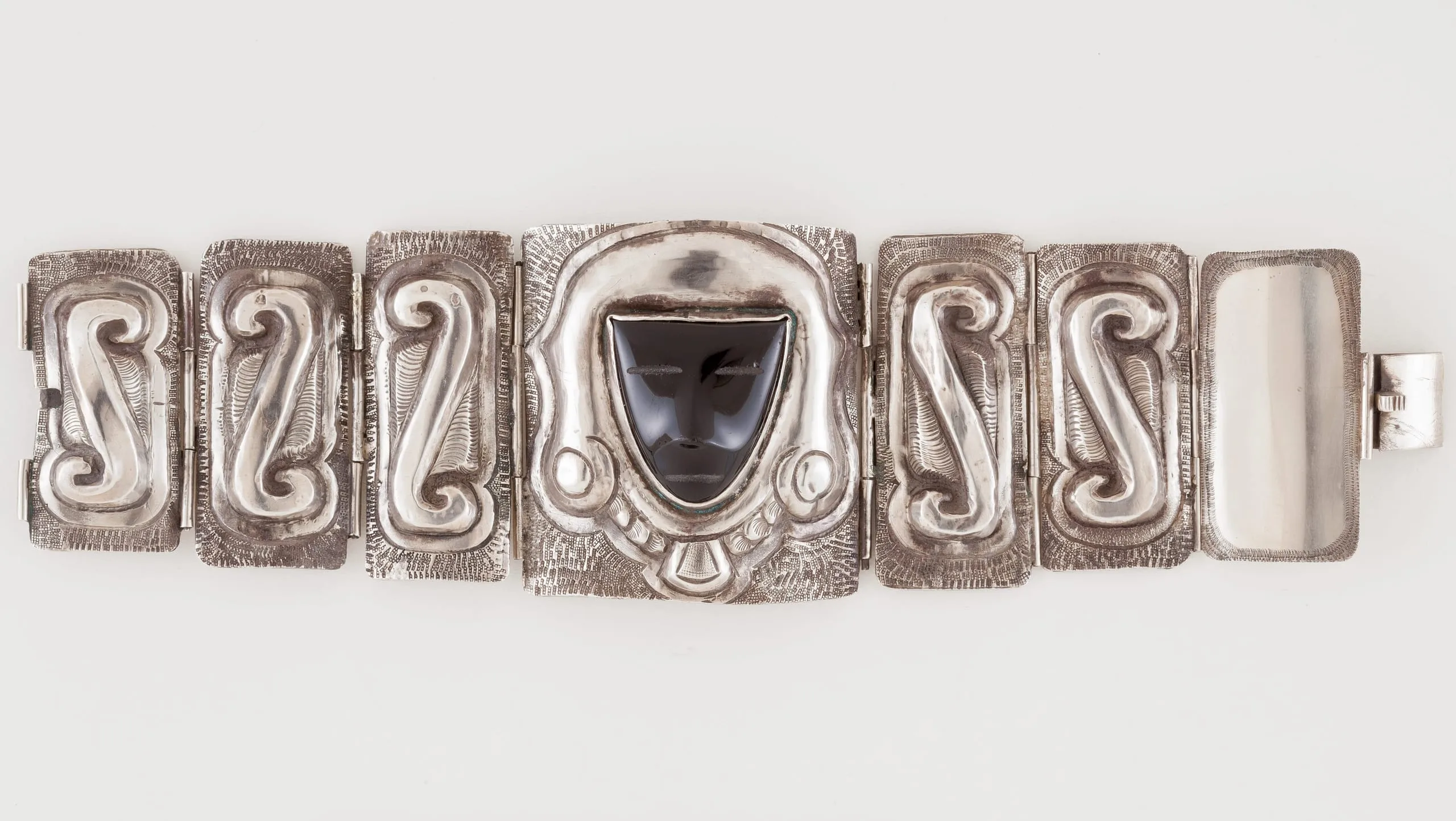
Silver Cuff Bracelet with Framed Pre-Columbian Mask, Amethyst and Coral
Part of the design family Mask
Saves instantly, no account needed. Already a member? Sign in.
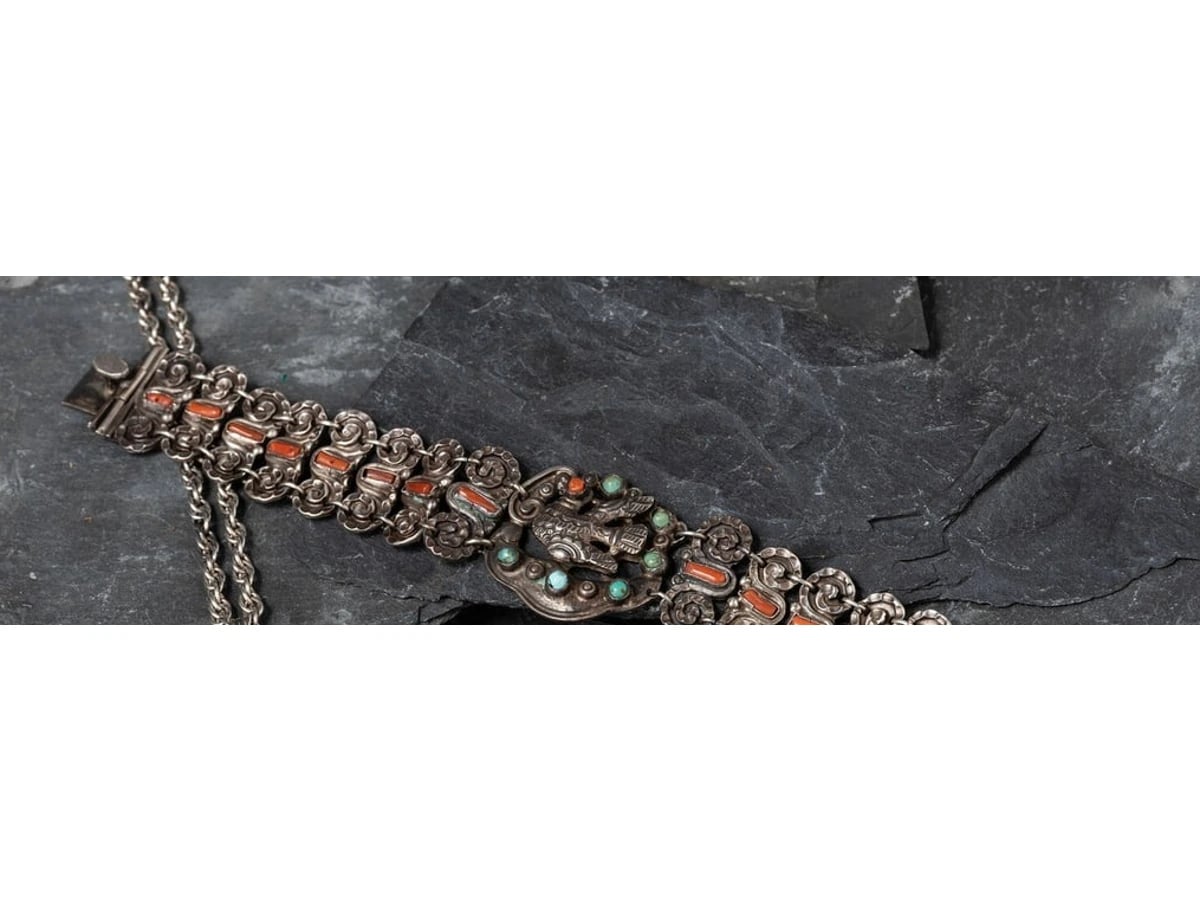
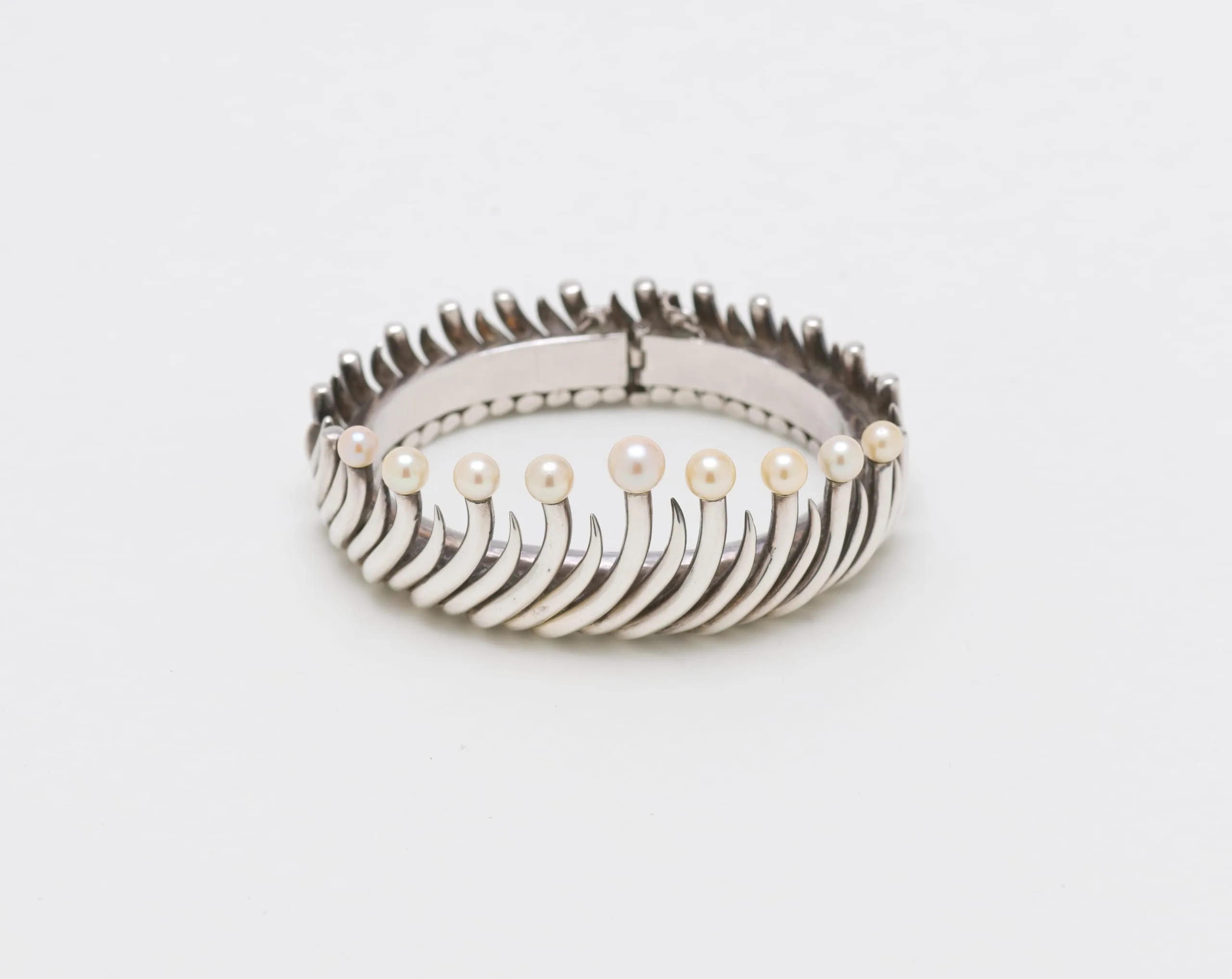
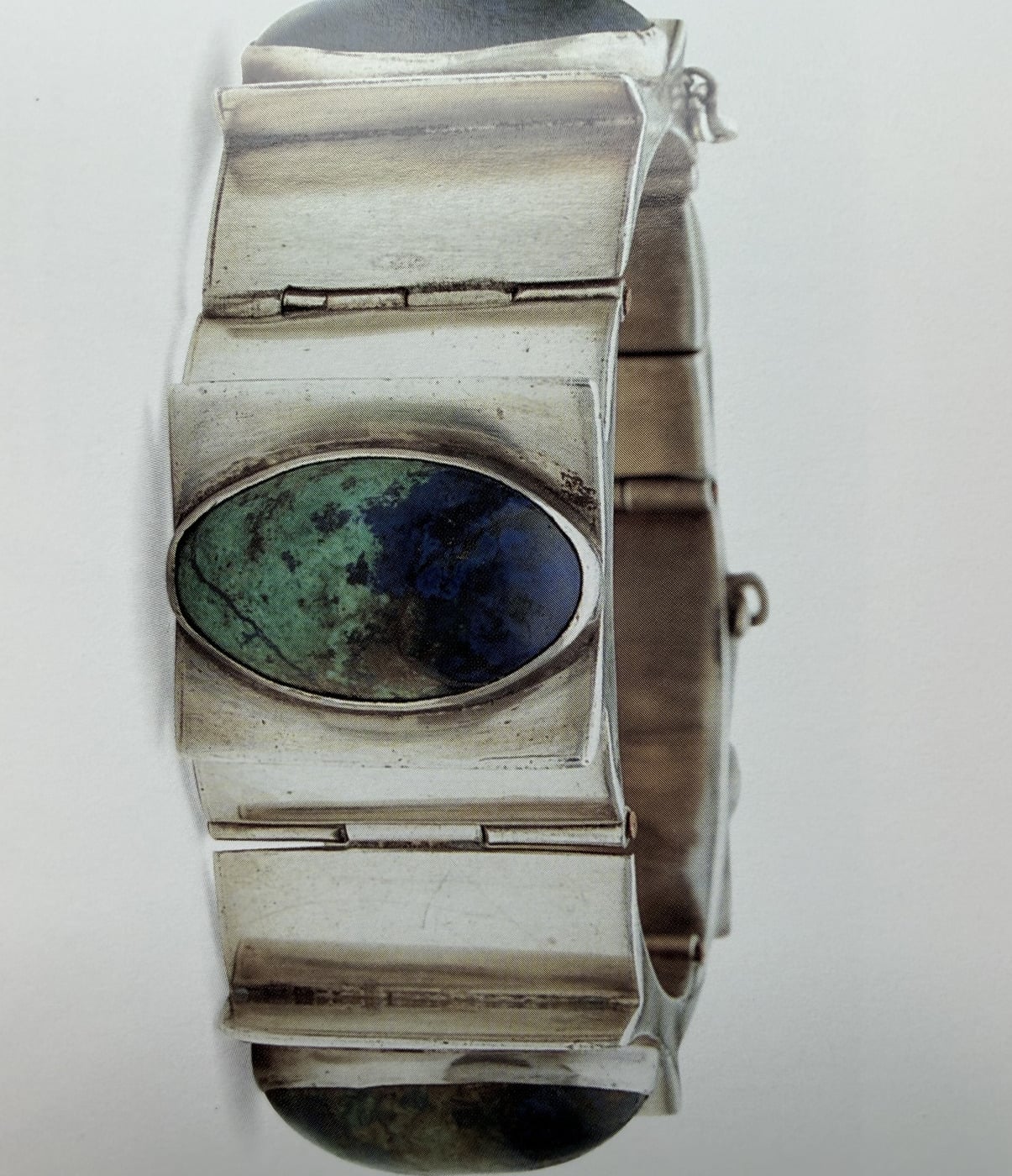
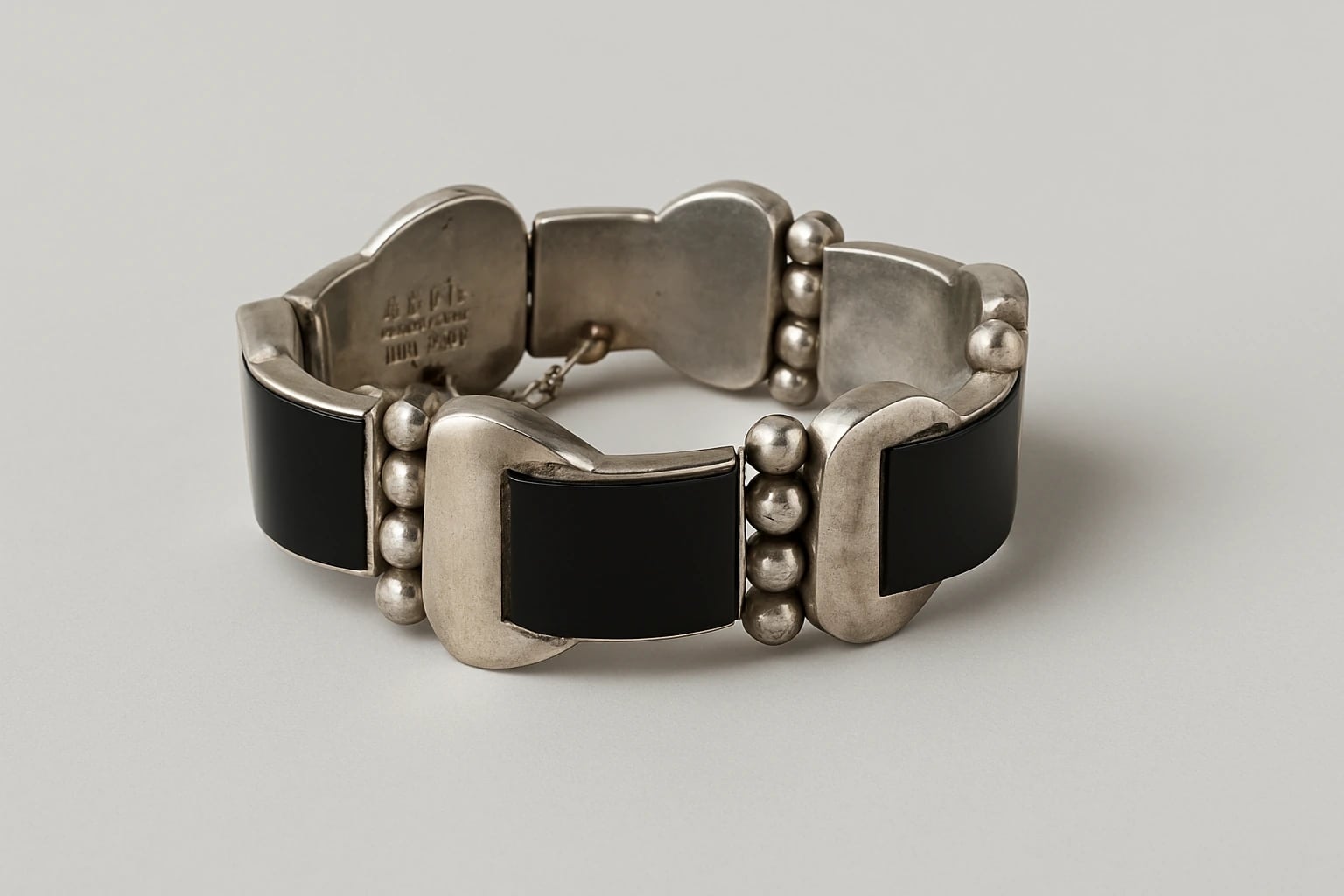
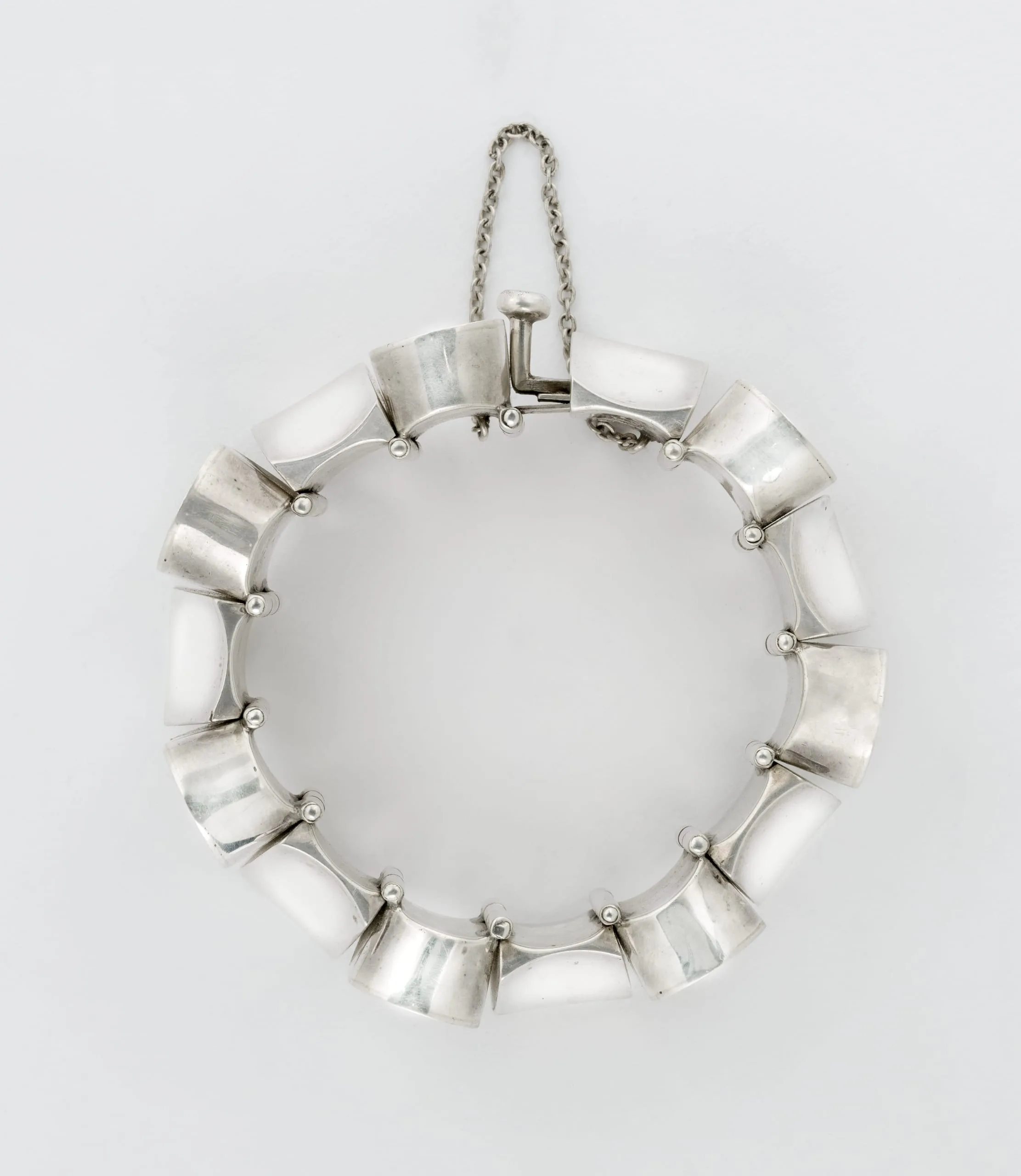
The Framed Mask Cuff Bracelet is built around a stylized pre-Columbian mask figure set into a broad silver cuff whose surface is worked with regular scored lines. The mask carries amethyst and coral cabochons as eyes and applied accents, framed by the linear silver ground that surrounds the figure. The scoring is structural rather than decorative: the parallel lines give the cuff its rhythm and let the central mask emerge as the composition's anchor without applied embellishment elsewhere on the band.
Matilde Poulat's design language drew steadily from Mesoamerican religious iconography and the pre-Columbian mask tradition, often combined with the turquoise, coral and amethyst stones that became identifying materials for her atelier. The MATL hallmark is associated above all with this combination of figural reference and stone-set colour.
The piece comes out of Poulat's Mexico City workshop, distinct from the Taxco ateliers in both geography and emphasis. Where the Taxco school developed around hollowware, large jewelry and figural pins, MATL's Mexico City production concentrated on stone-set figural work with religious and pre-Columbian subjects. The workshop operated through the mid-century with a small team of silversmiths under Poulat's direction.
The date of this cuff remains uncertain. Matilde Poulat died in 1960, so work marked MATL from her own workshop is pre-1960, while post-1960 production under her nephew Ricardo Salas carries MATL-Salas. The mark on this bracelet has not been recorded, and the cuff cannot yet be placed in either period.
Framed Mask Cuff Bracelet (Brazalete con máscara enmarcada)
Accession M.2013.4.22. Official museum record
Verified against each institution's own collection records. All museum collections
Museum of Mexican Silver. “Silver Cuff Bracelet with Framed Pre-Columbian Mask, Amethyst and Coral.” Catalog no. MoMS-001477. https://museumofmexicansilver.com/pieces/matl-framed-mask-cuff-bracelet
See something wrong with this record? Suggest a correction and the piece details fill in automatically.
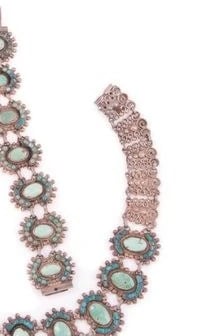
MATL (Matilde Poulat)
Round-Link Bracelet with Turquoise
1934 or later
Turquoise