Saves instantly, no account needed. Already a member? Sign in.
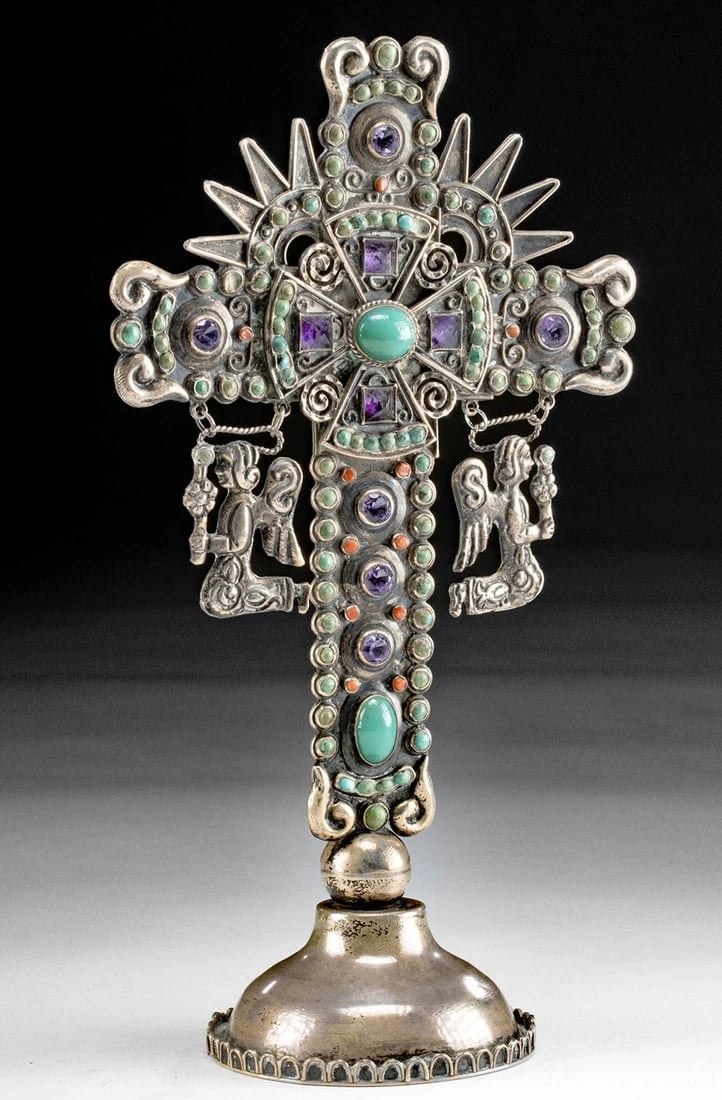
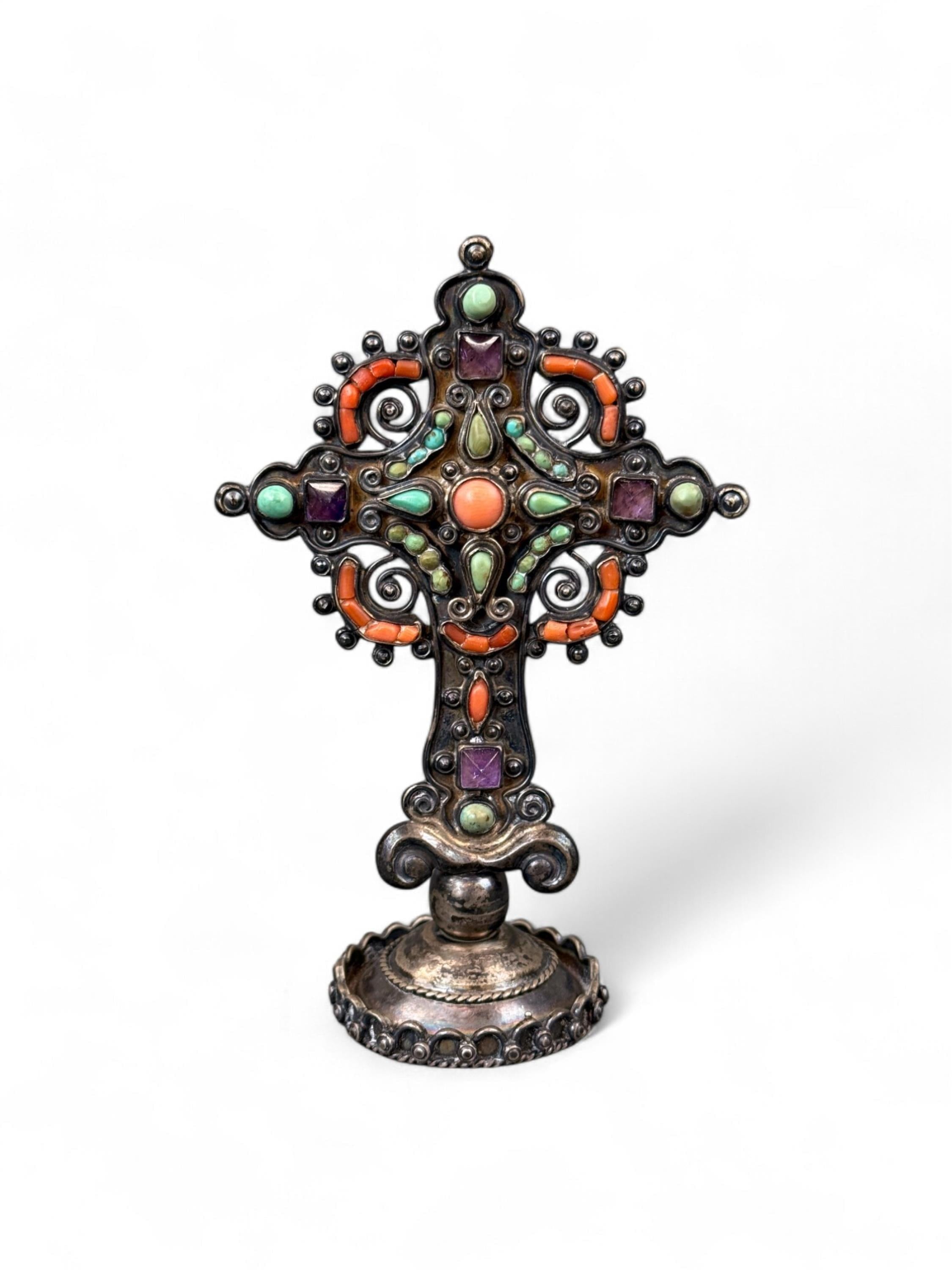
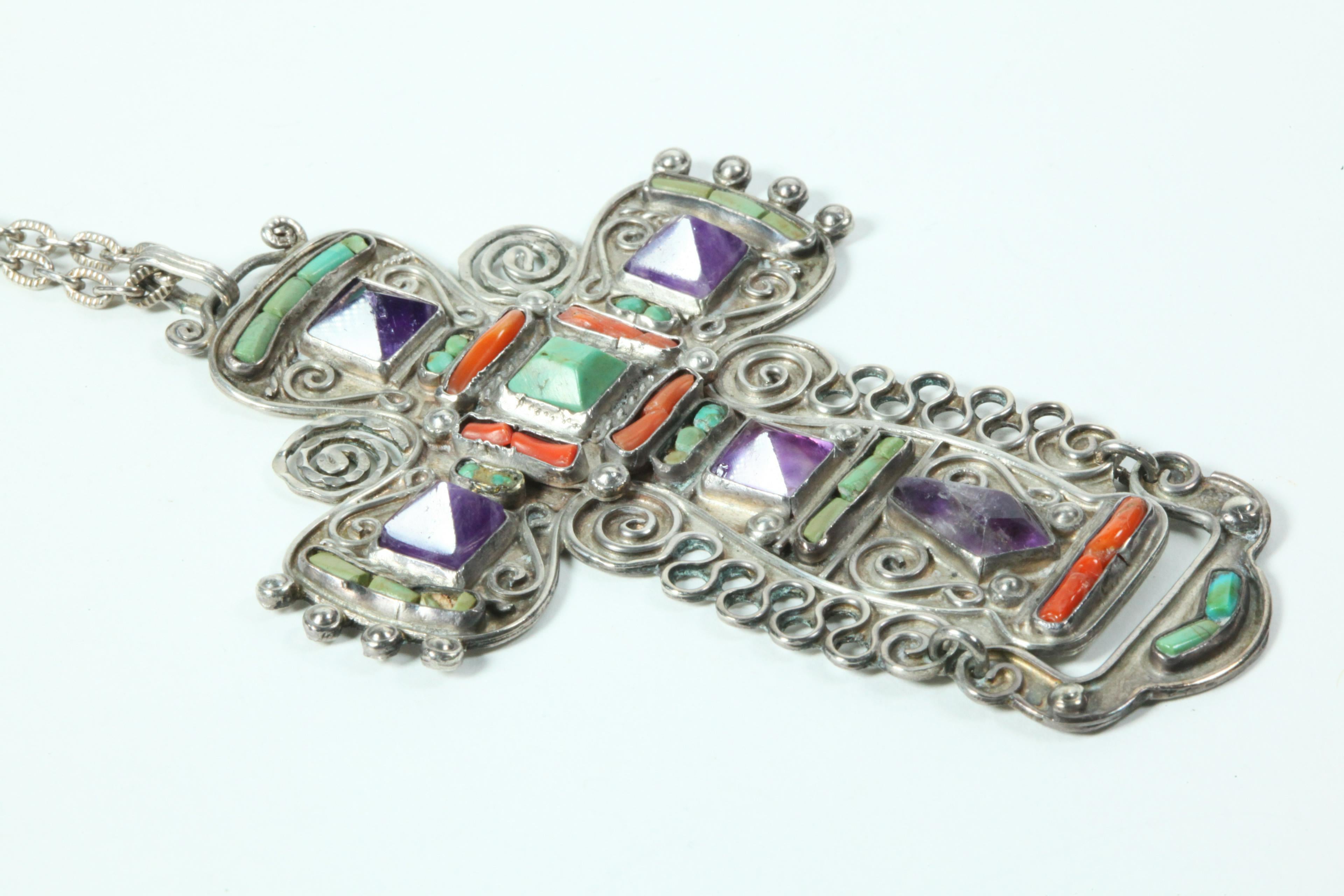
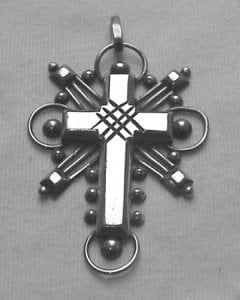
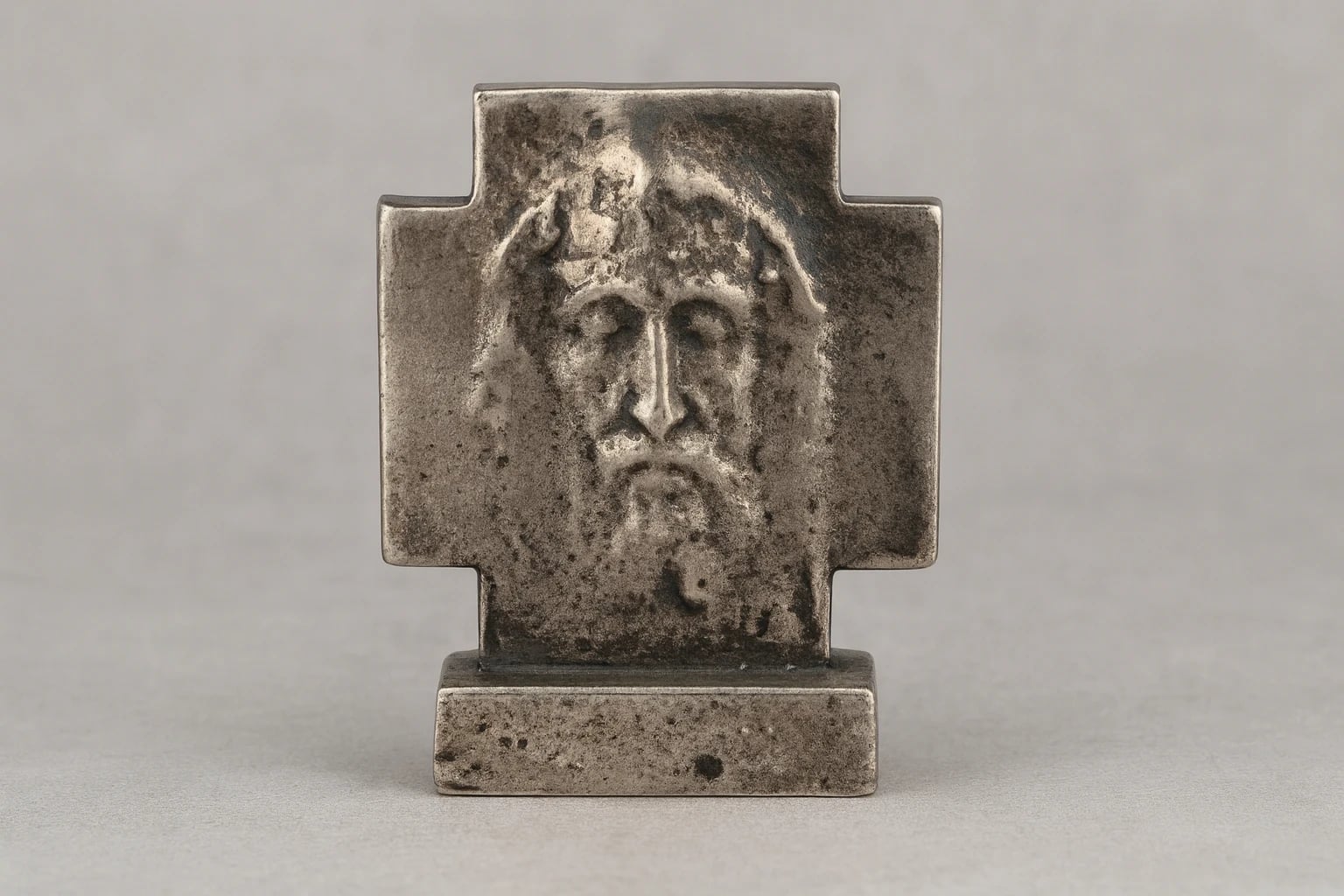
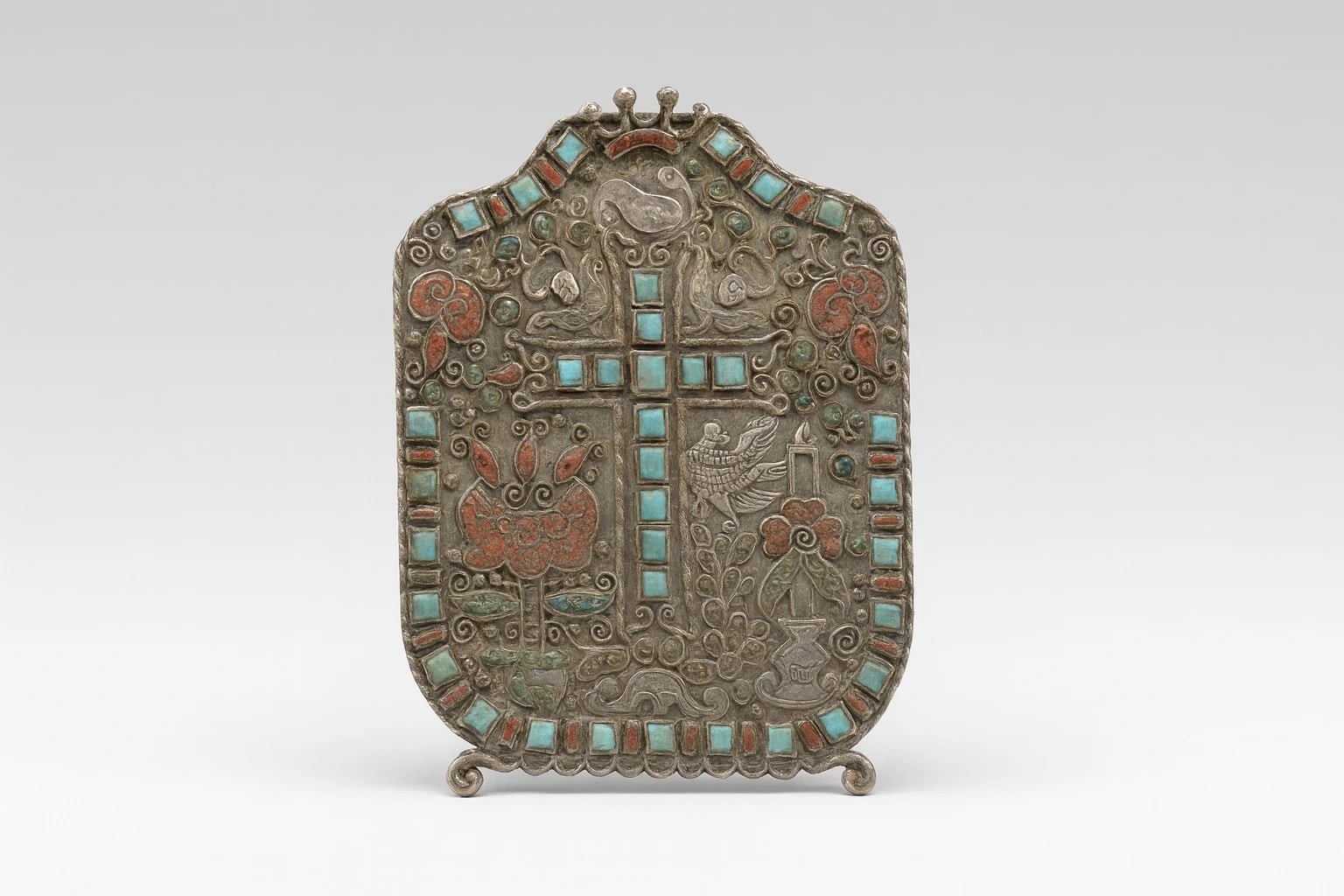
A cross worked with animal forms fuses the two strands that ran through the MATL workshop, its devotional output and its folk menagerie, into a single object. The zoomorphic ornament turns a Christian form into something distinctly Mexican, creatures rendered in silver across the body of the cross.
Matilde Poulat moved easily between the sacred and the whimsical. A San Carlos-trained painter who introduced the "MATL" mark in 1934, she drew on the dove, flowers, and tiny bells of Mexican folk art and on the Mixtec gold found at Monte Alban in 1932 (Morrill, p. 216); Morrill also records that the taller produced about a hundred different religious pieces alongside its jewelry (p. 216). A zoomorphic cross brings both impulses together.
Such crosses surface only occasionally. After Poulat's death in 1960, her nephew Ricardo Salas continued the designs under the "MATL Salas" mark, so the back stamp helps in dating. For a collector the appeal is the unusual marriage of religious form and folk-animal imagery in the MATL hand.
Museum of Mexican Silver. “Zoomorphic Cross.” Catalog no. MoMS-001536. https://museumofmexicansilver.com/pieces/matl-zoomorphic-cross
See something wrong with this record? Suggest a correction and the piece details fill in automatically.
MATL (Matilde Poulat)
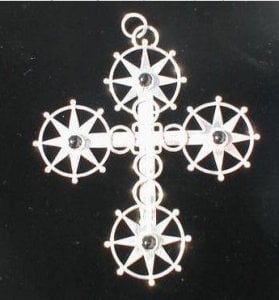
Cross with Turquoise and Coral
1934 or later
Turquoise