Saves instantly, no account needed. Already a member? Sign in.
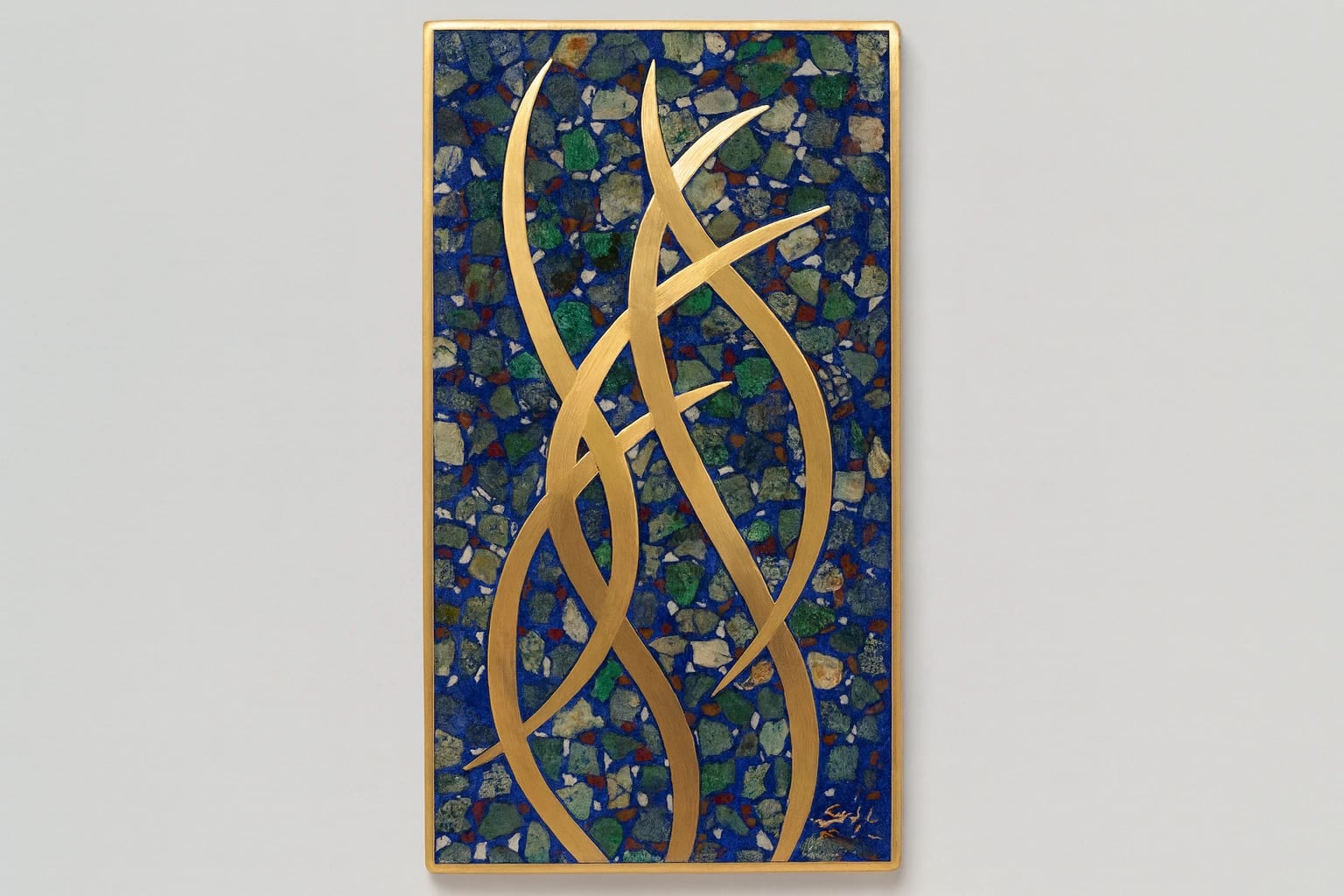
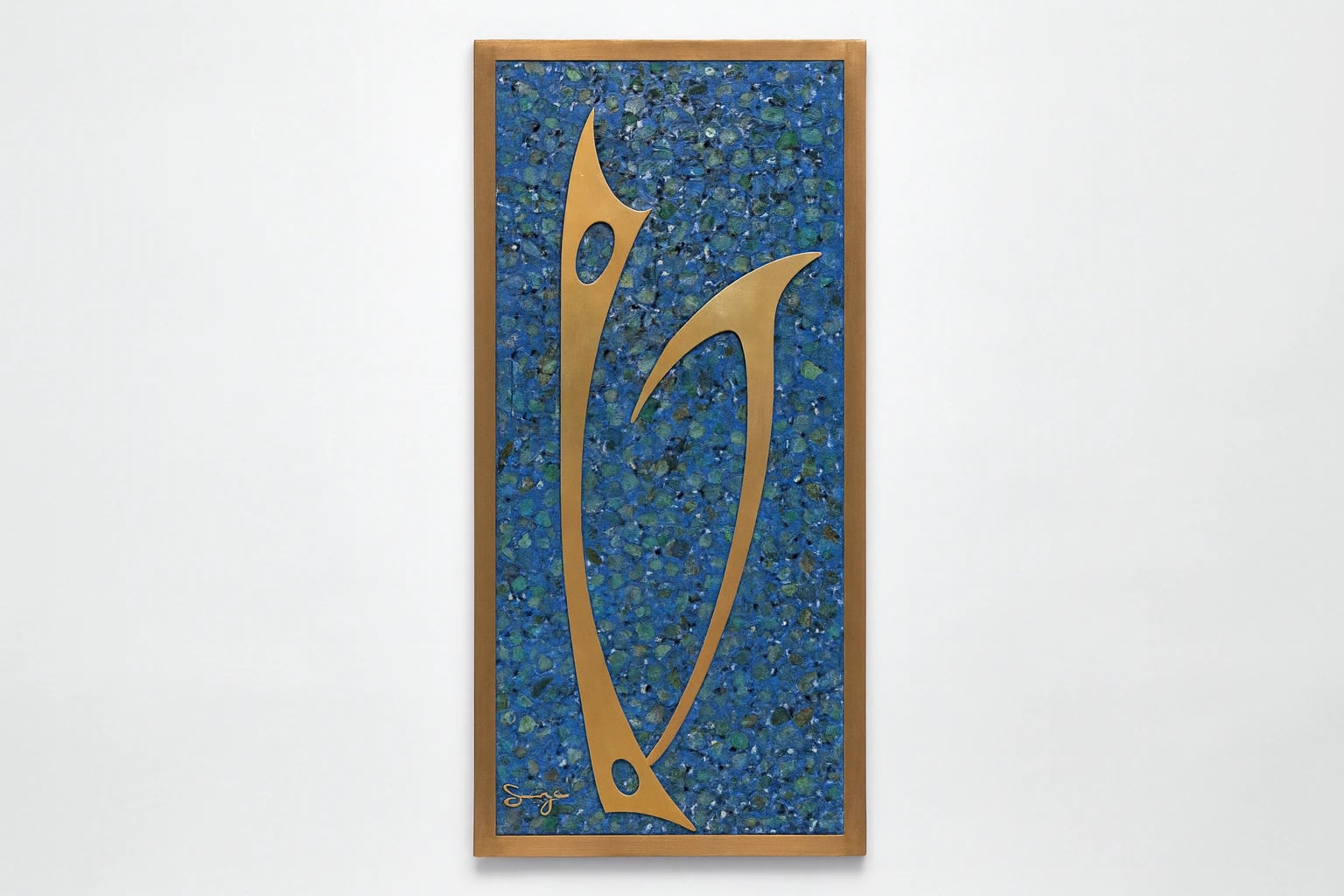
A blue mosaic field held between two elongated brass forms organizes this vertical plaque, a work that places Sigi Pineda's design sensibility on a wall rather than a body. Standing thirty-one inches high and eleven inches wide, and weighing just over twelve and a half pounds, it belongs to a category of Taxco object that remains far less studied than jewelry: the decorative panel conceived as an independent art object. The two slender brass elements rise the length of the composition and frame the enamel mosaic between them, so that the piece reads as a controlled vertical column of color bounded by warm metal.
The relationship between the mosaic and the brass carries the design. The blue field has a density and internal variation that a flat painted surface would not, and its tones shift as light moves across it. Against that saturated field, the two brass forms read as warm, reflective, and linear, their length exaggerating the vertical proportion of the panel. The composition depends on this contrast of a broad chromatic center and narrow metallic edges. The signature at the lower left situates the maker within the work without interrupting the field. The museum record documents the piece as brass and enamel mosaic, and the weight confirms a substantial constructed object rather than a light ornamental plaque.
Enamel was central to Sigi Pineda's formation. Before opening his own shop in Taxco in 1952, later renamed Sigi, he directed the enameling workshop at Margot de Taxco, the atelier most identified with ambitious Mexican enamel work of the period, and his earlier training passed through Los Castillo and through Salvador Terán. That lineage matters here because the enamel mosaic technique on this plaque draws on workshop knowledge Pineda helped develop and lead. Hougart records that Pineda's work reflects strong design flow and inventive use of dimension, and this panel translates those qualities from the scale of jewelry to the scale of a wall. It also situates him among the Taxco designers who, as Contreras Osio observes, extended their creative work well beyond jewelry into a wider range of objects, even as those object traditions never consolidated into a continuous industry.
For a collection built around the Mexican silver renaissance, the plaque documents a less familiar side of that movement: designers of Pineda's generation applying enamel and metal to objects meant for the wall rather than the person. It records the enameling expertise that Pineda carried from Margot de Taxco into his own shop, and it shows how a Taxco designer could organize color and metal at architectural scale. The piece stands as evidence that the renaissance produced decorative objects with the same material intelligence its makers brought to jewelry, a dimension of the period that the published literature has only begun to address.
Museum of Mexican Silver. “Blue Mosaic Mixed-Media Wall Plaque.” Catalog no. MoMS-002267. https://museumofmexicansilver.com/pieces/sigi-blue-mosaic-mixed-media-wall-plaque
See something wrong with this record? Suggest a correction and the piece details fill in automatically.
Sigi Pineda
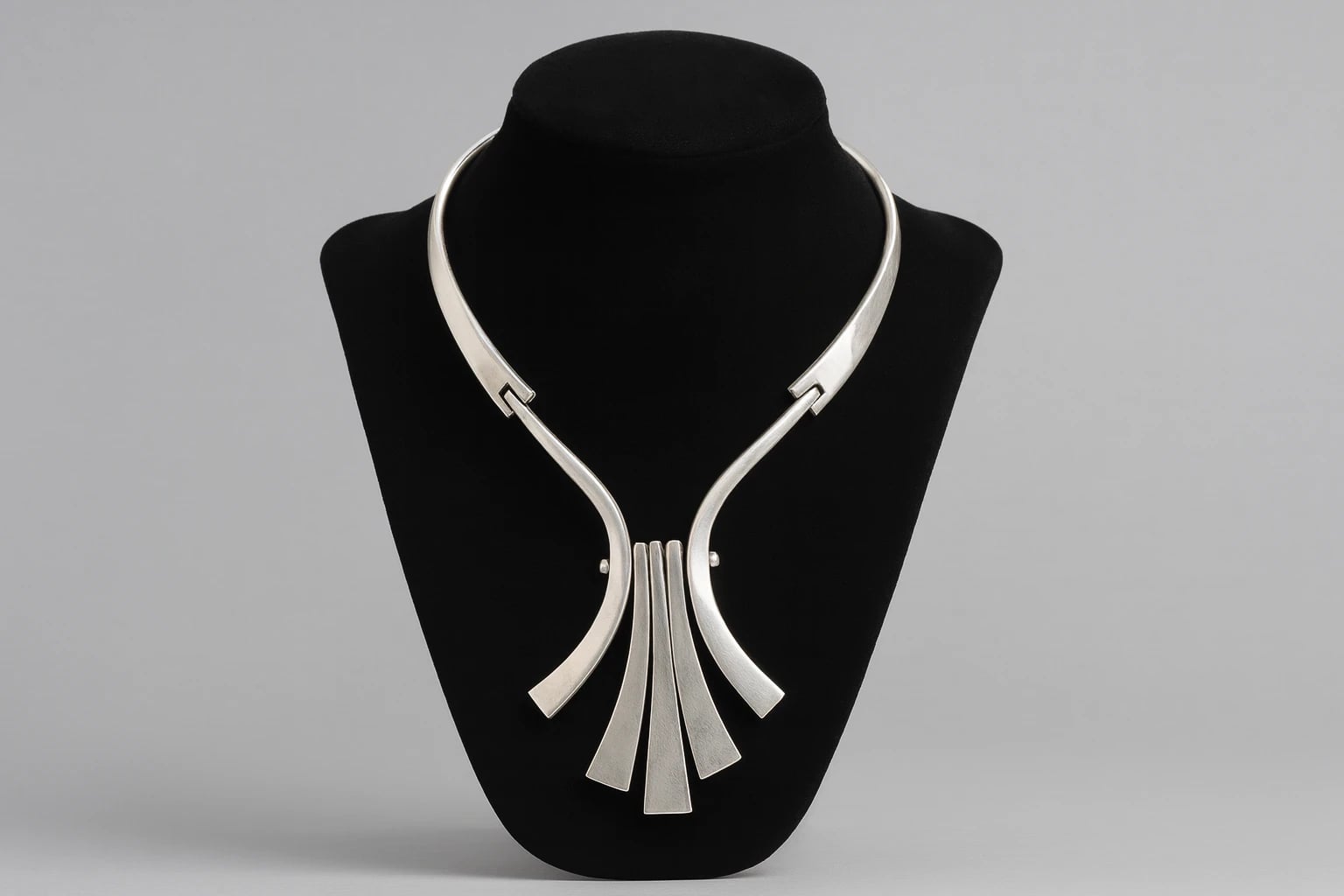
Modernist Sterling Necklace
1956 or later
Silver