Saves instantly, no account needed. Already a member? Sign in.
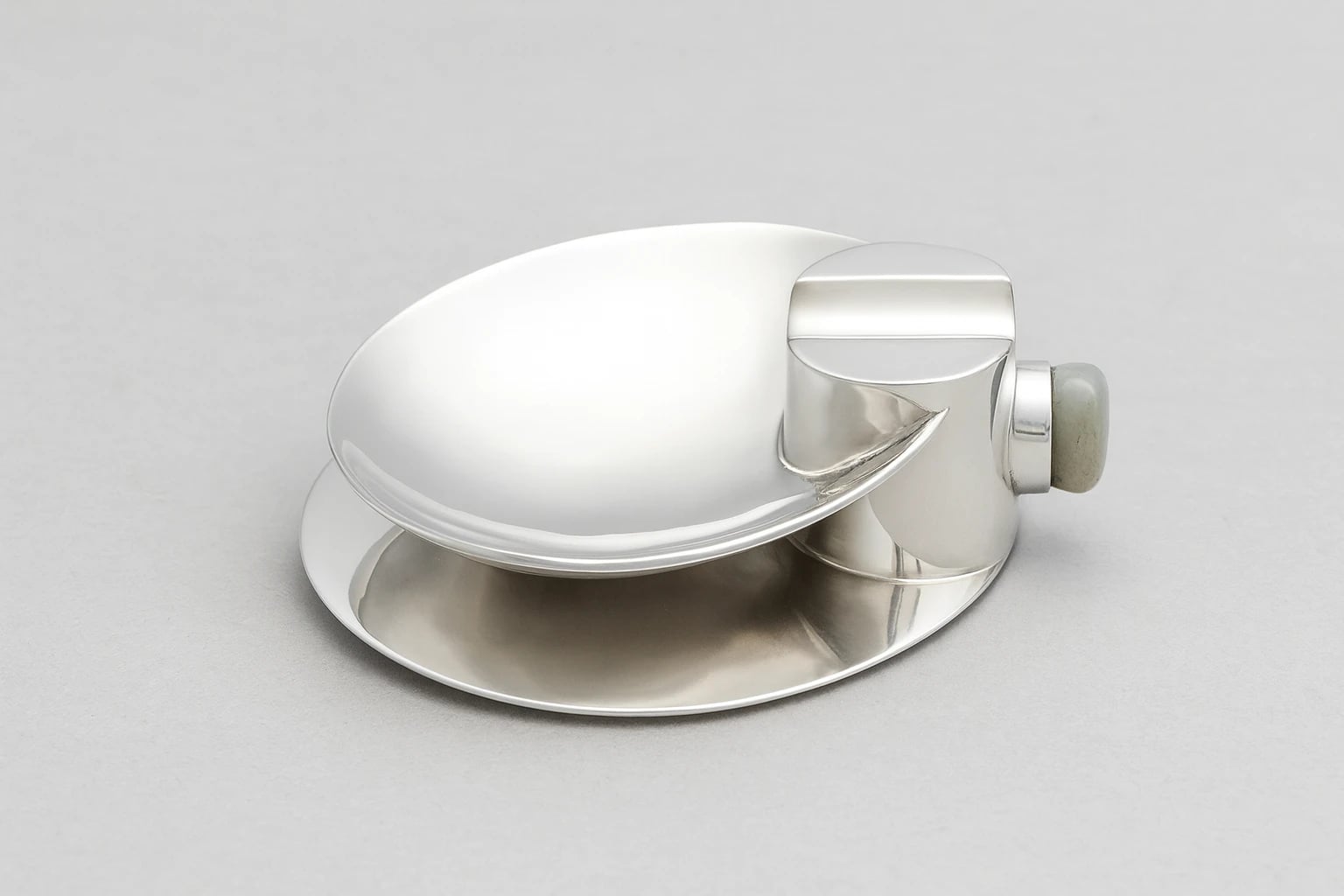
A round ashtray raised on a pedestal and set with inset azur malachite, this piece carries the banded blue-green stone into Spratling's hollowware during his second design period. The malachite, one of the semiprecious materials he favored in these years and explored in his "North Star" pieces, supplies a jewel-like accent to a functional silver form (Morrill, p. 66).
The pedestal lifts the dish and gives the object a small architectural presence, while the inset stone reads as a single point of color against the silver. It is the same disciplined pairing of stone and metal that runs through Spratling's second-period jewelry, here applied to a tabletop object.
A drawing of a similar ashtray design appears in the William Spratling Folio of Drawings, connecting the piece to Spratling's own design process. It is recorded in El Arte en la Vida Diaria: Exposición de Objetos de Buen Diseño Hechos en México and in Phyllis Goddard's Spratling Silver: A Field Guide.
With that documentation and its inset stone, the ashtray is a well-anchored example of Spratling's second-period hollowware. Pieces combining malachite with silver hollowware come to market only occasionally.
Museum of Mexican Silver. “Azur Malachite Pedestal Ashtray.” Catalog no. MoMS-000443. https://museumofmexicansilver.com/pieces/spratling-13
See something wrong with this record? Suggest a correction and the piece details fill in automatically.
William Spratling
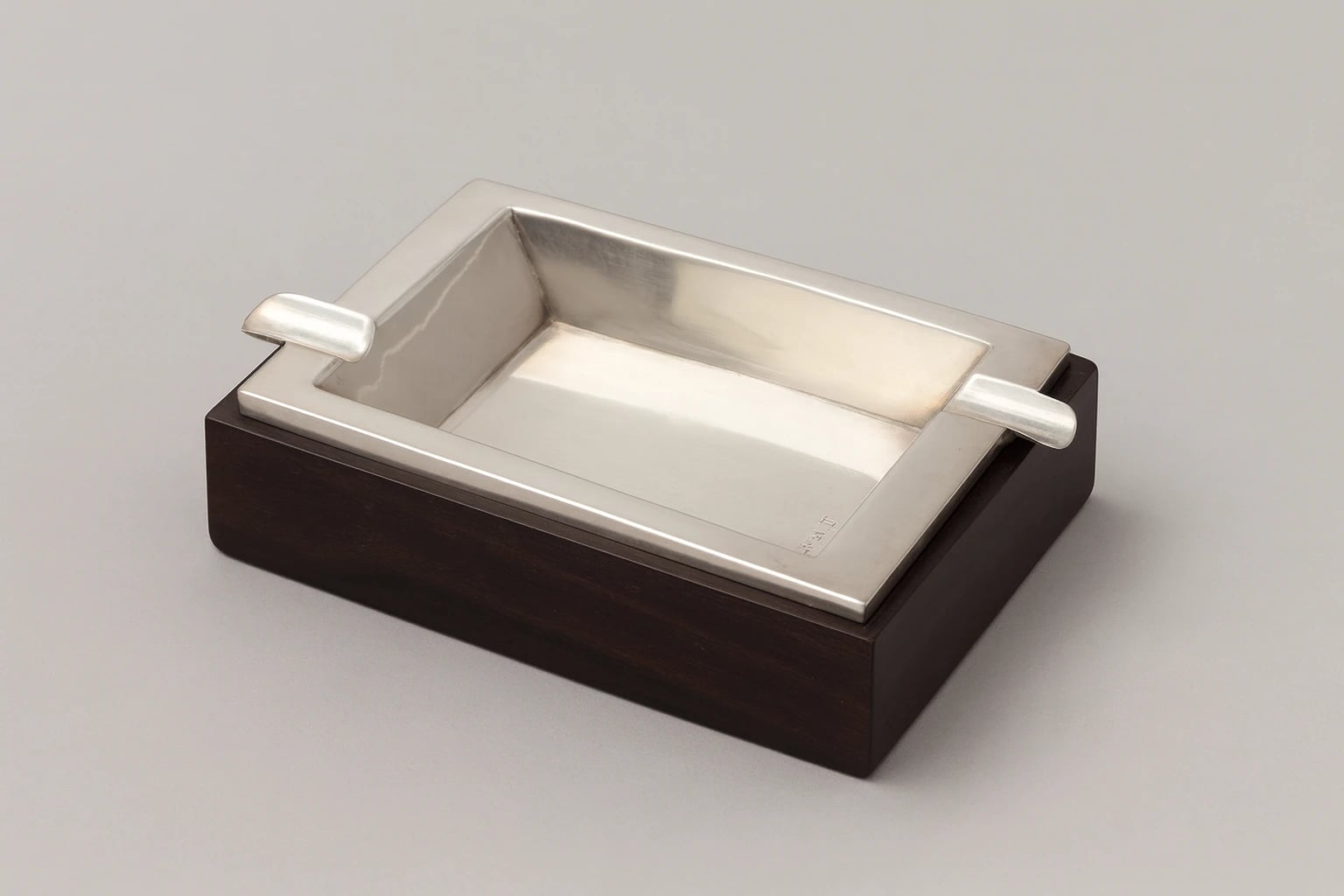
Rectangular Rosewood Ashtray
First Design Period: 1931 - 1946
Silver