Saves instantly, no account needed. Already a member? Sign in.
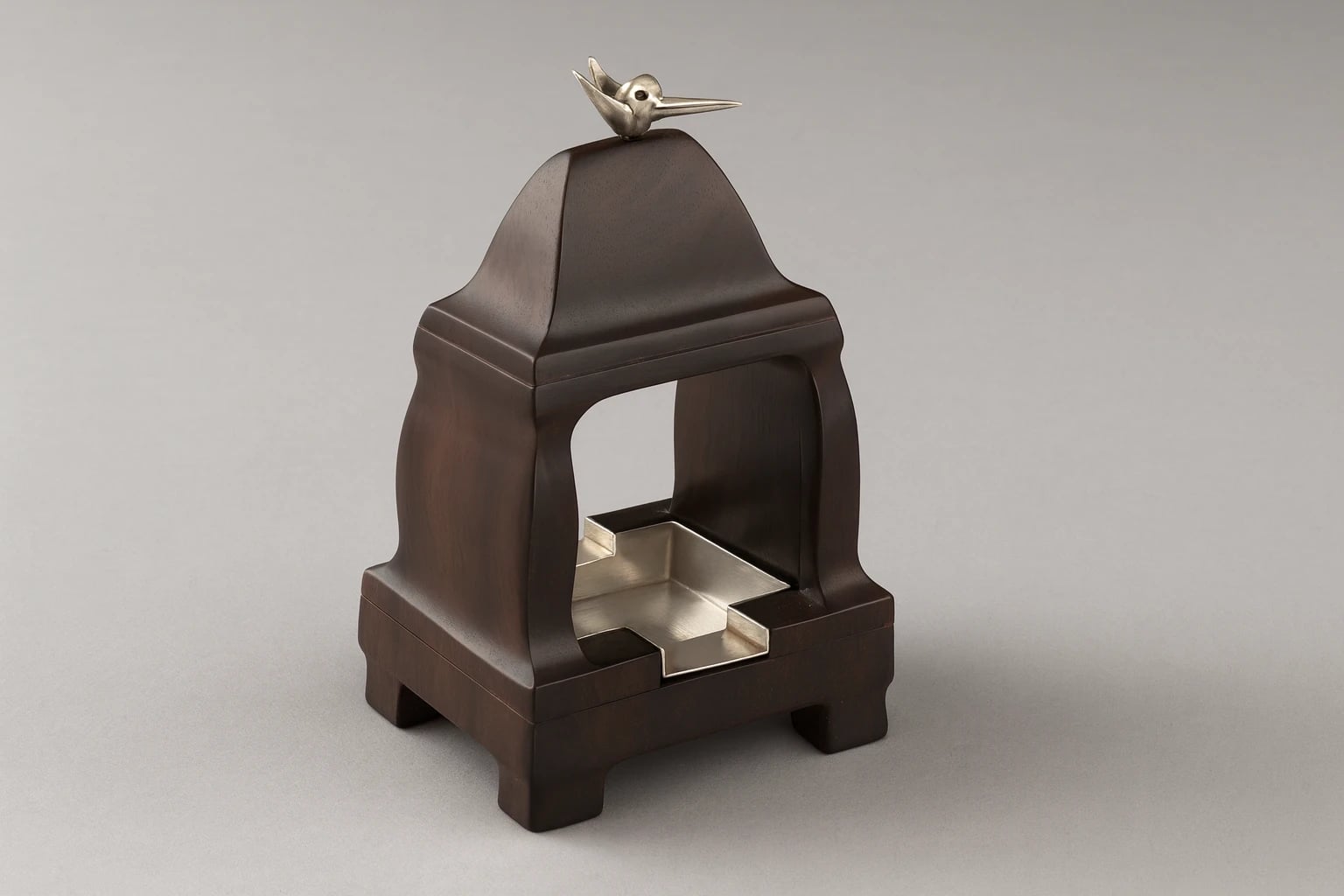
A rosewood temple form fitted with a silver inset ashtray and topped by a silver bird, this is one of Spratling's more singular objects, described by Marguerite Banda as one of his unique pieces. The architectural temple shape gives the object real sculptural ambition, far beyond the function of an ashtray, and the perched silver bird completes it as a small monument in wood and metal.
The form has a documented source of inspiration. The book "Mezcala: Ancient Mexican Sculpture" by Miguel Covarrubias, with notes by Spratling, includes a picture of a miniature temple with a turret of dark green stone that may have inspired this piece. That connection ties the object directly to Spratling's deep engagement with Mexico's ancient art, the same engagement that ran through his pre-Columbian-inspired designs.
The combination of rosewood and silver places the piece in Spratling's third design period, when he set wood and metal in deliberate dialogue across his hollowware. The temple form, though, is exceptional rather than typical of that production.
The object is recorded in Cederwall and Riney's Spratling Silver, in Penny Morrill's William Spratling and the Mexican Silver Renaissance: Maestros de Plata, and in Phyllis Goddard's Spratling Silver: A Field Guide. With its documented inspiration and its standing as a noted unique piece, it comes to market only on rare occasions.
Museum of Mexican Silver. “Rosewood Temple with Silver Inset Ashtray.” Catalog no. MoMS-000742. https://museumofmexicansilver.com/pieces/spratling-14
See something wrong with this record? Suggest a correction and the piece details fill in automatically.
William Spratling
Square Rosewood Ashtray
First Design Period: 1931 - 1946
Silver