Saves instantly, no account needed. Already a member? Sign in.
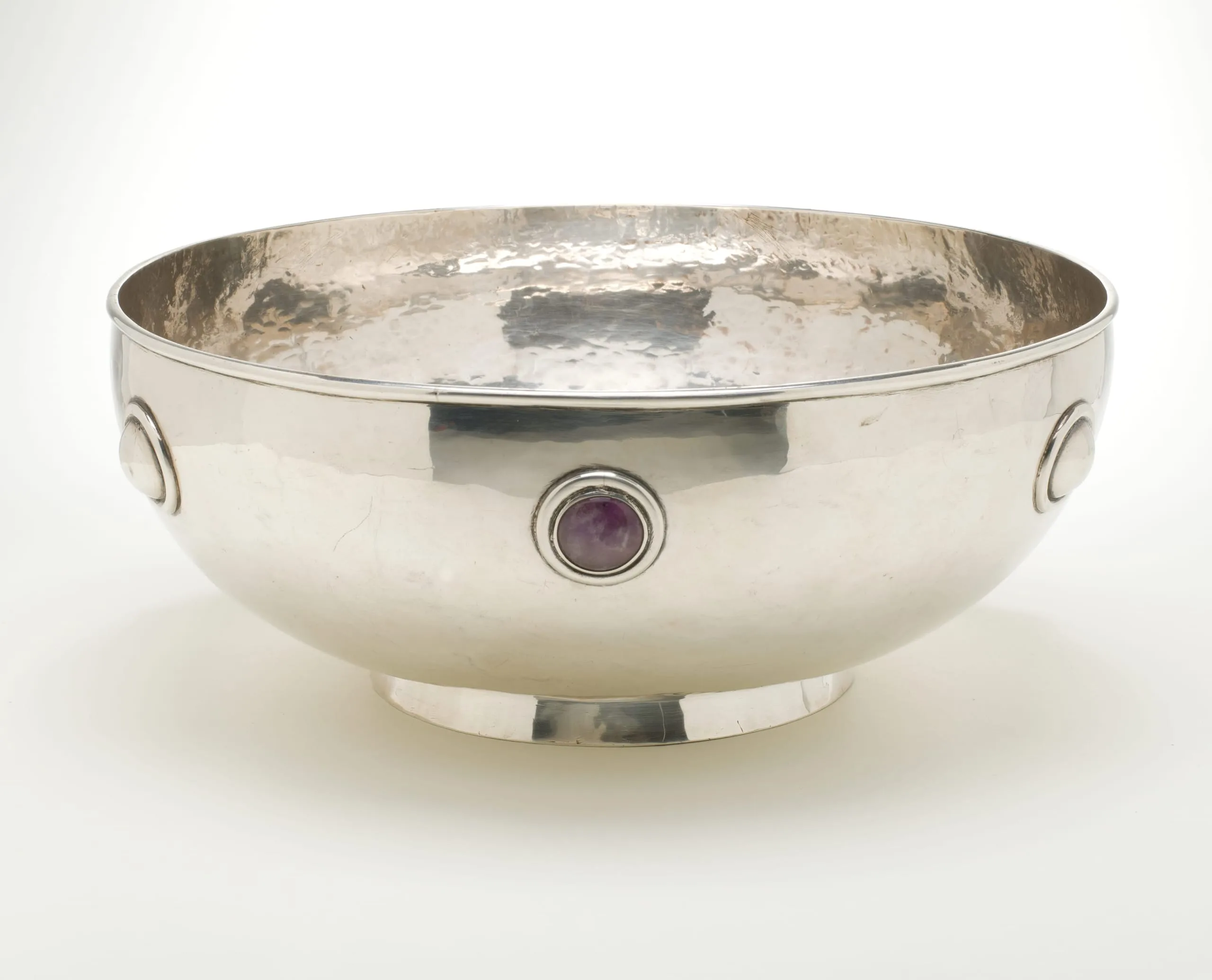
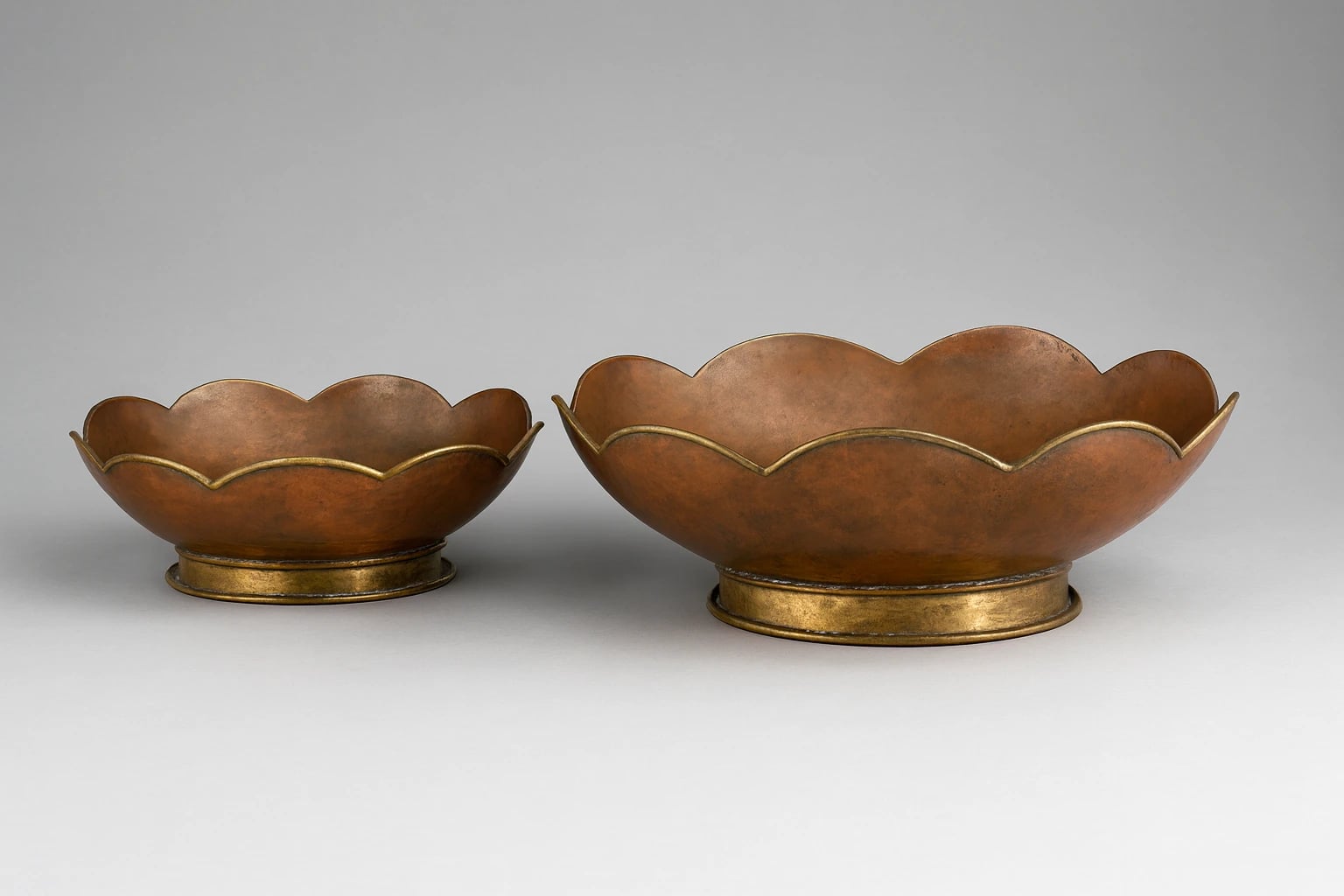
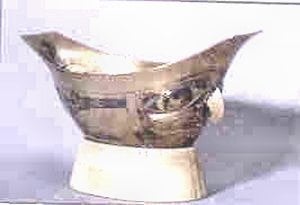
This gilded-silver bowl with an ivory base survives from an unusual episode in Spratling's career: the project to build a viable crafts industry for Alaska Natives. Spratling described it as "Tlingit motif, ivory base, silver, gilded," and it is now in the collection of the Alaska State Museum in Juneau (Catalog No. 97-15-1).
In 1945 Spratling was brought to Alaska through the efforts of René d'Harnoncourt and Governor Ernest Gruening to devise a financially viable crafts industry for Alaska Natives, producing a report dated October 1, 1945 from Taxco el Viejo (Morrill, p. 28). Over a six-month commission he was charged with producing some two hundred new models for future production by the Natives, made in materials many of which were native to Alaska, ivory, lapis lazuli, baleen, abalone, jade, gold, and silver (Morrill, pp. 64, 66). The seven Alaskans trained in Taxco in 1949, but the workshops and museum envisioned by Spratling, Gruening, and d'Harnoncourt were lost in bureaucracy (Morrill, p. 28).
The bowl is therefore a rare surviving prototype from that aborted program, the Tlingit motif and ivory answering Spratling's conviction that Alaskan makers could find a market for fine objects in beaten gold and yellow ivory rather than mass-produced curios (Morrill, p. 67). It is recorded in Penny Morrill's William Spratling and the Mexican Silver Renaissance.
Few of these Alaskan prototypes are around; this one entered the museum's collection in 1997 from a Juneau family, authenticated with Morrill's help.
Museum of Mexican Silver. “Alaskan Bird Bowl.” Catalog no. MoMS-000483. https://museumofmexicansilver.com/pieces/spratling-1540
See something wrong with this record? Suggest a correction and the piece details fill in automatically.
William Spratling
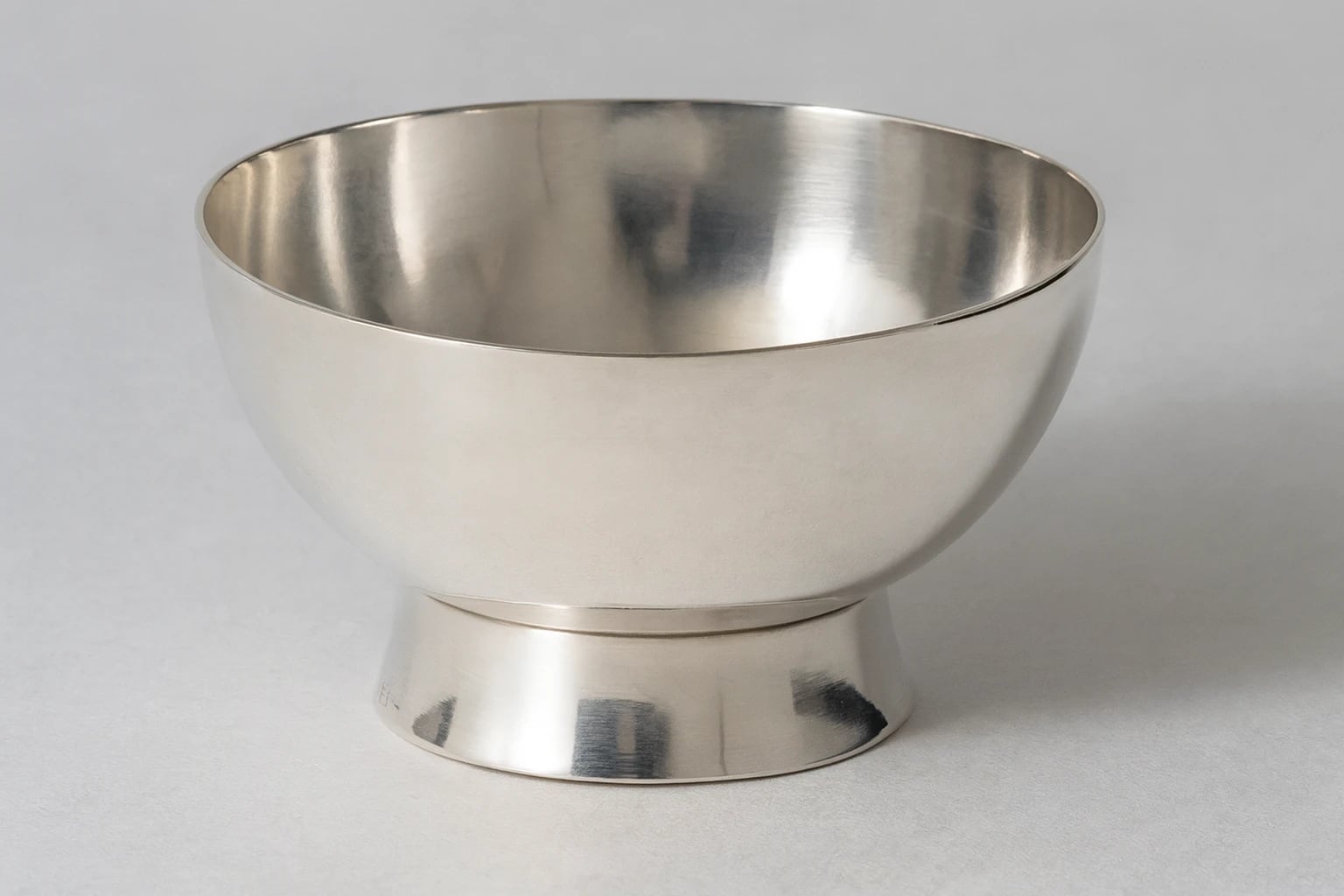
Pedestal Silver Bowl
Third Design Period: 1951 - 1967
Silver