Saves instantly, no account needed. Already a member? Sign in.
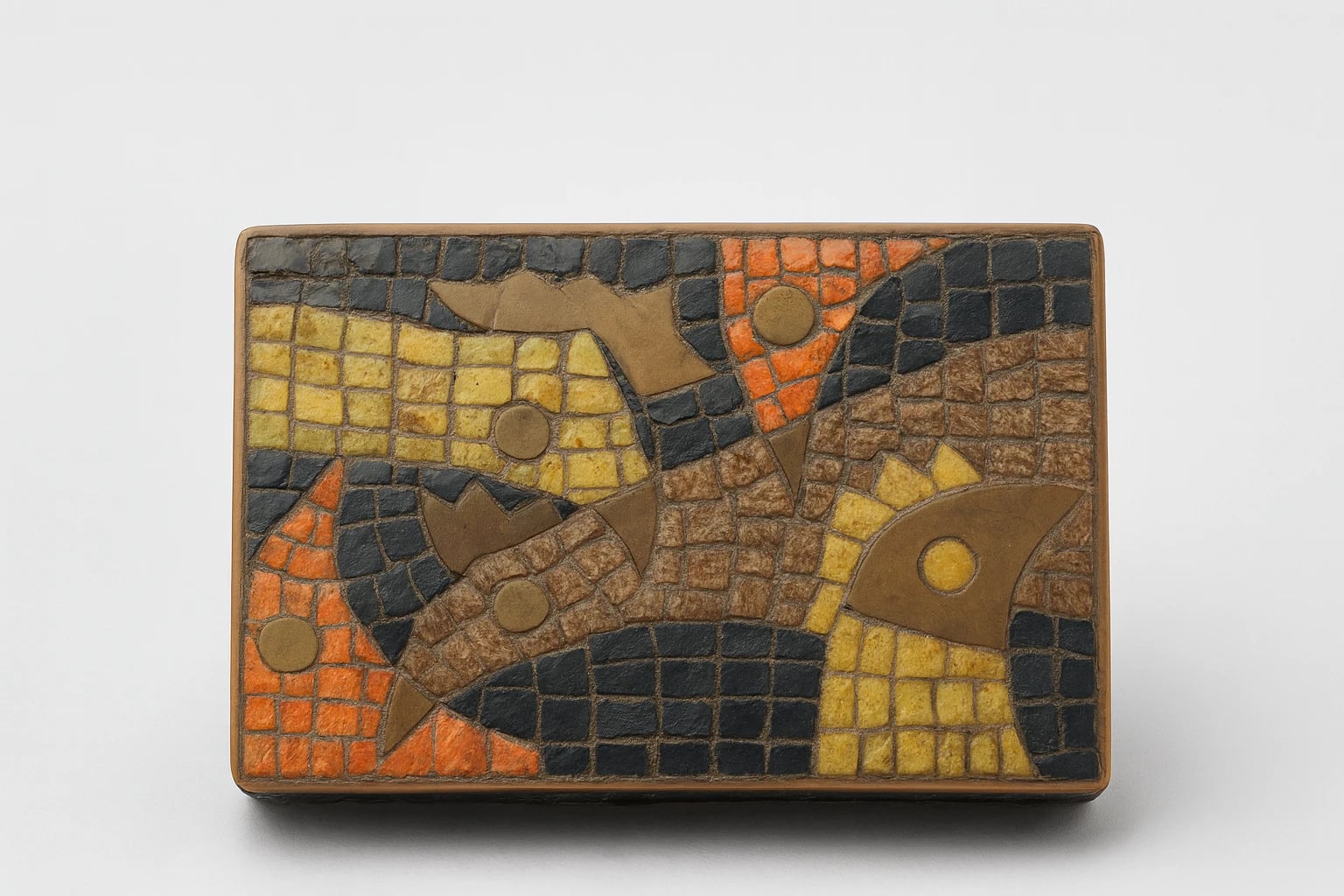
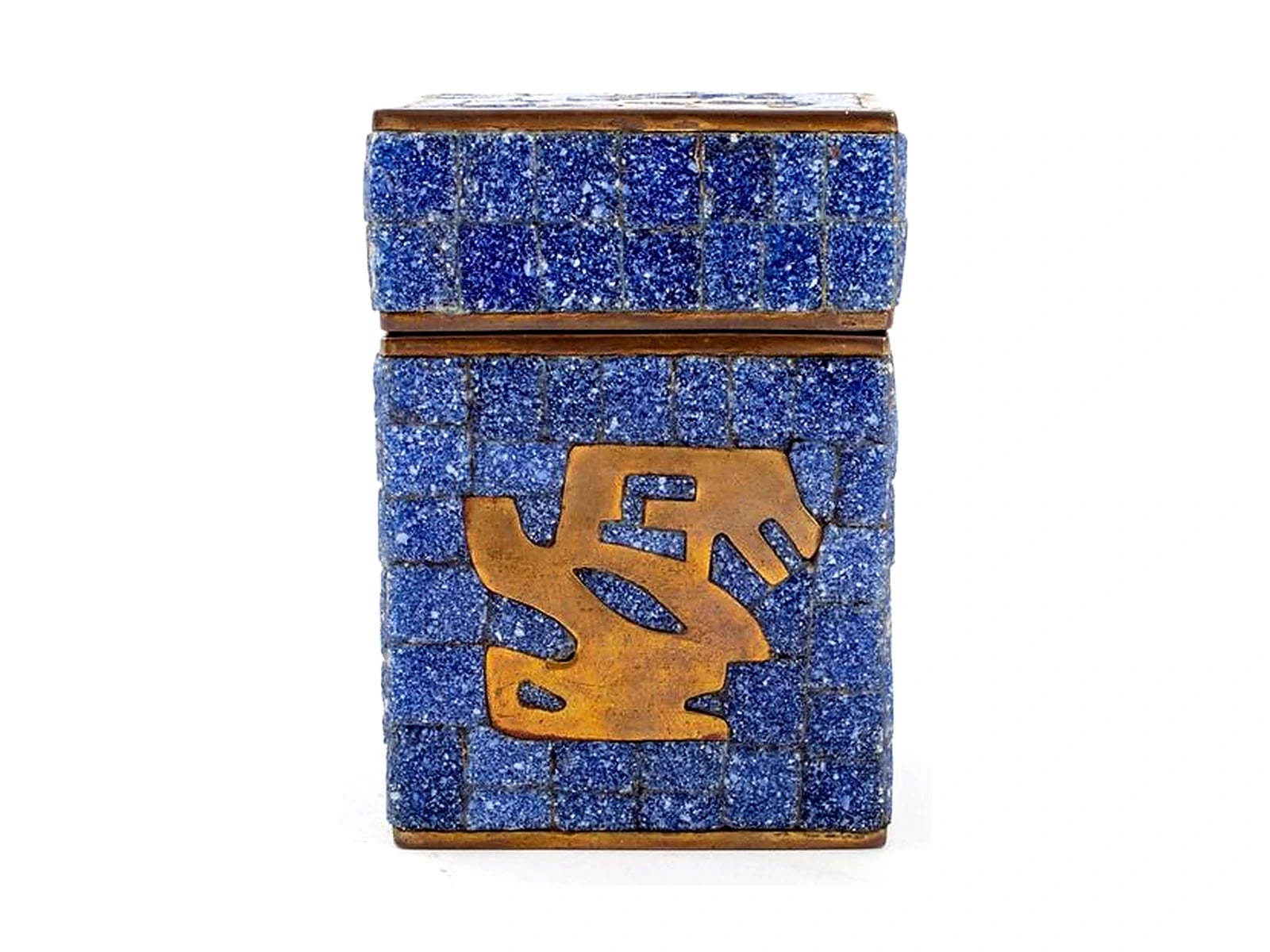
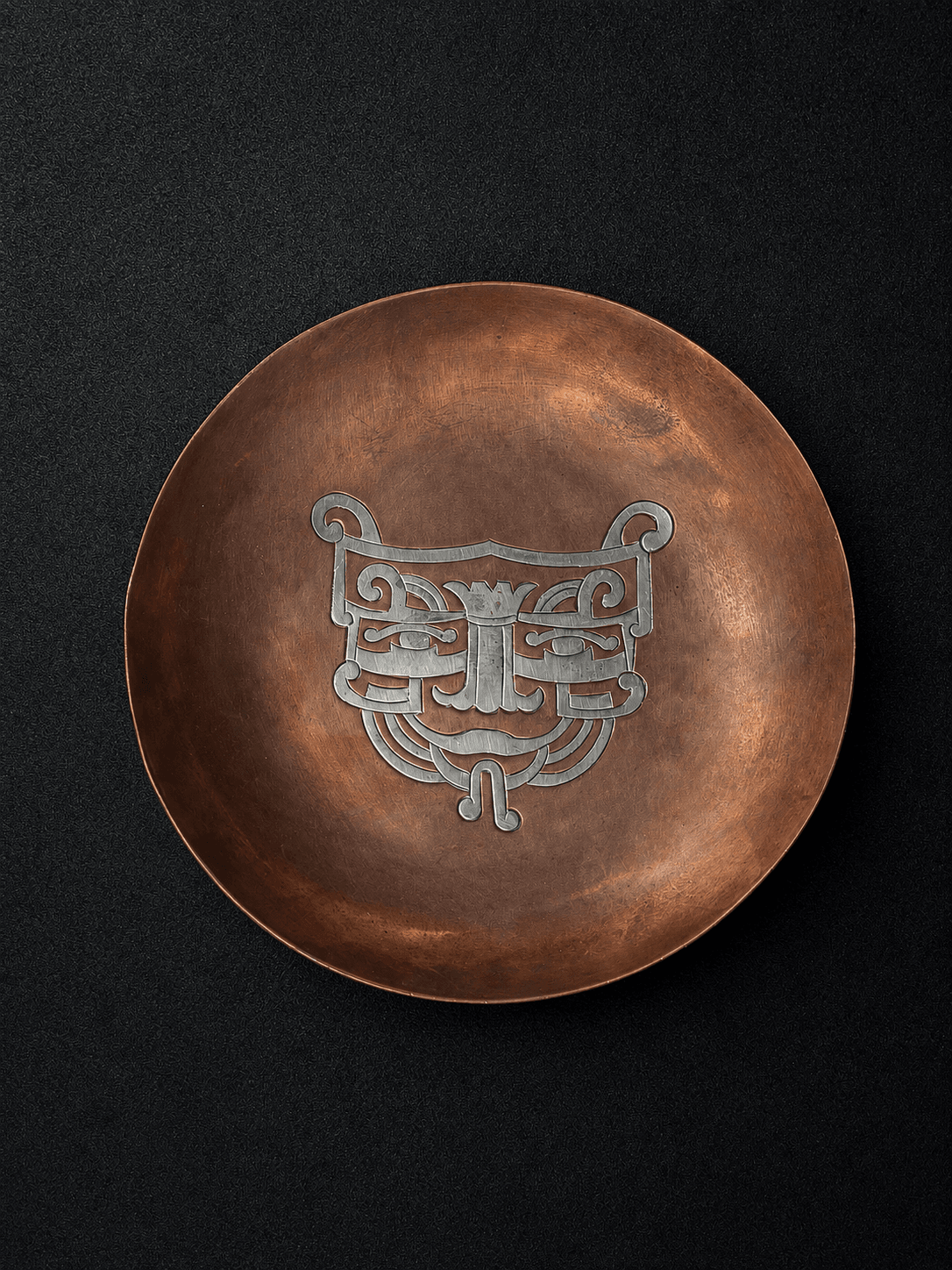
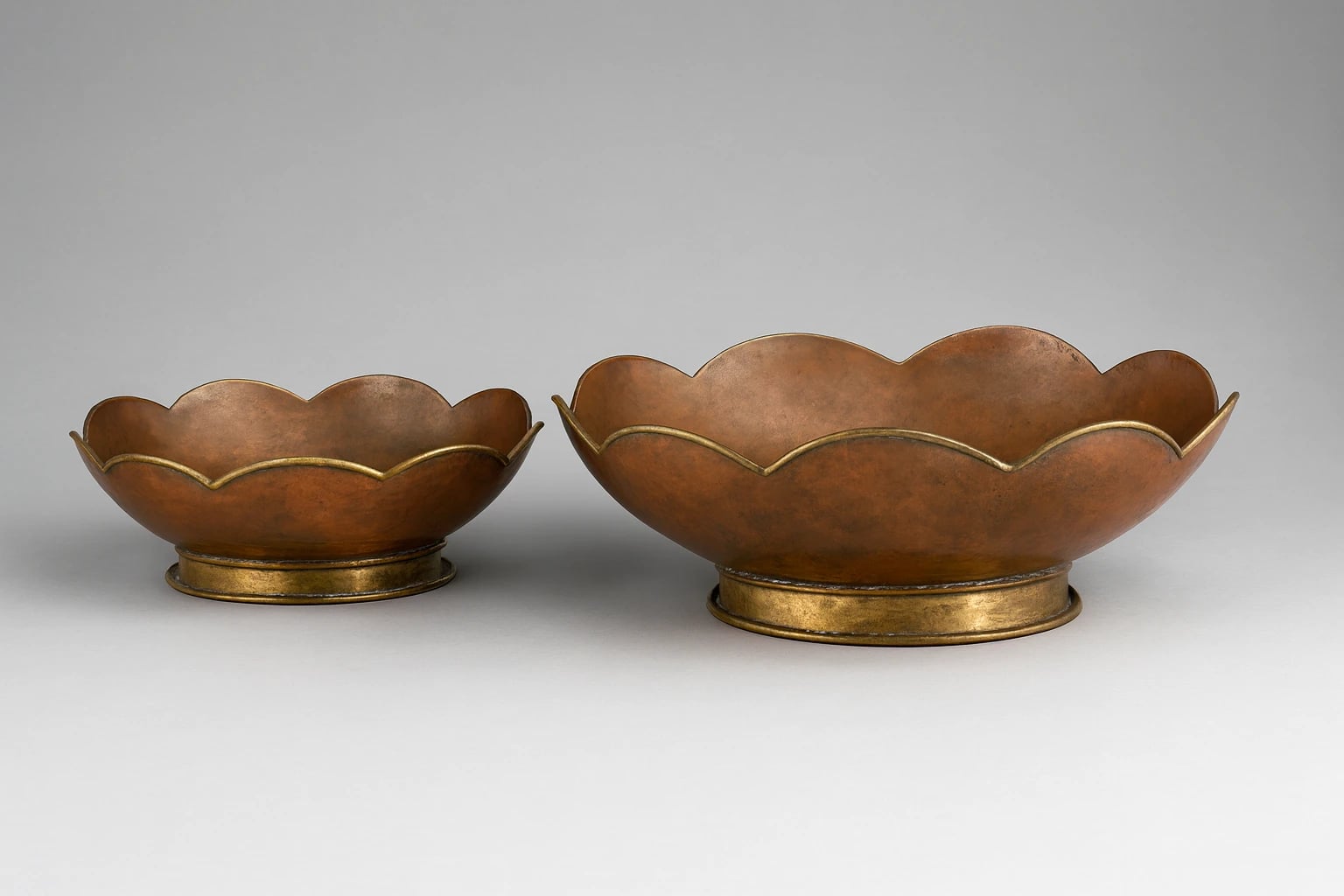
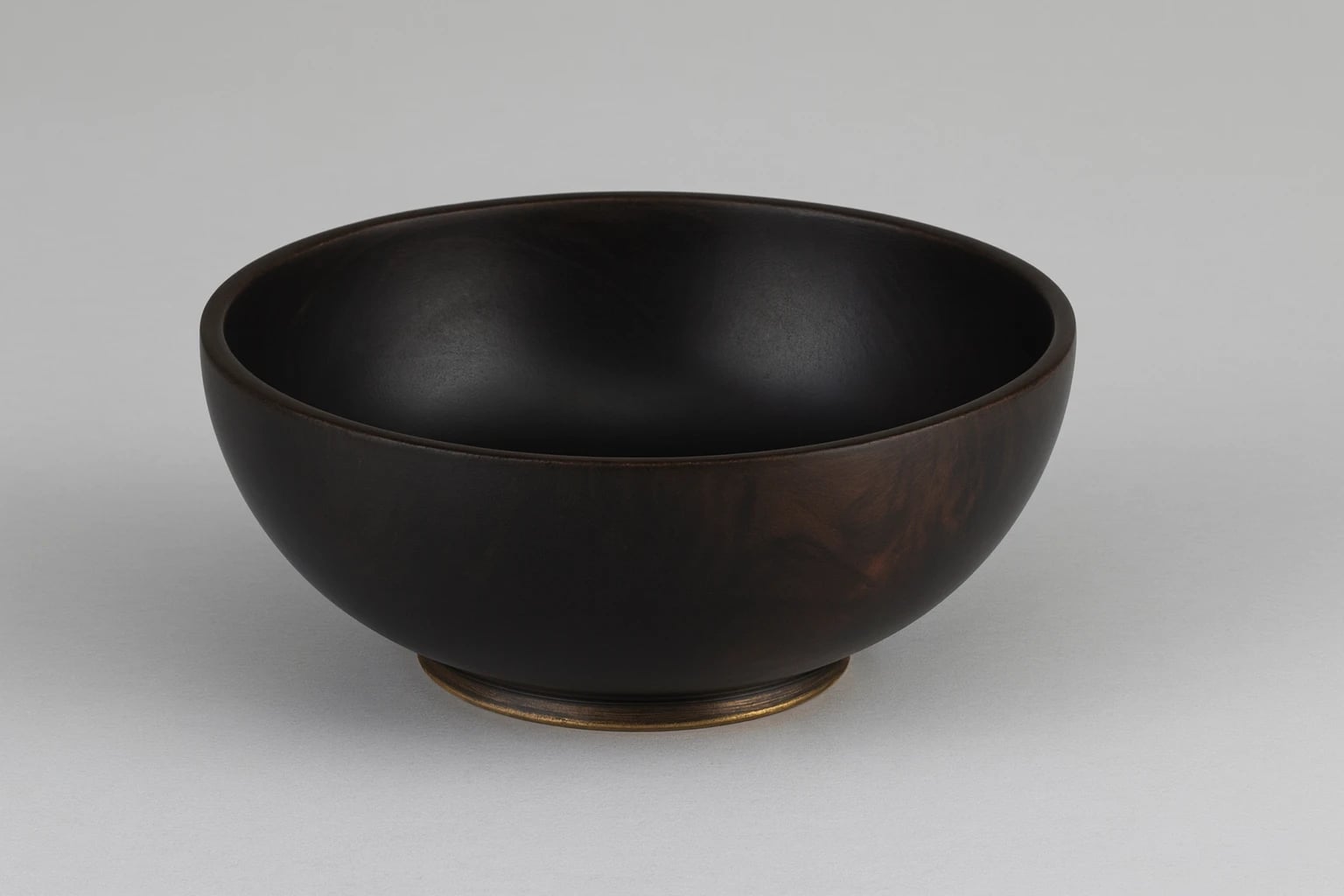
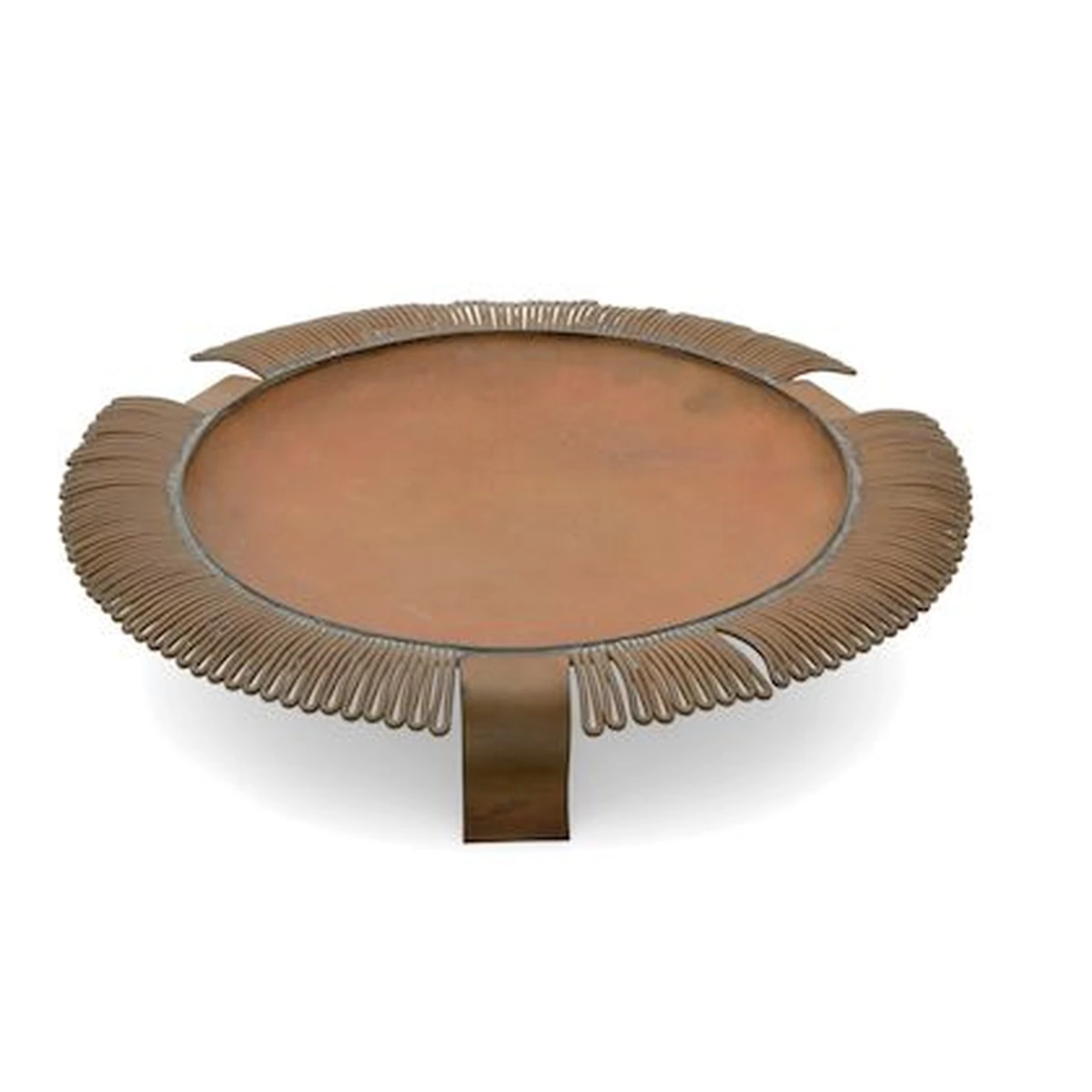
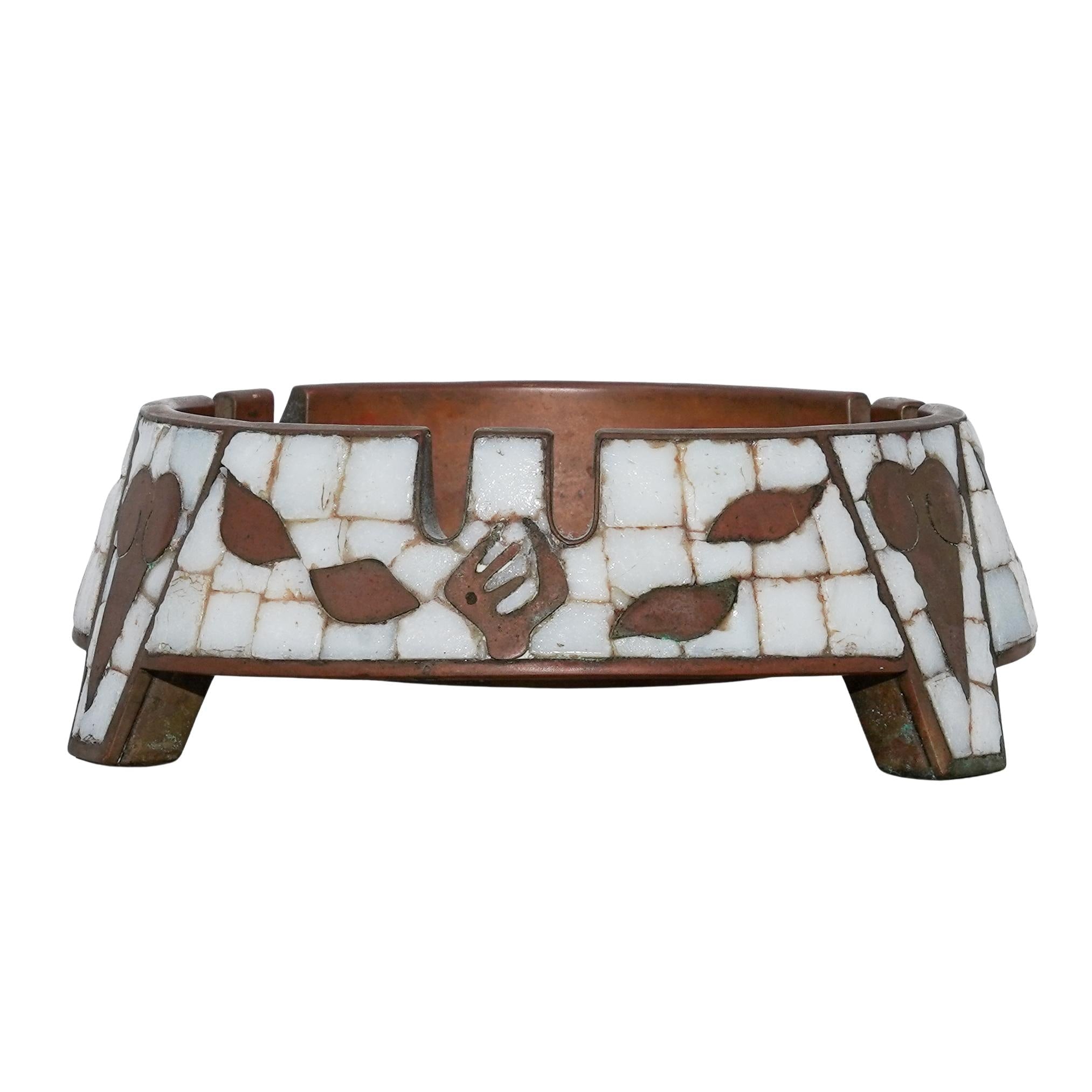
Stone mosaic applied to brass is the material register most thoroughly documented in the Terán scholarship, and this footed bowl represents that practice in a form built for display. Davis and Pack, writing in Mexican Jewelry, recorded the studio's orientation directly: Terán was "combining metal with mosaic and has a large workshop busy turning out boxes, trays, and other decorative objects" (cited in Morrill, Mexican Silver, 1994, p. 206). A footed bowl in brass and stone mosaic sits squarely at the center of that output.
Stromberg notes that Terán's mosaic technique "might be described as a 'bas-relief' application," setting it apart structurally from the flat inlay method that Stromberg elsewhere calls the "Aztec mosaic" — small cut stone pieces bedded flush into a metal ground (Stromberg, Antonio Pineda, 2008, p. 43). Raising the bowl on a foot gives the vessel a presentational weight suited to the display register his studio specialized in, lifting a utilitarian form into something closer to a decorative object meant to be read from across a room.
Terán came out of the founding generation of Los Castillo: a cousin of the brothers who left the Taller de Las Delicias with them in the late 1930s to establish the new workshop (Morrill, Aguilar, 1996, p. 168). He later founded his own studio, and by 1979 it was counted among the leading workshops in Taxco. The footed bowl form in particular is uncommon.
Museum of Mexican Silver. “Mosaic Brass Footed Bowl.” Catalog no. MoMS-001544. https://museumofmexicansilver.com/pieces/teran-bowl-mosaic-brass-footed
See something wrong with this record? Suggest a correction and the piece details fill in automatically.
Salvador Terán
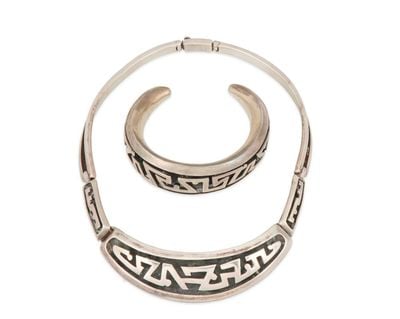
Silver Shadowbox Jewelry Set
1952-1974
Silver