Saves instantly, no account needed. Already a member? Sign in.
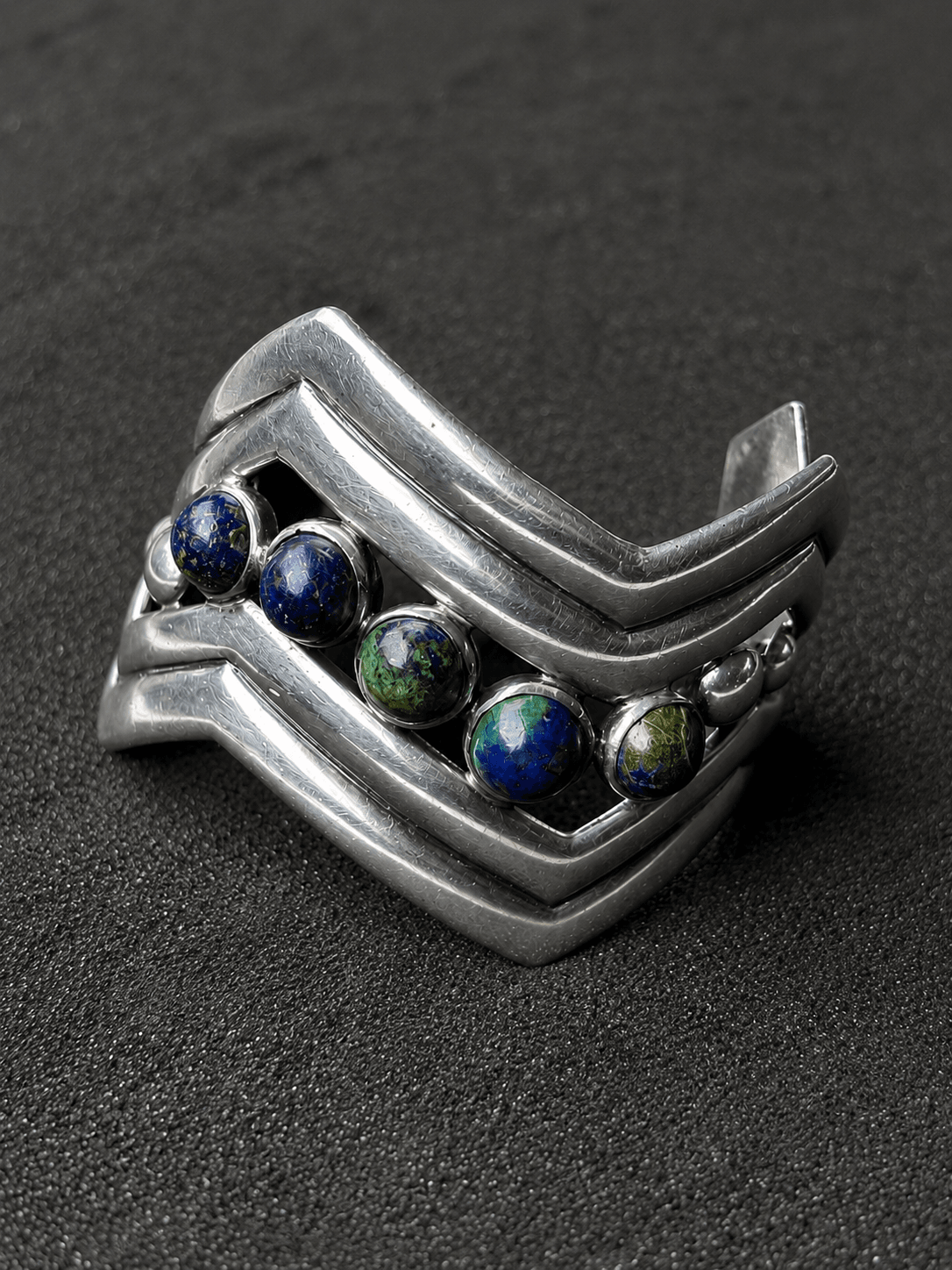
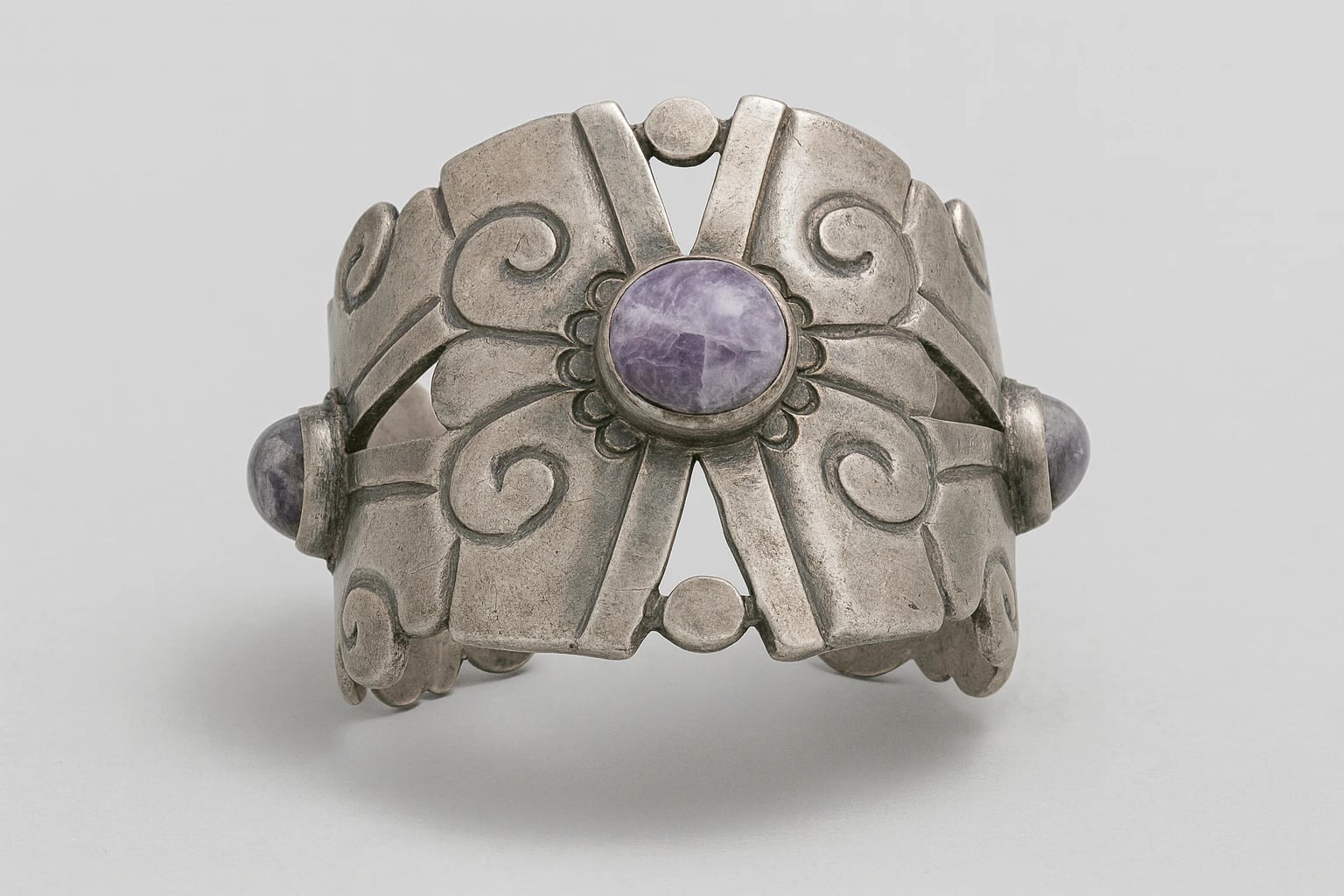
Spratling called this heavy cuff "Nahui Olin," after the Aztec calendar sign for movement, and the design draws its inspiration directly from those Pre-Columbian symbols: flat-chased incised lines and passages of cut-out work shape the band, set with three amethyst cabochons. It is a clear case of Spratling translating an ancient Mexican source into modern wearable form, the kind of Pre-Columbian translation that defined the Las Delicias workshop (Stromberg, p. 27).
From the First Design Period, 1931 to 1946, the cuff was also made without the amethysts, a sign the underlying calendar-derived design carried the piece on its own. The flat chasing is cincelar and the cut-out work calar, the workshop's core techniques for marking and piercing silver (Morrill, p. 15).
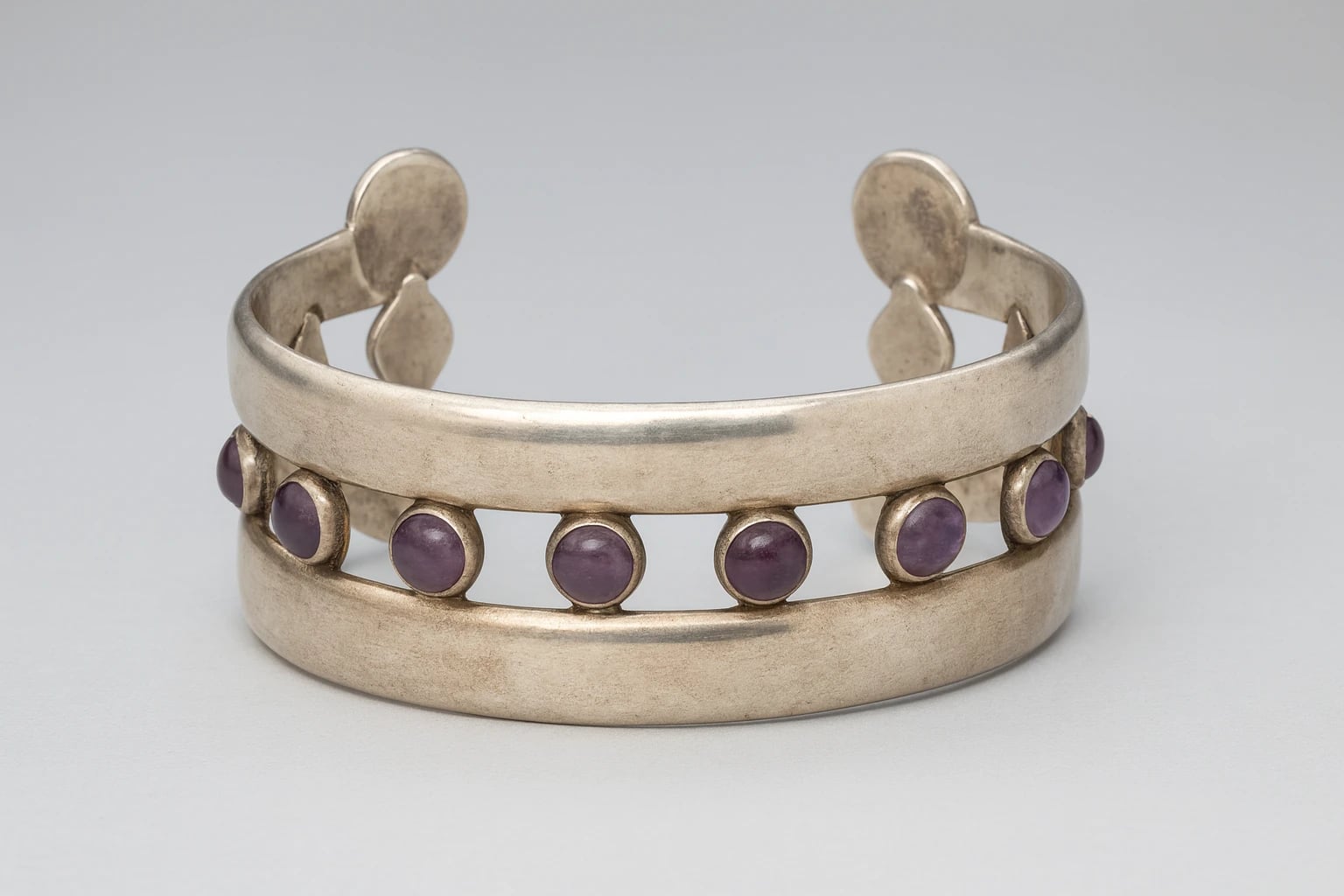
Worked in 980 silver under the joined "WS" mark (Morrill, p. 39), the cuff is recorded in Morrill's Maestros de Plata. Its named design, documented Aztec source, and place in the literature give it standing; the amethyst version, with intact stones and an early mark, is the example to confirm.
Museum of Mexican Silver. “Amethyst Incised Cuff Bracelet.” Catalog no. MoMS-000295. https://museumofmexicansilver.com/pieces/spratling-2984
See something wrong with this record? Suggest a correction and the piece details fill in automatically.
William Spratling
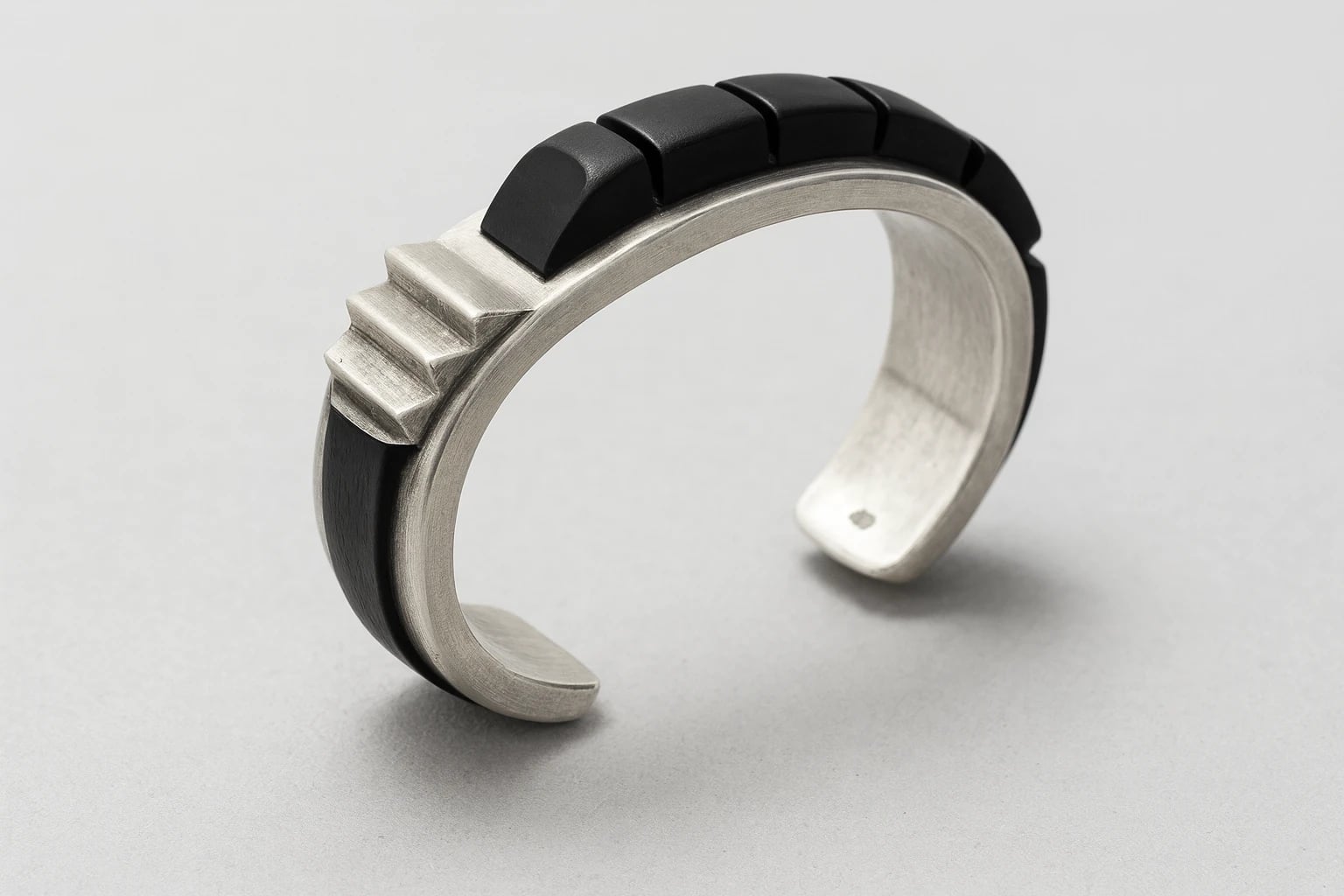
Stained Rosewood and Silver Cuff Bracelet
Third Design Period: 1951 - 1967
Silver