Saves instantly, no account needed. Already a member? Sign in.
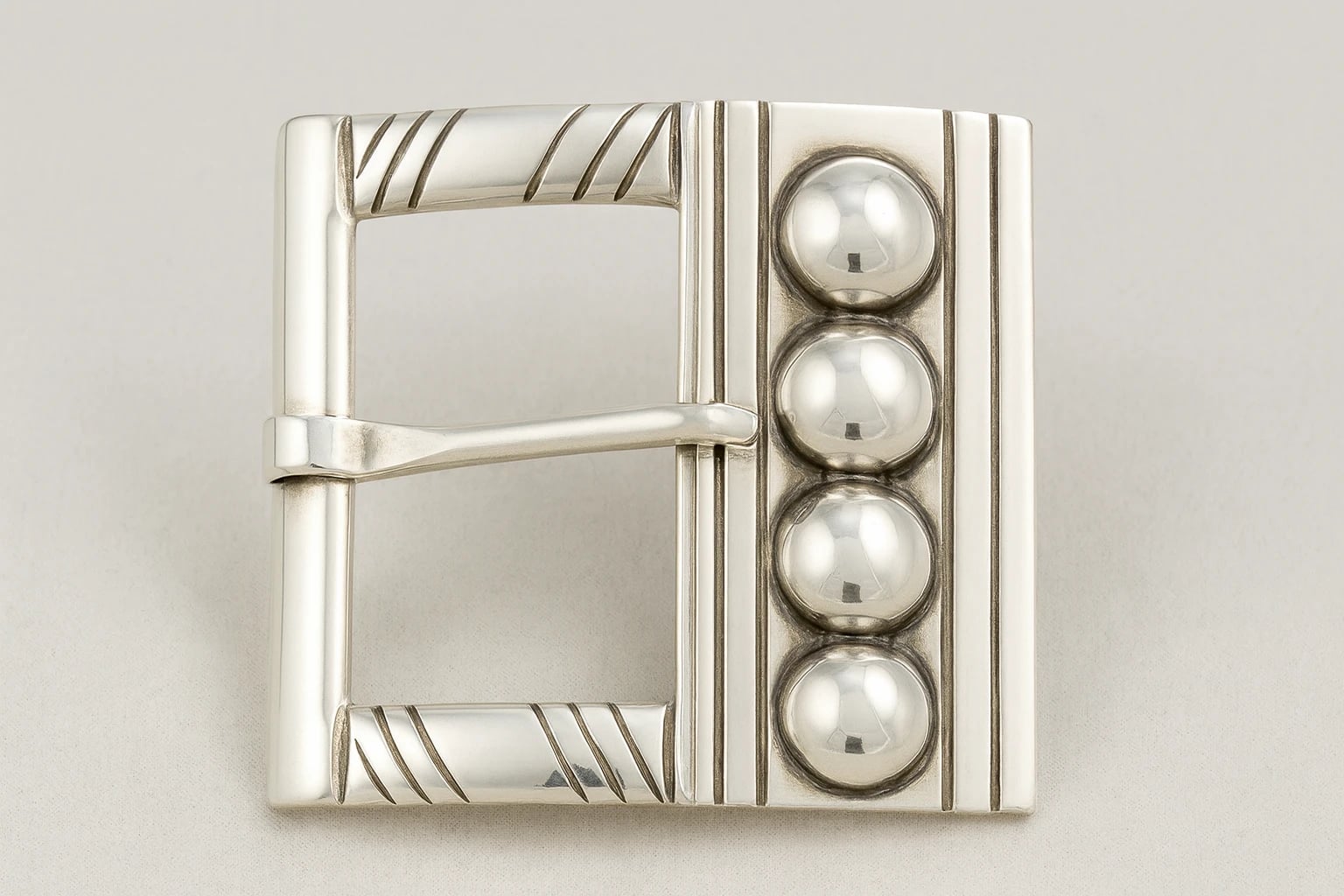
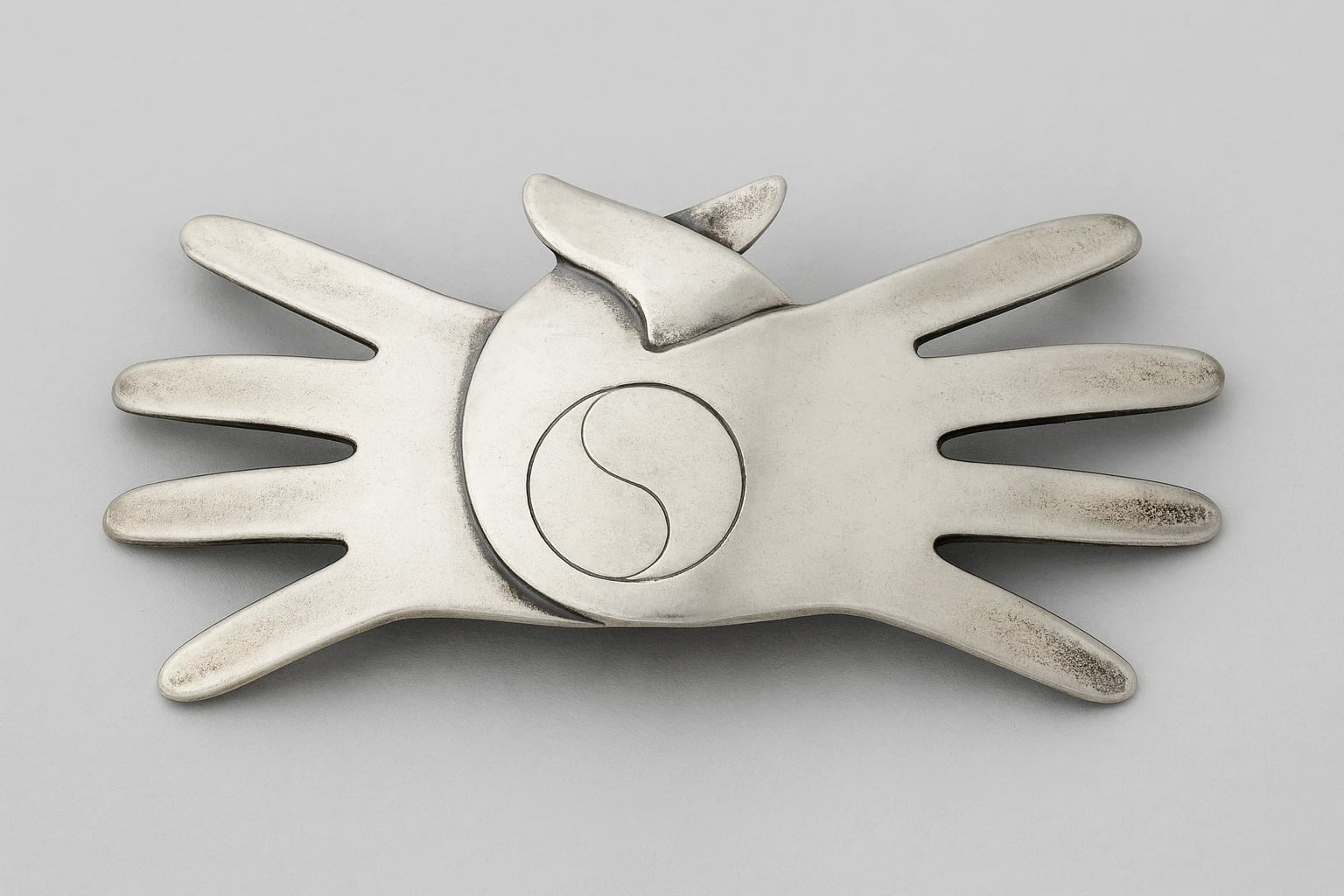
Two open hands with their thumbs entwined form the whole of this silver buckle, a Second Design Period (1949 to 1951) design that turns a human gesture into ornament. Spratling produced it both in all silver and in a silver-and-tortoise-shell version, so the same figural idea was carried across two material treatments.
Figural and emblematic buckles run through Spratling's output from the beginning. Morrill records that heavy silver buckles were among the first things his workshop made, and that early buckle designs took motifs as "a point of departure" rather than literal copies (Morrill, Mexican Silver, 1994, p. 39). The clasped hands fit that pattern, a single legible image worked into a wearable plate.
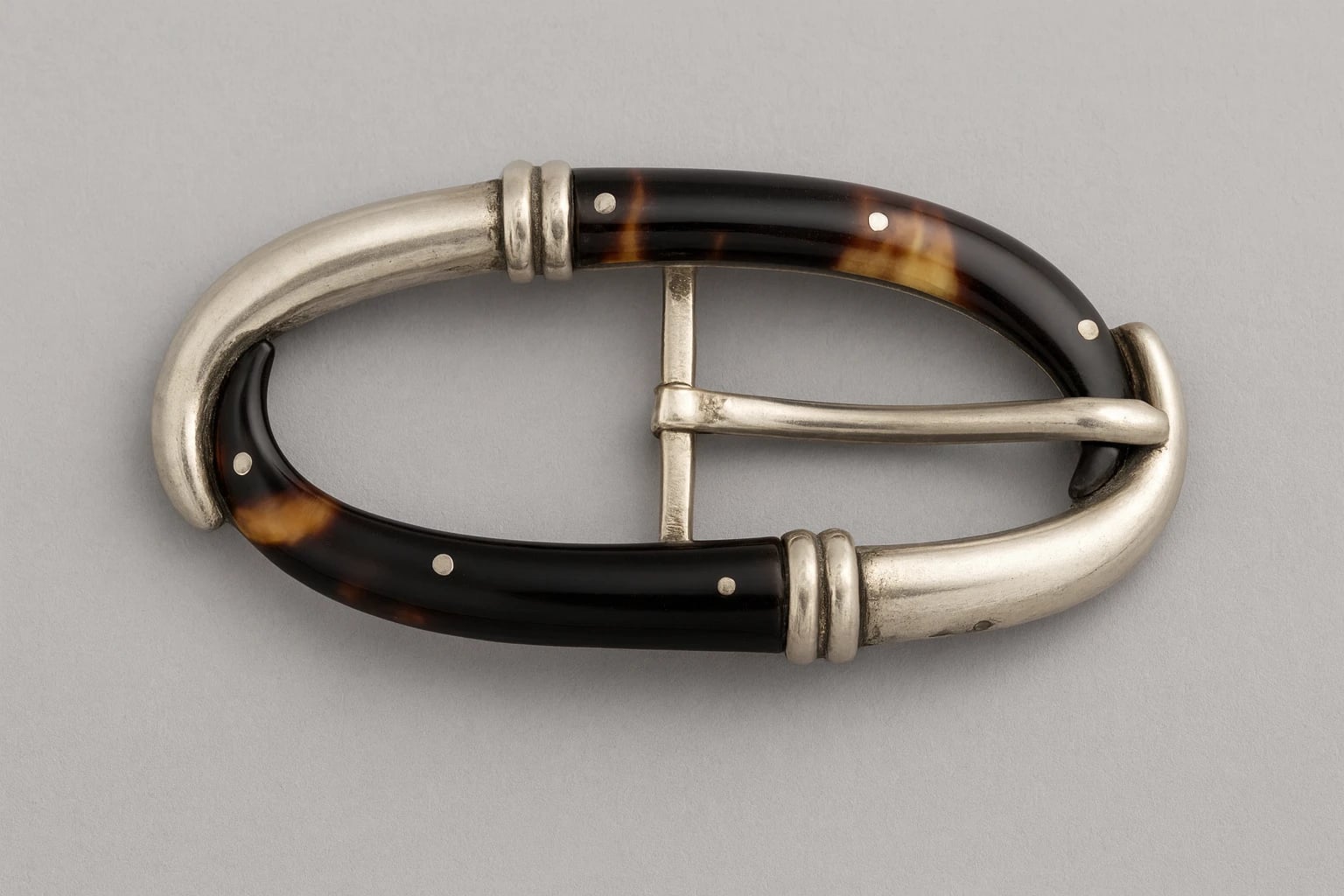
The all-silver treatment lets the modeling of the hands carry the design, while the tortoise-shell variant introduces the kind of material contrast Spratling favored in this period (Morrill, p. 73). Either way the buckle reads as a piece of sculpture in miniature rather than a decorated blank.
Buckles from this brief two-year period appear at auction only occasionally, and a figural one like this, with its documented dual-material production, is the kind of piece collectors track closely within Spratling's catalogue.
Museum of Mexican Silver. “Entwined Hands Buckle.” Catalog no. MoMS-000538. https://museumofmexicansilver.com/pieces/spratling-3095
See something wrong with this record? Suggest a correction and the piece details fill in automatically.
William Spratling
Croissant Shaped Belt Buckle
Third Design Period: 1951 - 1967
Silver