Saves instantly, no account needed. Already a member? Sign in.
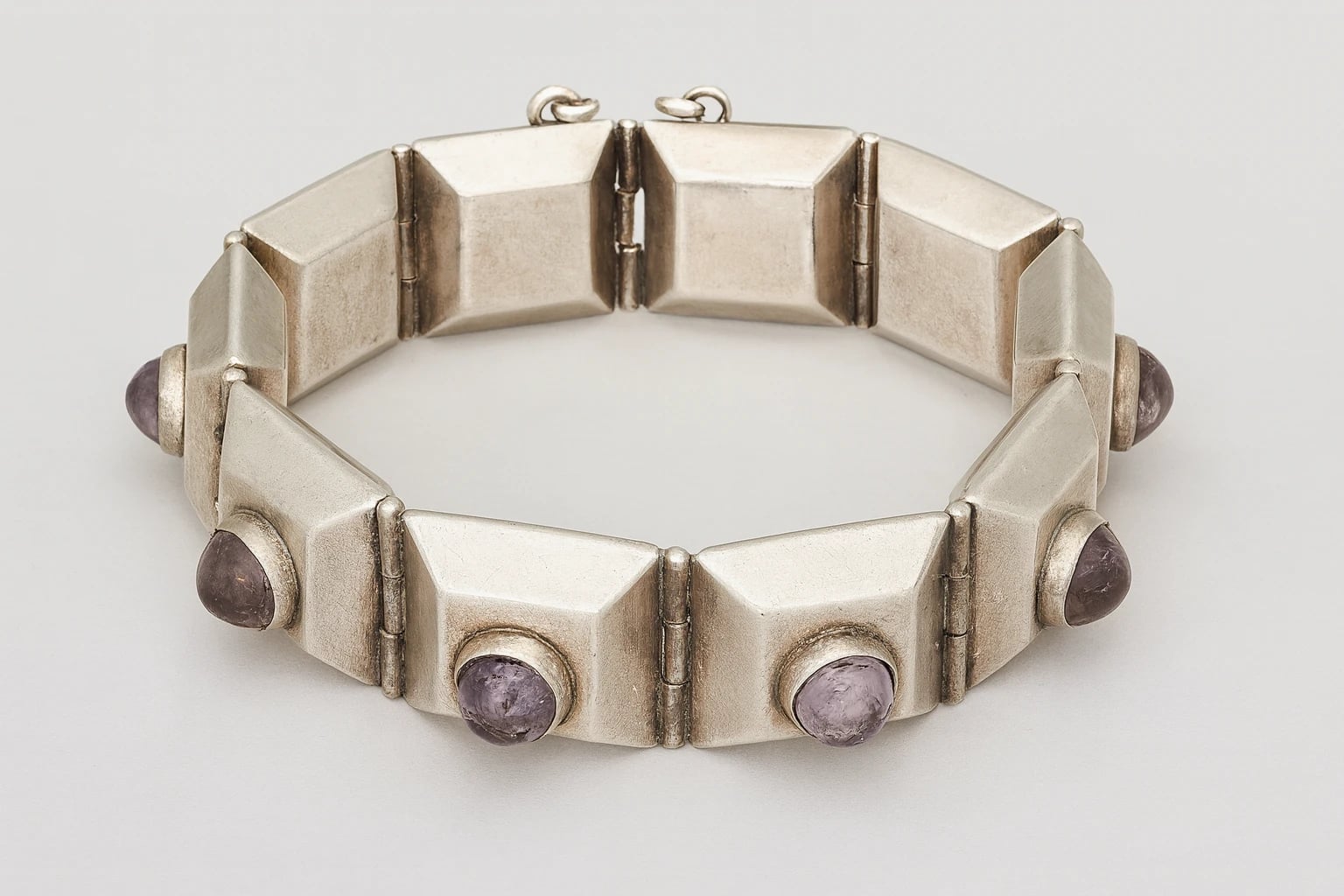
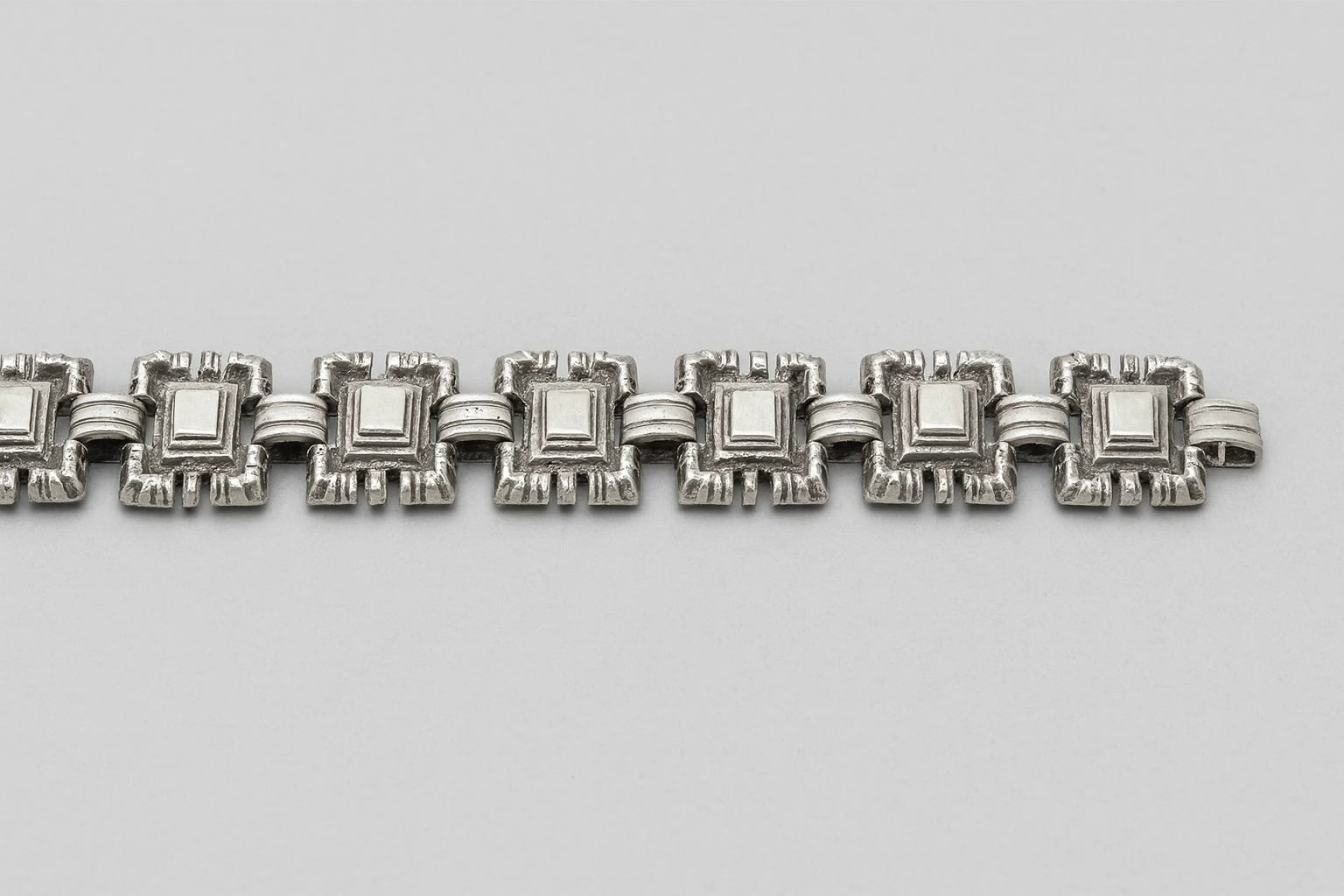
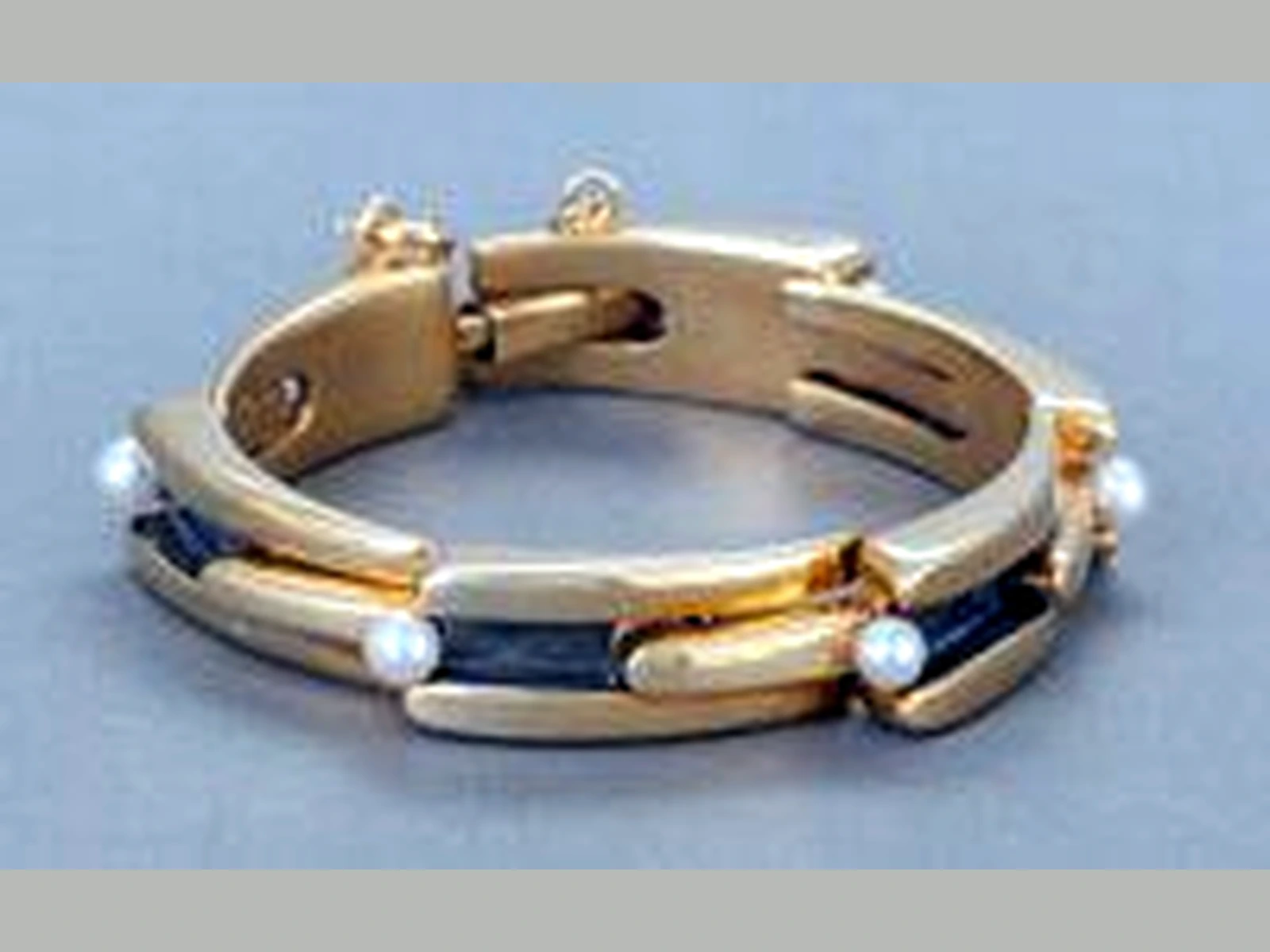
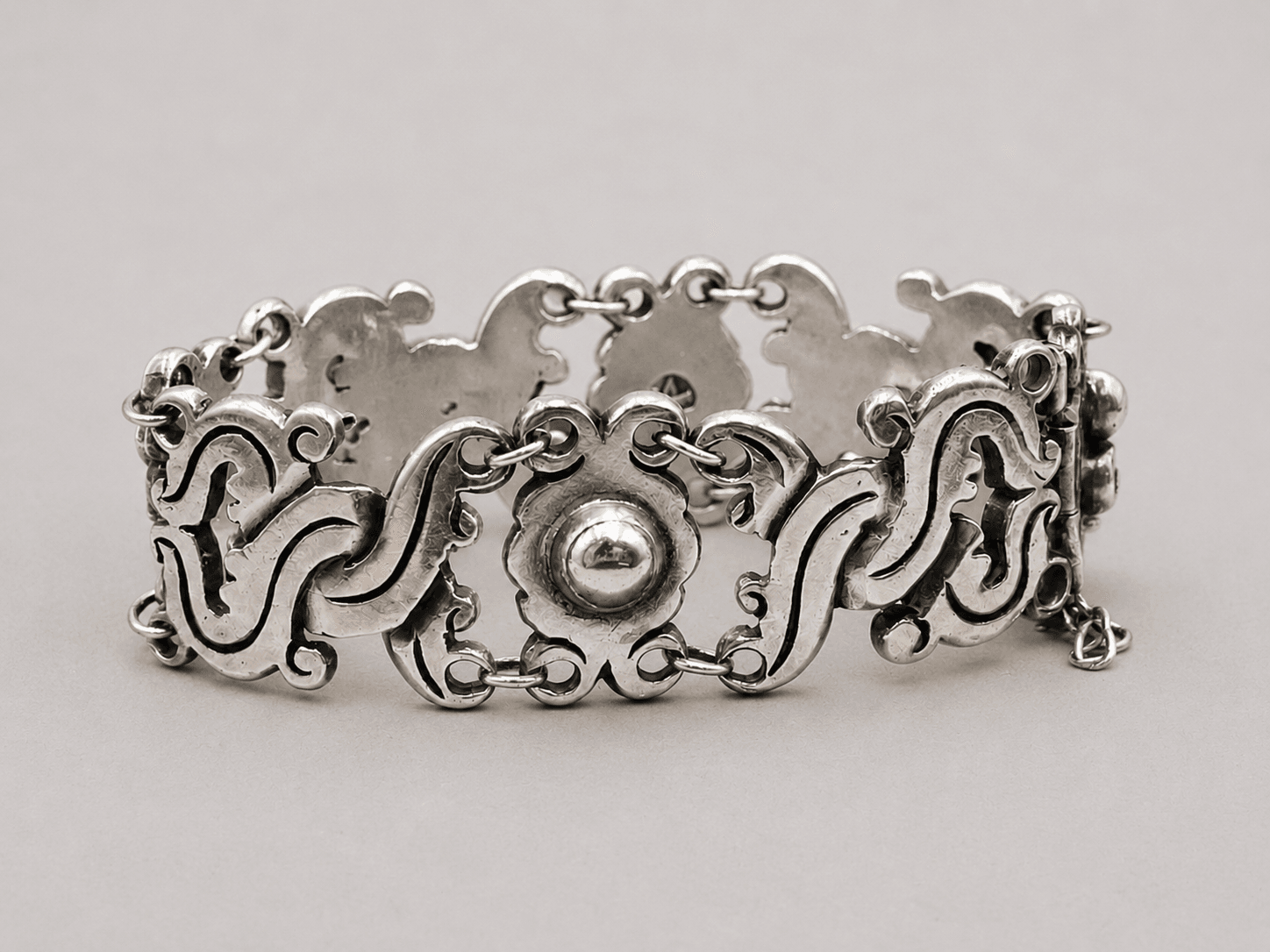
William Spratling’s Vindobonensis Bracelet is a key early Taxco modernist jewel: a handwrought silver bracelet that translates pre-Hispanic manuscript imagery into a bold, wearable modern object. Collection records describe examples as Taxco-made, generally dating to Spratling’s early design phase, from the 1930s through about 1940–1946 depending on the hallmark. Known examples are built from alternating links of stylized “X” forms and raised silver cabochons, usually with a pin-and-chain closure. The design is illustrated in Morrill and Berk’s Mexican Silver: 20th Century Handwrought Jewelry & Metalwork, p. 43, fig. III-30.
The title “Vindobonensis” points to the Codex Vindobonensis Mexicanus 1, also known as the Vienna Codex, one of the great Mixtec pictorial manuscripts. The British Museum identifies the original as Mixtec, circa 1500, and describes it as a Mexican pictorial manuscript with ritual-calendrical material and mythological genealogies. University of Kentucky’s collection notes that the codex is housed in the Austrian National Library and chronicles the history and genealogy of Tilantongo rulers as well as the divine origins of dynasties associated with Apoala/Yuta Tnoho.
The bracelet is important because it compresses several major art-historical narratives into a single object: Mesoamerican manuscript tradition, postrevolutionary Mexican nationalism, modernist design, and the Taxco silver renaissance. Spratling’s work did not simply reproduce ancient motifs; it converted them into a new design language. The repeated “X” and cabochon rhythm reads like a modern abstraction, yet its source world is codical, archaeological, and pre-Hispanic.
That transformation is central to Spratling’s importance. Morrill and Berk describe him as adopting pre-Columbian and contemporary indigenous forms and interpreting them in silver, thereby reviving both a traditional craft and an ancient iconographic vocabulary. The founding of his Taller de Las Delicias in 1931 was a fusion of twentieth-century enterprise with cultural and aesthetic systems that predated the Spanish conquest. In that sense, the Vindobonensis Bracelet is not merely jewelry. It is a small-scale manifesto for Mexican modernism in silver.
The Vindobonensis Bracelet is especially relevant because it treats a manuscript source as a design matrix. In effect, it turns a pictorial text into a modern silver architecture for the wrist.
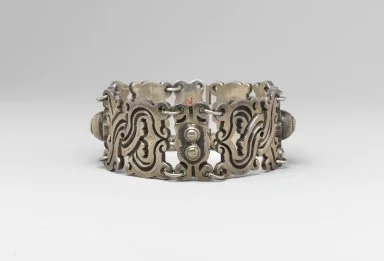
Bracelet, ca. 1935-1940
Accession 2006.7.2. Official museum record Brooklyn Museum, Creative Commons-BY.
Verified against each institution's own collection records. All museum collections
William Spratling Vindobonensis Silver Bracelet
Auctions at Showplace · 2026-03-05
WILLIAM SPRATLING Silver Bracelet
Blackwell Auctions LLC · 2023-06-17
A WILLIAM SPRATLING MEXICAN SILVER VINDOBONENSIS BRACELET, Taxco, Mexico, circa 1944 Marks: WS, SPRATLING, MADE IN MEXICO, SPRATLING SILVER 8-1/2 inches long (21.6 cm) 4.50 troy ounces
Heritage Auctions · 2014-11-06
Museum of Mexican Silver. “Vindobonensis Bracelet.” Catalog no. MoMS-000044. https://museumofmexicansilver.com/pieces/spratling-3124
See something wrong with this record? Suggest a correction and the piece details fill in automatically.
It also fits the development of “neo-Pre-Columbian” Mexican design. Ana Elena Mallet’s essay in Silver Seduction explains that a neo-Pre-Columbian style emerged in Mexico and, together with ideas of indigenous heritage and Art Deco, helped form what became recognized as “Mexican design,” later inspiring Spratling and the Taxco School. The bracelet’s geometry, repetition, relief, and mass sit precisely in that zone between archaeological reference and Art Deco modernity.
The bracelet’s visual power lies in its weight, modularity, and relief. The alternating links create a procession around the wrist, almost like a miniature codex register. The raised silver cabochons punctuate the design like sculptural glyphs or architectural bosses. The stylized “X” links are abstract enough to satisfy modernist taste, but they retain the aura of carved stone, manuscript sign, and pre-Hispanic ornament.
This is one of Spratling’s great achievements: he made silver behave like architecture, sculpture, and textile at once. The object is intimate in scale but monumental in effect.
William Spratling
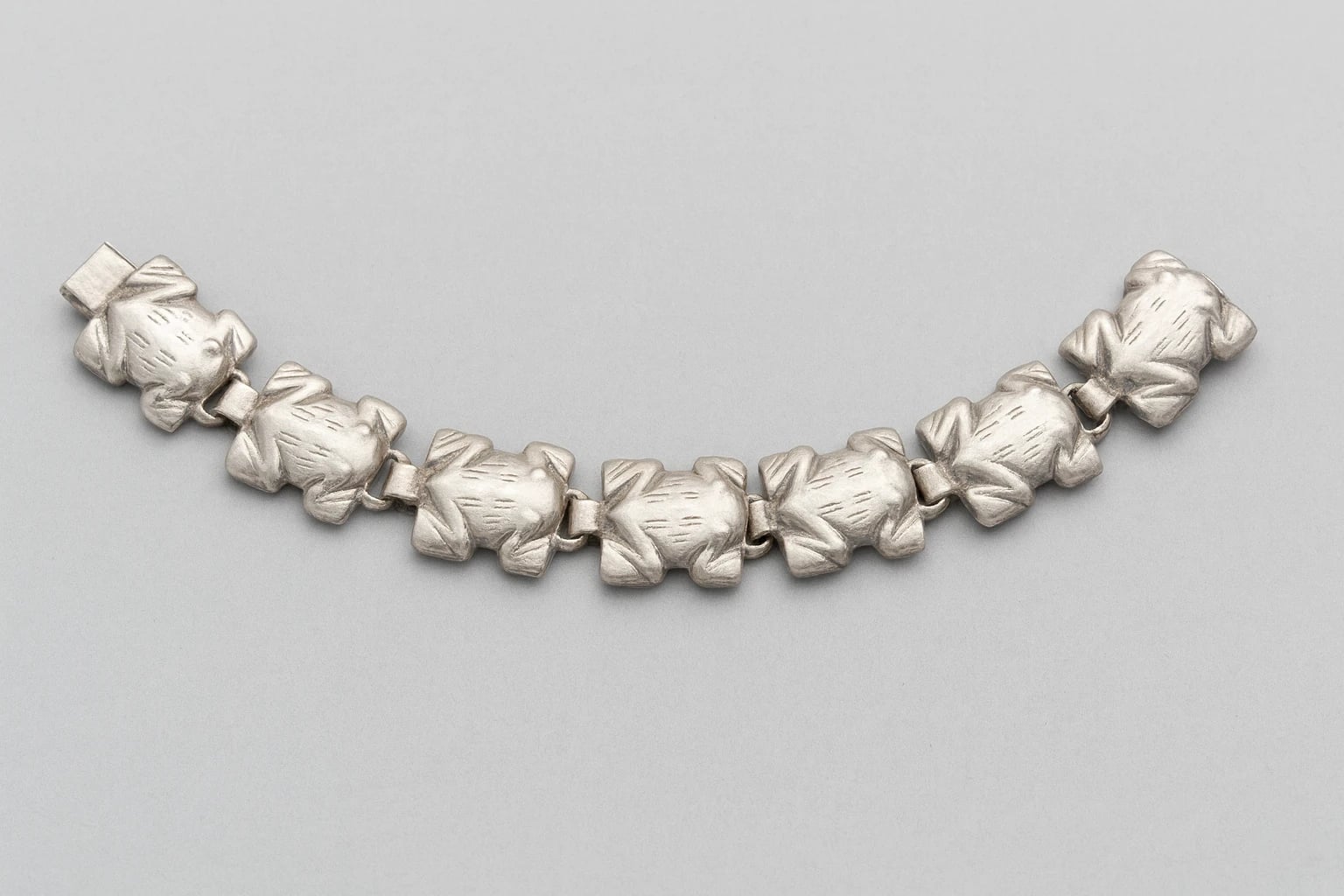
Double Row Frog Bracelet
First Design Period: 1931 - 1946
Silver Plate