Saves instantly, no account needed. Already a member? Sign in.
Sterling cuff bracelets are among the most direct expressions of the First Design Period — the years between 1931 and 1946 when Spratling's Taxco workshop was building the design vocabulary that would define Mexican modern silver for a generation. At nearly two inches in width, this example carries the physical authority of early Spratling production: broad enough to anchor the wrist, made to read as form before it reads as jewelry.
The interior marks precisely locate it within that output. The joined "WS" — based, as Morrill records in Mexican Silver, on the brand Spratling used for his horses — appears alongside "TAXCO" and a sterling "925" content mark. Morrill documents that Spratling generally preferred a higher silver purity of 980 parts per thousand, while also noting that in the earliest phase of the workshop, coins of 0.925 silver were melted down as raw material. The TAXCO stamp without an eagle workshop number is equally informative: Mexico did not reinstate its government registration system for silver workshops until 1948, anchoring this cuff within the prewar years of the First Design Period.
What the piece offers is a direct material connection to the originating decade of the Taxco school, when Spratling's insistence on marking each piece with his joined monogram was, as Morrill observes, a statement of authorial intent in a craft tradition that had long worked anonymously.
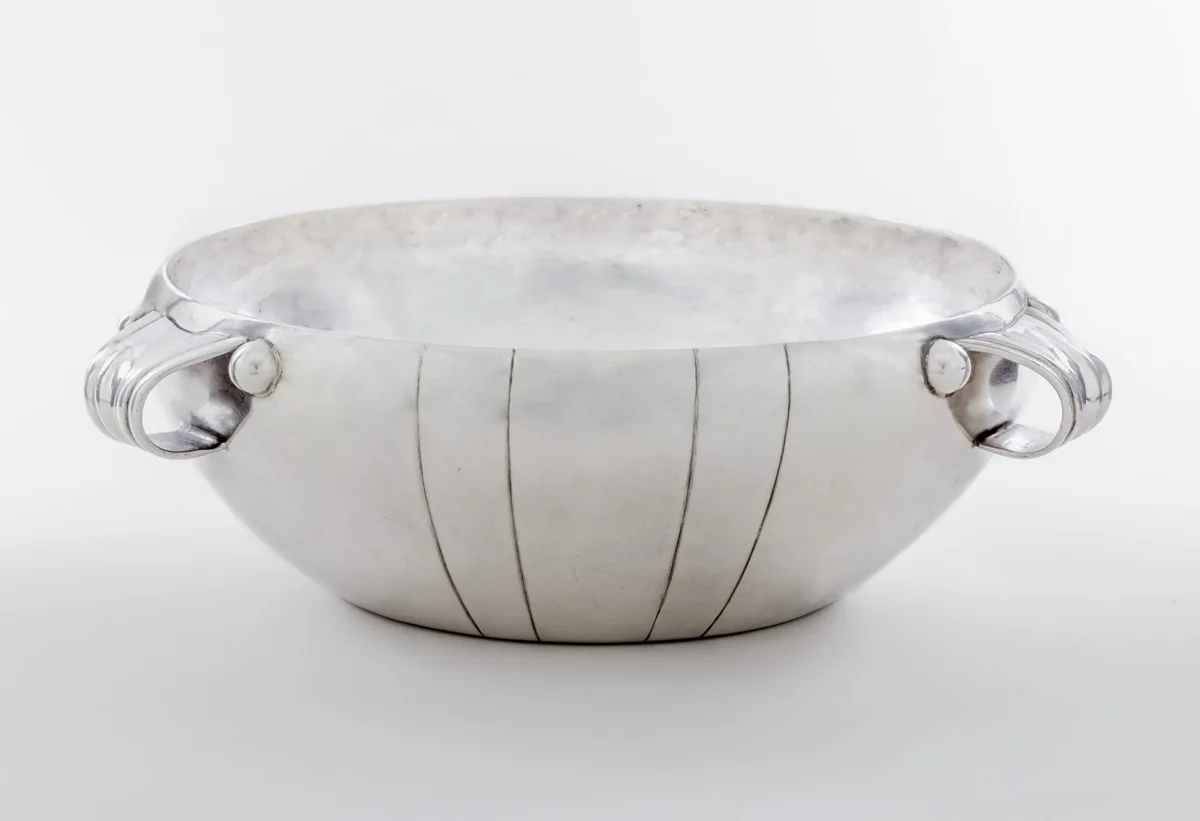
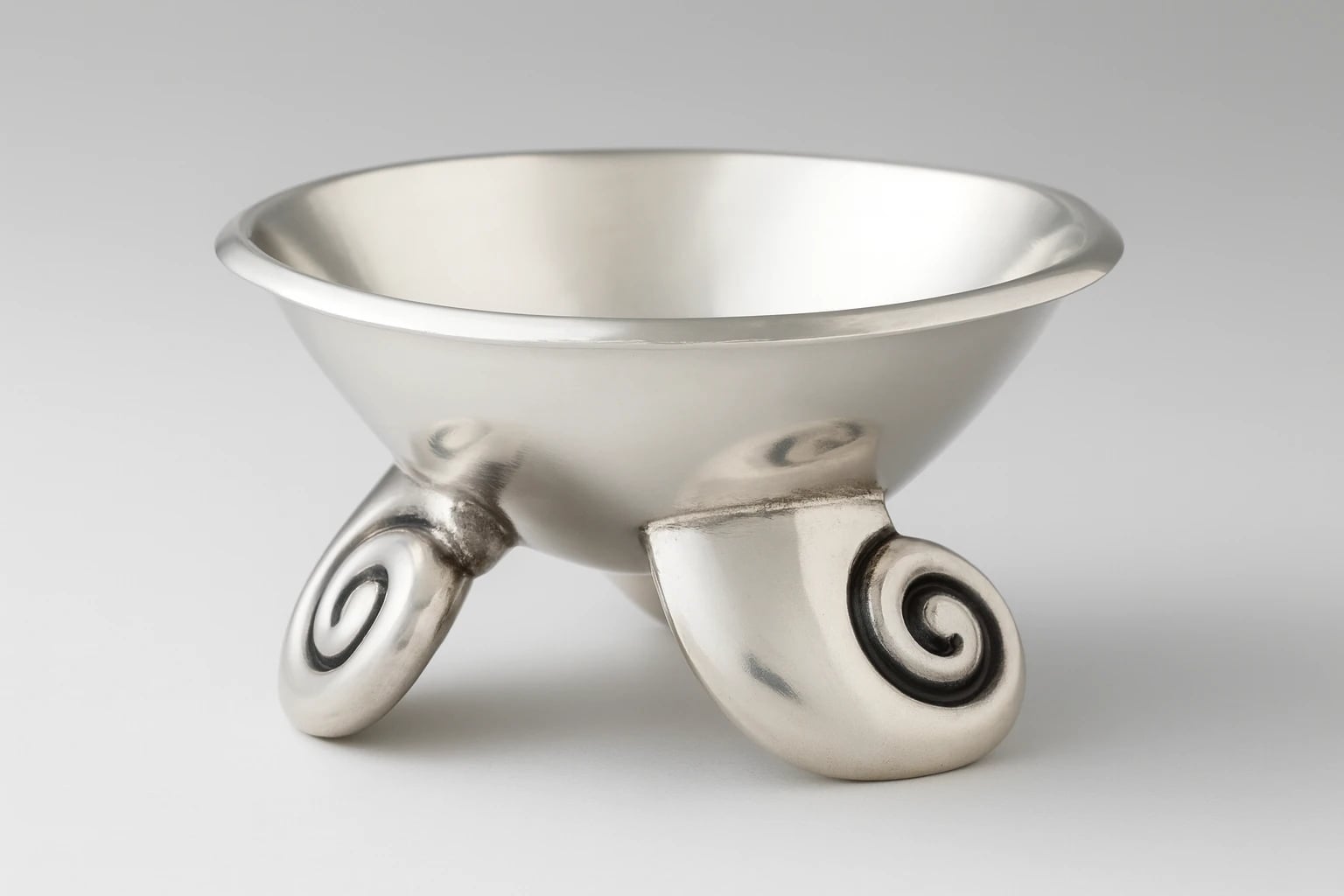
Bowl with Handles, 1940-1944
Accession M.2015.190.8. Official museum record Photo: Los Angeles County Museum of Art.
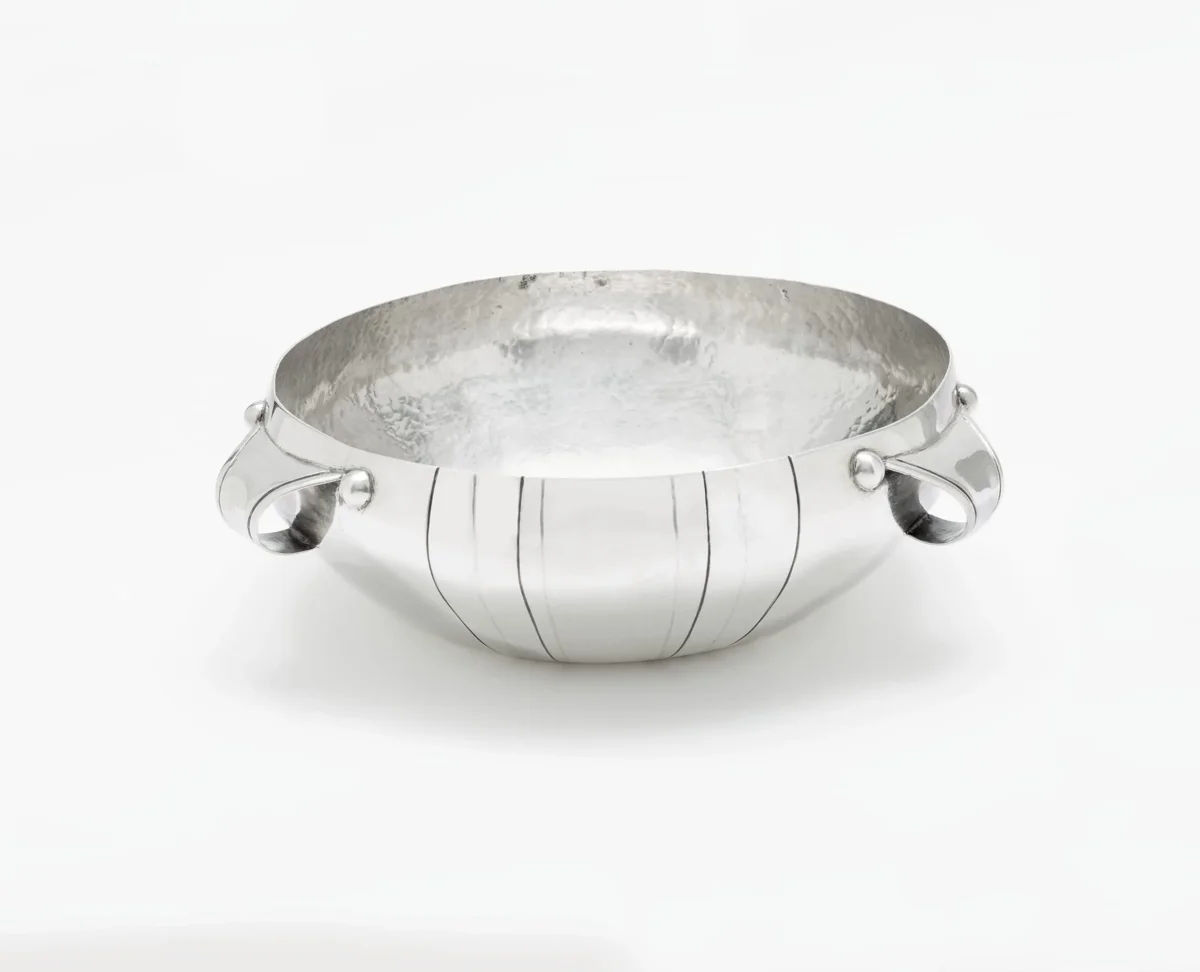
Bowl with Handles, 1940-1944
Accession M.2015.190.9. Official museum record Photo: Los Angeles County Museum of Art.
Verified against each institution's own collection records. All museum collections
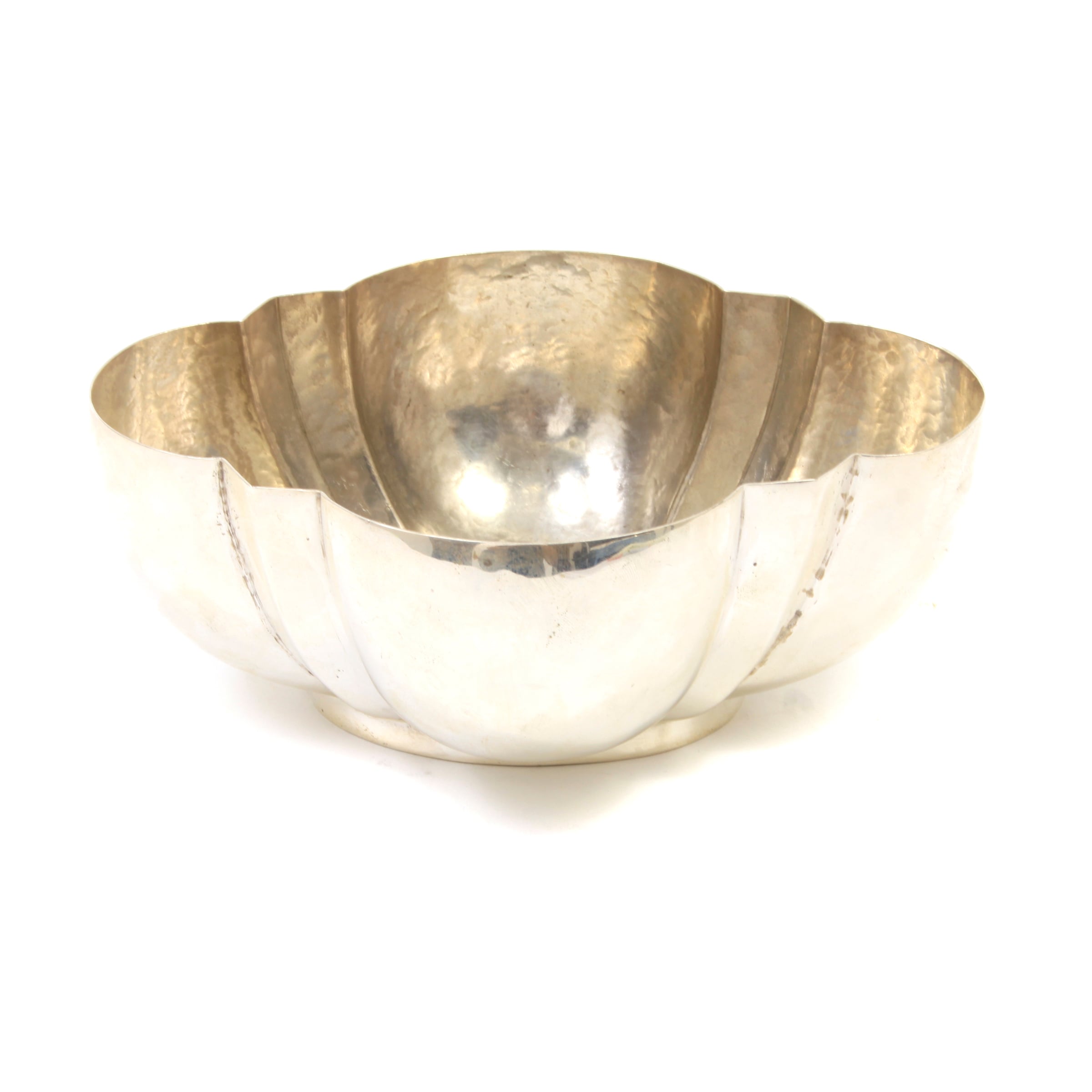
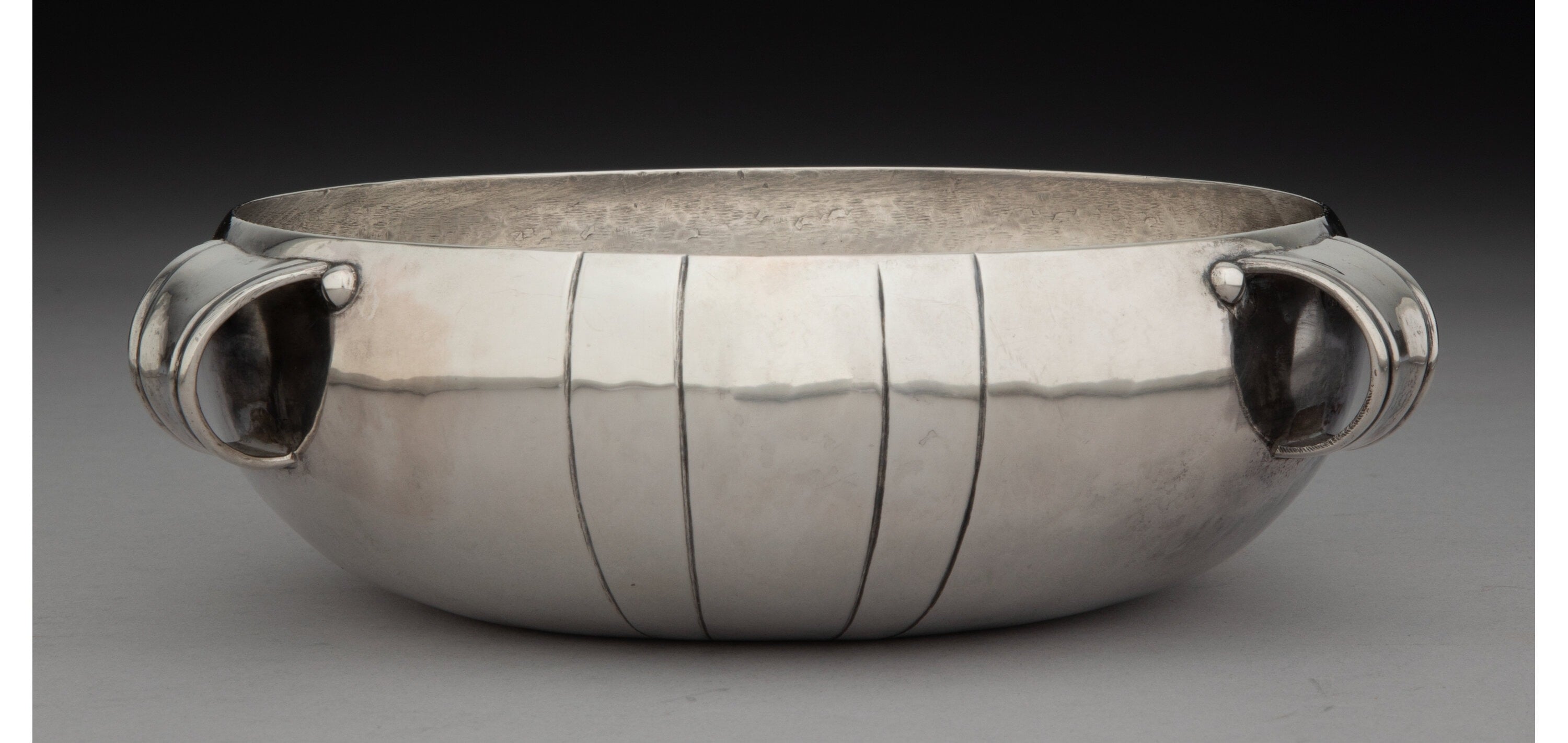
Museum of Mexican Silver. “Looped Handle Bowl.” Catalog no. MoMS-000028. https://museumofmexicansilver.com/pieces/spratling-38
See something wrong with this record? Suggest a correction and the piece details fill in automatically.
William Spratling
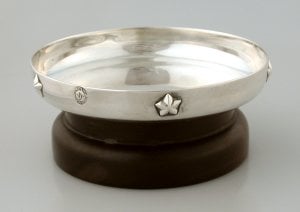
Applied Star Silver Bowl
First Design Period: 1931 - 1946
Silver