Saves instantly, no account needed. Already a member? Sign in.
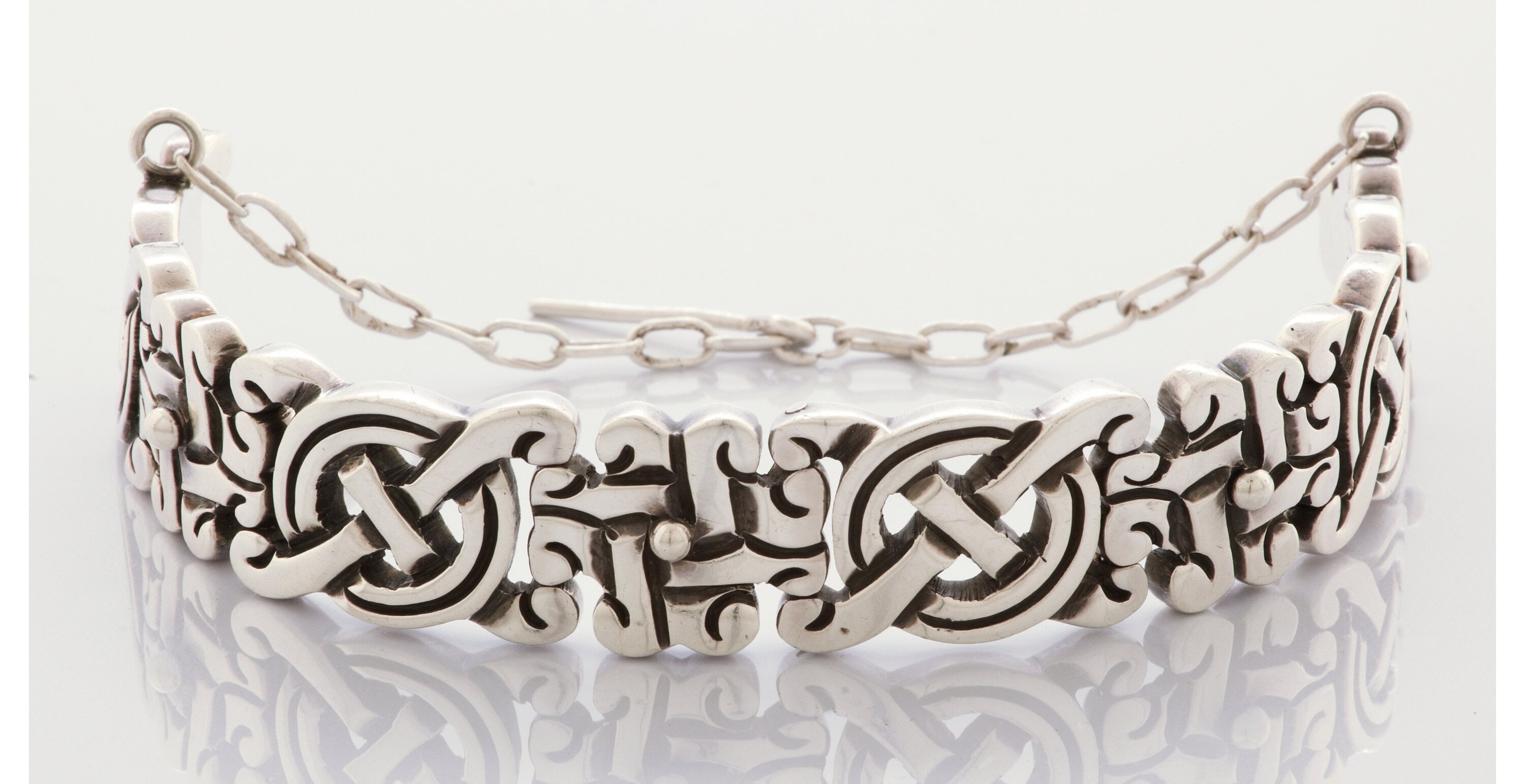
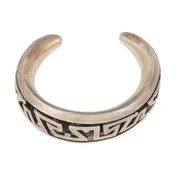
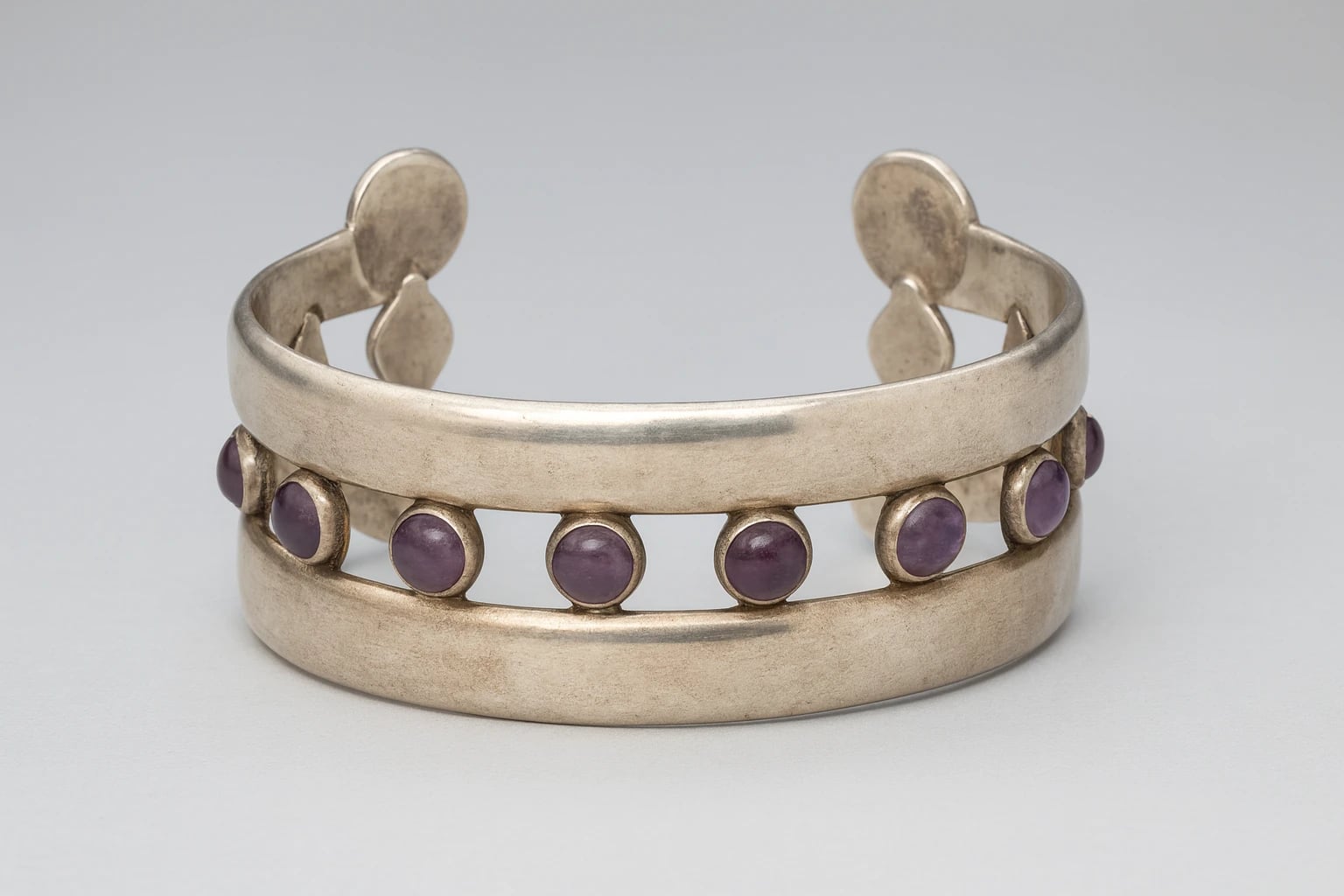
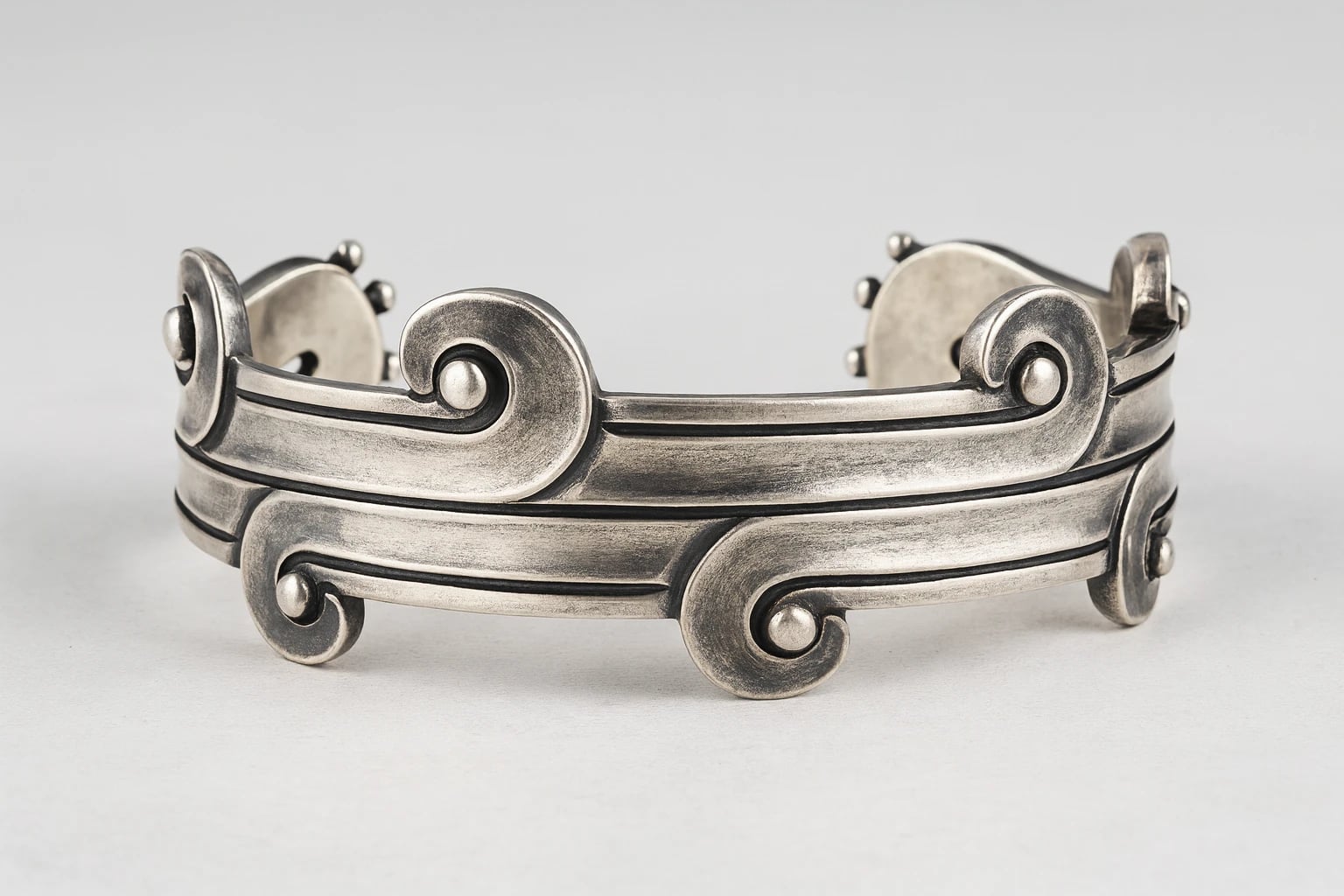
A narrow silver cuff, flat and close-fitting, the Cholula bracelet concentrates its interest in a single chased band rather than in mass or projecting ornament. The surface has been worked with a cincel, the engraving tool the Taxco smiths used to mark silver through repeated hammer blows, each edge cutting a different line. The result is a low relief that reads as sculptural without leaving the plane of the metal. Where much cuff jewelry seeks volume, this design holds to a shallow field and lets incised pattern carry the whole effect.
The band curves to encircle the wrist and stays close to the skin, so the eye follows the chased passage around its length rather than resting on a central motif. Chasing of this kind, the technique the Taxco workshops called cincelar, builds an image by displacing rather than removing metal, and the play of light across those shallow cuts changes as the wearer moves. The narrow format asks the smith for control, since a flat cuff offers no depth to hide an uneven line, and the design depends on the evenness of the tooled surface for its coherence. The silver here is the subject, not a setting for stones, and its reflectivity carries the pattern.
The bracelet belongs to Spratling's first design period, the years between the 1931 founding of the Taller de Las Delicias and 1946, when he was organizing the workshop system that made this kind of controlled hand chasing possible at scale. The title Cholula points toward the ancient Mexican city and its great pyramid, part of the broader turn within postrevolutionary culture toward Mexico's indigenous past that shaped so much Taxco design. Spratling's talleres joined design authority to specialized hand skill, allowing a designer to set a pattern that trained smiths could execute consistently. Within that structure, a modest object like a narrow chased cuff shows the workshop's command of surface as clearly as its more elaborate necklaces and hollowware.
As a piece of Spratling's early production, the Cholula bracelet records how much expressive weight the Taxco School placed on tooled silver alone. It sits alongside the work of the wider generation of Taxco designers, from the Castillo brothers to Antonio Pineda, who built distinct languages from shared workshop techniques. Here the chased line, drawn from a named Mexican source and held to a flat narrow band, marks a characteristic phase of Spratling's design before 1946 and the surface intelligence on which that phase rested.
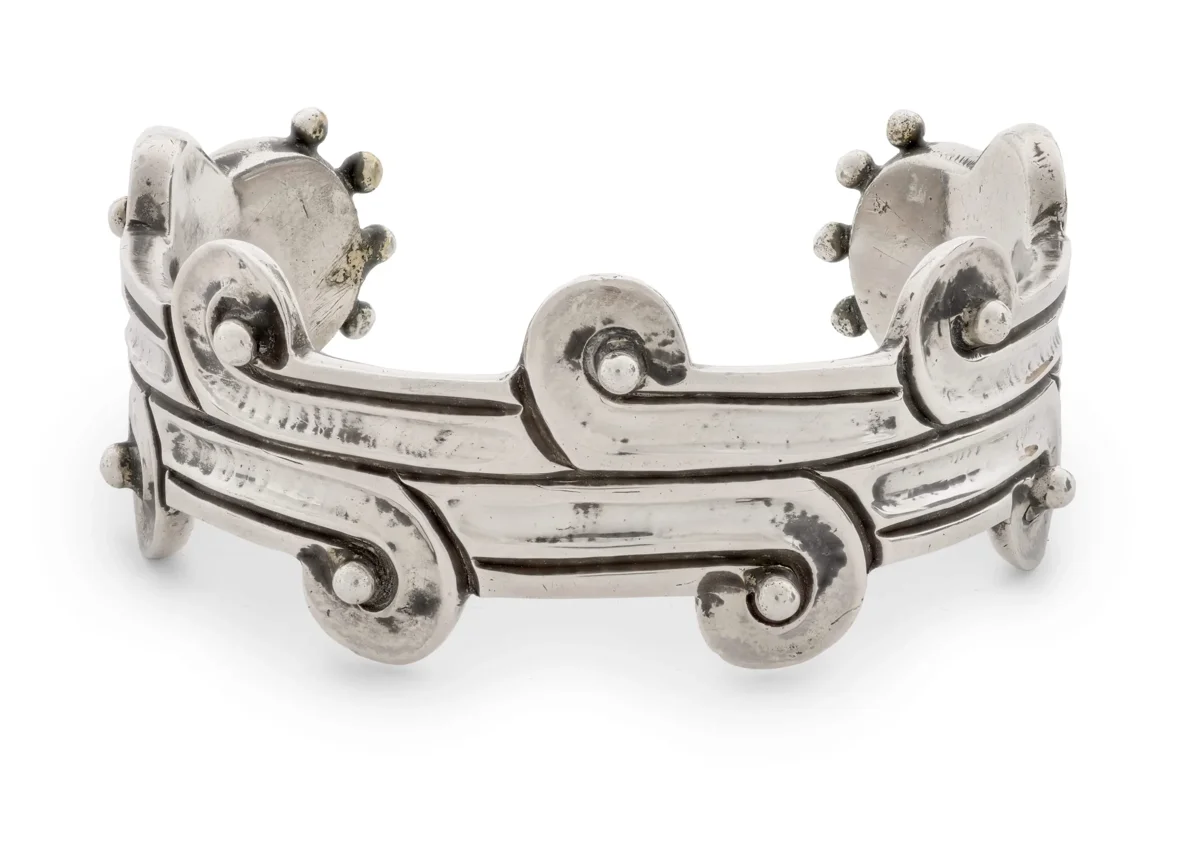
Cuff with Cholula Motifs, 1944
Accession M.2018.68.53. Official museum record Photo: Los Angeles County Museum of Art.
Verified against each institution's own collection records. All museum collections
Museum of Mexican Silver. “Cholula Bracelet.” Catalog no. MoMS-000051. https://museumofmexicansilver.com/pieces/spratling-69
See something wrong with this record? Suggest a correction and the piece details fill in automatically.
William Spratling
Stepped Cuff
First Design Period: 1931 - 1946
Silver