Saves instantly, no account needed. Already a member? Sign in.
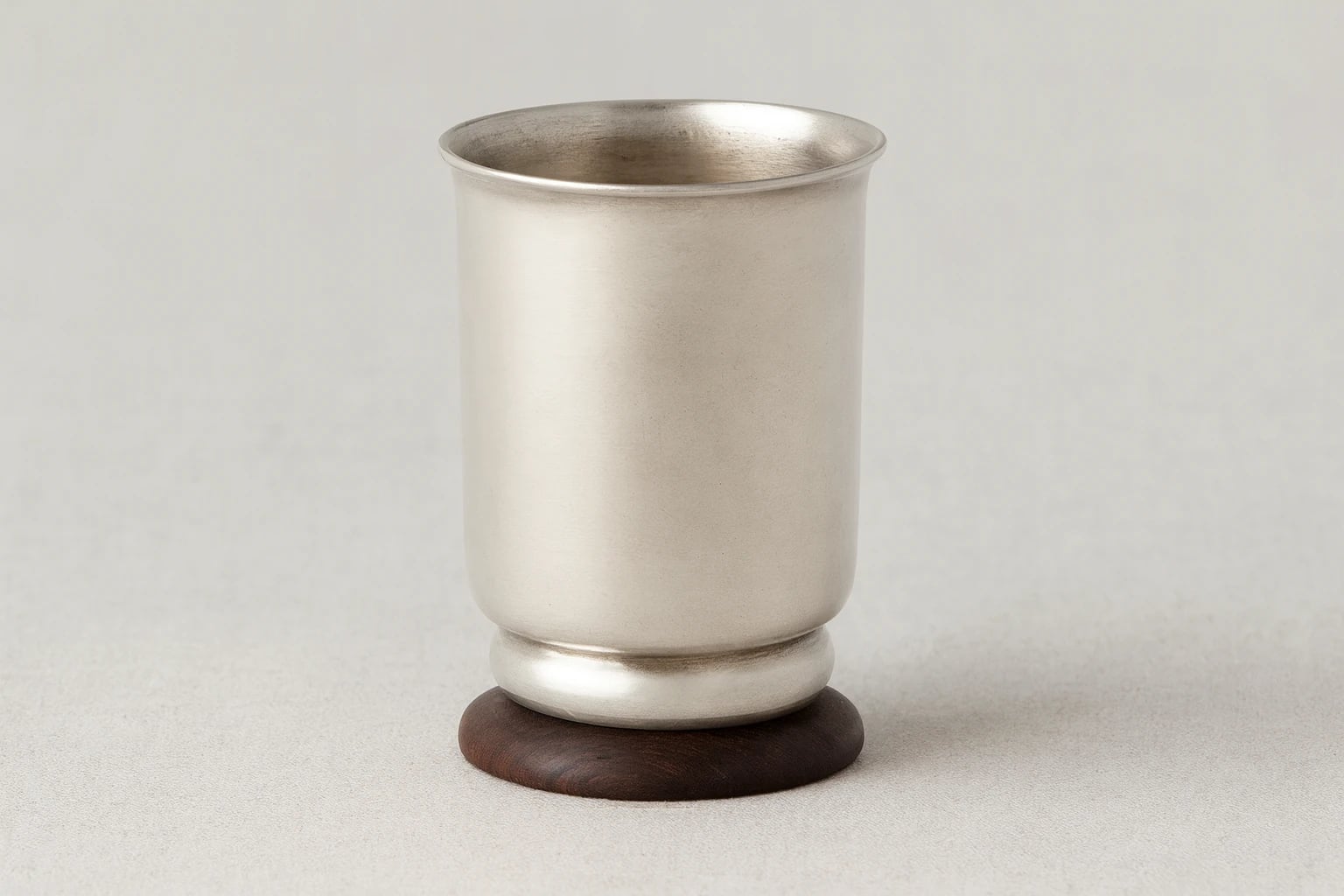
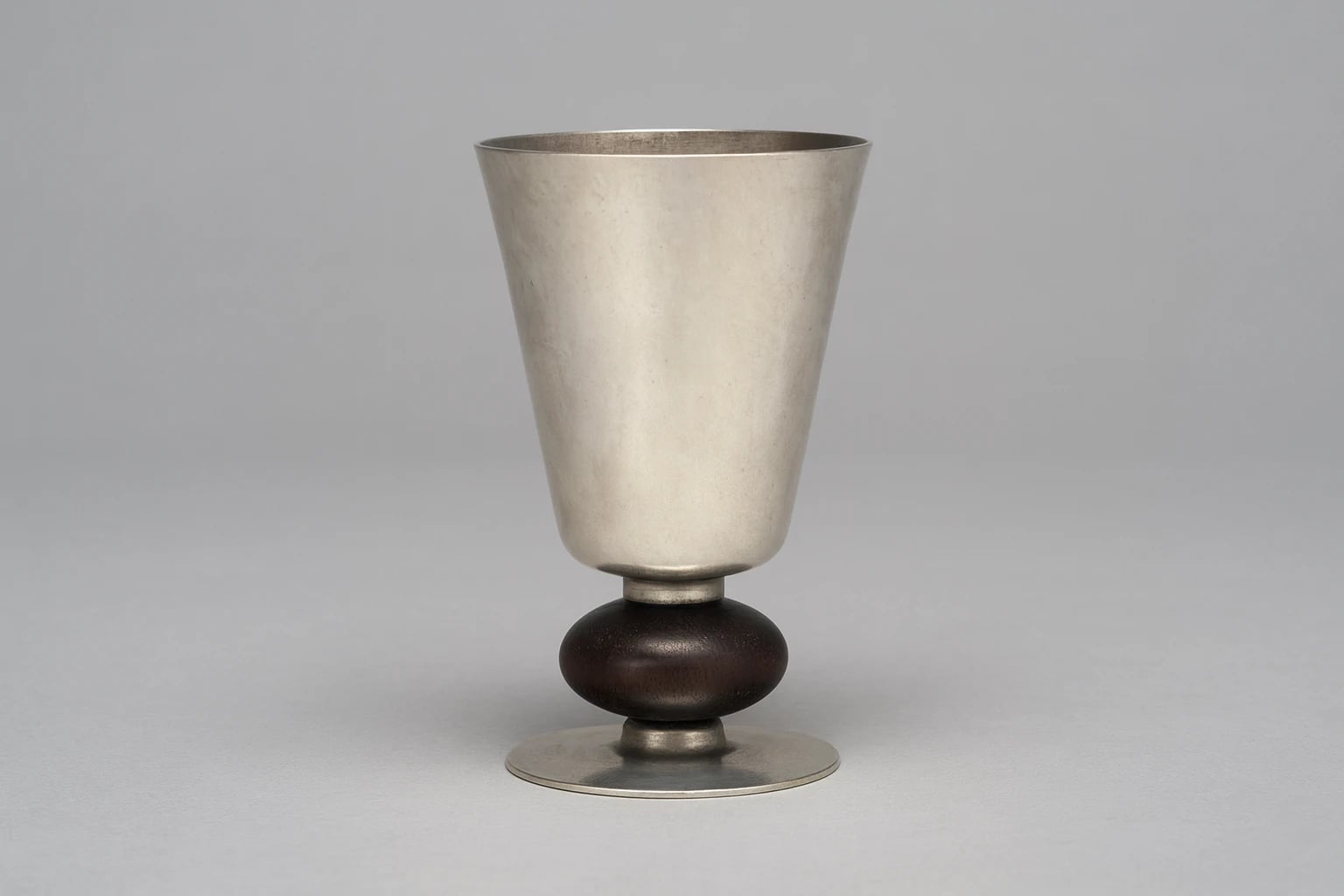
A footed liqueur cup that pins a disc of rosewood at the meeting of stem and cup does something quietly deliberate: it places a warm, opaque, organic material at the exact point where the eye reads a vessel's balance. Silver rises above and stands below, but the rosewood interrupts that continuous metal at the waist, breaking a single bright form into two silver zones separated by a band of grain and color. The result is a small object organized around one material decision rather than around applied ornament.
The cup tapers upward from a narrow base, so the profile draws inward toward the lip and then opens slightly, giving the silhouette tension rather than the simple flare of a conventional goblet. The foot spreads to steady that vertical, and the rosewood disc sits where a plain knop would ordinarily go, doing a knop's structural work while changing the surface entirely. Rosewood absorbs light where the silver reflects it, so the disc reads as a dark, matte pause between two polished surfaces. The wood also warms the hand at the stem, the place where fingers naturally hold such a cup, which turns a decorative choice into a tactile one. Whether the disc is turned solid stock or a mounted ring is not established by inspection alone, and the note does not assume it.
Combining silver with rosewood, ivory, and other organic materials was a recurring habit in Spratling's workshop practice, not an isolated experiment. Morrill records his readiness to pair silver with materials chosen for color and warmth, including a later Alaskan project whose letter-opener set a silver blade into a handle of ivory and baleen, with forms simplified until the join between metal and organic material carried the design. The same instinct governs this cup. The rosewood is not a luxury inlay meant to signal expense; it is a structural and chromatic element that controls how the whole object is read. That approach connects the Taller de Las Delicias hollowware to a broader current in Mexican modernist design, where a reduced vocabulary of pure form and honest materials replaced applied decoration. Spratling founded Las Delicias in 1931 and built a workshop that produced tableware and hollowware alongside jewelry, and pieces like this show how consistently that material thinking crossed object types.
Within the recorded chronology of Spratling's marks, the WS-on-wood stamps span from the earliest Taxco years to the 1960s, and his silver hollowware carried Taxco and fineness marks throughout, so a documented hallmark rather than the design alone would fix this cup's fabrication and its place in the sequence. As a barware object it belongs to the useful, domestic side of the Spratling output, the goblets and serving pieces made for a table rather than a display case. Its interest lies in seeing the same material intelligence that shaped his jewelry applied to something meant to be lifted, held, and drunk from, where the rosewood disc is both the thing that steadies the cup and the thing the hand rests against.
Museum of Mexican Silver. “Footed Liqueur Cup with Rosewood Disc.” Catalog no. MoMS-000864. https://museumofmexicansilver.com/pieces/spratling-791
See something wrong with this record? Suggest a correction and the piece details fill in automatically.
William Spratling
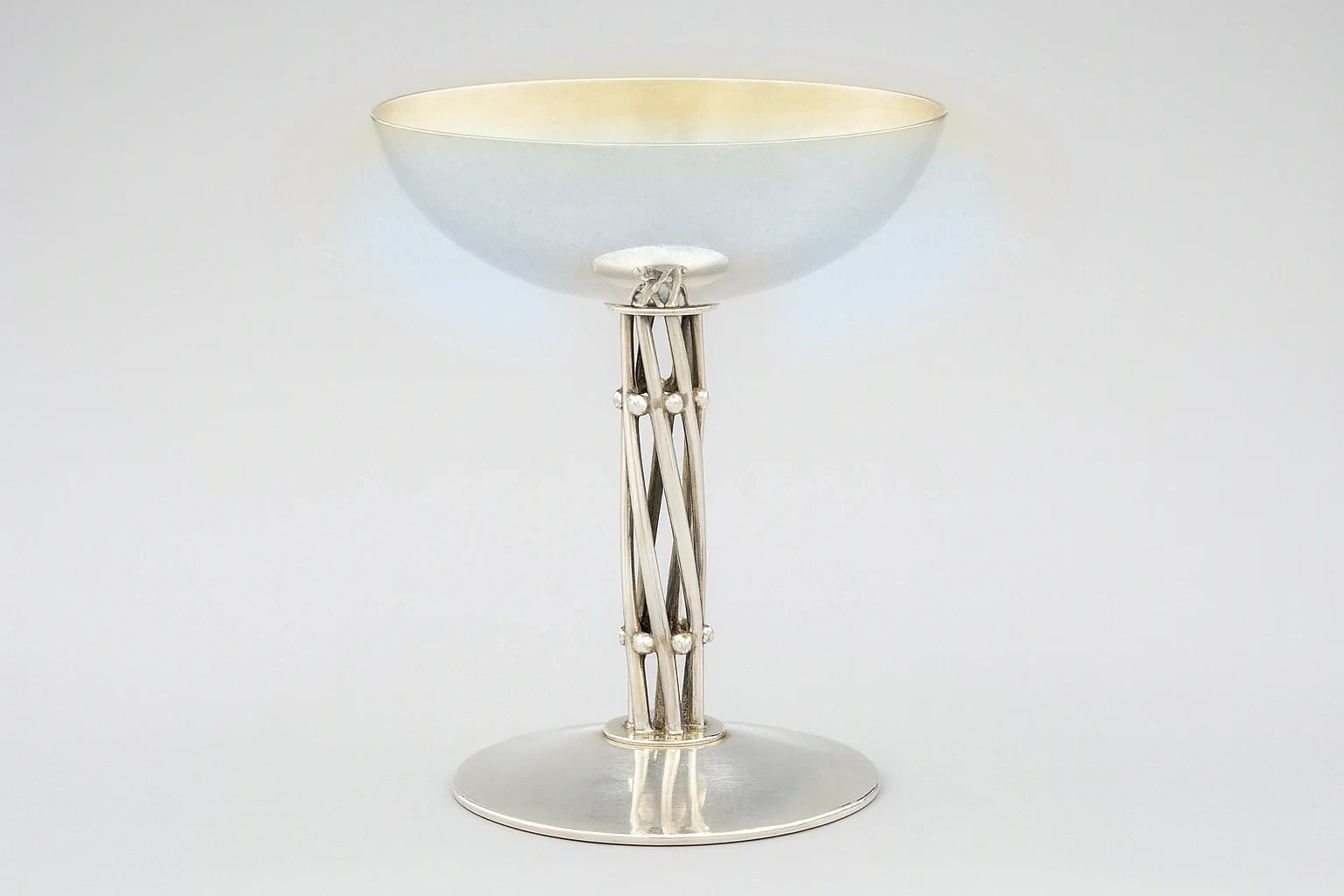
Champagne Goblet with Spiral Stem
Silver