Saves instantly, no account needed. Already a member? Sign in.
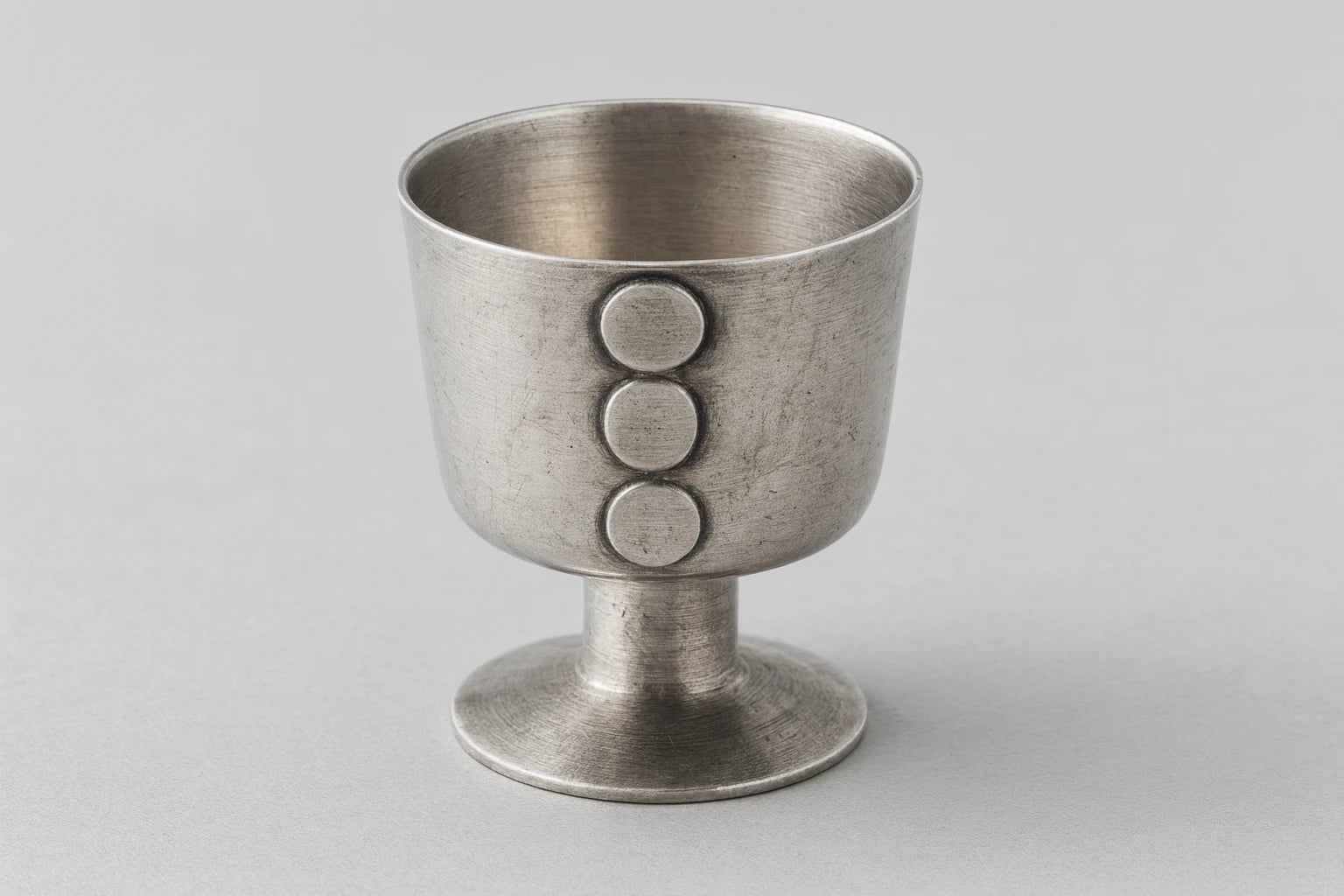
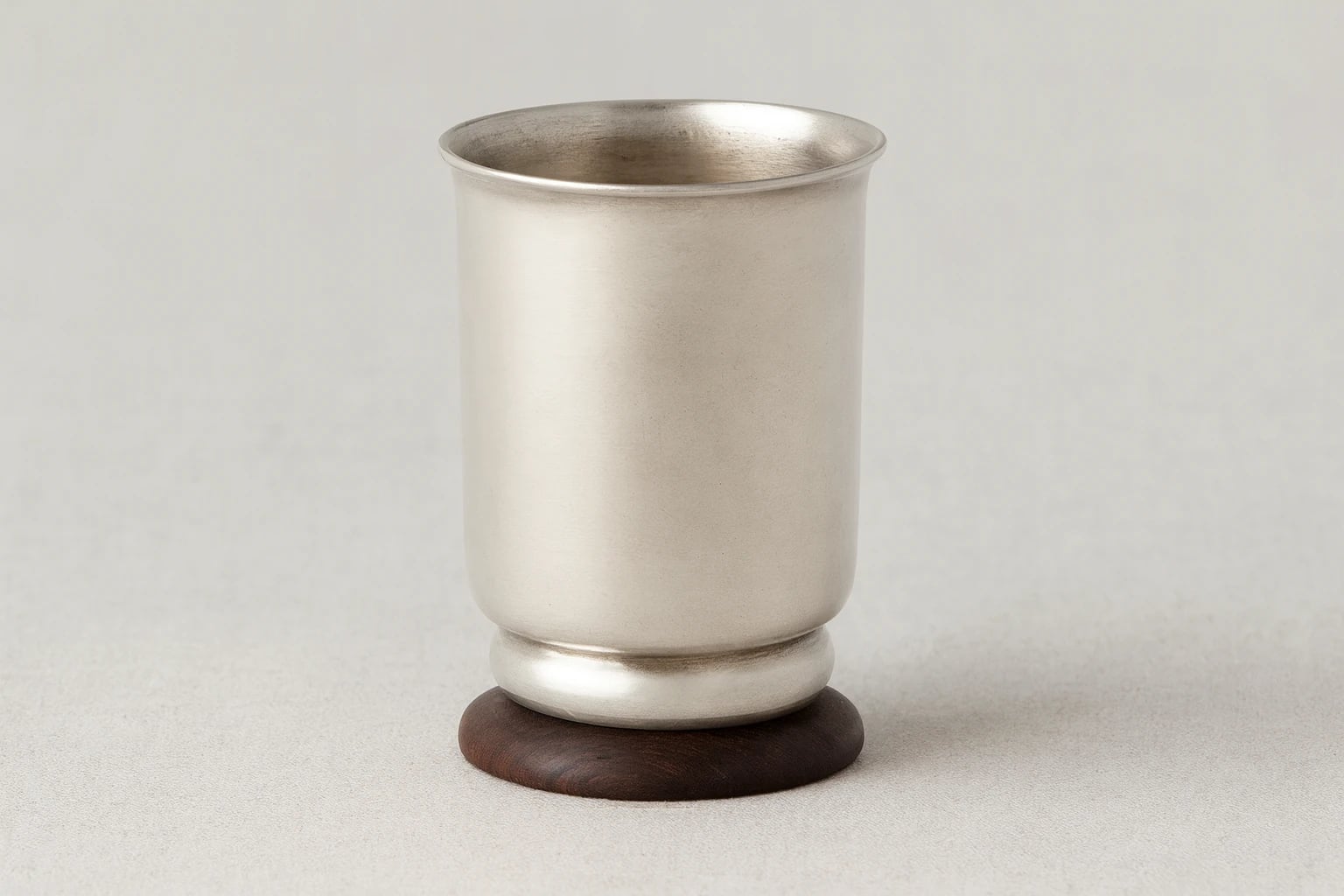
A small silver liqueur cup set on a rosewood base, this piece pairs the reflective metal of the bowl with the warm, dense grain of Brazilian rosewood in the contrast of materials that runs through Spratling's holloware. The wood is not merely a stand but a structural and visual counterweight to the silver, the same logic he applied across his objects of the 1950s.
The cup was made only for a year or two, just prior to 1958, according to Spratling's catalogs, which makes it a genuinely short-run form. Its narrow production window sets it apart from the designs he carried for a decade or more, and surviving examples come to market only occasionally.
The piece is documented in the literature, with Spratling's own drawing of the design included in the William Spratling Folio of Drawings and the form recorded in Phyllis Goddard's Spratling Silver: A Field Guide. Having both the working drawing and a published field reference ties the object directly to its design origin.
Spratling, who founded the Taxco silver revival in 1931, treated drinking and serving vessels with the same care he gave jewelry, and the silver-on-rosewood liqueur cup is a compact example of his material pairing applied to the table. A short-lived form preserved in his own drawings is a precise record of a brief moment in the workshop's output.
Museum of Mexican Silver. “Rosewood Based Liqueur Cup.” Catalog no. MoMS-000717. https://museumofmexicansilver.com/pieces/spratling-966
See something wrong with this record? Suggest a correction and the piece details fill in automatically.
William Spratling
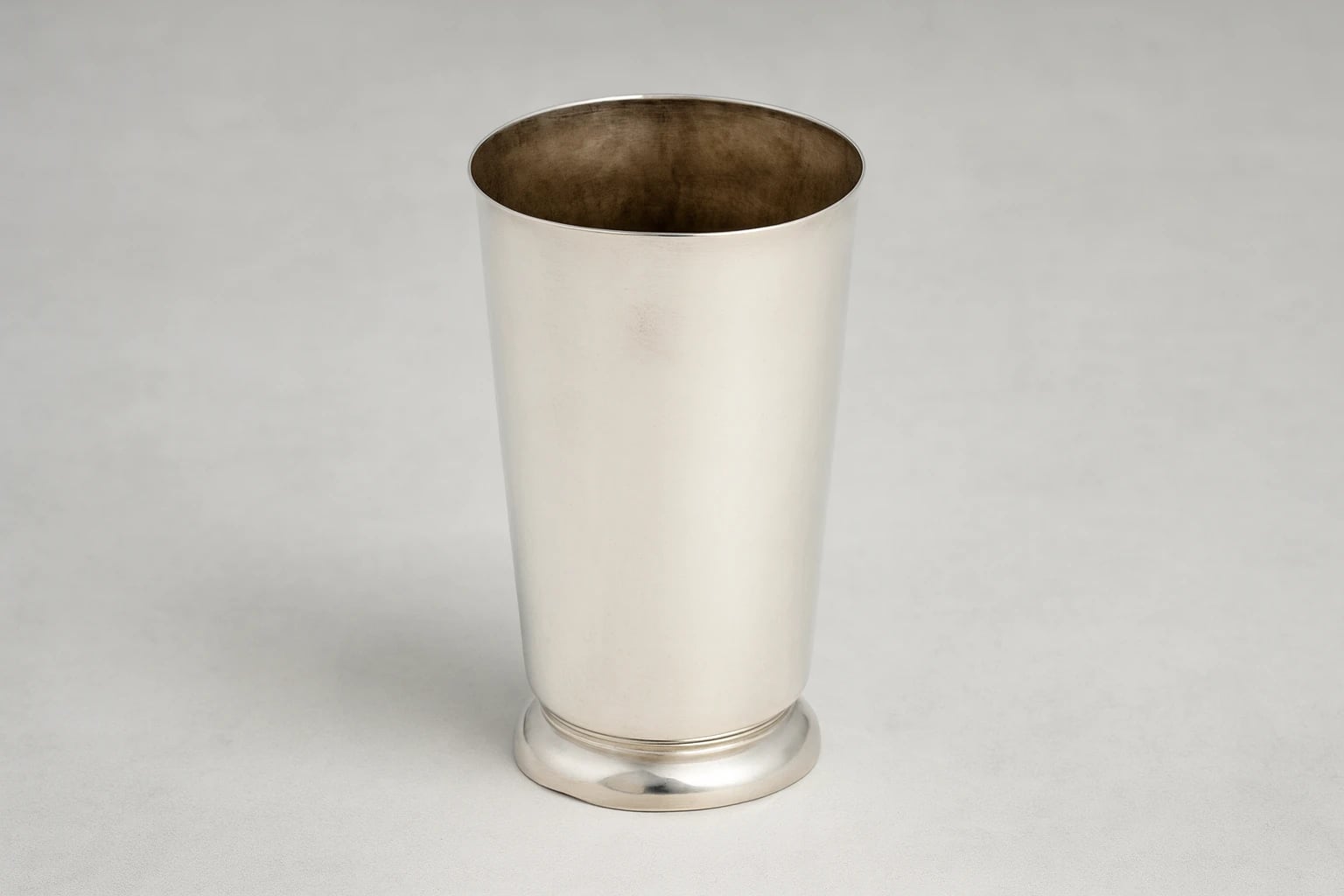
Mint Julep Cup
First Design Period: 1931 - 1946
Silver