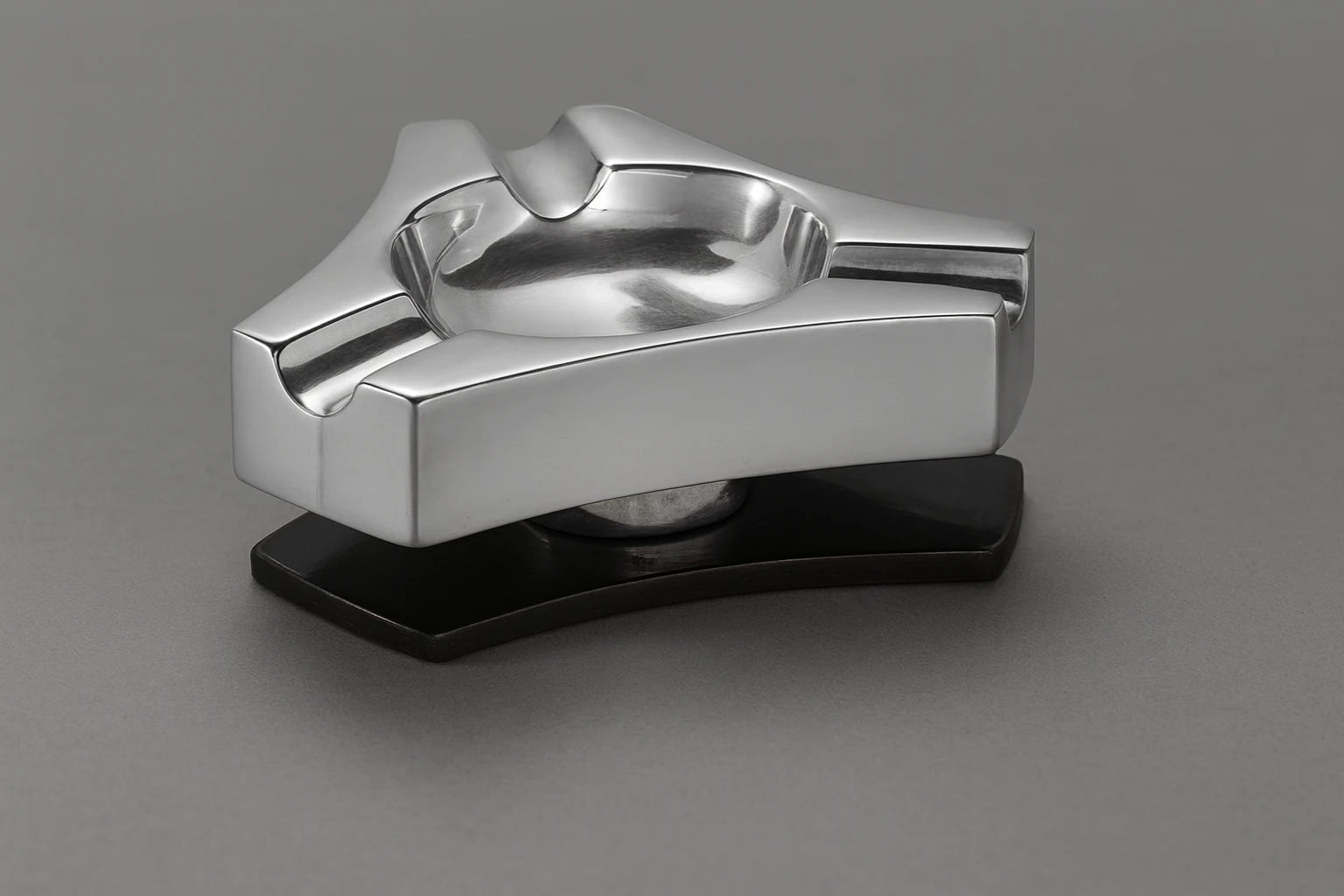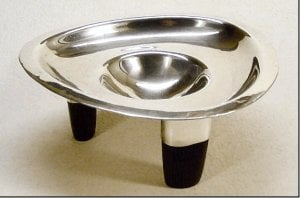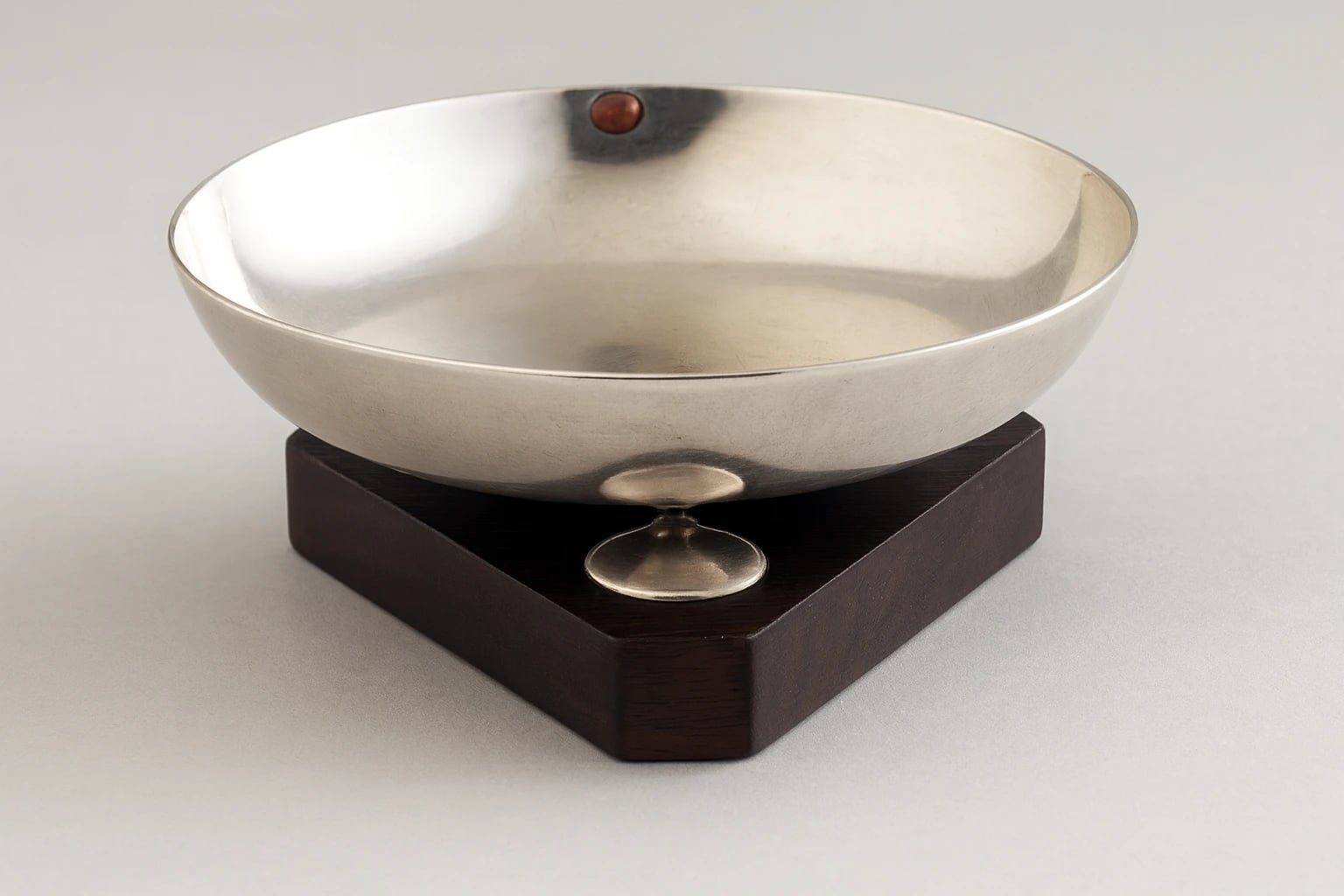
Ashtray with Triangular Rosewood Base and Silver Pin Mounts
Saves instantly, no account needed. Already a member? Sign in.
An individual ashtray resting on a triangular rosewood base, the silver dish joined to the wood by silver pins, this object compresses the workshop's First Design Period vocabulary into a small functional form: native hardwood, hand-raised silver, and a late art deco geometry in the triangular plan. The piece carries an unusually firm record, having been shown in the Brooklyn Museum's 1937 to 1938 exhibition "Contemporary Industrial & Handwrought Silver," which included nineteen examples of Spratling silver, and then offered in the 1943 Montgomery Ward Christmas Book.
The pairing of rosewood with silver was a hallmark of the early Taxco workshop, aligning hand-wrought metalwork with the broader Mexican craft revival, and its distribution through Montgomery Ward placed it before a national American audience in the years Spratling silver reached the Ward catalogues (Morrill, p. 53). The geometric base reflects the deco vocabulary of the moment translated into a vernacular Mexican idiom.
Recorded in the 1943 Montgomery Ward catalogue, the ashtray's documented exhibition and catalogue history establish a firm First Design Period provenance for the model. Surviving examples with the rosewood unsplit and the silver pins undisturbed are uncommon given the object's utilitarian function and decades of use, and the condition of the wood-to-silver joinery, together with the presence of an early Spratling mark, materially affects desirability.
Museum of Mexican Silver. “Ashtray with Triangular Rosewood Base and Silver Pin Mounts.” Catalog no. MoMS-000002. https://museumofmexicansilver.com/pieces/spratling-815
See something wrong with this record? Suggest a correction and the piece details fill in automatically.
William Spratling
Handsome Heavy Small Tri-Form Ashtray
Second Design Period: 1949 - 1951
Silver