Saves instantly, no account needed. Already a member? Sign in.
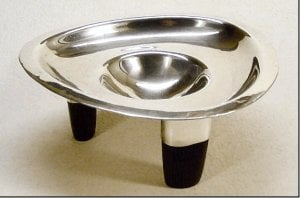
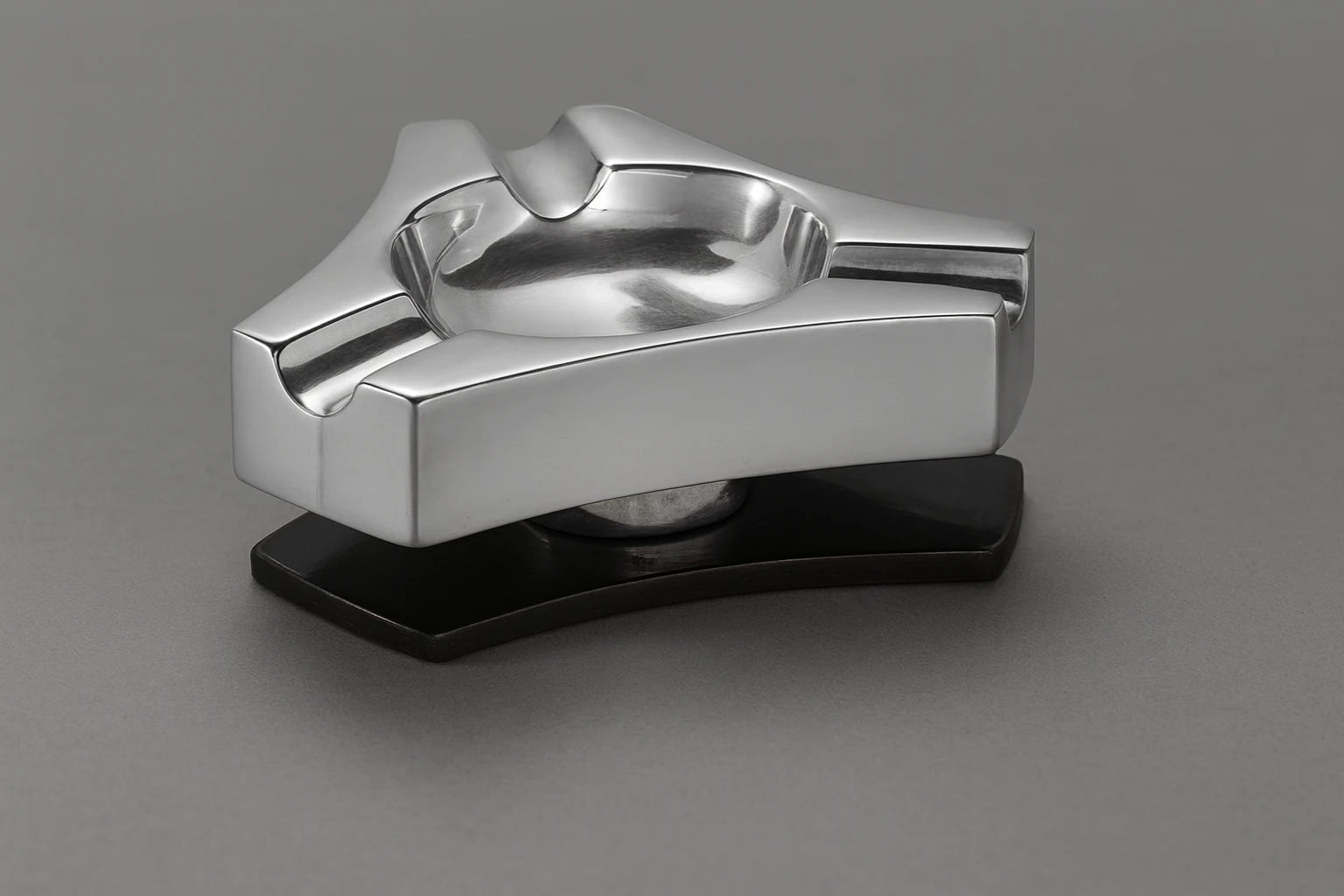
This small tri-form ashtray is heavier in the hand than its size suggests at sixty-four grams, and that density is the point: a sculptural object pared to three lobes, the silver dish lifted on a short stem set into a shaped base of tortoise shell. The pairing of cool silver with the warm, mottled shell is the contrast of materials Spratling pursued throughout the 1950s, here resolved into a tabletop object rather than a piece of jewelry.
The ashtray belongs to a specific and short-lived episode. It comes from the group of sculptural individual ashtrays Spratling designed in 1949 and 1950 intended for production by the Conquistador company. Unlike many Conquistador designs he continued to make after the contract was cancelled around 1952, none of these small special ashtray designs was produced again, which makes the form genuinely scarce.
The piece is documented in the literature, with Spratling's own drawing of it included in the William Spratling Folio of Drawings and the form recorded in Phyllis Goddard's Spratling Silver: A Field Guide. Having both the artist's working drawing and a published field reference is unusual and ties the surviving object directly to its design origin.
Spratling, who founded the Taxco revival in 1931, treated holloware and small objects with the same seriousness as jewelry, and the Conquistador period shows him designing for outside production while keeping his sculptural instinct. A short-run ashtray from that moment, never reissued, is a discrete artifact of a brief commercial chapter.
Museum of Mexican Silver. “Handsome Heavy Small Tri-Form Ashtray.” Catalog no. MoMS-000588. https://museumofmexicansilver.com/pieces/spratling-958
See something wrong with this record? Suggest a correction and the piece details fill in automatically.
William Spratling
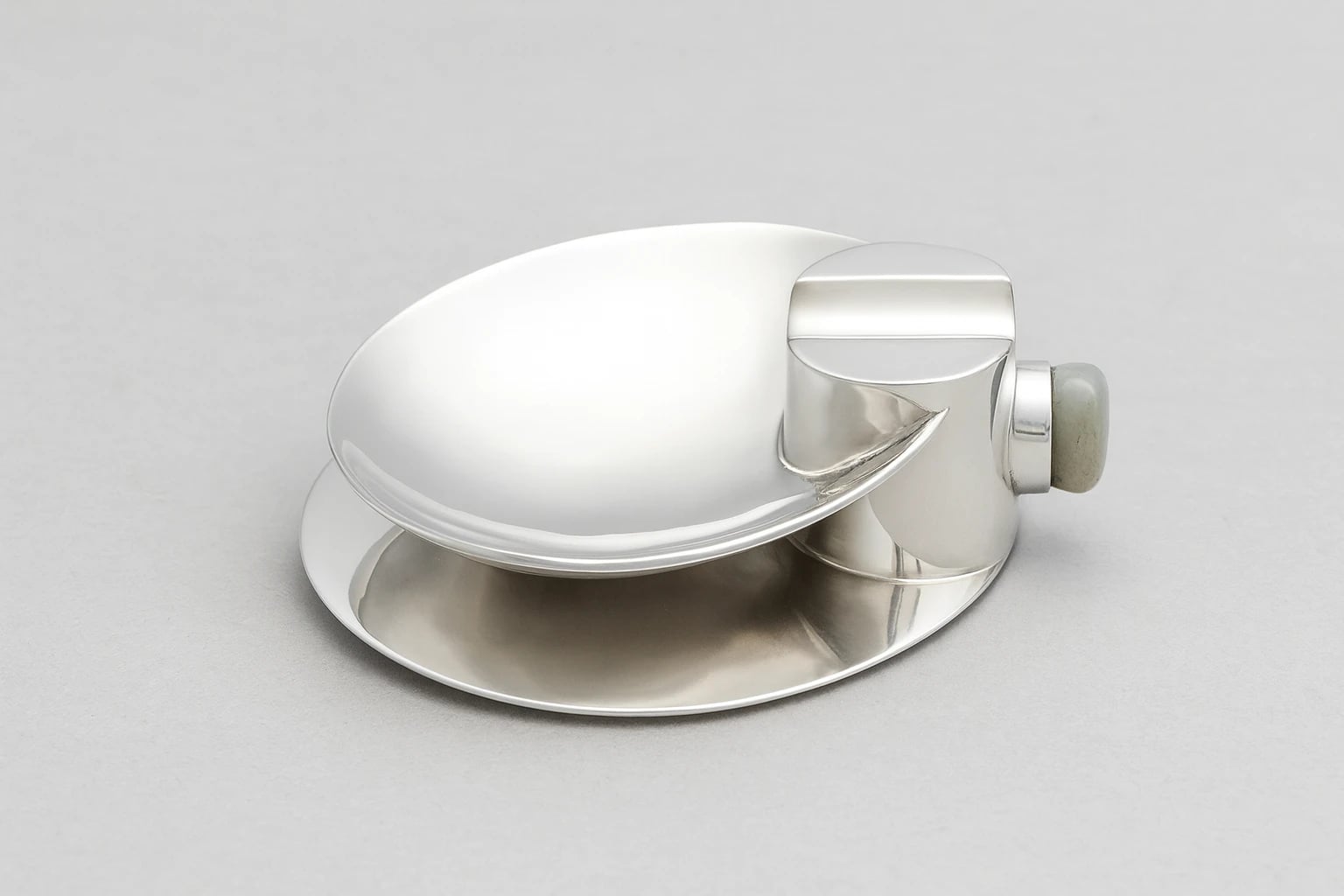
Azur Malachite Pedestal Ashtray
Second Design Period: 1949 - 1951
Silver