Saves instantly, no account needed. Already a member? Sign in.
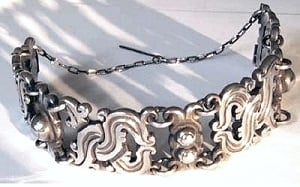
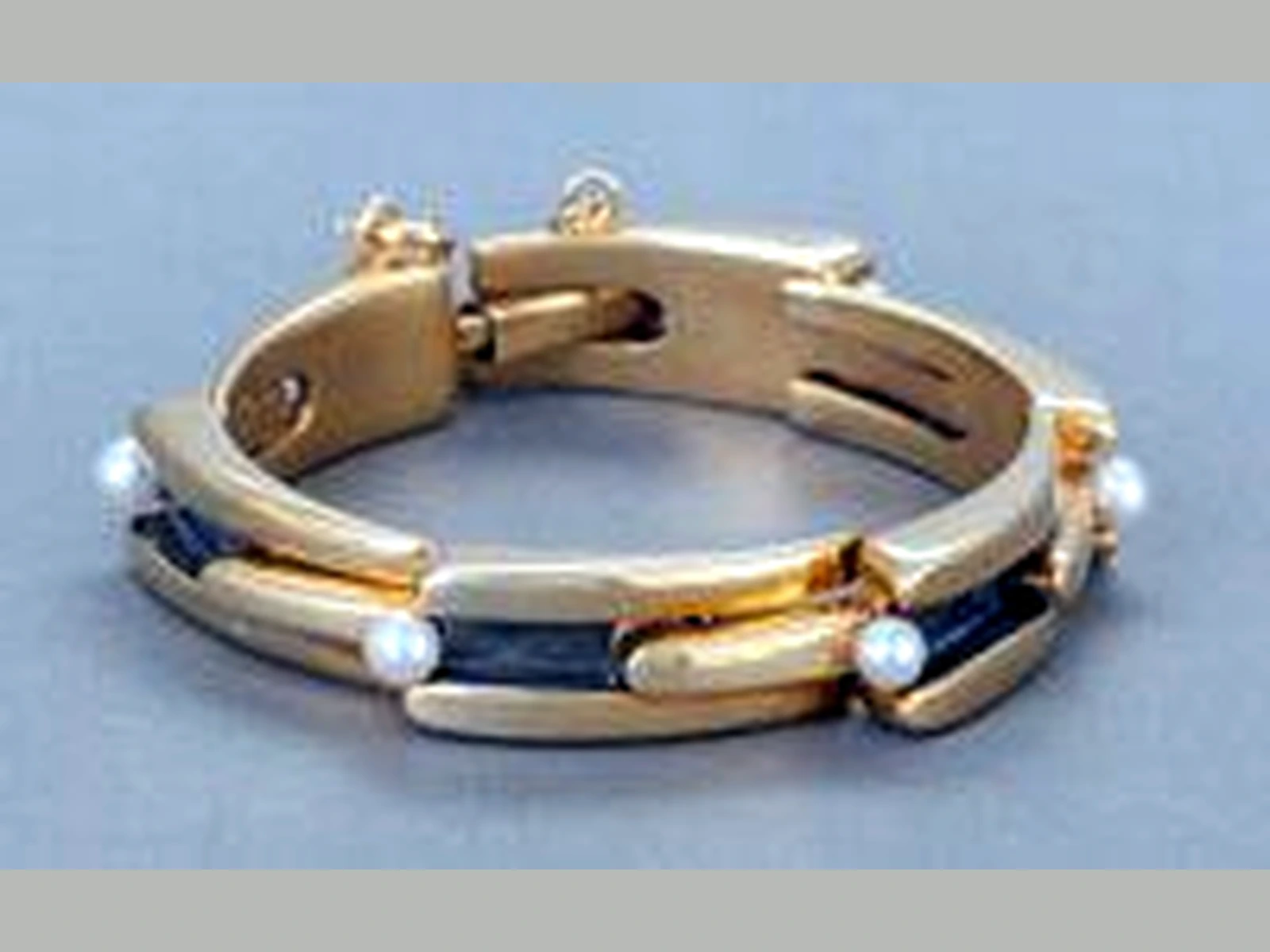
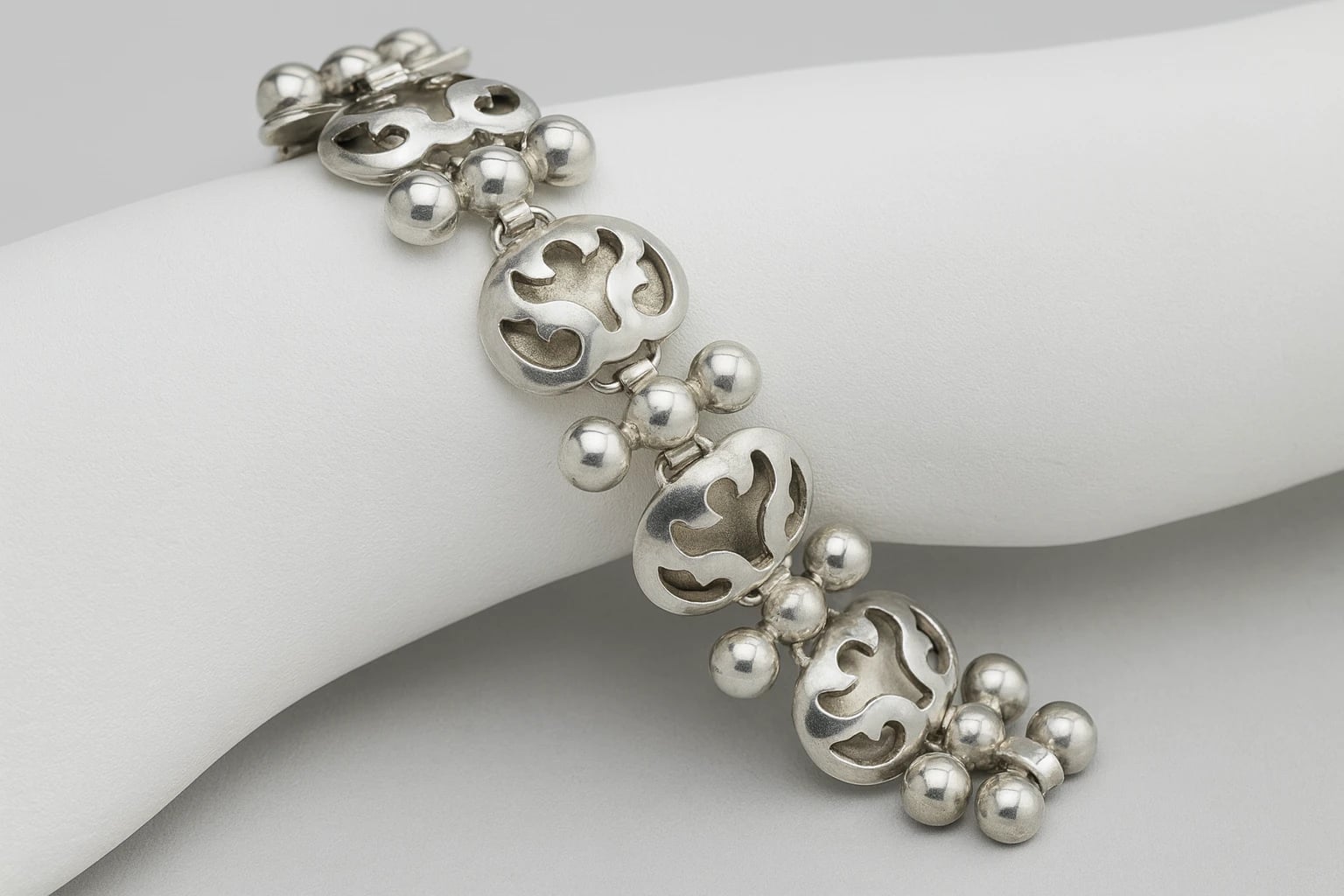
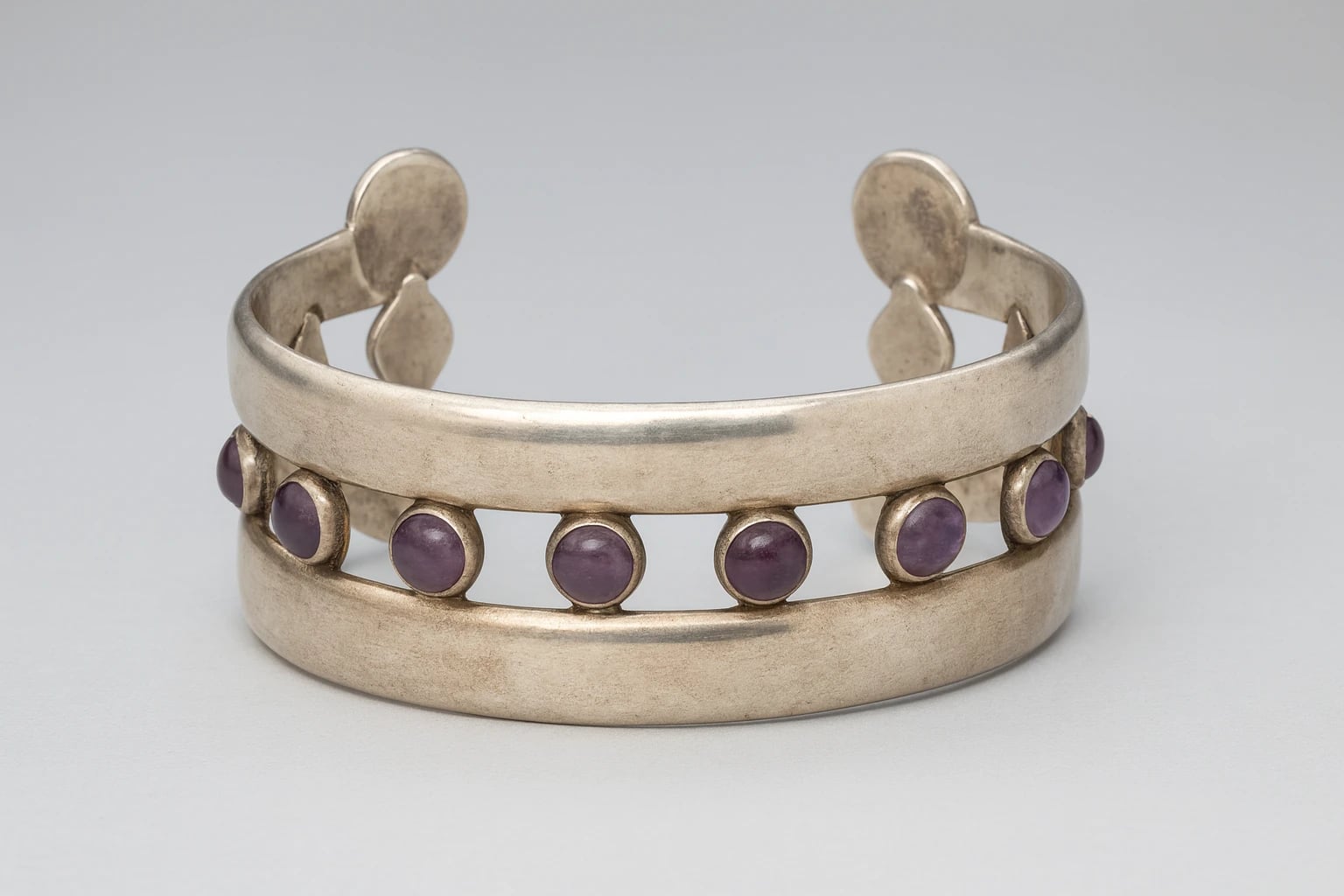
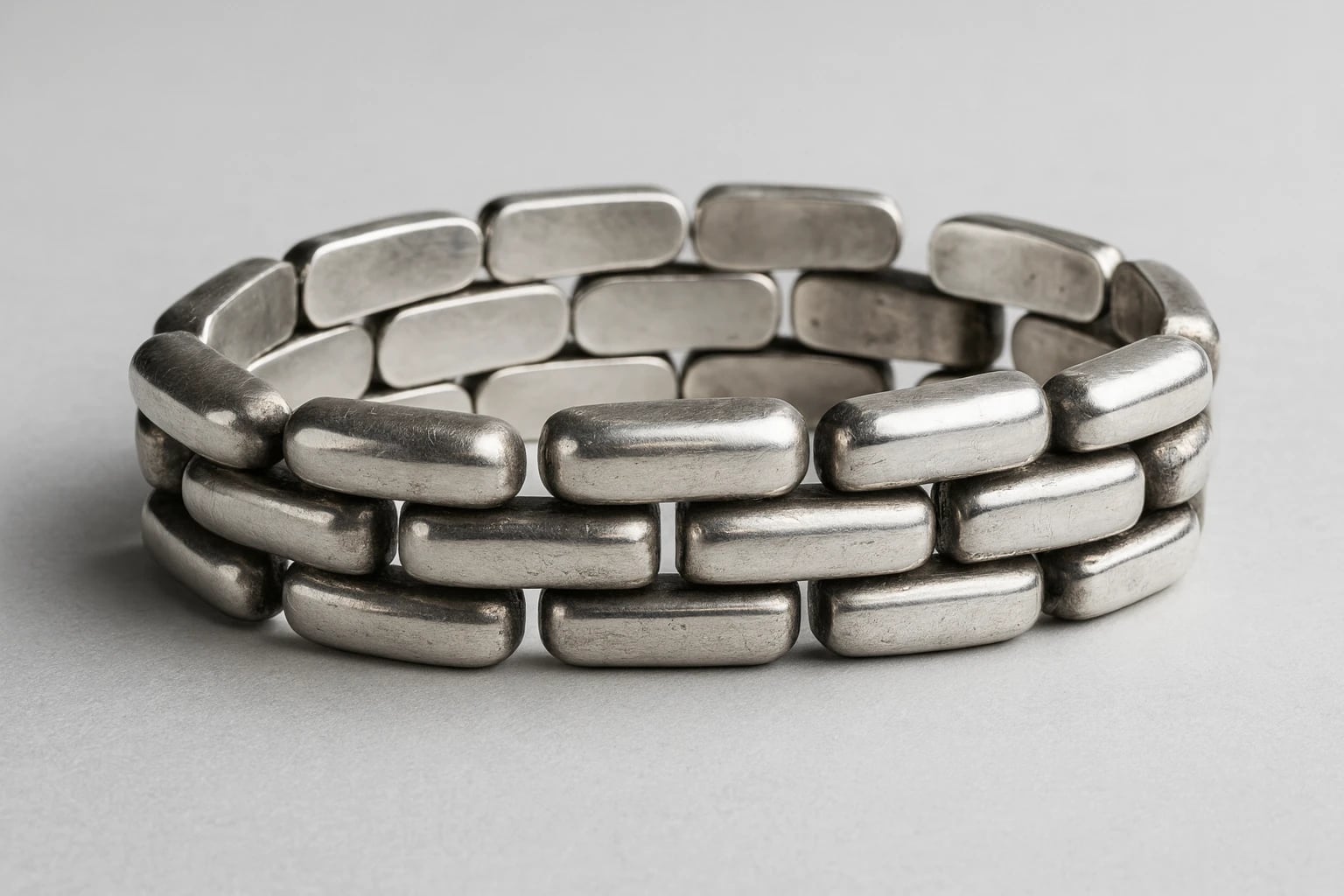
This bracelet, built from three rows of small brick-like silver links, represents William Spratling's workshop working in a purely modernist, non-figural register during the First Design Period. Where much of the early taller output drew on Pre-Columbian imagery or the Mexican menagerie of birds and beasts, this design turns instead to a strict architectural logic. The bracelet reduces its ornament to a single repeated module, a short rectangular link, and derives its whole effect from the disciplined multiplication of that unit into a flexible, masonry-like band. It is a piece that teaches how far Spratling's design intelligence could carry pure geometry, without recourse to motif.
The construction is the design. Three parallel courses of rectangular links are set in the offset, staggered pattern of laid brick, each unit joined to its neighbors so that the whole band articulates and flexes to the wrist while reading, at rest, as a continuous silver wall. The offsetting of the rows is what animates the surface: light catches the small planes at slightly different angles, and the eye follows the interlocking rhythm across and along the band. This is demanding hand fabrication, since every link must be formed and finished to a consistent gauge for the pattern to hold true, and the flexibility that makes the bracelet wearable depends on the precision of dozens of small joints. The result is substantial on the wrist yet supple, a satisfying weight of hand-wrought silver.
The design belongs to the international current of geometric, modular modernism that ran through Taxco alongside its Pre-Columbian revivalism. Its reductive vocabulary, a form built from the honest repetition of a single geometric element, echoes the functionalist purity Spratling admired in Jean Puiforcat, whose forms Morrill describes as "geometric, pure in line and volume, comparable to Cubist paintings and the architecture of Le Corbusier" (Morrill, Mexican Silver, 1994, p. 224). Within Spratling's own output the piece sits among the hand-wrought link bracelets the workshop produced in quantity in these years, of the general family as the identification and chain bracelets that reached a wide market through outlets such as Montgomery Ward (Morrill, Mexican Silver, 1994, p. 53). It shows the taller applying its craft not to representation but to structure and pattern.
While no individual production record for this design is documented, its type, the hand-wrought geometric link bracelet, is well attested in the First Design Period literature, and the brick pattern is a distinctive and comparatively demanding variant within that family. Link bracelets saw hard daily wear, and examples with all their links intact and their flex still sound survive in fewer numbers than their original production would suggest. Collectors and curators prize the geometric bracelets because they represent the modernist, industrial-age face of a workshop more often celebrated for its folkloric and Pre-Columbian designs, and because the quality of the hand-work is legible in every joint.
Museum of Mexican Silver. “Silver Brick Bracelet.” Catalog no. MoMS-000250. https://museumofmexicansilver.com/pieces/spratling-83
See something wrong with this record? Suggest a correction and the piece details fill in automatically.
The bracelet warrants inclusion in a museum collection as clear evidence of the modernist discipline within the Taxco renaissance. Stripped of imagery and reduced to the rhythm of a single repeated form, it demonstrates that Spratling's workshop commanded the abstract, geometric language of international modern design as fluently as it did the iconography of Mexico's past, and that even a modest band for the wrist could carry that ambition in wholly hand-made silver.
William Spratling
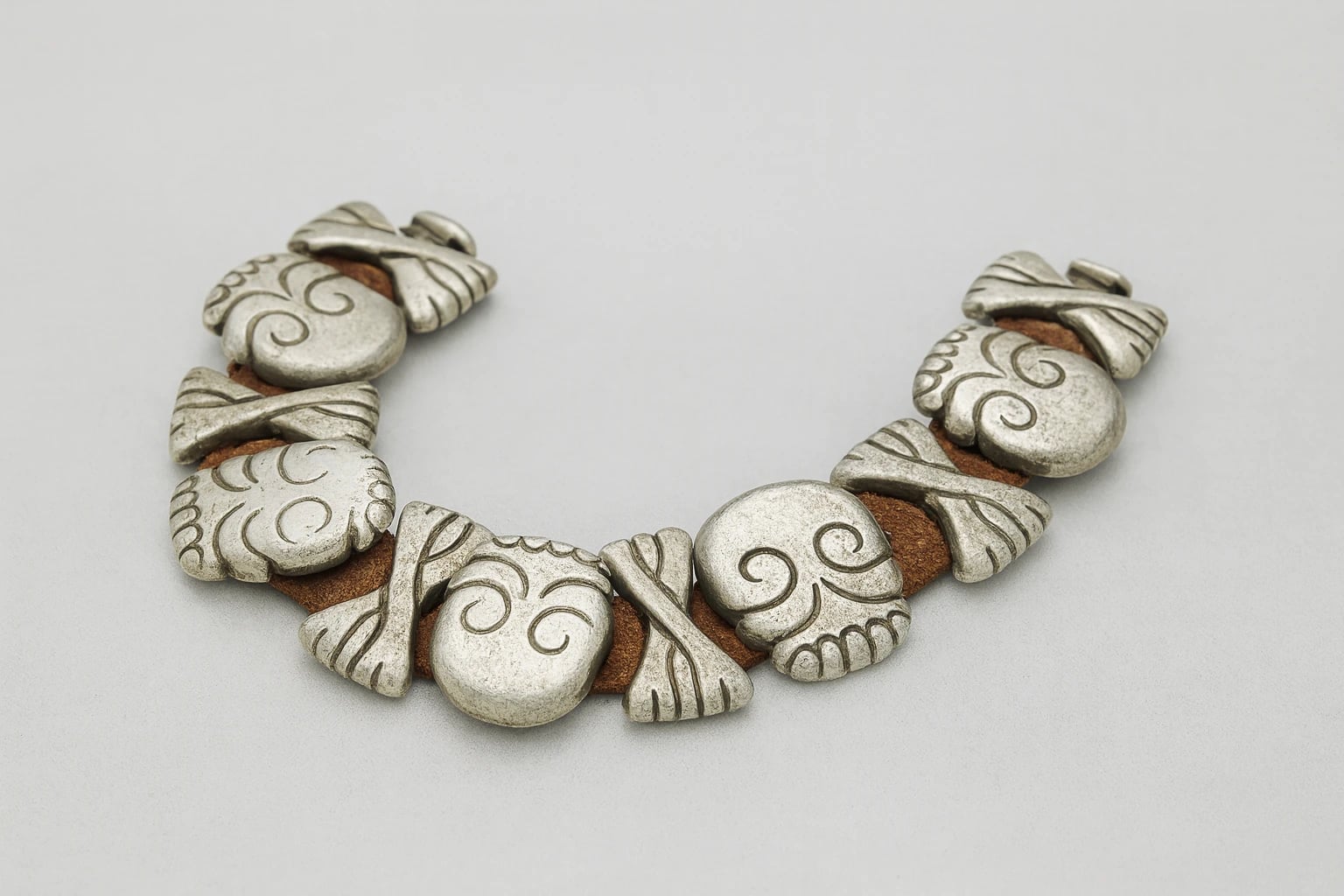
Day of the Dead Bracelet
First Design Period: 1931 - 1946
Silver