Saves instantly, no account needed. Already a member? Sign in.
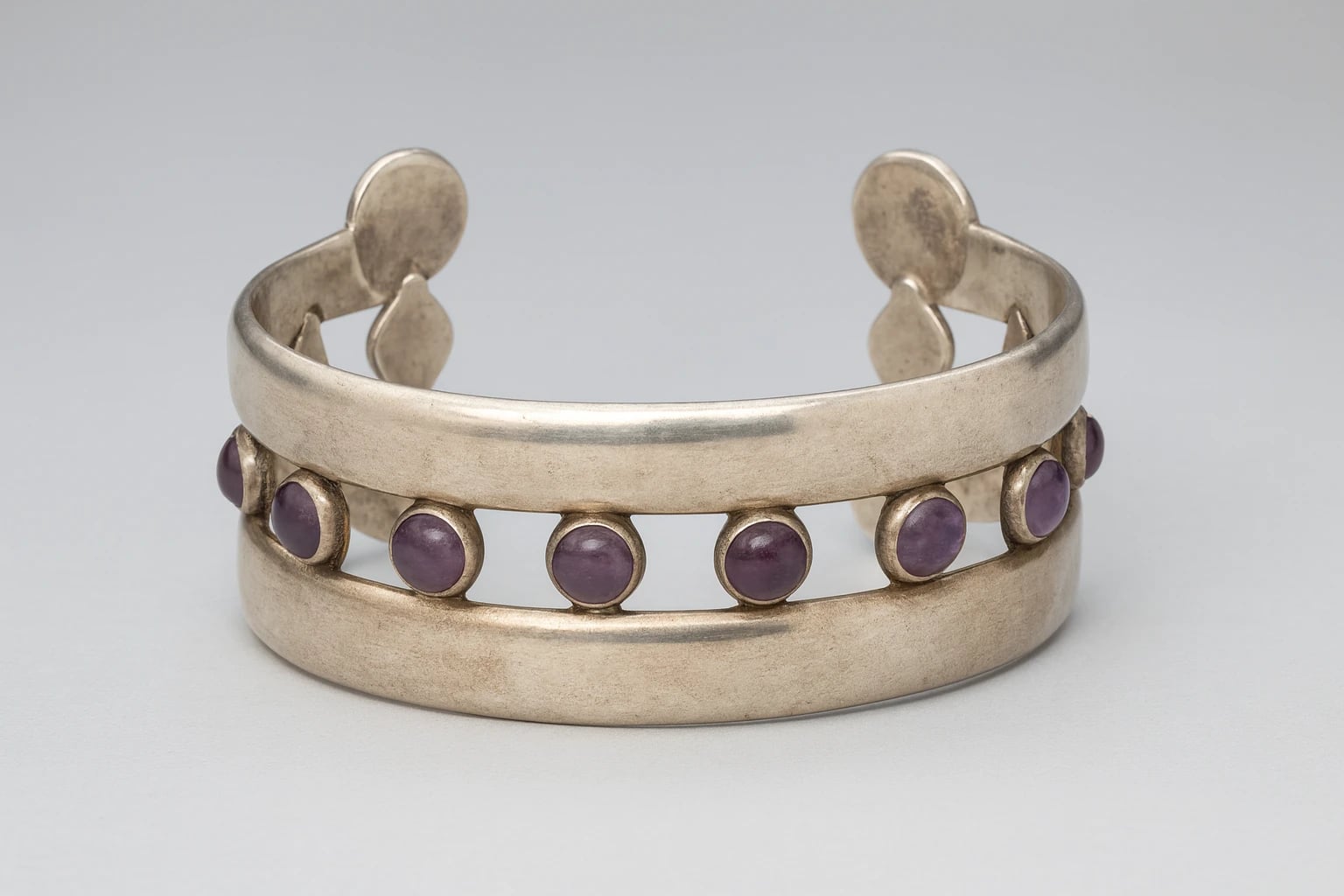
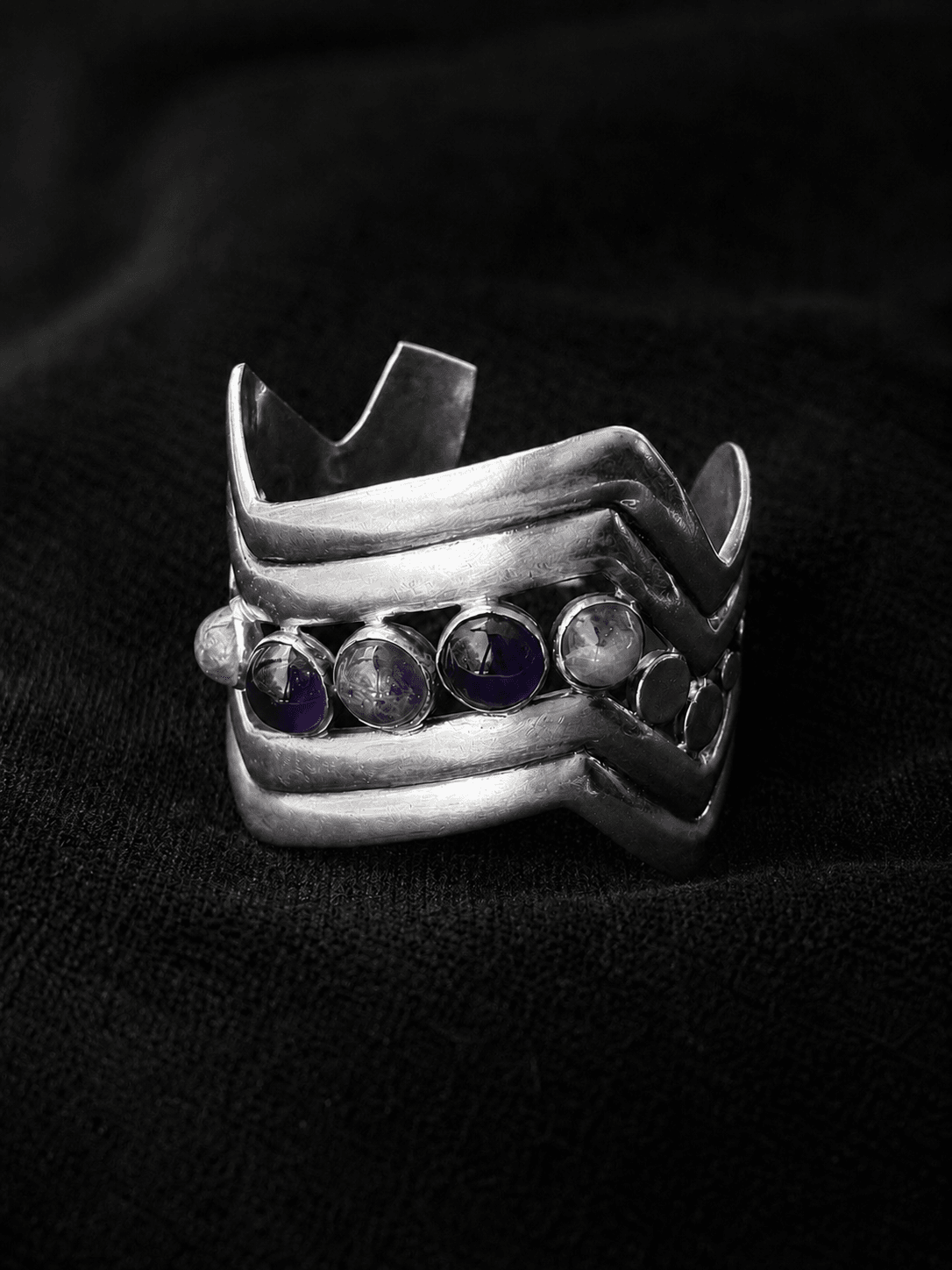
The bracelet takes a single idea, the acute angle, and repeats it around the wrist so that the band reads as a continuous chevron. The silver is worked into a series of V forms, and amethysts sit within the metal, their violet transparency interrupting the reflective surface at measured intervals. The result is a bracelet organized around one geometric motif rather than around a naturalistic subject, and that discipline places it among the more severely resolved of William Spratling's early ornaments.
The zigzag governs both the outline and the internal rhythm. Each angle meets the next at its point, so the eye follows a run of peaks and valleys as the band curves. Silver carries most of the surface, and its polish returns light in flat planes broken by the diagonal seams of the design. The amethysts introduce color and translucency where the metal is otherwise opaque, and their placement within the geometry keeps them subordinate to the structure. Spratling used stones this way in the first design period, treating them less as isolated jewels than as accents keyed to a metalwork pattern. The V shape also has a practical logic: the repeated angular links allow the rigid material to follow the round of the wrist without abandoning its geometry.
Spratling founded the Taller de Las Delicias in Taxco in 1931, reorganizing design and production and building the international markets that helped catalyze the silver renaissance. This bracelet belongs to that first design period, dated by Morrill and Berk to the years between 1931 and 1946, when much of the vocabulary later associated with the Taxco School was being worked out in his workshop. The taller was a collaborative structure in which a designer could concentrate on the conception of a piece while master smiths translated it into finished silver, and the clean repetition of the chevron here reflects that division of skill. The angular motif connects less to any single ancient source than to the broader modernist interest in geometric ornament that Spratling shared with the postrevolutionary generation of Mexican designers, among them the figures who trained in or passed through his workshop before establishing their own talleres.
Within a collection, the piece documents Spratling's early preference for governing an ornament by a single geometric unit and for using colored stones as controlled incident rather than centerpiece. The amethyst and silver pairing, worked into a strict chevron, shows how the first design period pursued modern form through repetition and restraint. It records a characteristic phase of his practice and of the workshop system that made such disciplined production possible in Taxco.
Museum of Mexican Silver. “Zig Zag Bracelet with Amethysts.” Catalog no. MoMS-000258. https://museumofmexicansilver.com/pieces/spratling-845
See something wrong with this record? Suggest a correction and the piece details fill in automatically.
William Spratling
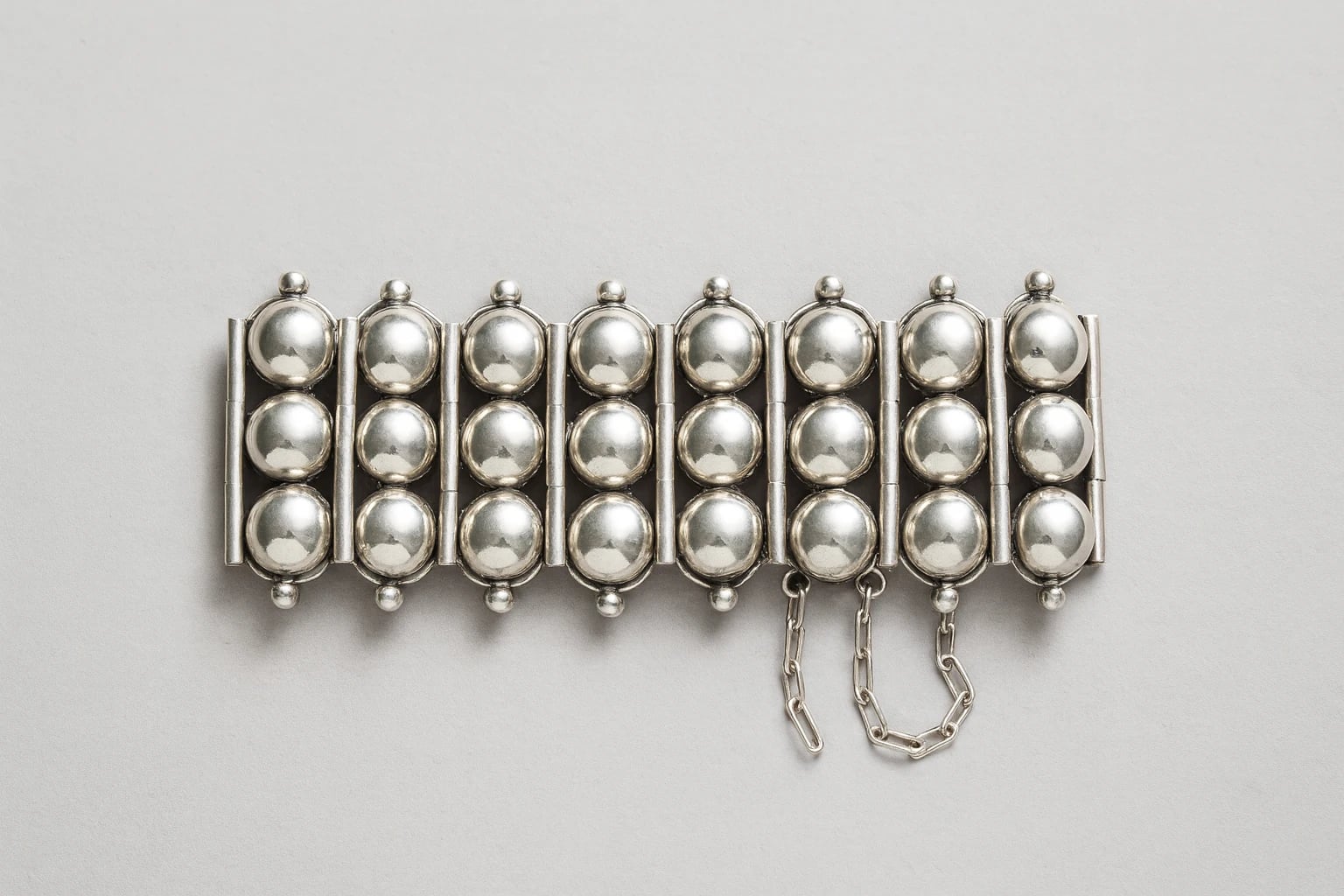
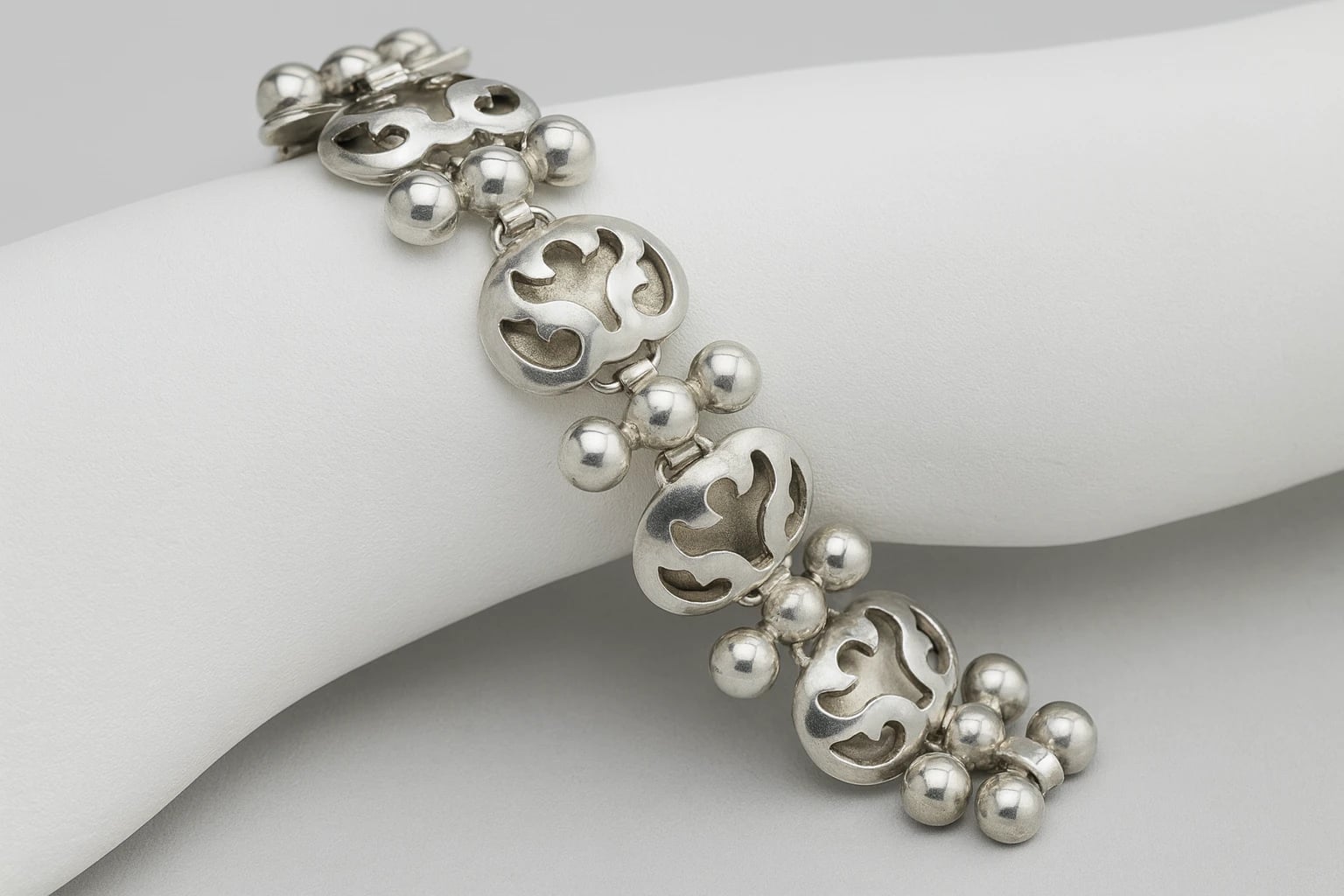
Half Ball Link Bracelet
First Design Period: 1931 - 1946
Silver