Saves instantly, no account needed. Already a member? Sign in.
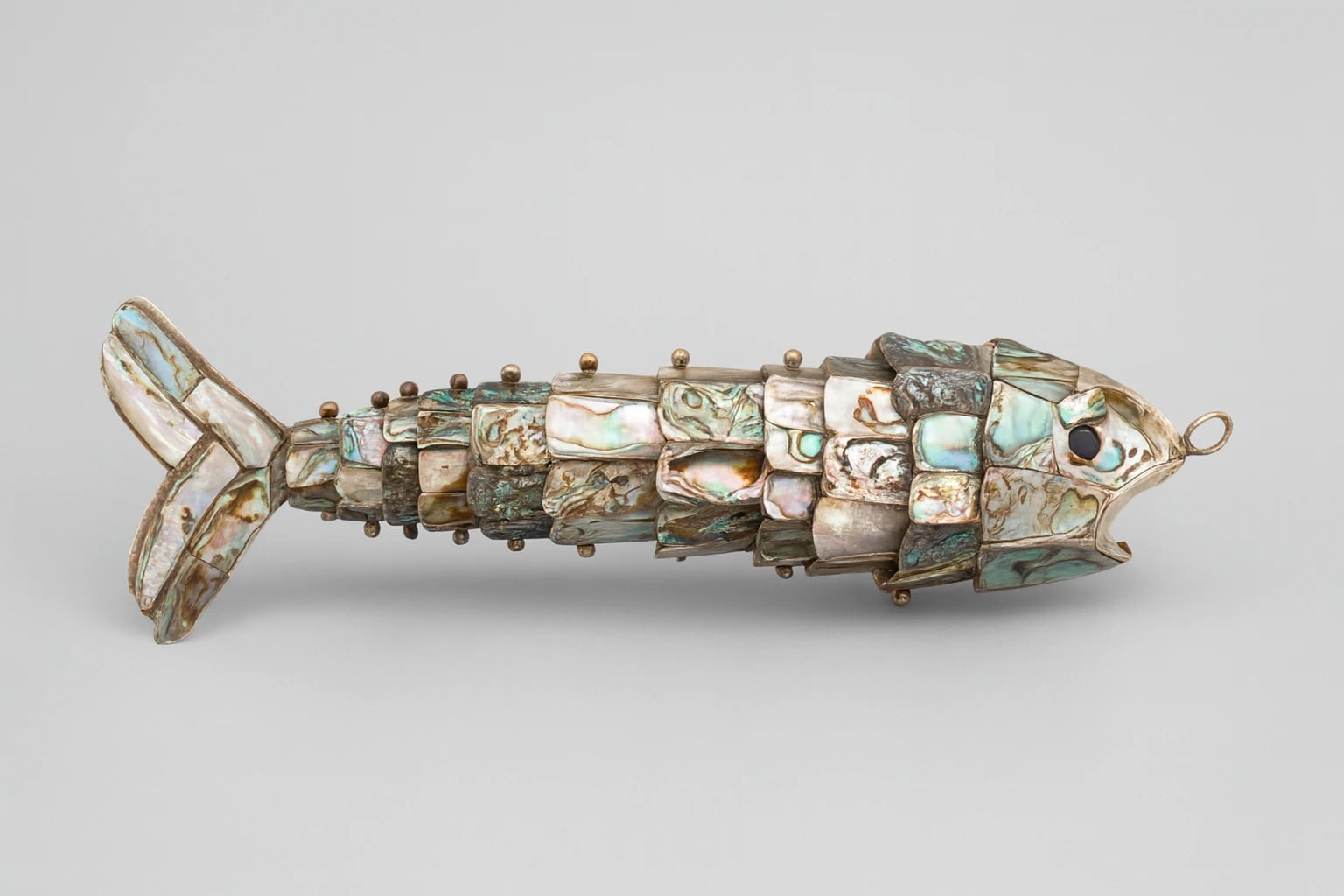
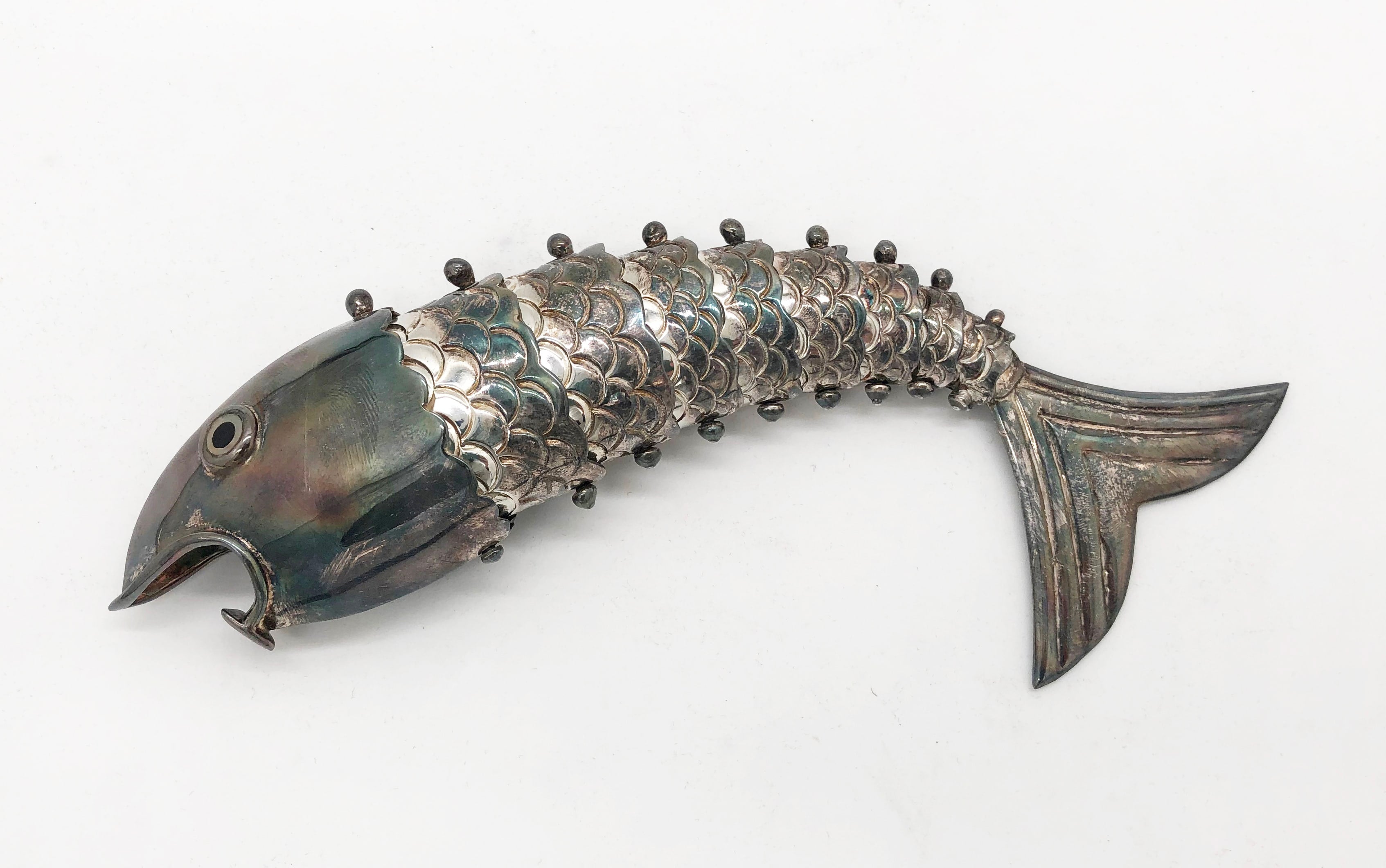
A fish-form bottle opener of this type captures Los Castillo's practice of extending the workshop's figural design vocabulary into functional domestic objects. Alongside the jewelry the taller is best known for, it sustained a production of household silver — trays, flatware, tabletop pieces — and the fish motif belongs to that documented repertoire: Penny C. Morrill records swirling silver fish in Los Castillo's jewelry production of the 1950s and 1960s, confirming the form as a house signature rather than a one-off commission.
Executed in silver plate, the piece belongs to the workshop's broader domestic line. The fish body arcs naturally into the lever mechanism of a bottle opener, the tail providing a grip, so form and function reinforce each other without ornament for its own sake. The economy of the design reflects the discipline of workshop production at Los Castillo, where, as Morrill notes, more than 350 artisans worked at the taller's height, producing some two hundred kilos of silver and silver-plate work every week (Morrill, Mexican Silver, 1994).
Founded in 1939 by Antonio Castillo and his brothers, all among William Spratling's first apprentices at the Taller de Las Delicias, Los Castillo developed a catalogue of more than eight hundred designs spanning jewelry, decorative objects, and functional table silver. A clearly marked example in the taller's characteristic figural style stands as a solid document of mid-century Taxco decorative production.
Museum of Mexican Silver. “Fish Bottle Opener.” Catalog no. MoMS-001183. https://museumofmexicansilver.com/pieces/los-castillo-bottle-opener-fish-bottle-opener-silverplate
See something wrong with this record? Suggest a correction and the piece details fill in automatically.
Los Castillo
Footed Copper Bowl
Copper