Saves instantly, no account needed. Already a member? Sign in.
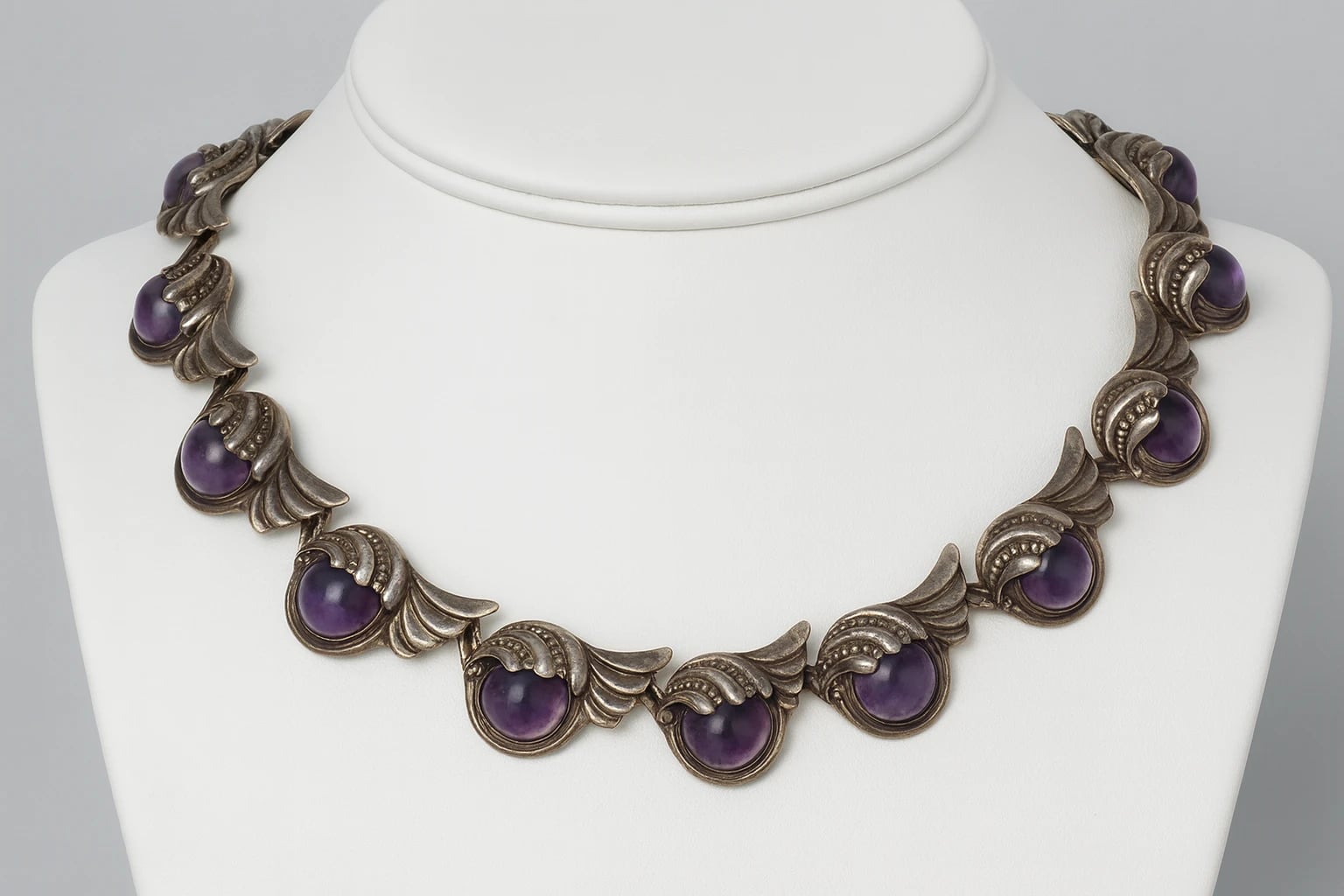
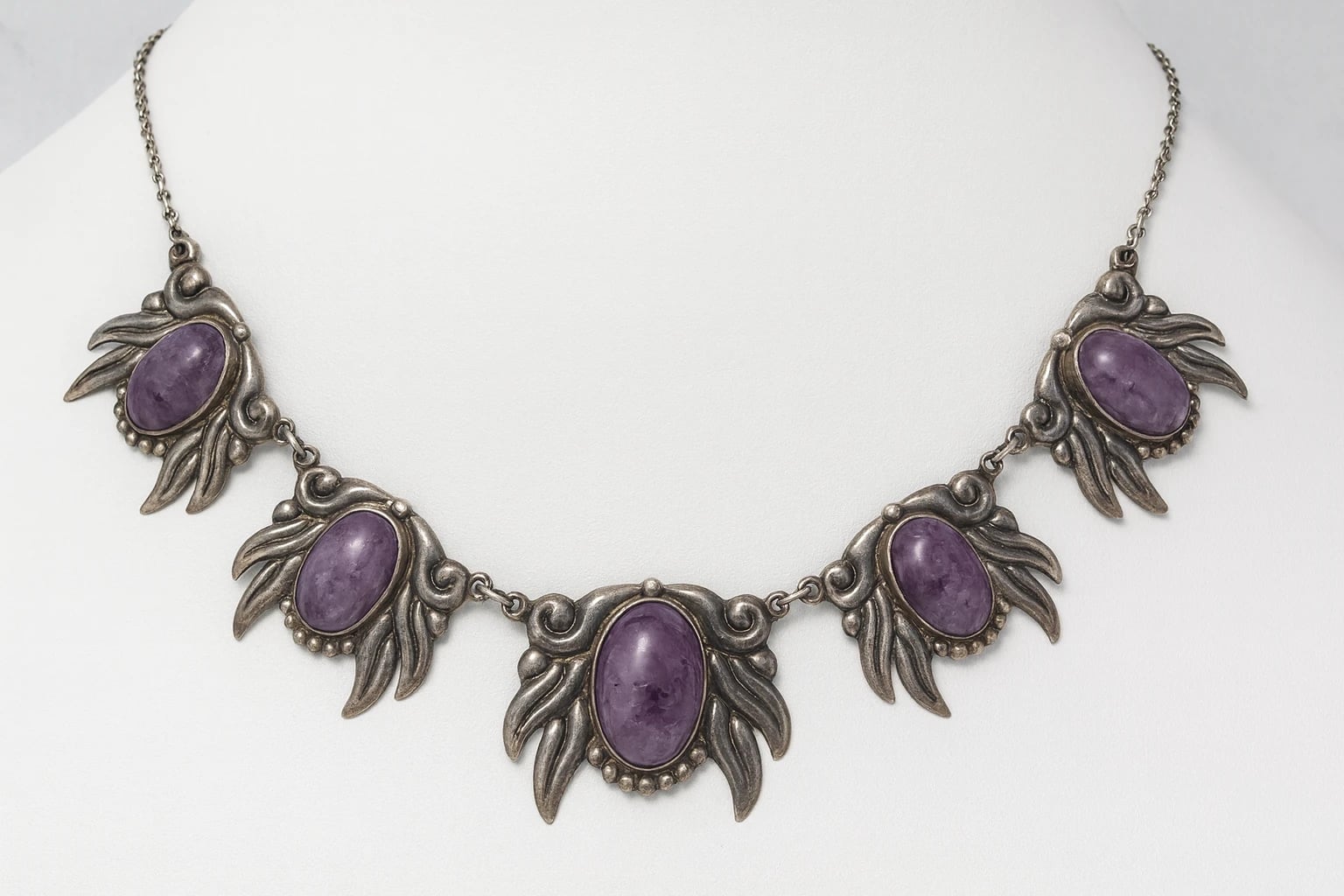
Seven amethyst cabochons set the rhythm of this Los Castillo necklace, each stone held in a silver form that opens into feathered wings. The necklace is compact in length, fourteen inches, but visually expansive: every link spreads outward from its oval center, so that the line around the neck alternates between the fullness of the stones and the pointed motion of the silver feathers. The result is not a continuous chain with pendants attached to it, but a sequence of articulated units whose ornament and structure are the same thing.
The amethysts are used for their mass and color rather than for sparkle. Their rounded, translucent purple surfaces sit against oxidized silver and niello accents, giving the necklace a darker, more atmospheric palette than the brighter gemstone settings often associated with tourist silver. The feather forms curl and taper around each cabochon, with beaded details marking the lower edges and darker linear accents emphasizing the separations between the silver vanes. These details keep the individual units legible when the necklace is worn. Each section has its own small drama of enclosure and release: the stone is held firmly at the center, while the silver seems to fan away from it.
The mark places the necklace in the early Los Castillo vocabulary: Made in Mexico, Sterling, design number 408, and the older linear Los Castillo Taxco mark, without an eagle assay stamp. Its circa 1940s date belongs to the formative decade of the taller, founded in Taxco in 1939 by Antonio Castillo with members of his family and cousin Salvador Terán after their experience in the workshop culture shaped by Las Delicias. The design number is especially useful here because Los Castillo, like several major Taxco workshops, used stamped inventory or design numbers to organize production. Number 408 does not give an exact year, but it situates the piece among the numbered designs of the workshop’s early development, before the later proliferation of line marks for specialized techniques such as Mosaico Azteca, Onix Negro, and Pluma Azteca.
This necklace also shows how quickly Los Castillo established an identity distinct from the workshops around it. The taller became famous for married metals and other highly inventive surface techniques, but its jewelry could be equally effective when organized through silver, stone, and dark accent alone. The wing or feather motif belongs naturally to the visual world of Mexican modernism, where ancient sources, natural forms, and modern stylization were continually reworked rather than copied. Here the feathers are not archaeological quotations. They are compressed into repeatable silver units, controlled enough for a necklace and animated enough to avoid stiffness.
Museum of Mexican Silver. “Wing Feather Necklace with Amethyst and Niello.” Catalog no. MoMS-002345. https://museumofmexicansilver.com/pieces/los-castillo-necklace-3
See something wrong with this record? Suggest a correction and the piece details fill in automatically.
Within a museum collection, the necklace is valuable because it records Los Castillo at a point when the workshop’s design language was still being formed through jewelry of intimate scale. It carries the evidence of an early mark, a numbered design, and a material combination that links the purple cabochon jewelry of the 1940s to the broader Taxco interest in color, silhouette, and movement. The piece belongs to the history of Mexican silver not only as adornment, but as a small, carefully organized modern object: modular, tactile, and unmistakably shaped by the collaborative intelligence of the Taxco taller.
Los Castillo
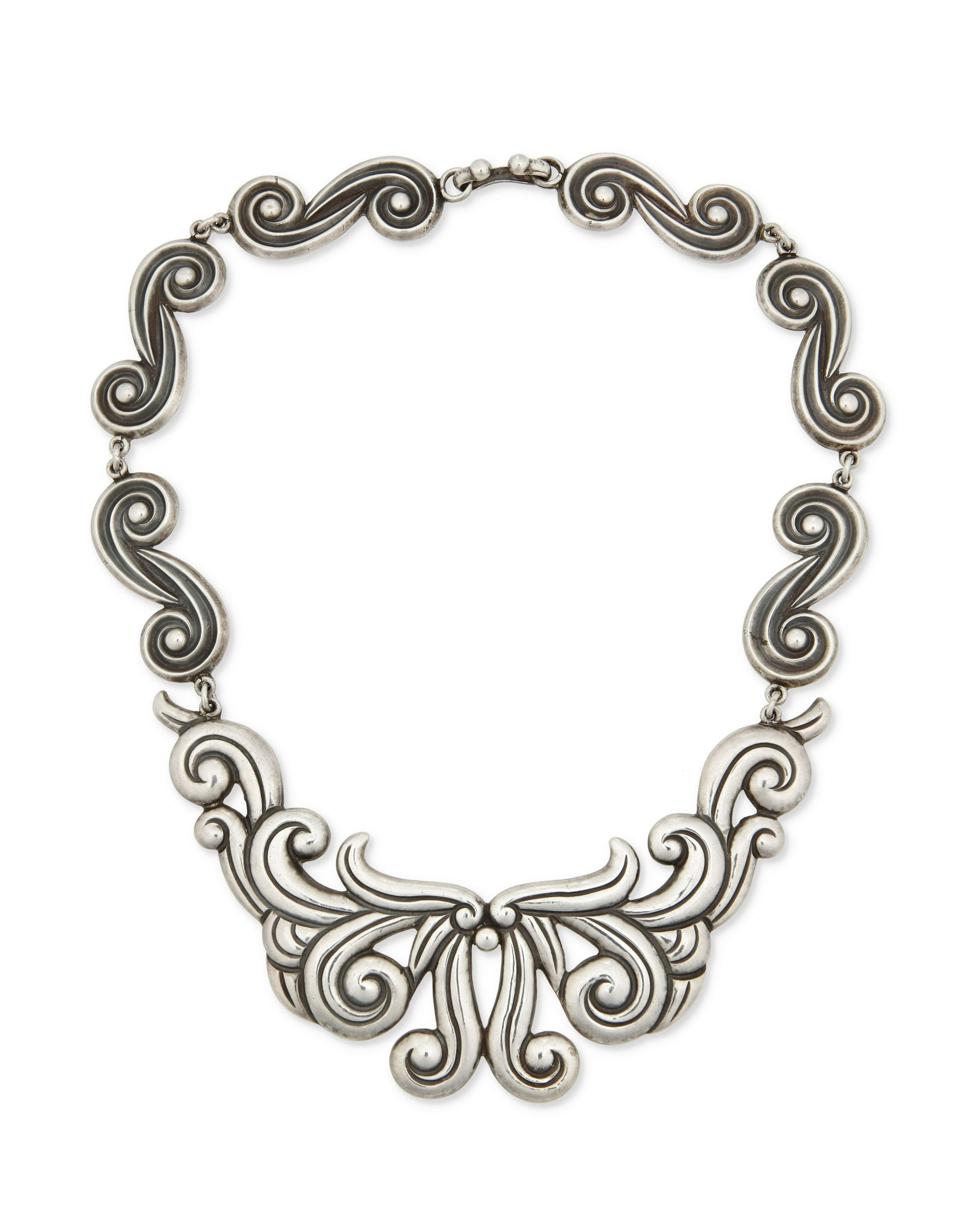
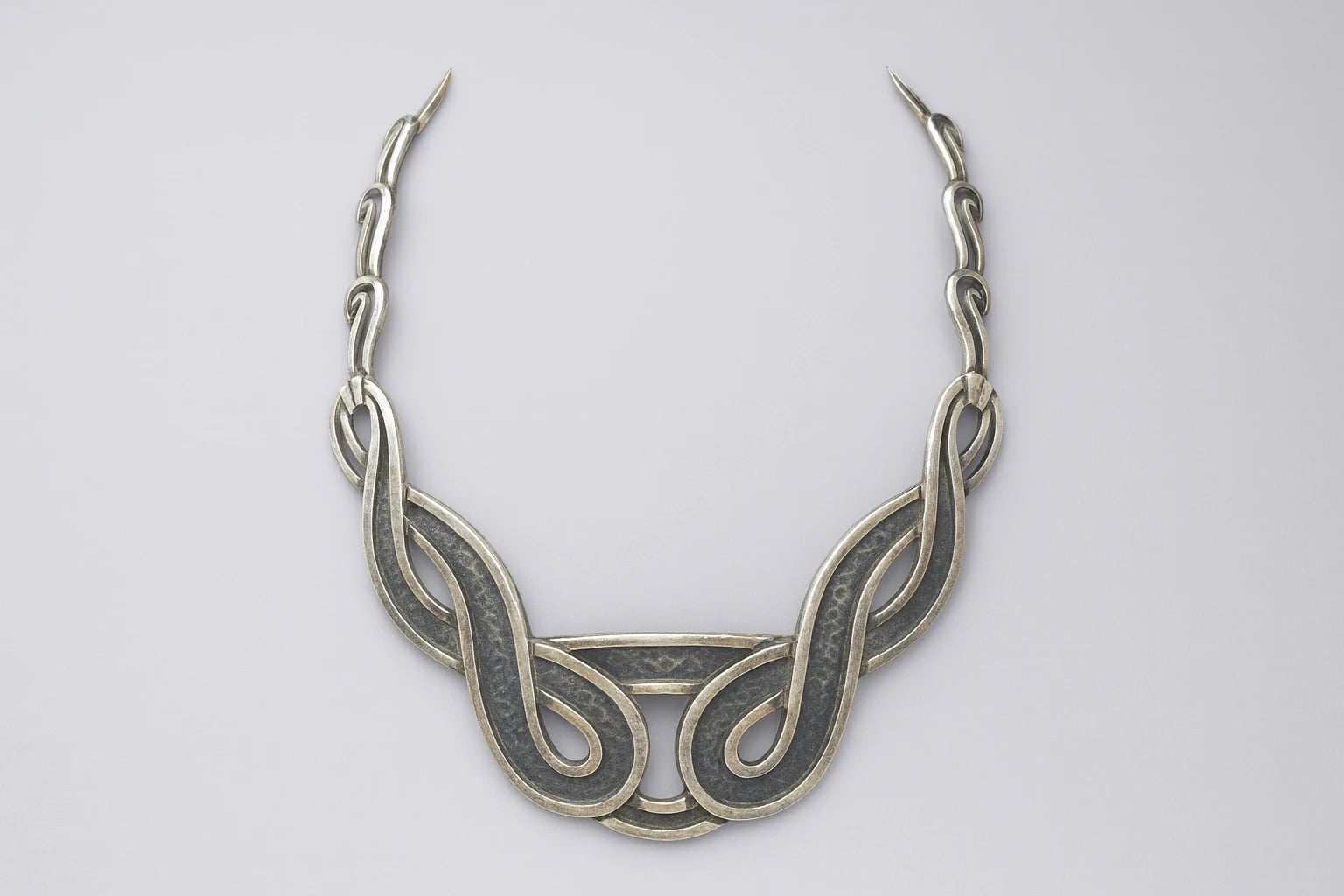
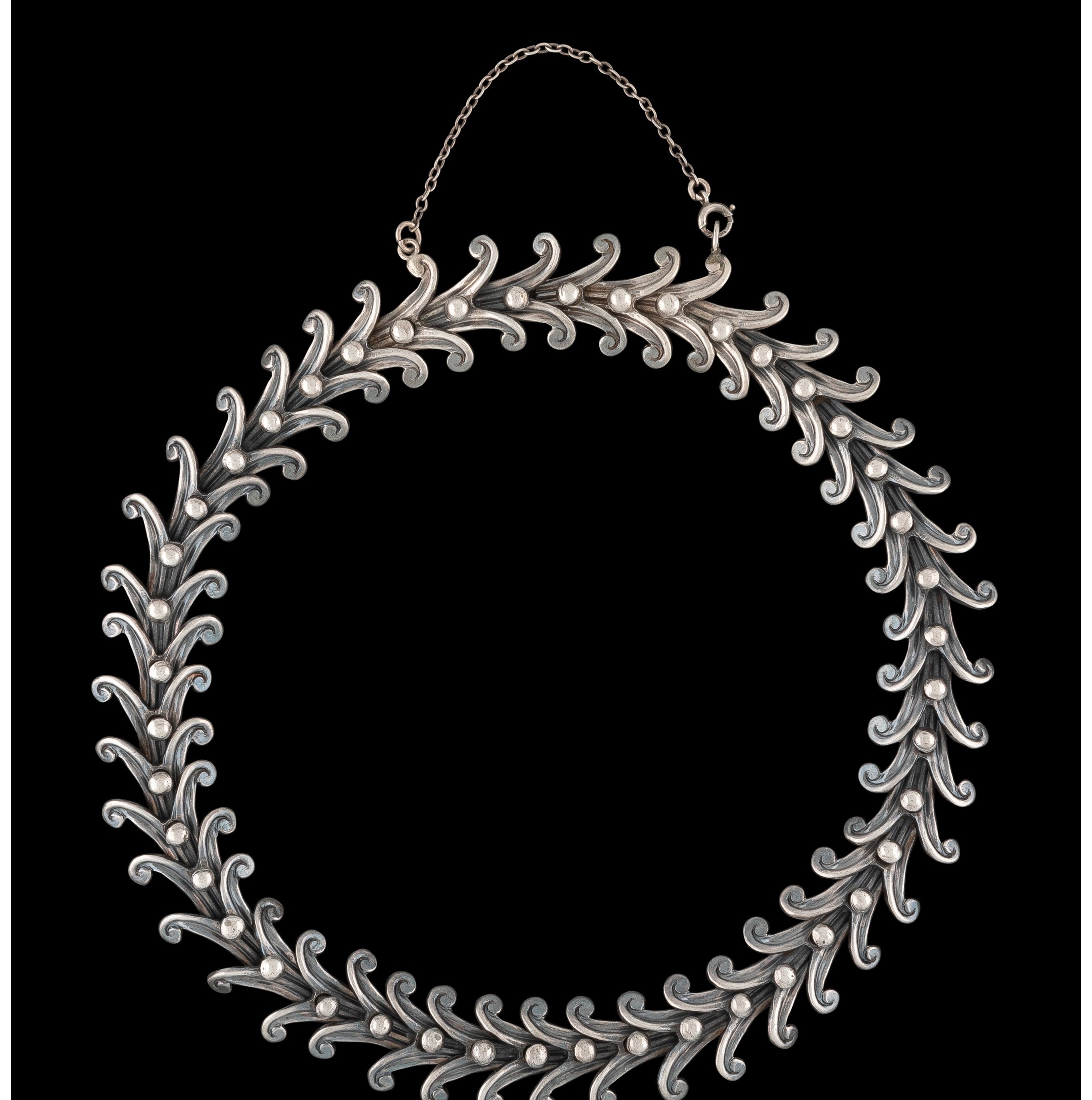
Swirling Repoussé Necklace, Design #366
Sterling silver