Saves instantly, no account needed. Already a member? Sign in.
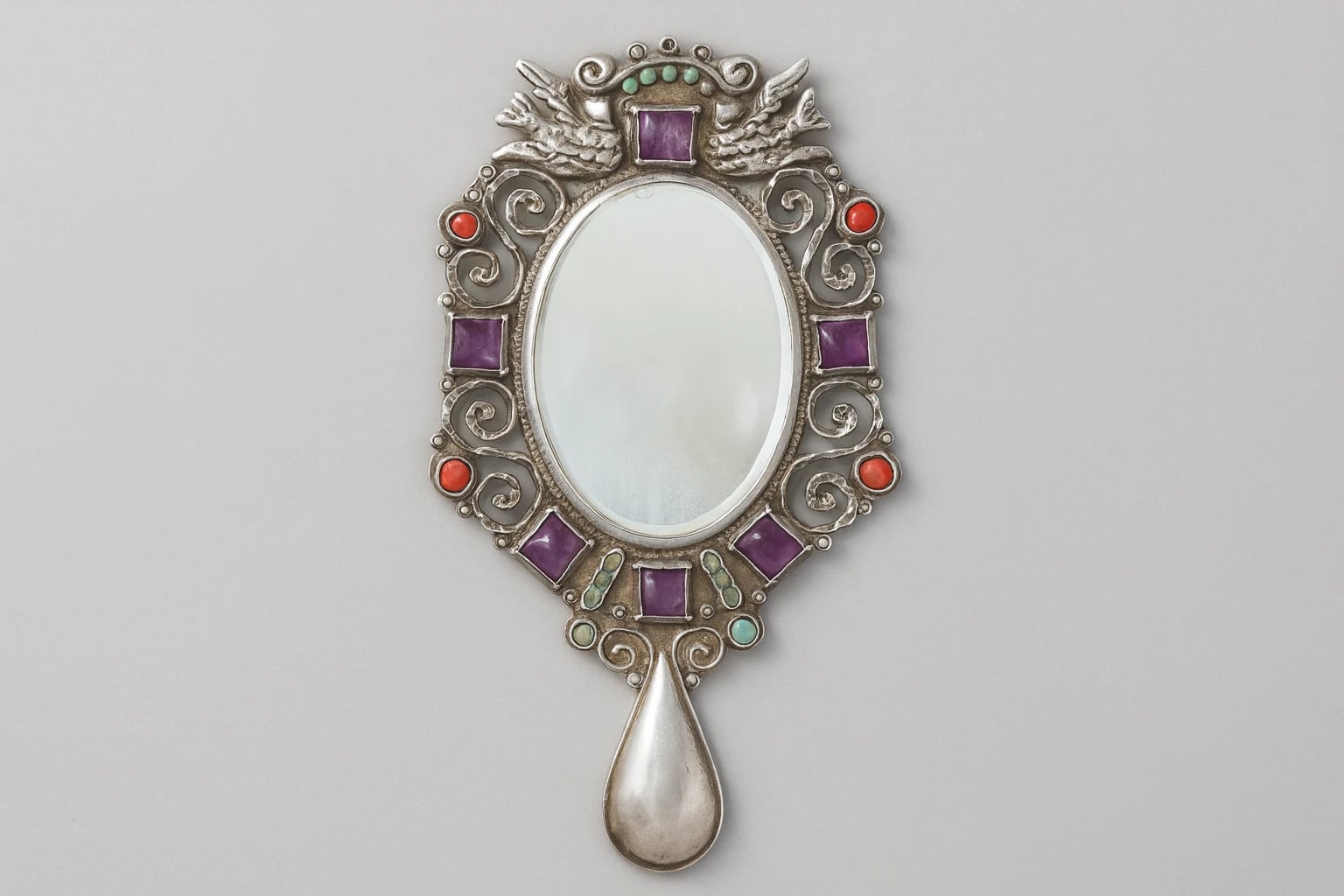
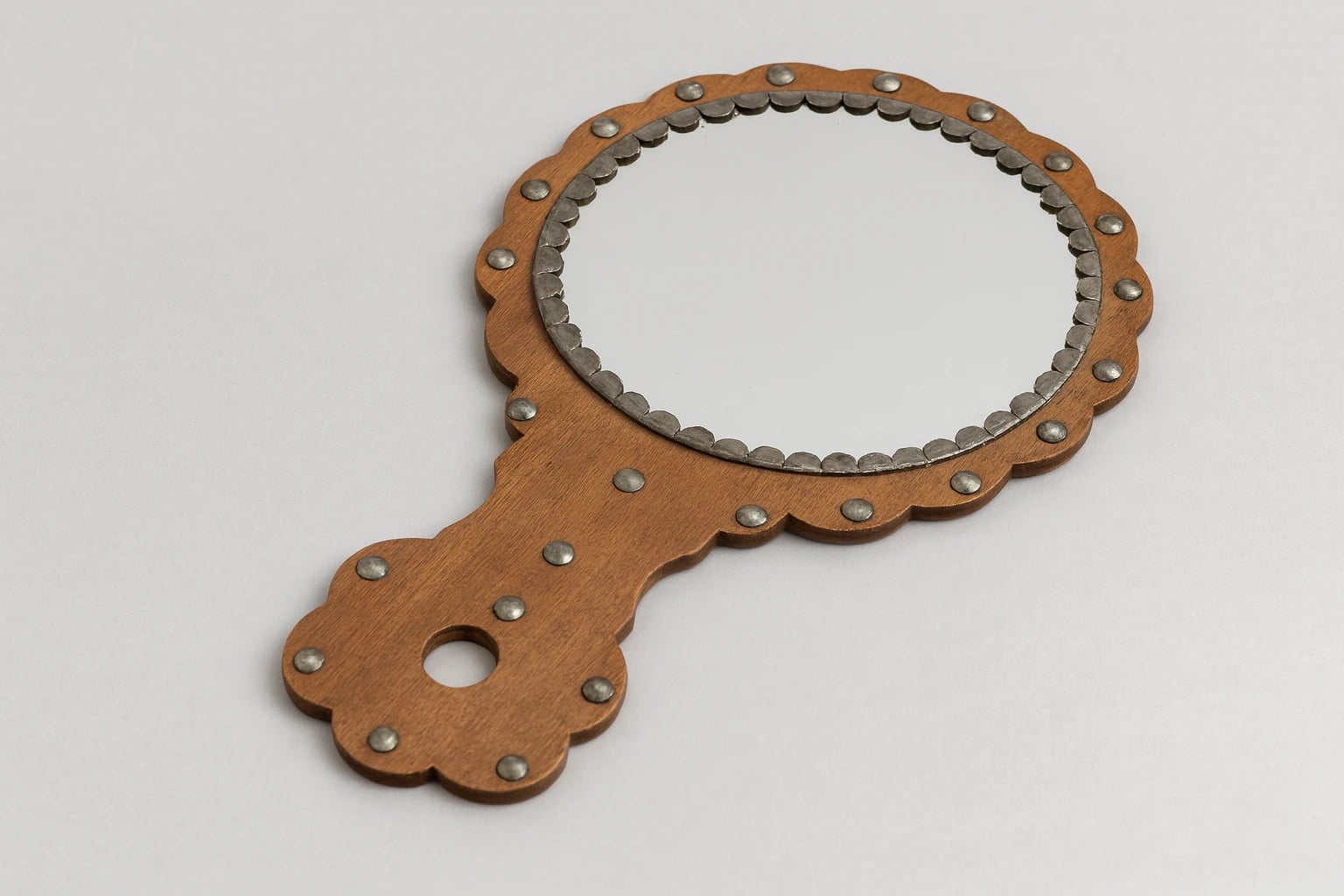
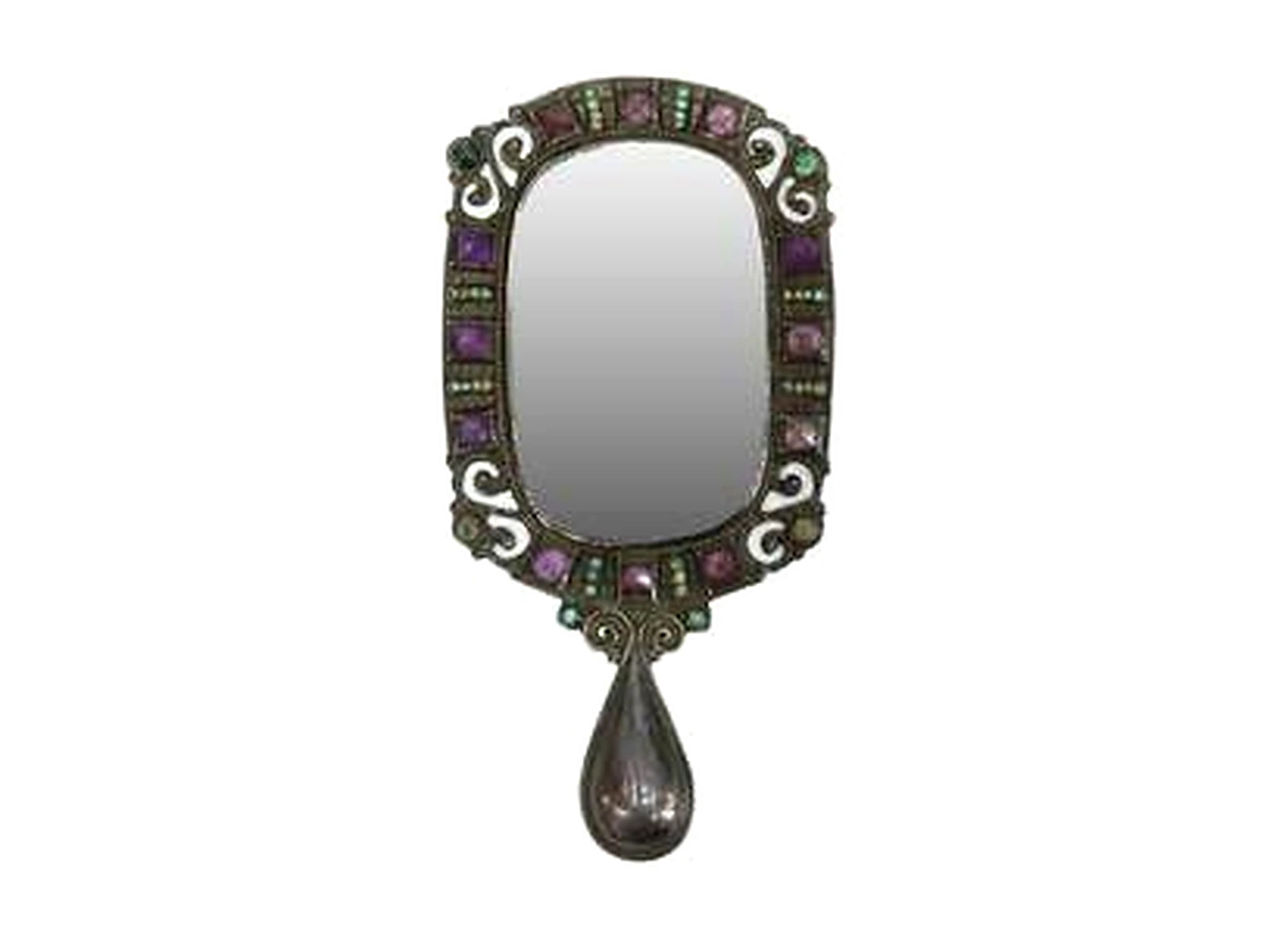
A hand mirror carries the MATL idiom out of the jewelry case and onto the vanity, its silver frame massed with turquoise in the same dense, devotional way Matilde Poulat brought to her brooches and crosses. The form is utilitarian, but the surface is anything but plain: turquoise reads as colored punctuation against worked silver, in the manner of folk ornament rather than European restraint.
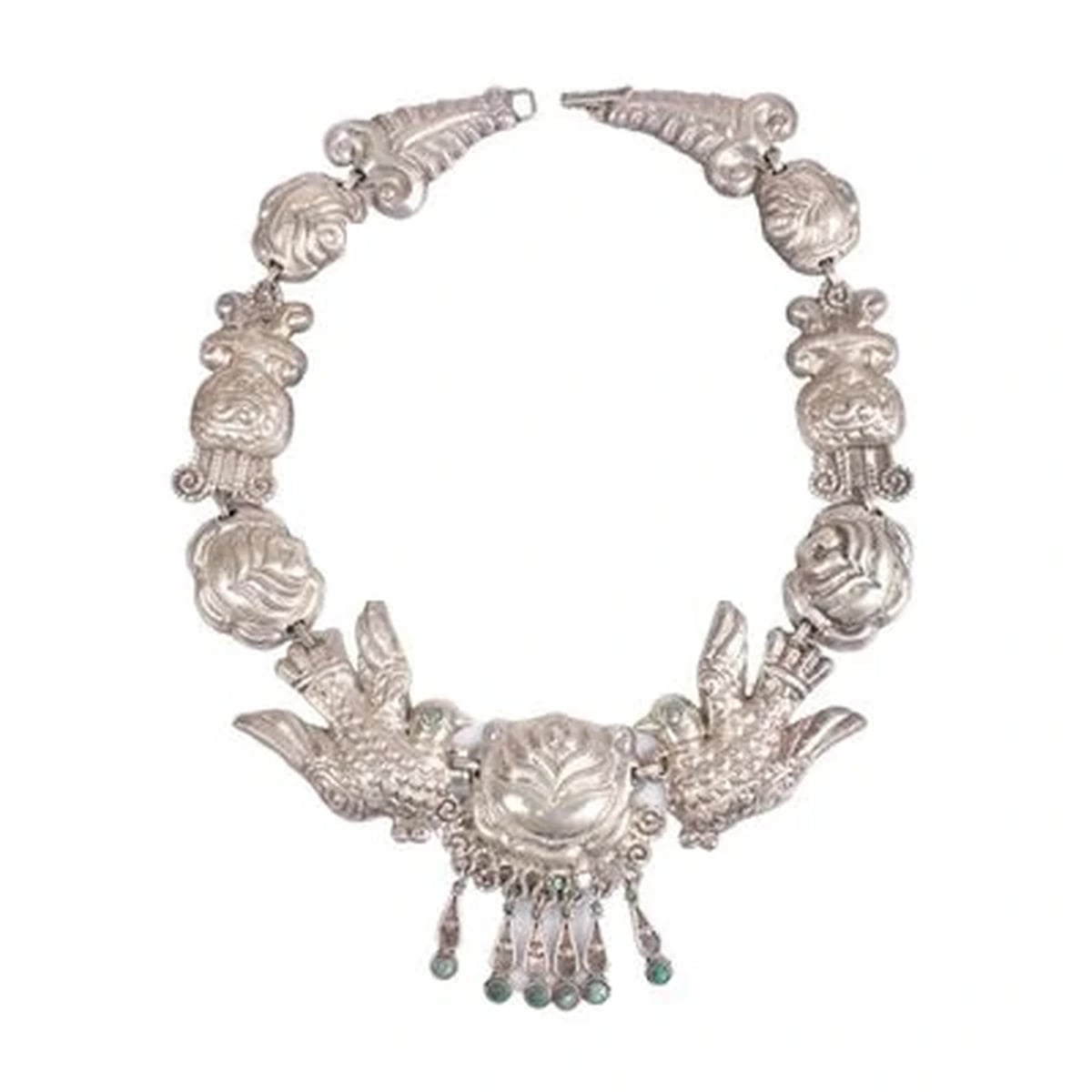
That idiom was a deliberate one. Trained as a painter at the San Carlos Academy before silver claimed her interest entirely, Poulat introduced the "MATL" mark in 1934 and built her work around motifs Morrill describes as the dove, flowers, and tiny bells, drawn from the whimsical vocabulary of Mexican folk art and from the Mixtec gold unearthed at Monte Alban in 1932 (Morrill, p. 216). A turquoise-set mirror sits squarely in that vision of a post-Revolution Mexican aesthetic, applied to a domestic object.
The workshop made on a remarkable scale. Morrill records that Poulat and her nephew Ricardo Salas produced some three thousand types of silver jewelry and a hundred religious pieces (p. 216). After Poulat's death in 1960, Salas continued the style under the "MATL Salas" mark, so framing and stamps matter to dating any example.
Museum of Mexican Silver. “Mirror with Turquoise.” Catalog no. MoMS-001467. https://museumofmexicansilver.com/pieces/matl-turquoise-mirror
See something wrong with this record? Suggest a correction and the piece details fill in automatically.
MATL (Matilde Poulat)
Round-Link Necklace with Turquoise
1934 or later
Turquoise