Saves instantly, no account needed. Already a member? Sign in.
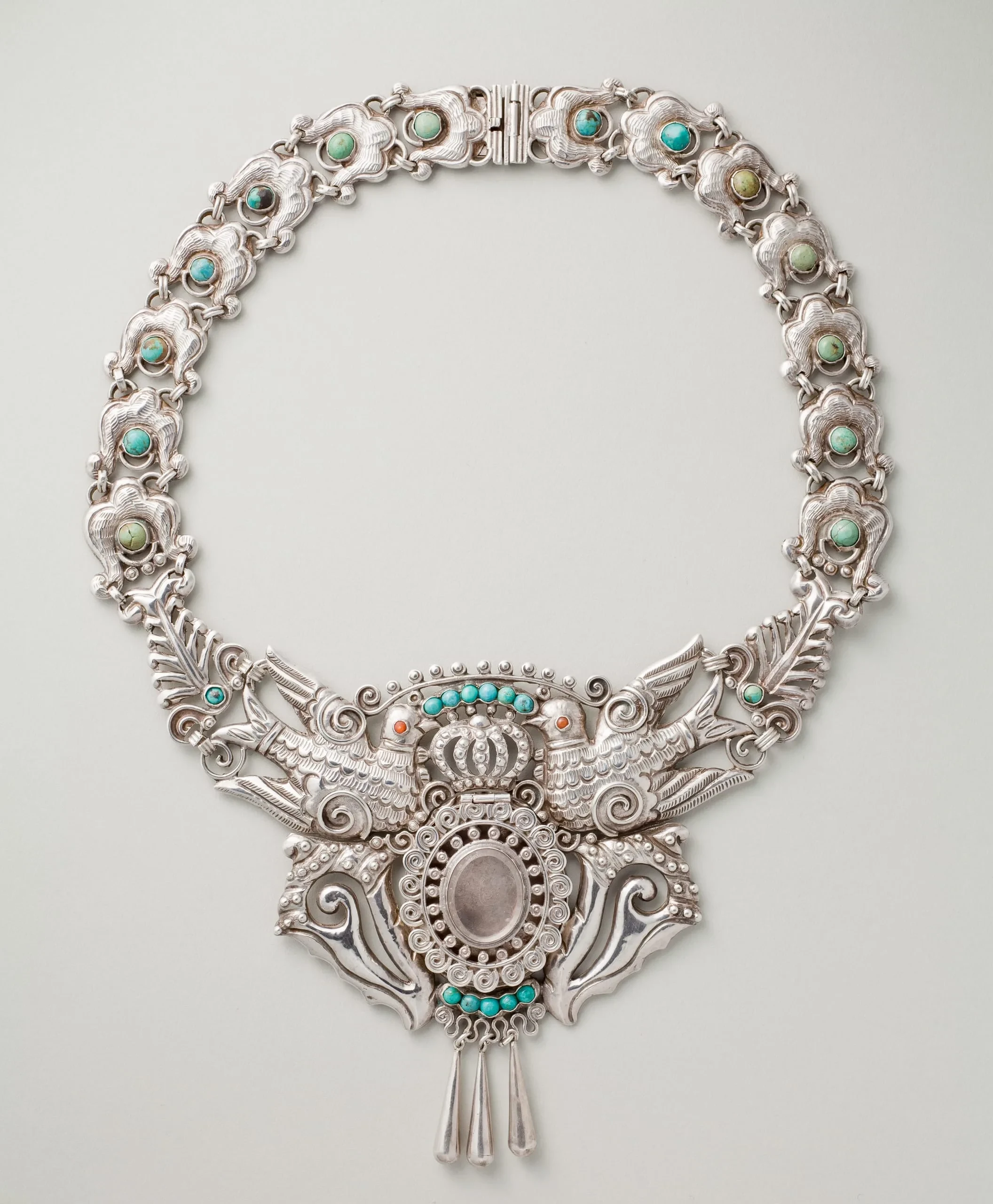
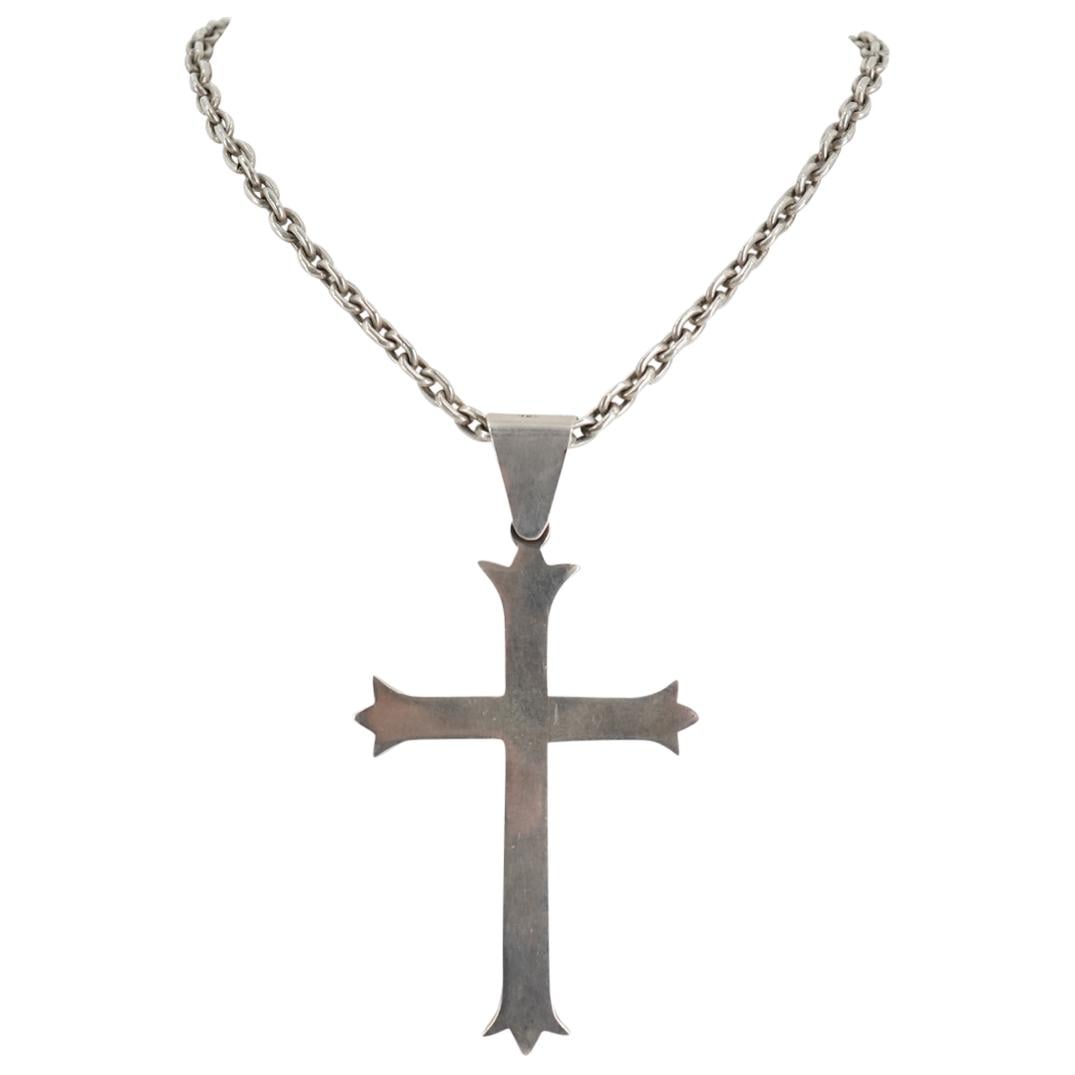
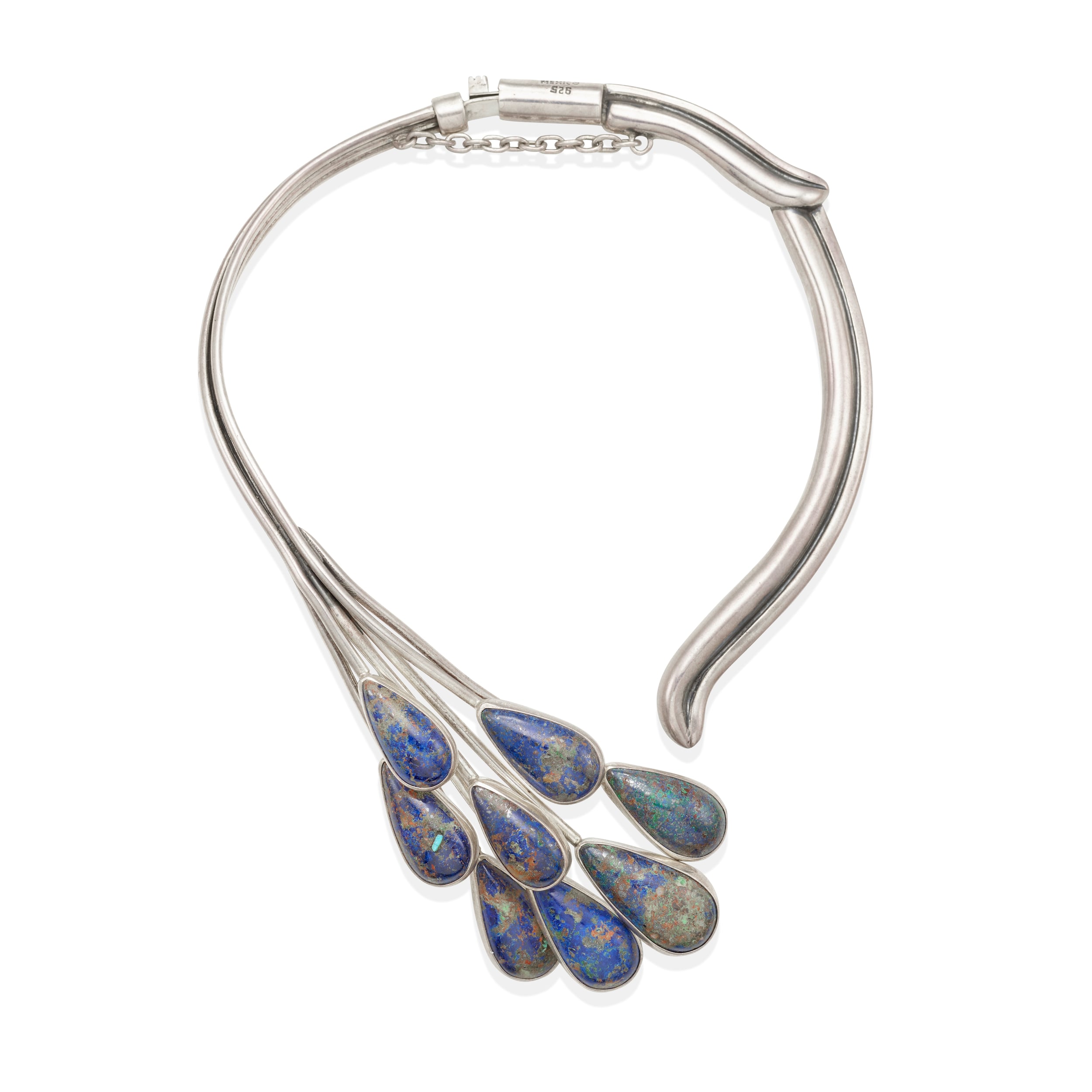
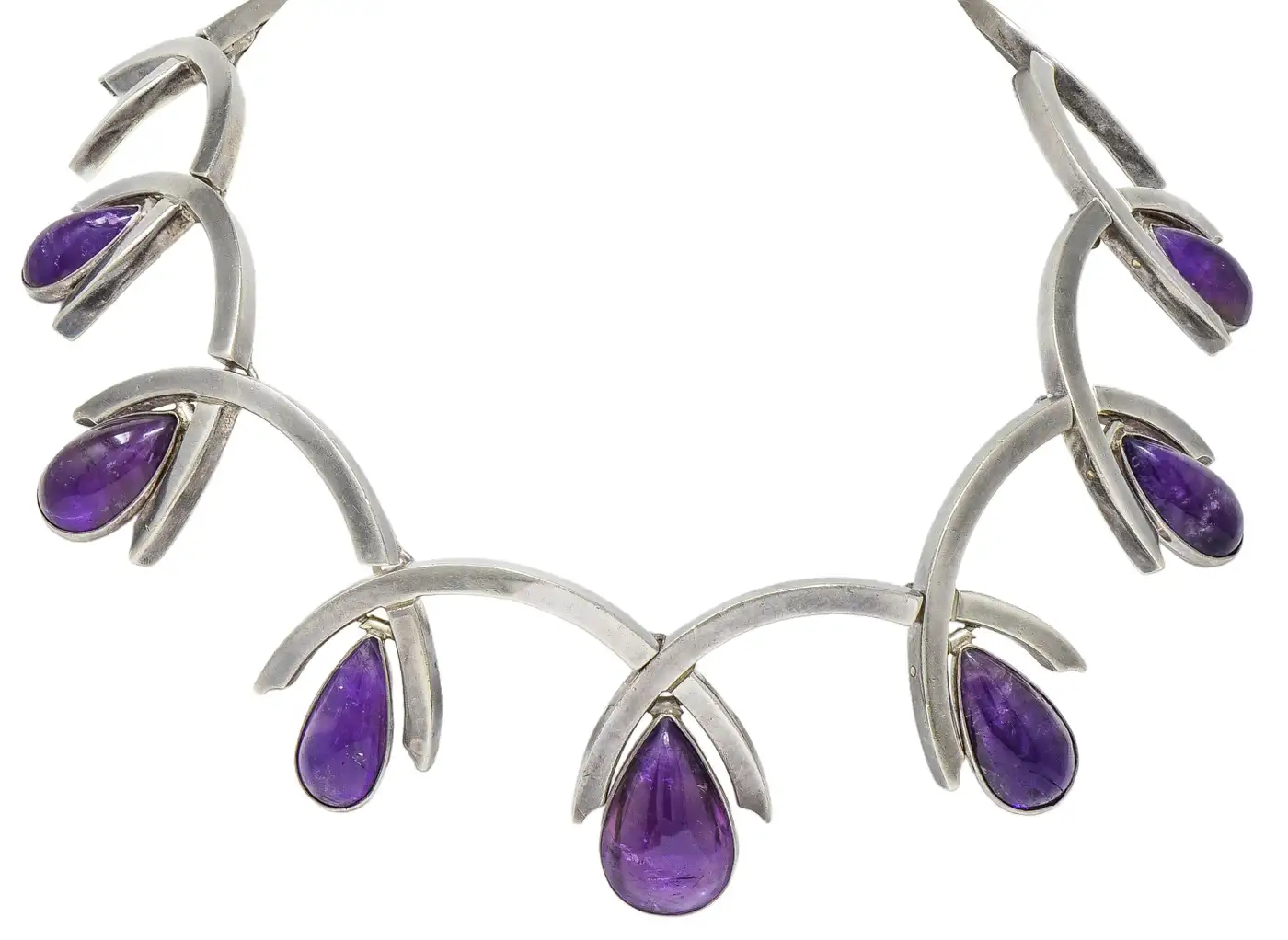
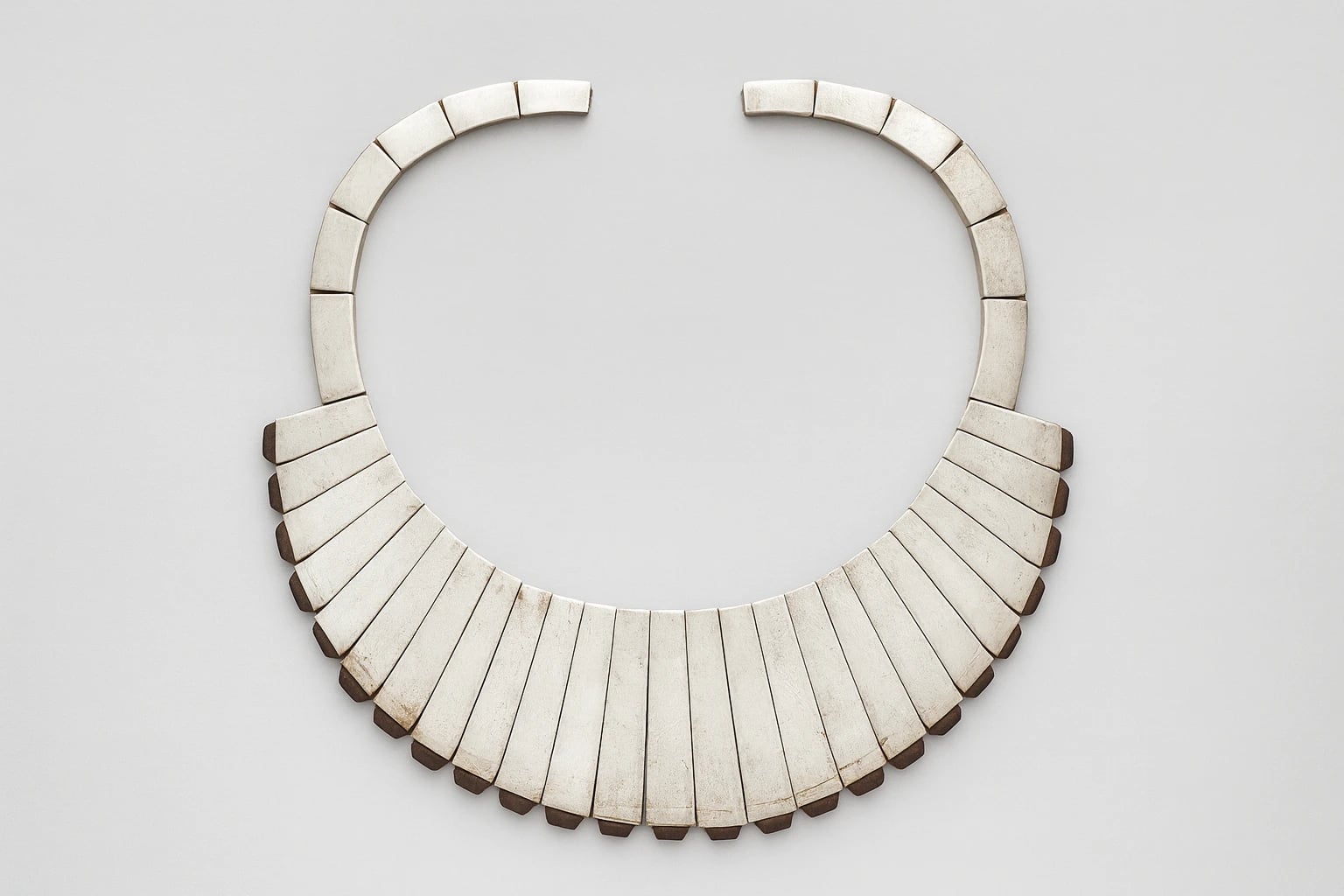
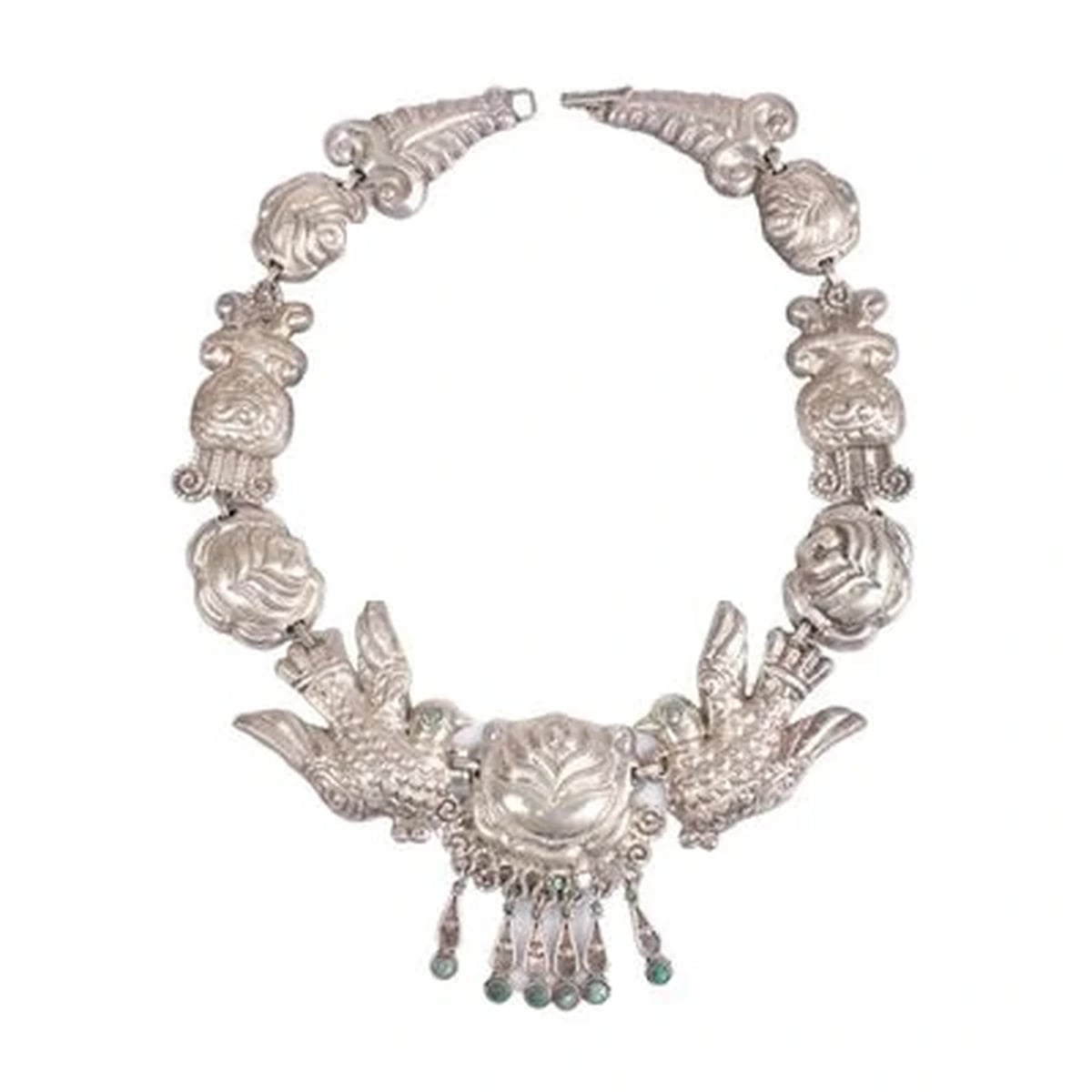
Turquoise massed against worked silver is the signature that made the MATL mark, and a necklace is where that language reaches its fullest pitch: a continuous field of stones and silverwork worn at the throat, dense and frankly ornamental in the way Matilde Poulat intended. The piece announces its maker not through restraint but through abundance.
That abundance had roots. Poulat studied painting at the San Carlos Academy before turning entirely to silver, and her chosen motifs, which Morrill names as the dove, flowers, and tiny bells, came out of Mexican folk art and the Mixtec gold discovered at Monte Alban in 1932 (Morrill, p. 216). She introduced the "MATL" mark in 1934, and her jewelry won international notice in 1941 when she was invited to show at the Pan American Union in Washington (Morrill, p. 216).
Necklaces survive in better numbers than her holloware, the recorded sales here reflecting that this was a core form for the taller. After Poulat's death in 1960, her nephew Ricardo Salas carried the designs forward under the "MATL Salas" mark, so the stamp on the back distinguishes a piece made in her lifetime from one made after it.
The enduring appeal is the directness of the thing: a Mexican folk sensibility rendered in turquoise and silver, recognizable across a room and unmistakably MATL.
Museum of Mexican Silver. “Two-Dove Necklace with Turquoise.” Catalog no. MoMS-001415. https://museumofmexicansilver.com/pieces/matl-turquoise-necklace
See something wrong with this record? Suggest a correction and the piece details fill in automatically.
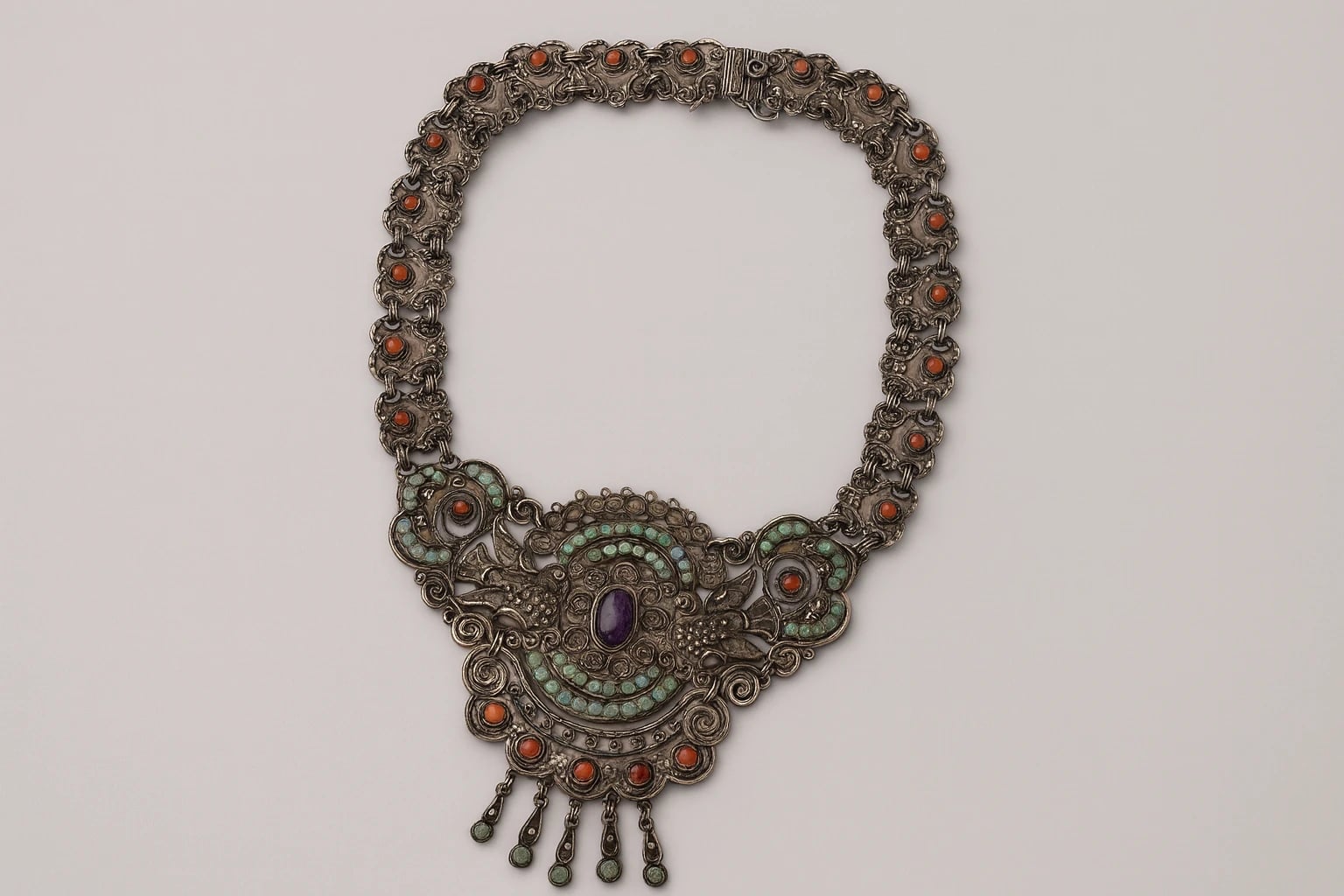
MATL (Matilde Poulat)
Dove Fringe Necklace with Amethyst, Coral, and Turquoise
1934-1948
Silver