Saves instantly, no account needed. Already a member? Sign in.
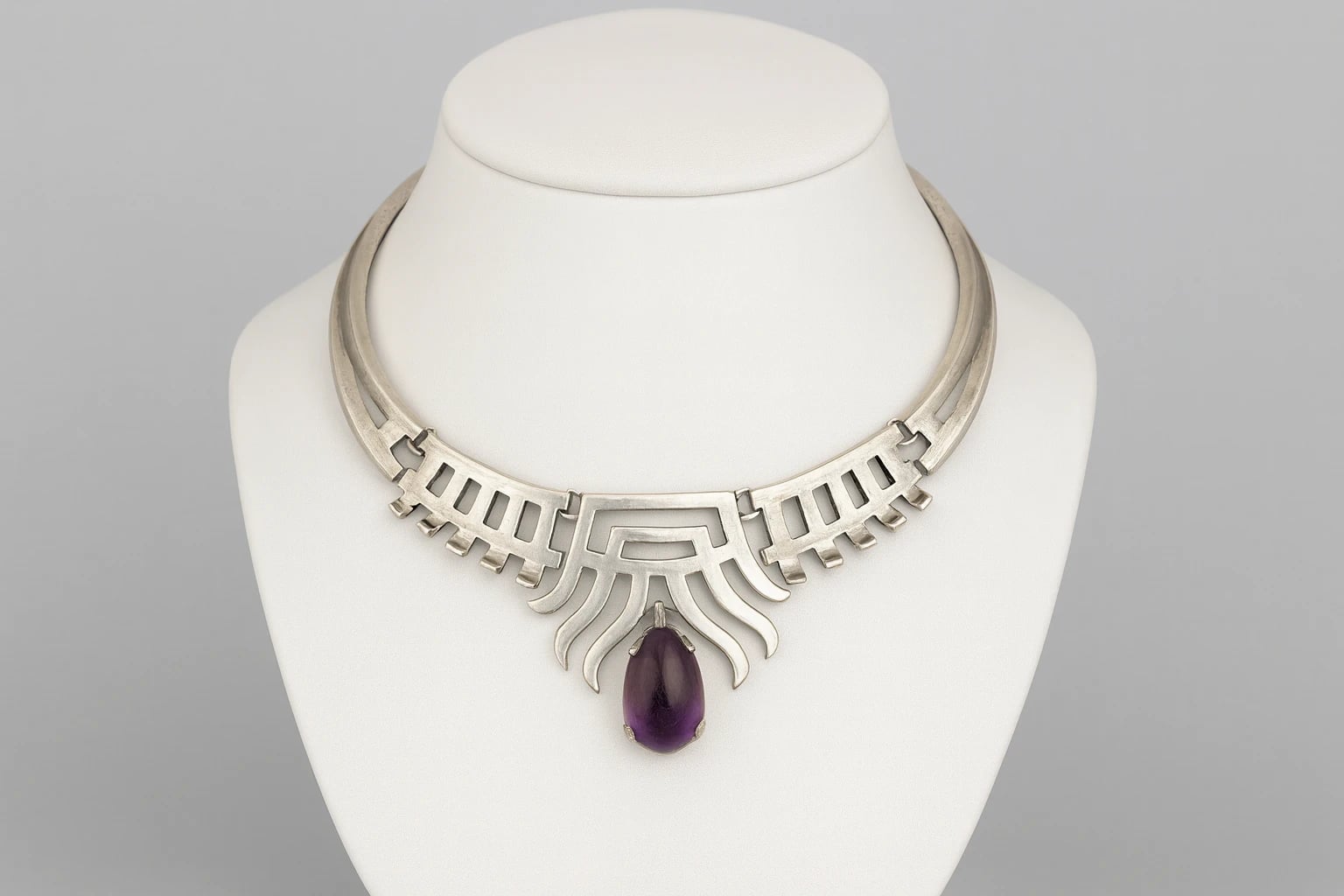
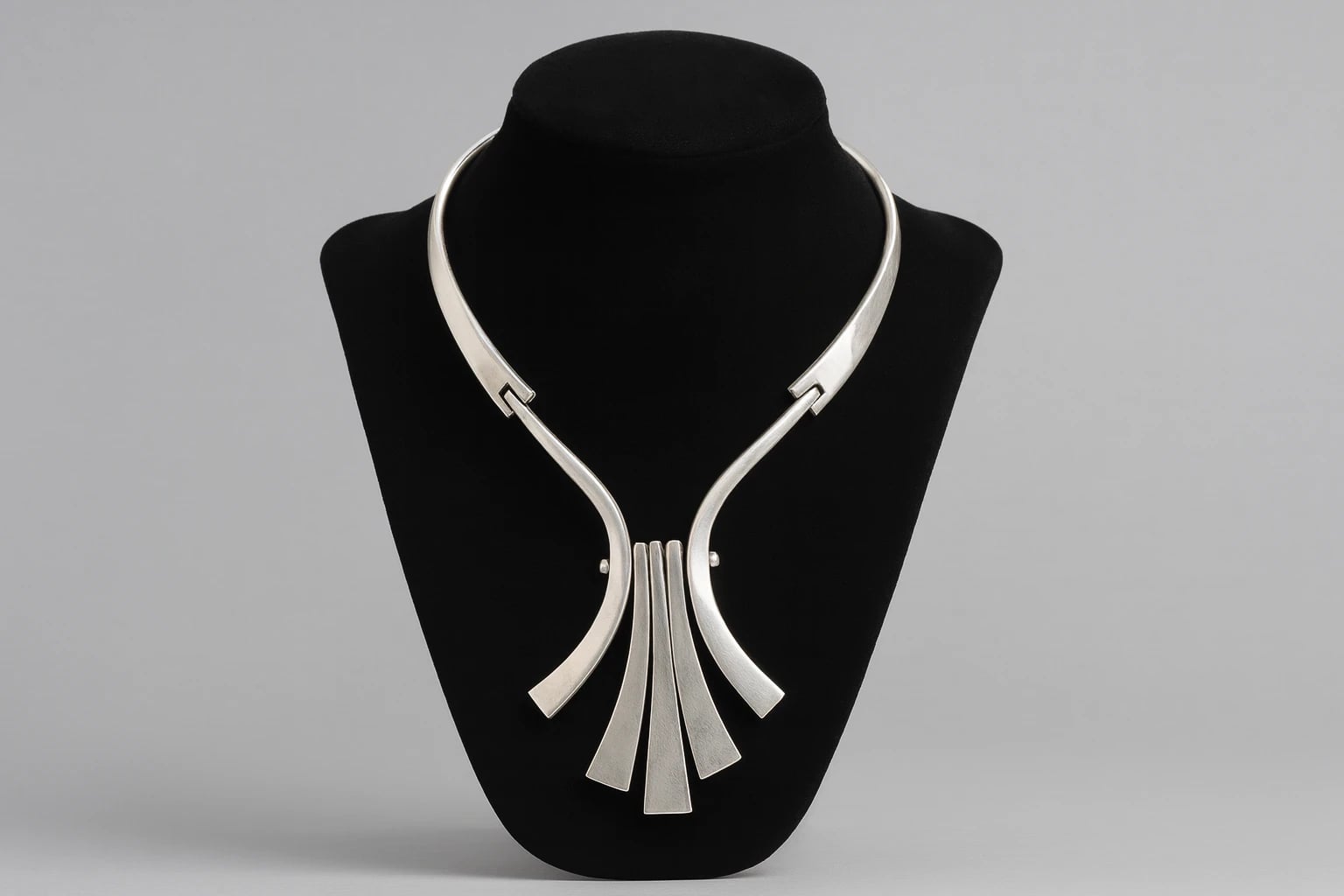
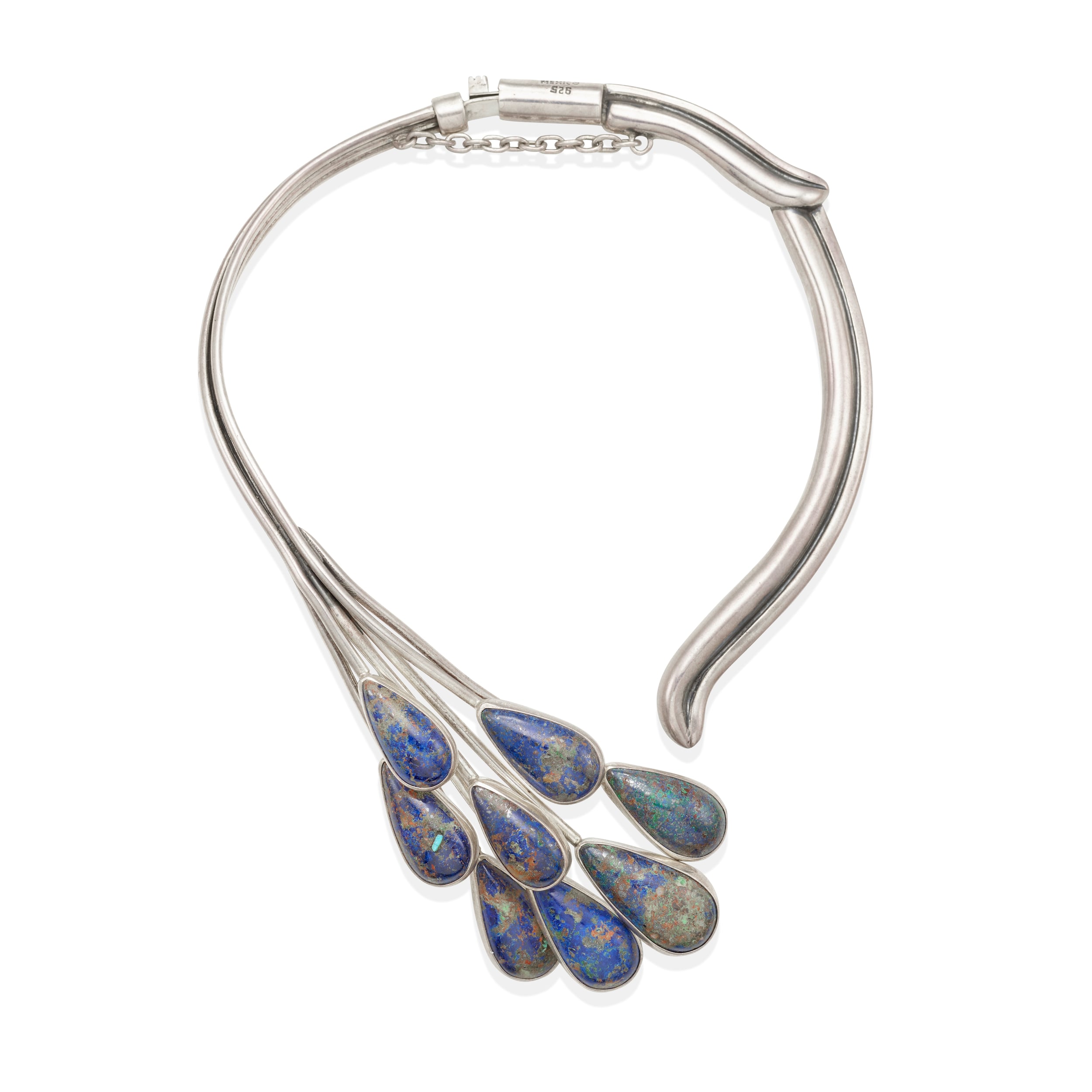
A fan of parallel silver rails sweeps from a rigid collar band and cascades into a cluster of bezel-set, pear-shaped azurmalachite cabochons — the structural logic is minimal, but the effect is emphatically sculptural. The collar relies on repetition and directionality rather than ornament: the rails do no decorative work beyond their movement, and the stones at their terminations provide the only textural counterweight.
Azurmalachite — the naturally occurring intergrowth of blue azurite and green malachite — brought color to the Taxco modernist idiom that was fundamentally different from polished semi-precious cabochons. Its mottled surface, ranging across deep indigo and earthy green within a single stone, resists the clean geometry of the silver setting and gives the necklace a visual tension the rails alone could not generate.
Antonio Pineda's path to this kind of sculptural economy was shaped by training under Valentín Vidaurreta in Mexico City, where, as Penny C. Morrill documents in Silver Masters of Mexico (1996), he developed an appreciation for powerfully formed but simple shapes in silver. His earlier studies in painting with Alfredo Zalce carried over into his silverwork as a commitment to visual directness, and Stromberg's 2008 study of Pineda situates his mature practice within the broader Taxco "Silver Age" — characterized by boldness and superb craftsmanship.
Each documented example contributes to understanding how his sculptural thinking operated at the level of wearable form.
Museum of Mexican Silver. “Modernist Silver and Azurmalachite Collar Necklace.” Catalog no. MoMS-001940. https://museumofmexicansilver.com/pieces/pineda-modernist-silver-and-azurmalachite-collar-necklace
See something wrong with this record? Suggest a correction and the piece details fill in automatically.
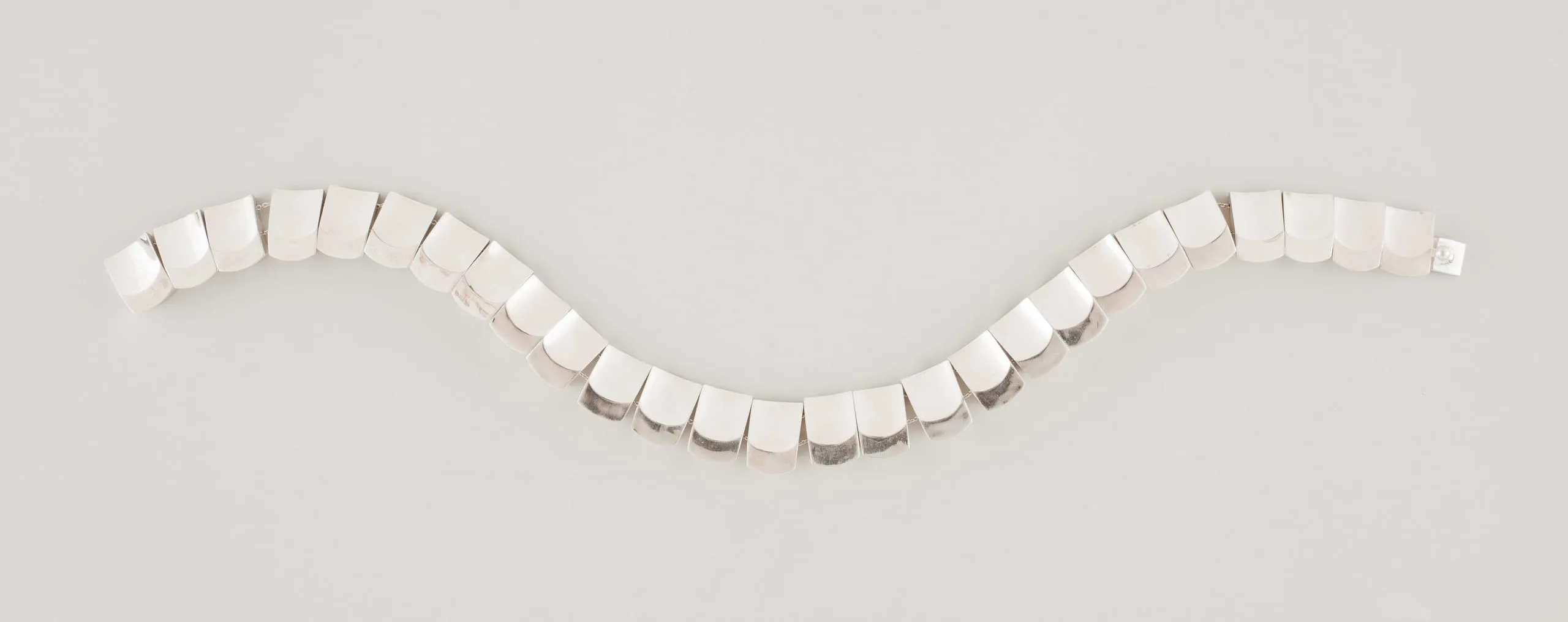
Antonio Pineda
Thumbnail Necklace
c. 1953
Sterling silver