Saves instantly, no account needed. Already a member? Sign in.
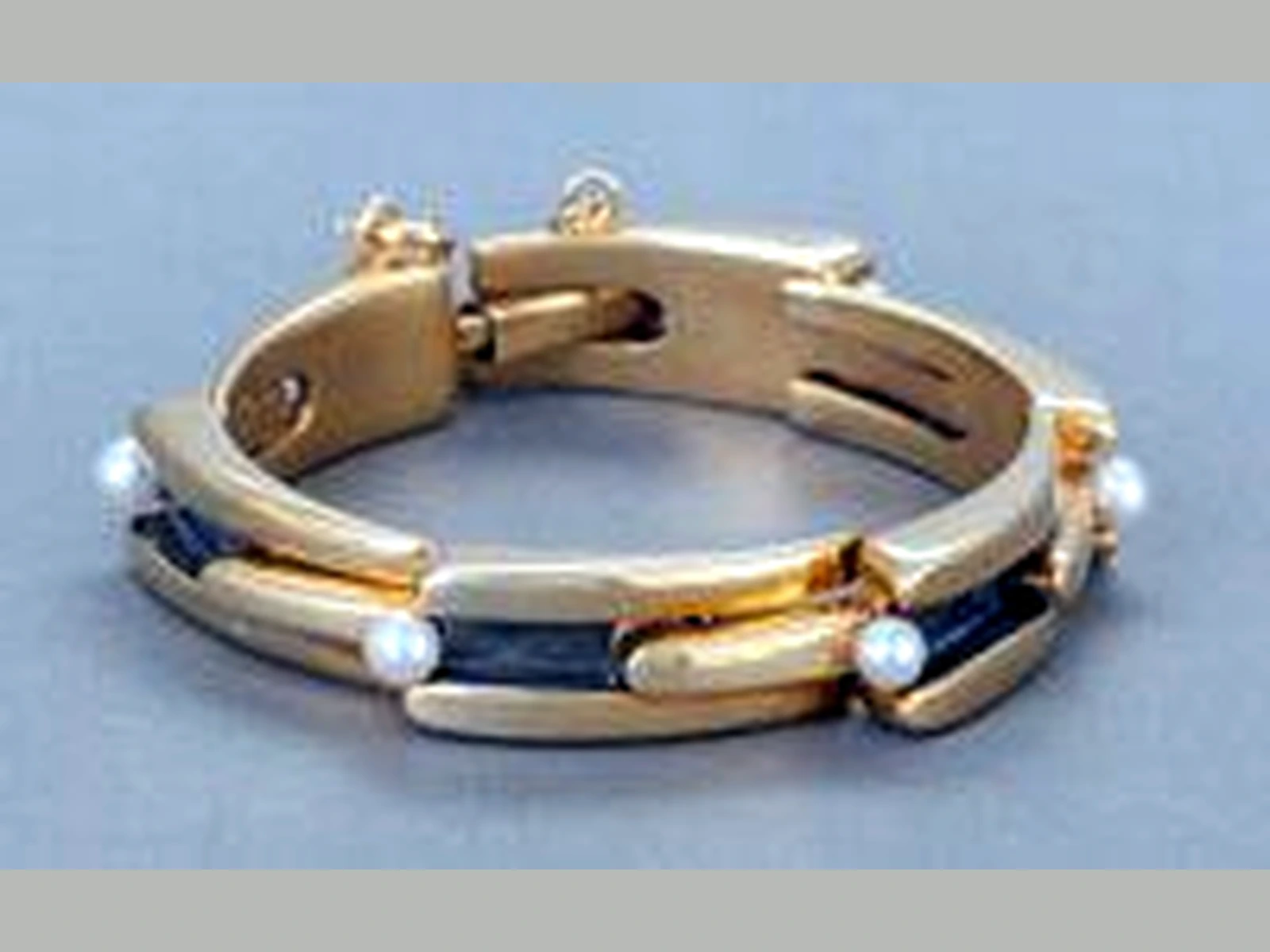
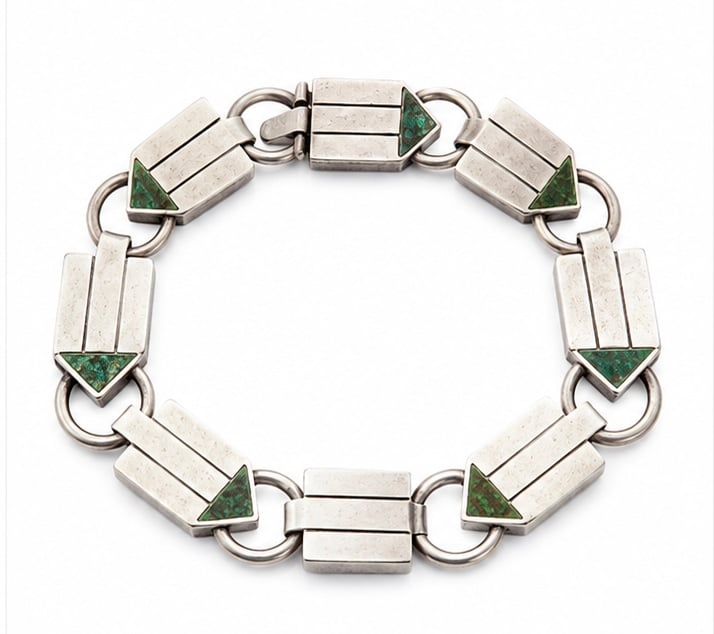
Rectangular three-part links of azur malachite seated in silver, joined by large open rings, give this bracelet the architectural rhythm that defines Spratling's second design period. The blue-green stone was among the semiprecious materials Spratling favored once he had left the management of his Taxco workshop to concentrate on design, and it recurs across his work of these years in pieces built on his "North Star" idiom (Morrill, p. 66).
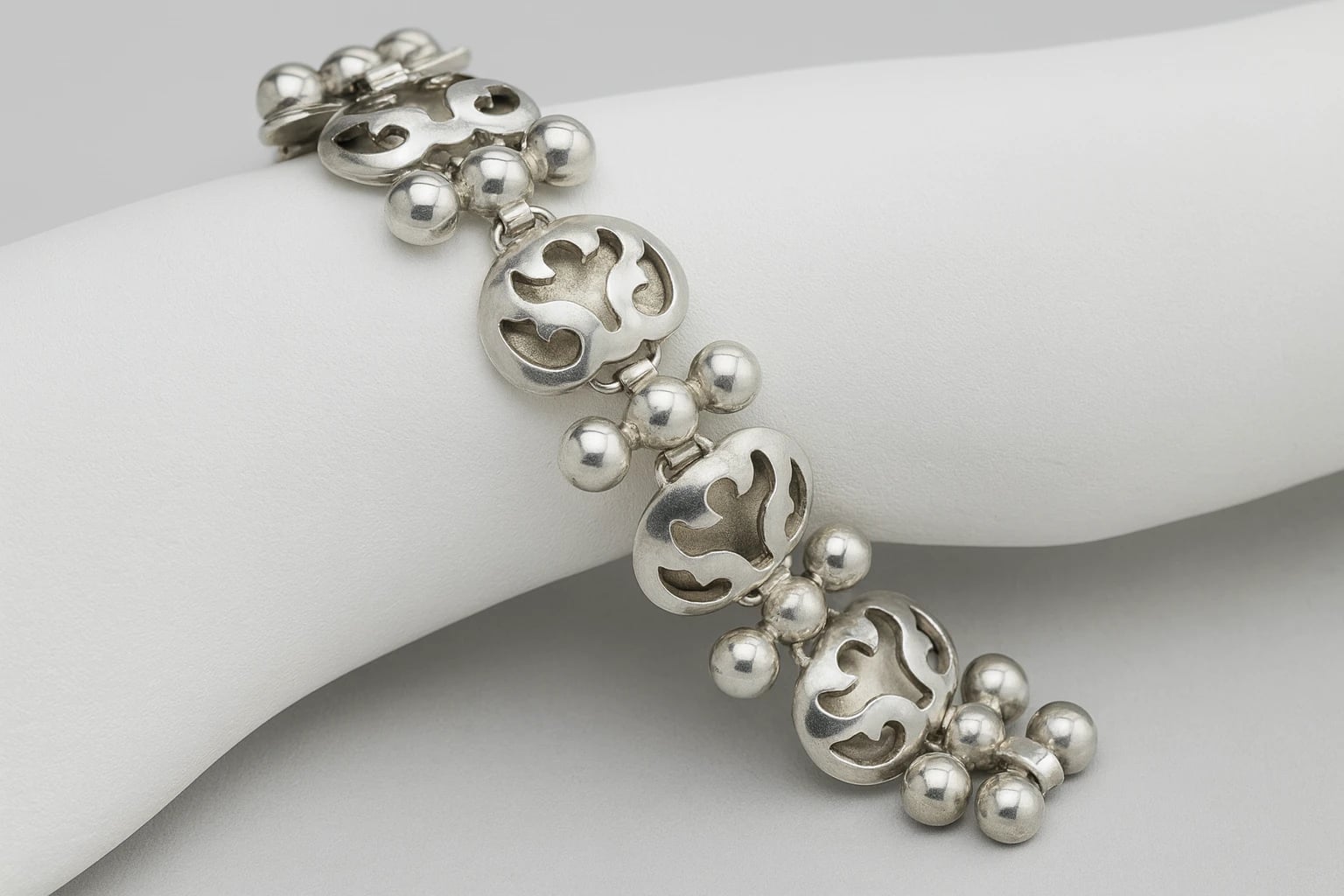
The construction is deliberately modular. Each link reads as a discrete unit, and the connecting rings make the assembly legible as a chain of repeated parts rather than a continuous band. That clarity of part-to-whole is characteristic of the period, when Spratling pared his forms down to their essential geometry and let the contrast of cool silver against banded stone carry the design.
A closely related necklace was built on the same link vocabulary, so the bracelet belongs to a small family of pieces sharing one structural idea worked across different forms. Recognizing that shared logic is part of how Spratling's second-period jewelry is read today.
Azur malachite pieces from these years come to market only occasionally, and the stone-and-silver bracelets in particular reward the collector who looks for the disciplined modular construction that sets Spratling's work apart from the broader Taxco trade.
Museum of Mexican Silver. “Conquistador Arrow Point Bracelet.” Catalog no. MoMS-000556. https://museumofmexicansilver.com/pieces/spratling-1007
See something wrong with this record? Suggest a correction and the piece details fill in automatically.
William Spratling
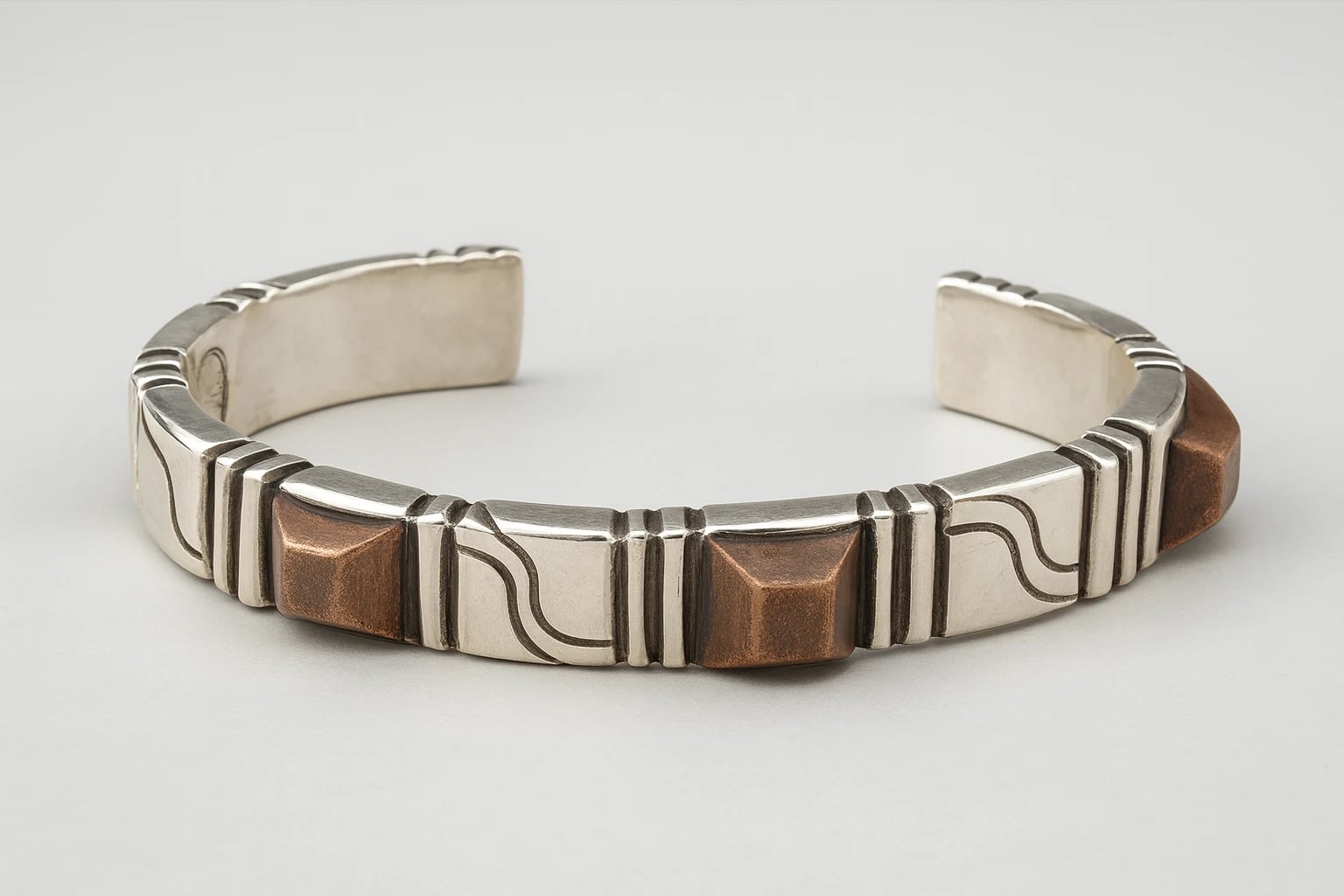
Silver and Bronze Bracelet
First Design Period: 1931 - 1946
Silver