Saves instantly, no account needed. Already a member? Sign in.
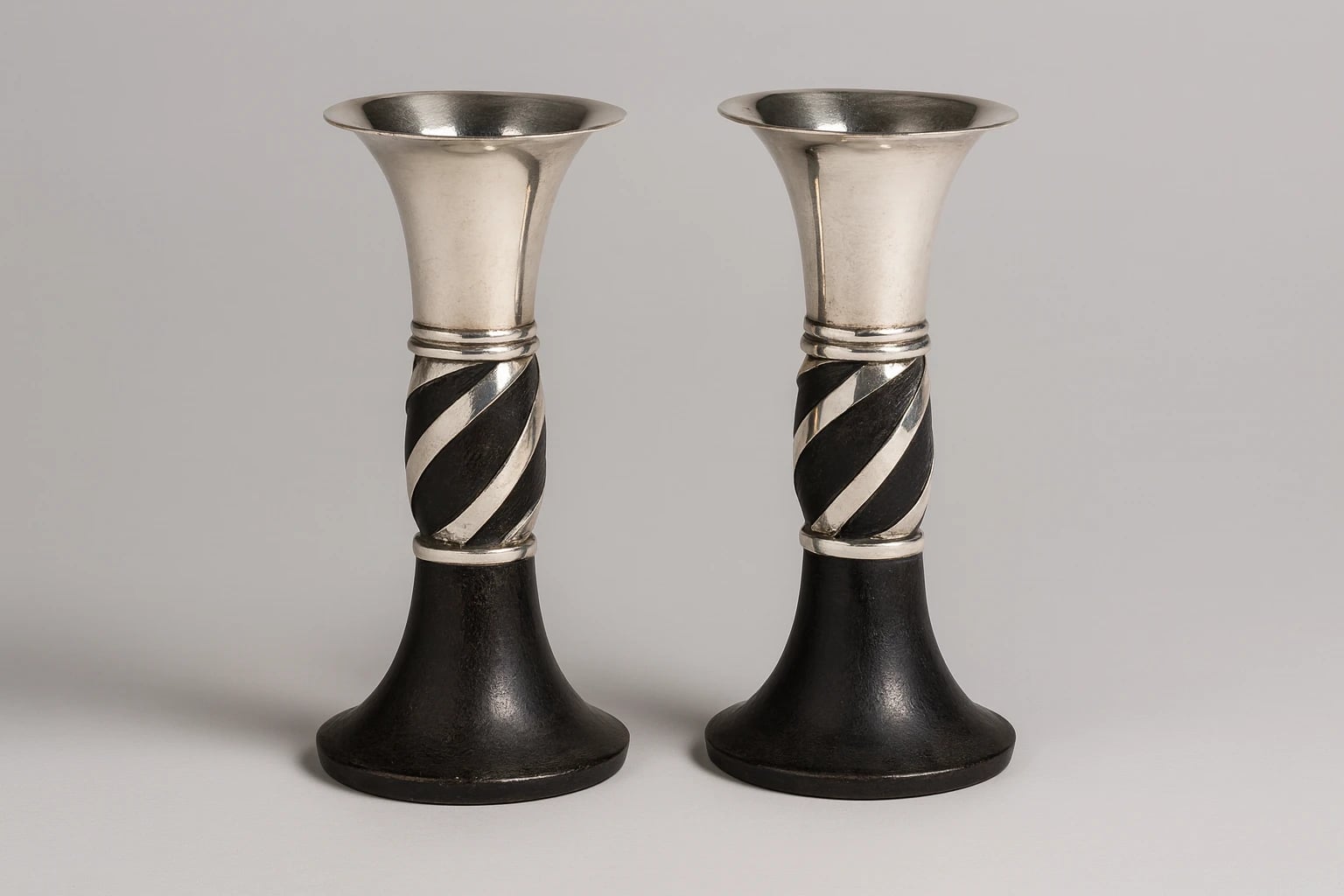
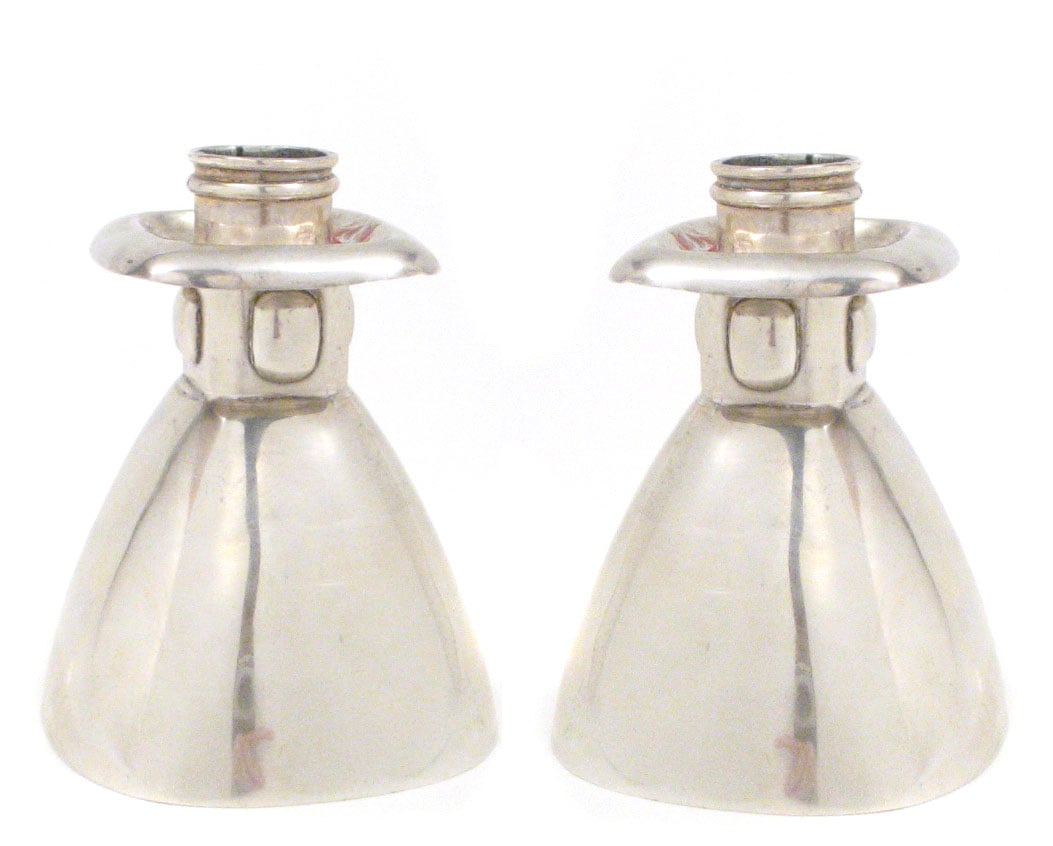
At roughly four inches tall, the oval bell form reads with the decisiveness of a column: a single outward sweep from base to bobeche that needs nothing but its own profile to hold attention. What Spratling's workshop added is a ring of applied sterling rectangles positioned just below the bobeche, interrupting the smooth flare of the body with precise geometric punctuation. The effect is assertive without being decorative in any conventional sense — pattern imposed through structure rather than engraving or chasing.
The design dates to the First Design Period, 1931–1946, the founding decade of Spratling's Taller de las Delicias and the years in which the Taxco workshop was actively testing forms against live production. Morrill & Berk have noted that the work of the Parisian silversmith Jean Puiforcat — whose singular commitment to purity of form had raised the silver object toward fine art in the 1920s — may have been among the shaping influences on Spratling's approach to silver design (*Mexican Silver*, 1994). The candlesticks' economy of means, their reliance on silhouette and applied geometry rather than surface ornament, sits within that lineage.
Hollowware from the First Design Period occupies a distinct place in the early Taxco canon. These objects were produced when Spratling's workshop stood at its most experimental. Their weight and scale make the applied rectangles legible even across a table, which suggests the detail was conceived as much for distance as for the hand.
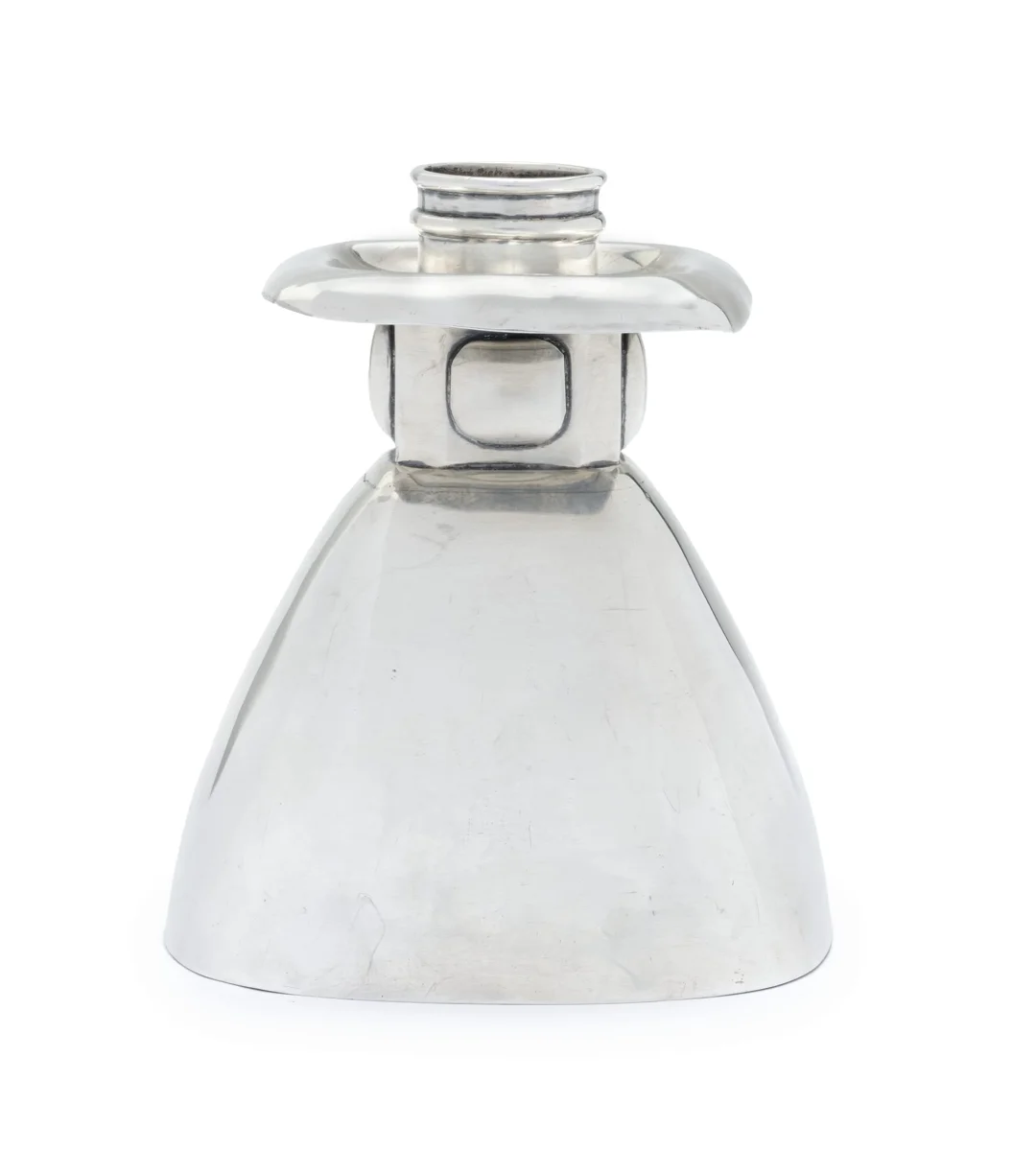
Bell Form Candlesticks, 1940-1944
Accession M.2018.68.13a-b. Official museum record Photo: Los Angeles County Museum of Art.
Verified against each institution's own collection records. All museum collections
Museum of Mexican Silver. “Oval Bell Candlesticks.” Catalog no. MoMS-000244. https://museumofmexicansilver.com/pieces/spratling-160
See something wrong with this record? Suggest a correction and the piece details fill in automatically.
Tall Candlestick with Silver Horn Top
Silver