Saves instantly, no account needed. Already a member? Sign in.
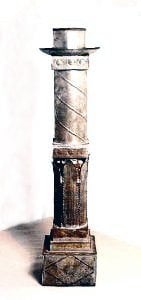
This tall tin candlestick is an exercise in stacked geometry: a stepped square base rises to a cylindrical column with flared bands, which carries another square base and a round column impressed with diagonal lines, the top square stamped with circles and the base with a diamond. The whole is composed as a sequence of distinct geometric stages.
The impressed circles, diagonals, and diamond are Spratling's familiar surface vocabulary translated into tin, and the stepped, architectural build recalls the Pre-Columbian motifs of steps and platforms that ran through Taxco design. Worked in tin rather than silver, the piece shows the same design control applied to an inexpensive metal.
The candlestick is recorded in Morrill's William Spratling and the Mexican Silver Renaissance: Maestros de Plata. As a documented tin object it represents the broader metalwork Spratling produced alongside his silver, where geometry and impressed pattern carried the design.
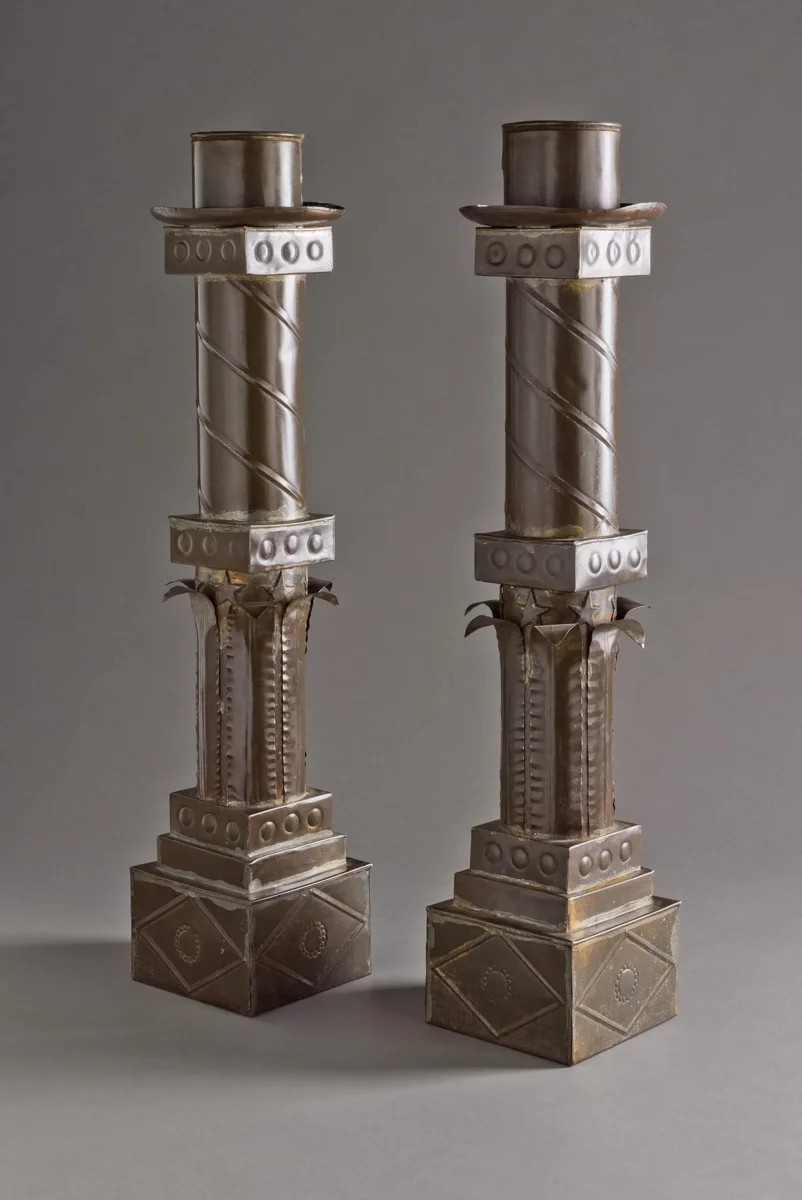
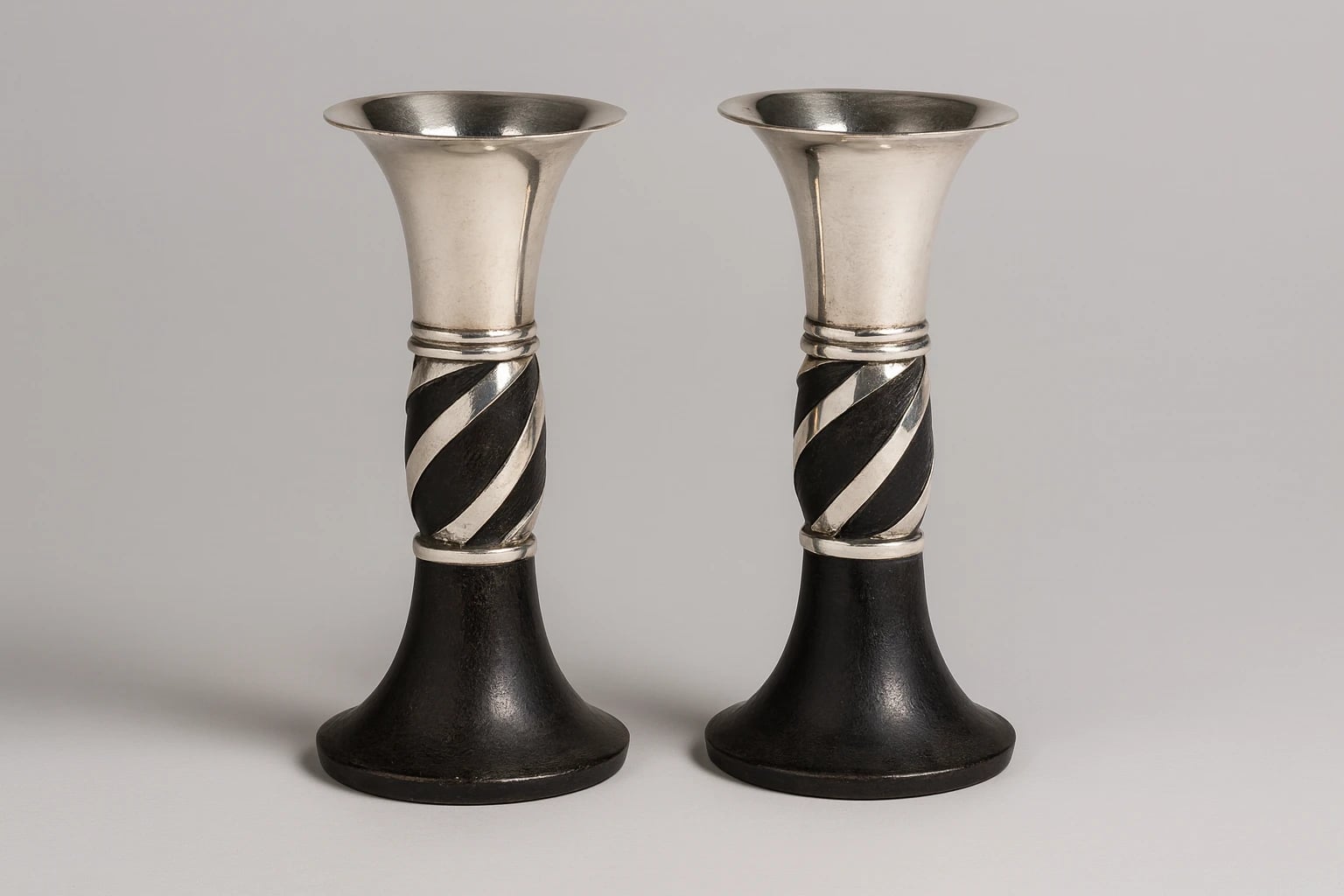
Tall Pair of Tin Candlesticks, circa 1935
Accession M.2013.4.7a-b. Official museum record Photo: Los Angeles County Museum of Art.
Verified against each institution's own collection records. All museum collections
Museum of Mexican Silver. “Tall Tin Candlestick.” Catalog no. MoMS-000909. https://museumofmexicansilver.com/pieces/spratling-2212
See something wrong with this record? Suggest a correction and the piece details fill in automatically.
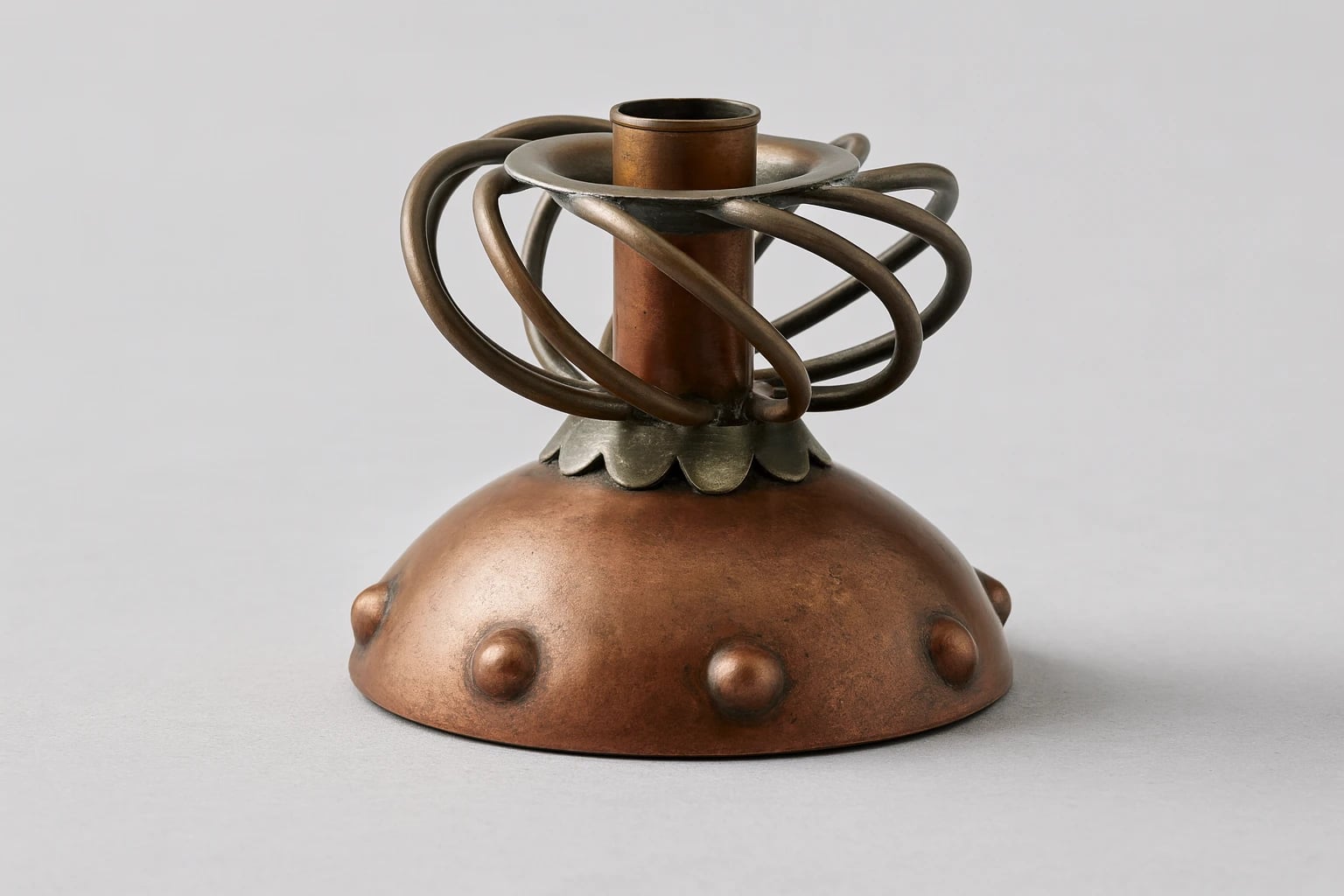
Three Loop Tin Candlestick
Tin