Saves instantly, no account needed. Already a member? Sign in.
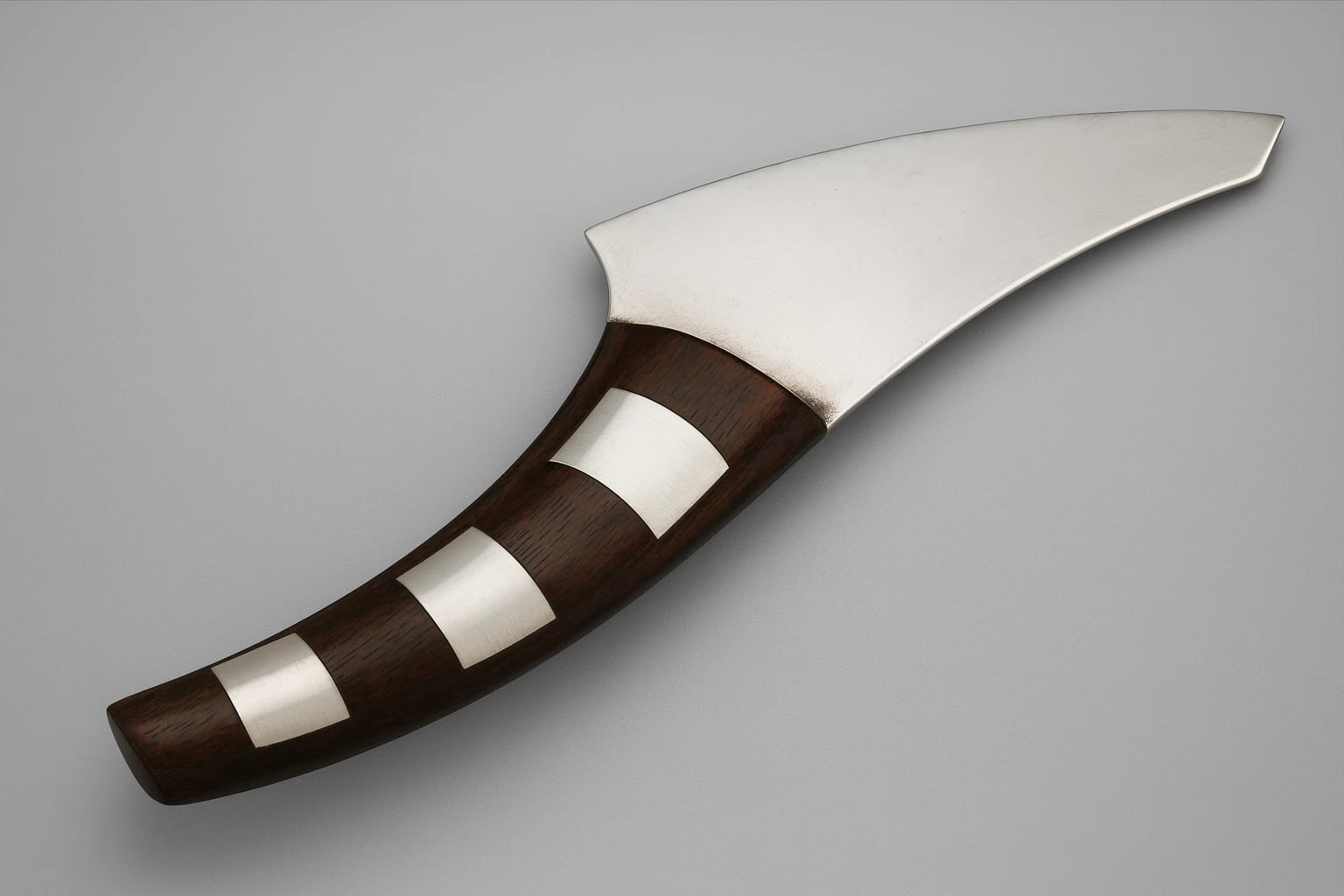
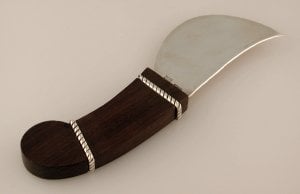
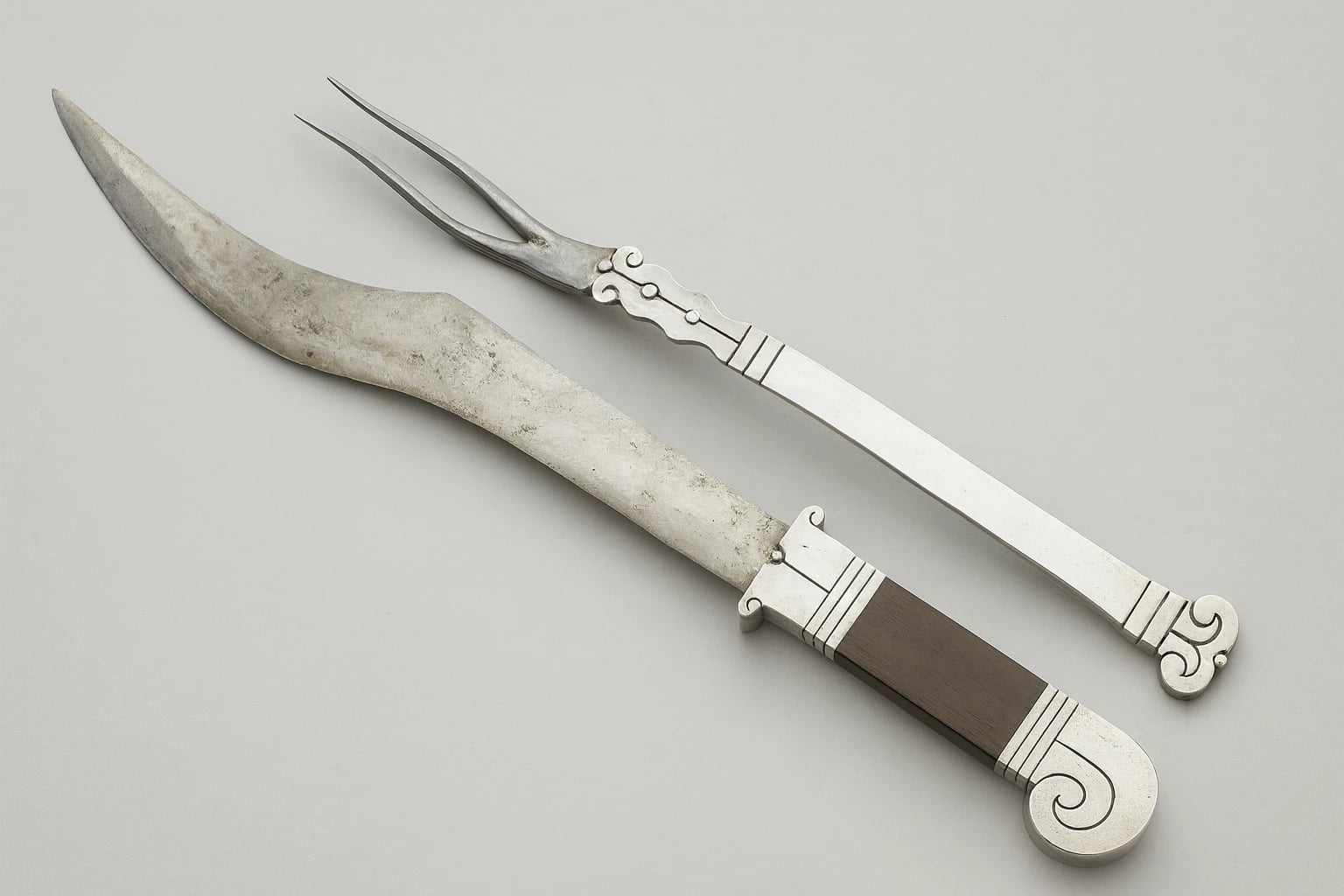
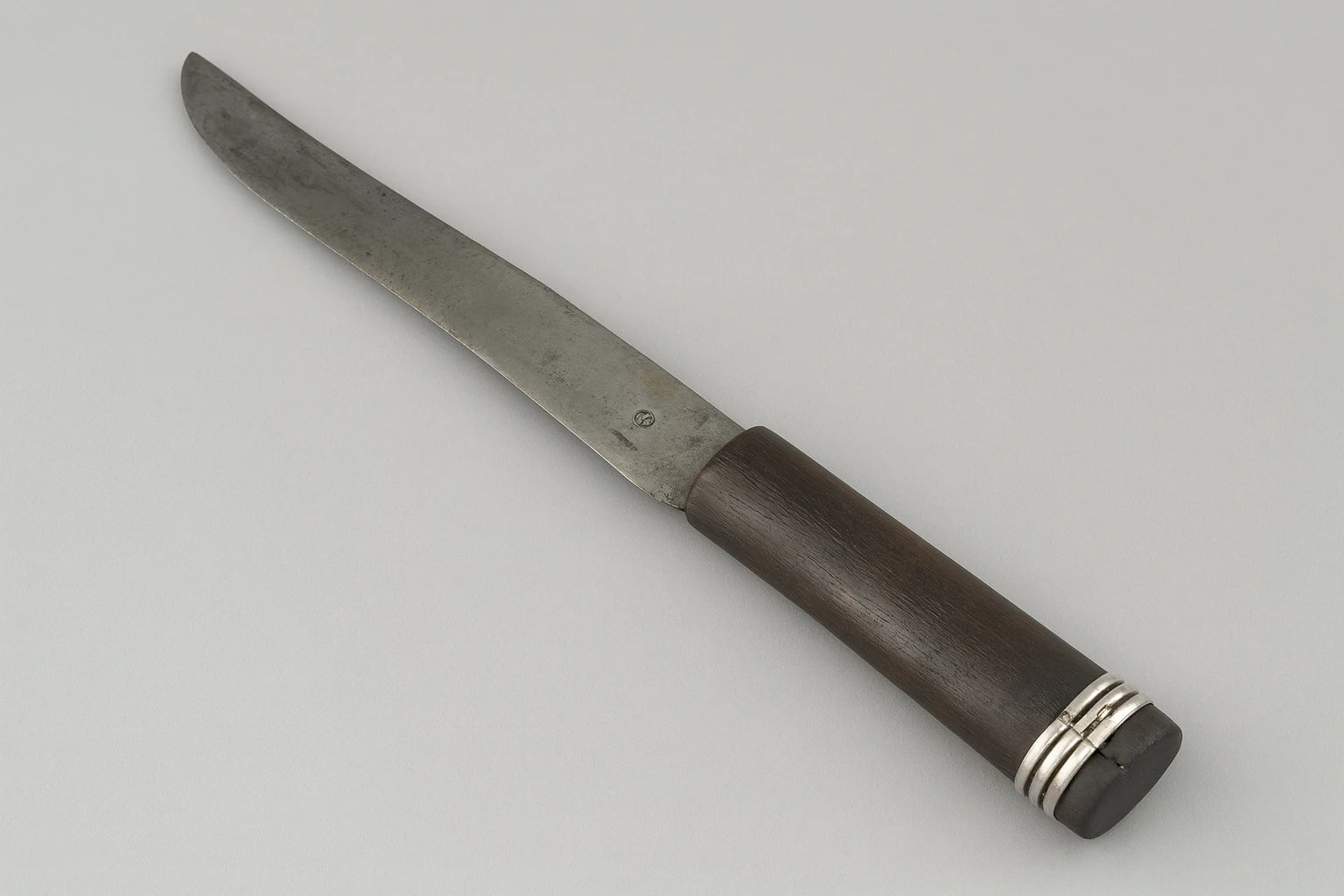
Spratling's silver was meant to be used, not only worn, and a carving knife is a plain reminder of that. This one joins a rosewood handle, banded with three applied silver collars, to a working steel blade.
The combination of silver with the warmth and density of an exotic wood was central to the table pieces produced at Las Delicias. Morrill notes the same instinct in the French silversmith Puiforcat, whose use of Brazilian rosewood handles against reflective silver she places alongside Spratling's own combining of materials and geometric approach to form (Morrill, p. 224). The applied silver bands here turn a functional handle into part of the composition.
It belongs to Spratling's First Design Period, the 1931 to 1946 years when the workshop established the vocabulary that defined Mexican modern silver, and when flatware and holloware were hand-wrought alongside the jewelry.
The knife is documented in Phyllis M. Goddard's Spratling Silver: A Field Guide.
Museum of Mexican Silver. “Carving Knife.” Catalog no. MoMS-000109. https://museumofmexicansilver.com/pieces/spratling-236
See something wrong with this record? Suggest a correction and the piece details fill in automatically.
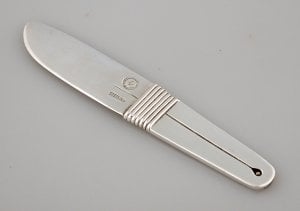
Individual Butter Knife
First Design Period: 1931 - 1946
Silver