Saves instantly, no account needed. Already a member? Sign in.
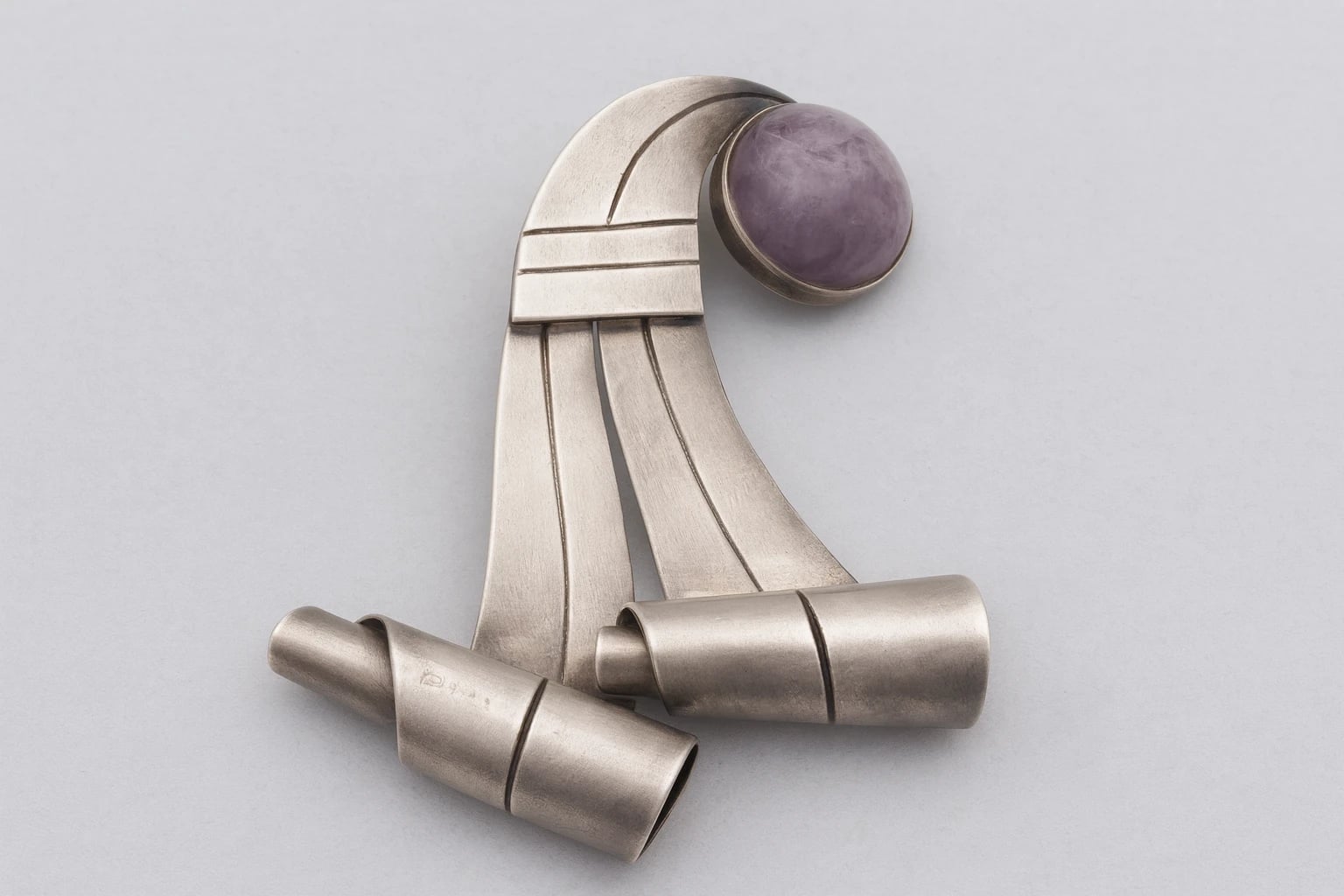
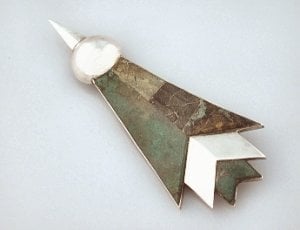
Read as an arrow or as a hummingbird, this brooch draws its life from azur-malachite, the blue-green stone carrying most of the design against worked silver. It is recorded across three references, including William Spratling: Folio of Drawings, Penny C. Morrill's Maestros de Plata, and Phyllis M. Goddard's Spratling Silver field guide.
The ambiguity between weapon and bird is characteristic of how Spratling abstracted natural and pre-Columbian forms into something legible to an American clientele, a translation Stromberg identifies as central to his method (Stromberg, p. 27). A slightly larger and wider version of the same brooch was executed in silver with onyx and obsidian, the workshop again reworking one design across stones.
The use of native Mexican stone set into silver is part of what distinguishes Spratling's jewelry, and the appearance of this design in Spratling's own folio of drawings ties the finished brooch directly to the design process. A piece documented this thoroughly is a strong example for collectors of the early workshop.
Museum of Mexican Silver. “Azur-Malachite Arrow Brooch.” Catalog no. MoMS-000555. https://museumofmexicansilver.com/pieces/spratling-2452
See something wrong with this record? Suggest a correction and the piece details fill in automatically.
William Spratling
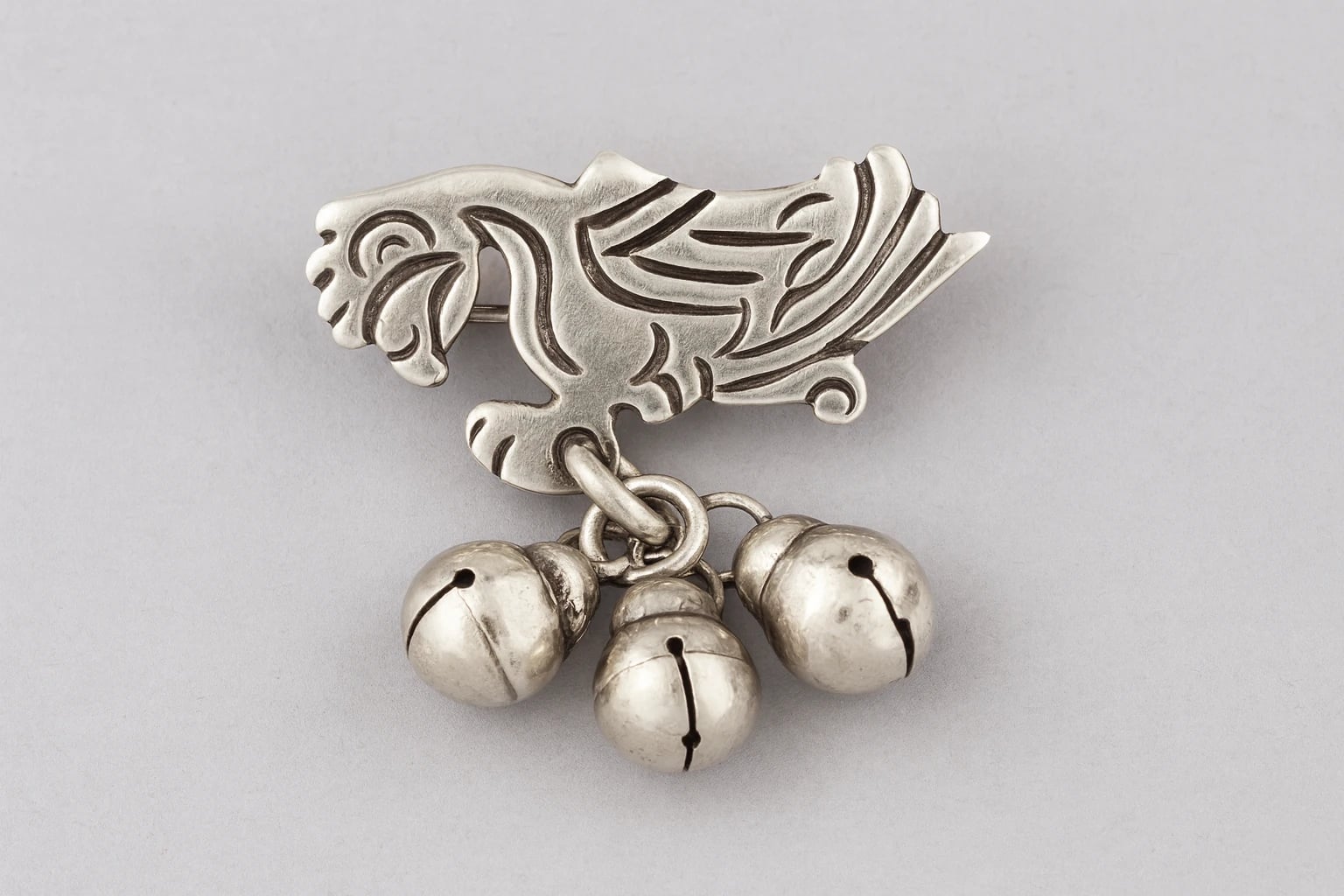
Chachalaca Brooch
First Design Period: 1931 - 1946
Silver