Saves instantly, no account needed. Already a member? Sign in.
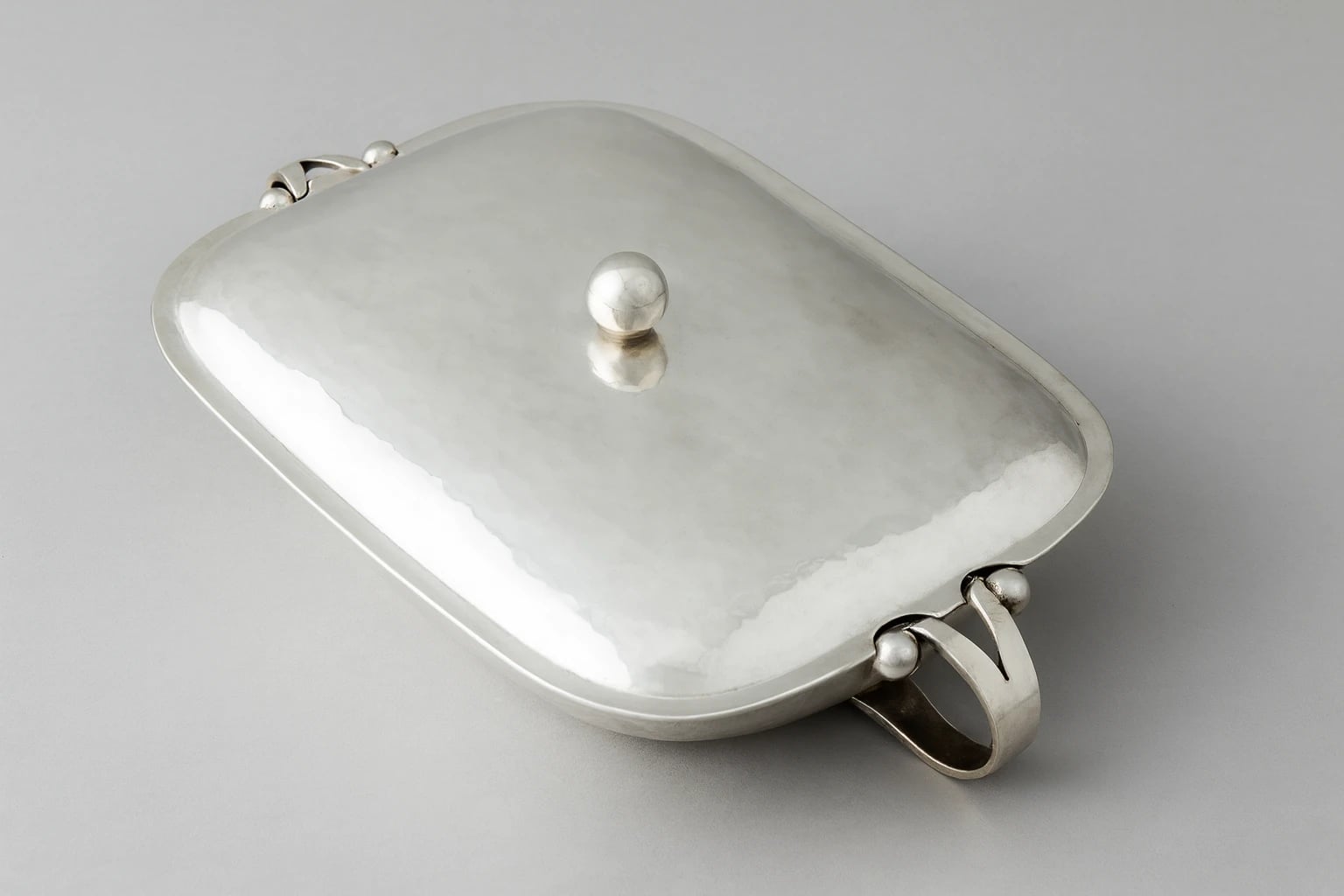
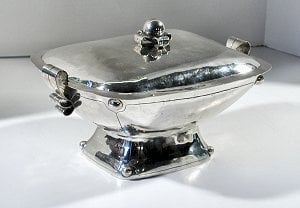
Hand-hammering is visible across the interior and underside of this covered vegetable dish, evidence of the entirely manual fabrication behind Spratling's hollowware. The early Taxco workshops had no rolling mills, and apprentices hammered silver flat before it could be raised or worked (Morrill, p. 36); a piece like this, raised on a rectangular platform and finished by hand, carries that labor on its surface.
The decoration is built from simple repeated elements: an incised line, silver half-balls studded at the corners of platform and bowl, a domed lid topped with a silver ball framed by four ribbon loops, and ribbon "ear" handles below. The vocabulary is structural rather than applied, ornament that grows out of the form.
The dish belongs to the first design period, 1931-1946, the years in which Spratling established his hollowware language. Substantial handwrought serving pieces of this date survive in limited numbers.
Museum of Mexican Silver. “Footed Vegetable Dish.” Catalog no. MoMS-000209. https://museumofmexicansilver.com/pieces/spratling-2637
See something wrong with this record? Suggest a correction and the piece details fill in automatically.
William Spratling
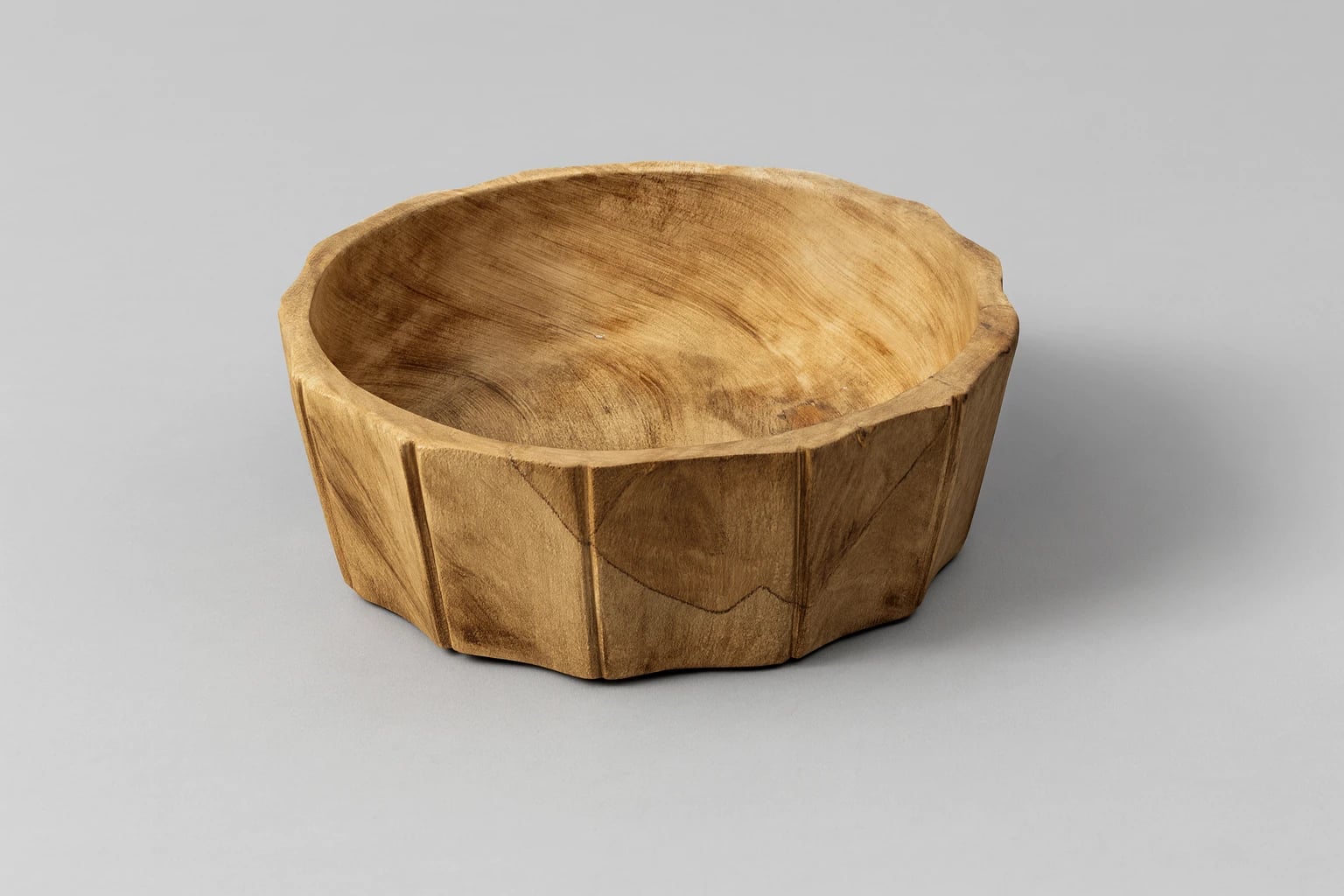
Small Scalloped Bowl
First Design Period: 1931 - 1946
Silver