Saves instantly, no account needed. Already a member? Sign in.
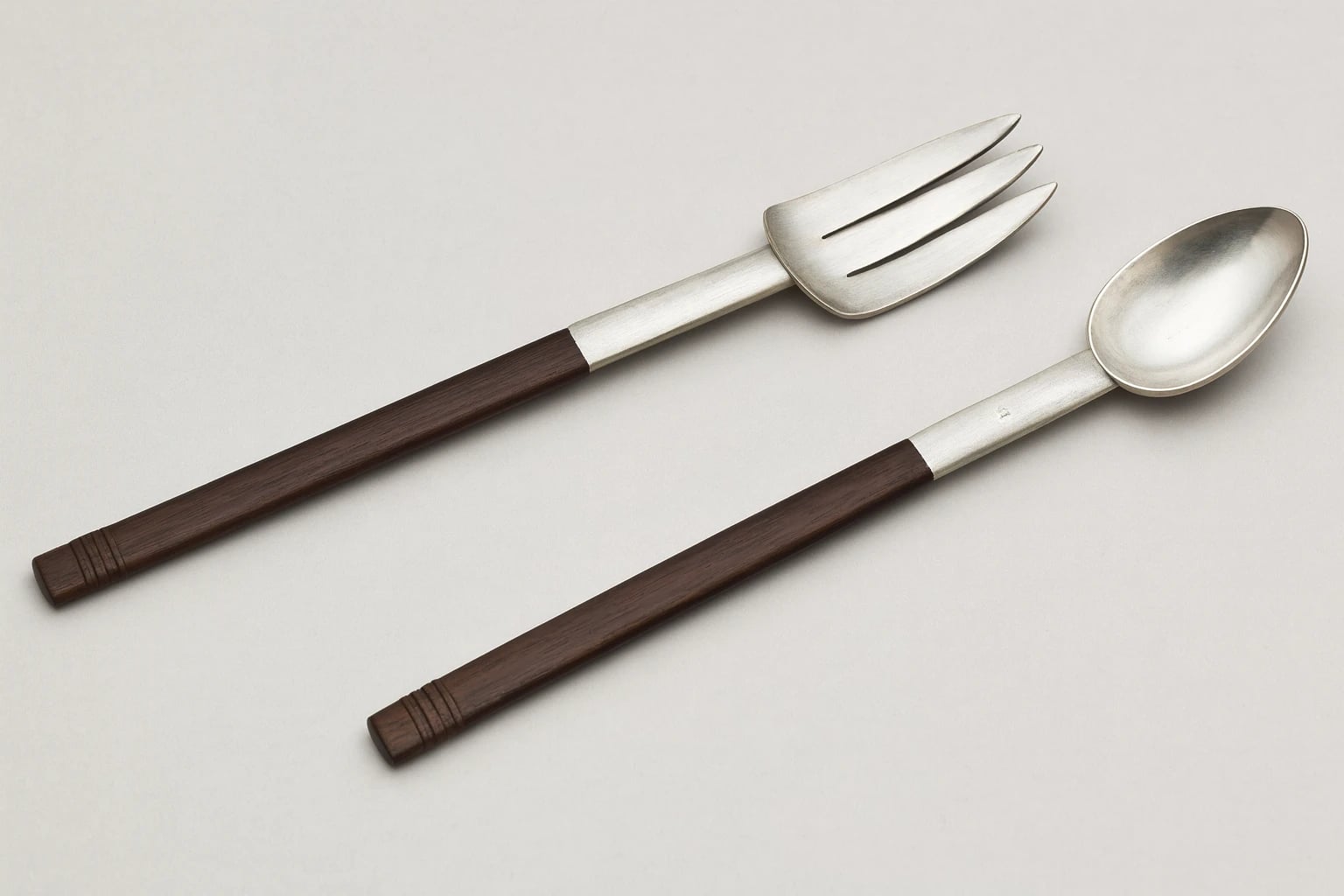
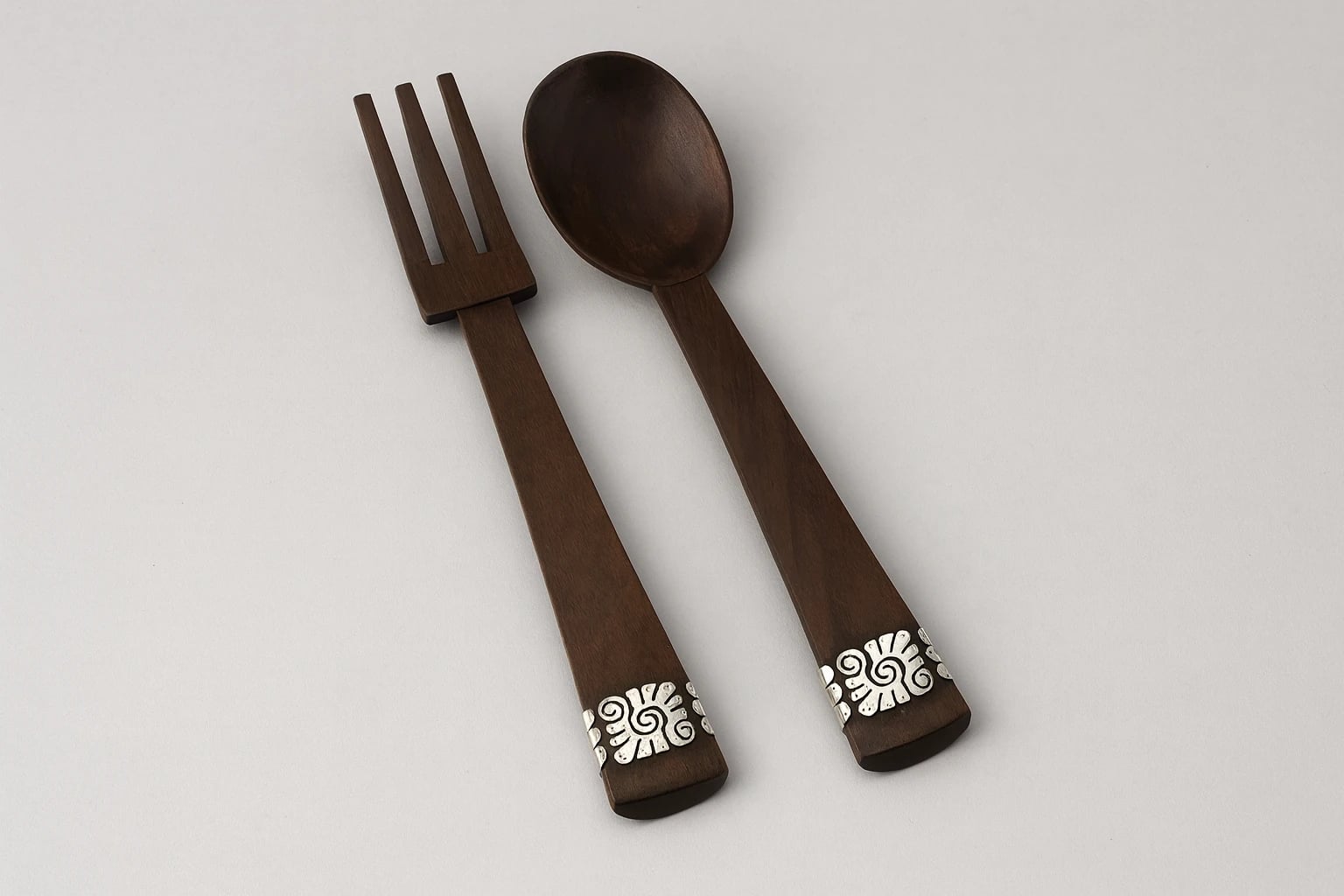
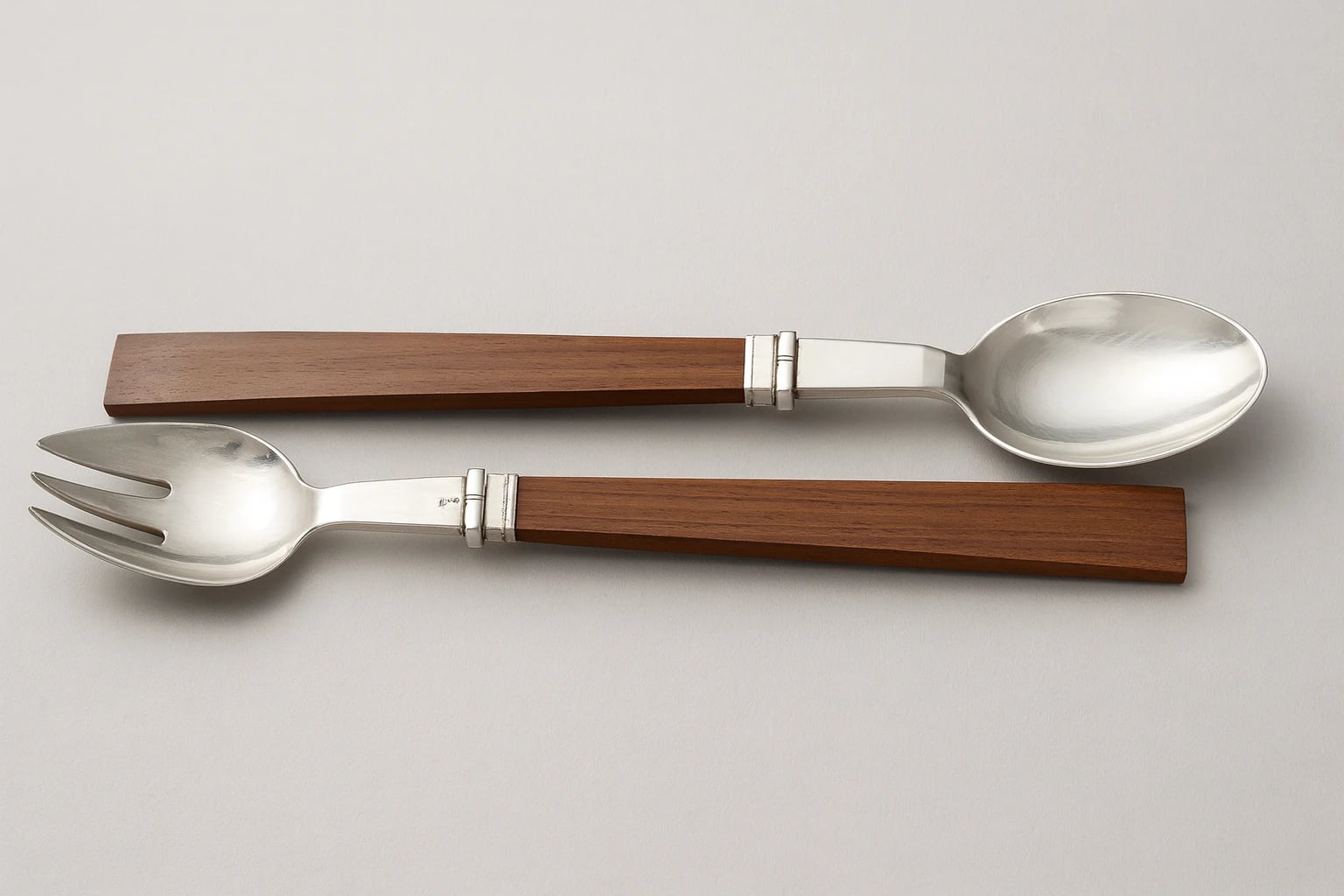
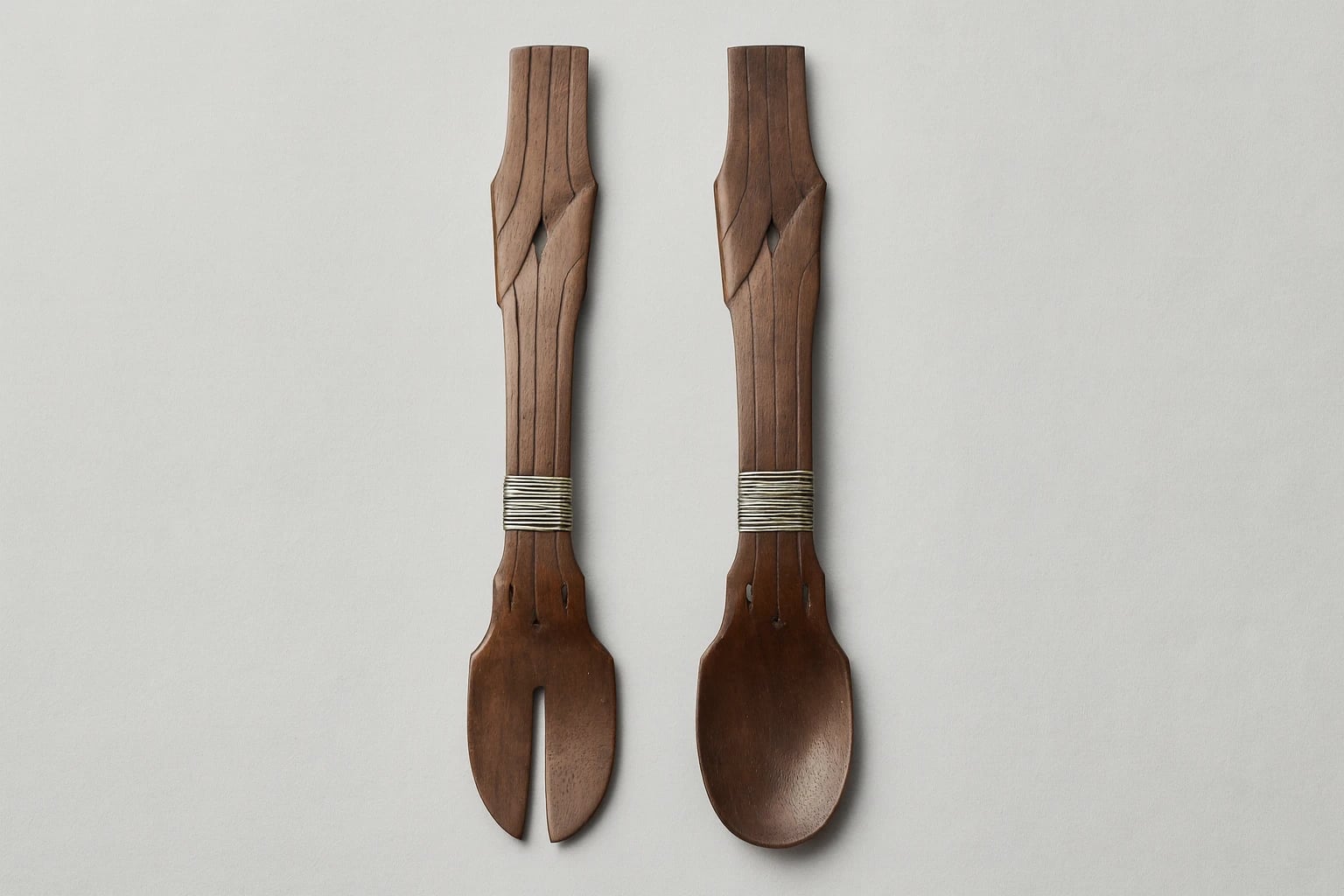
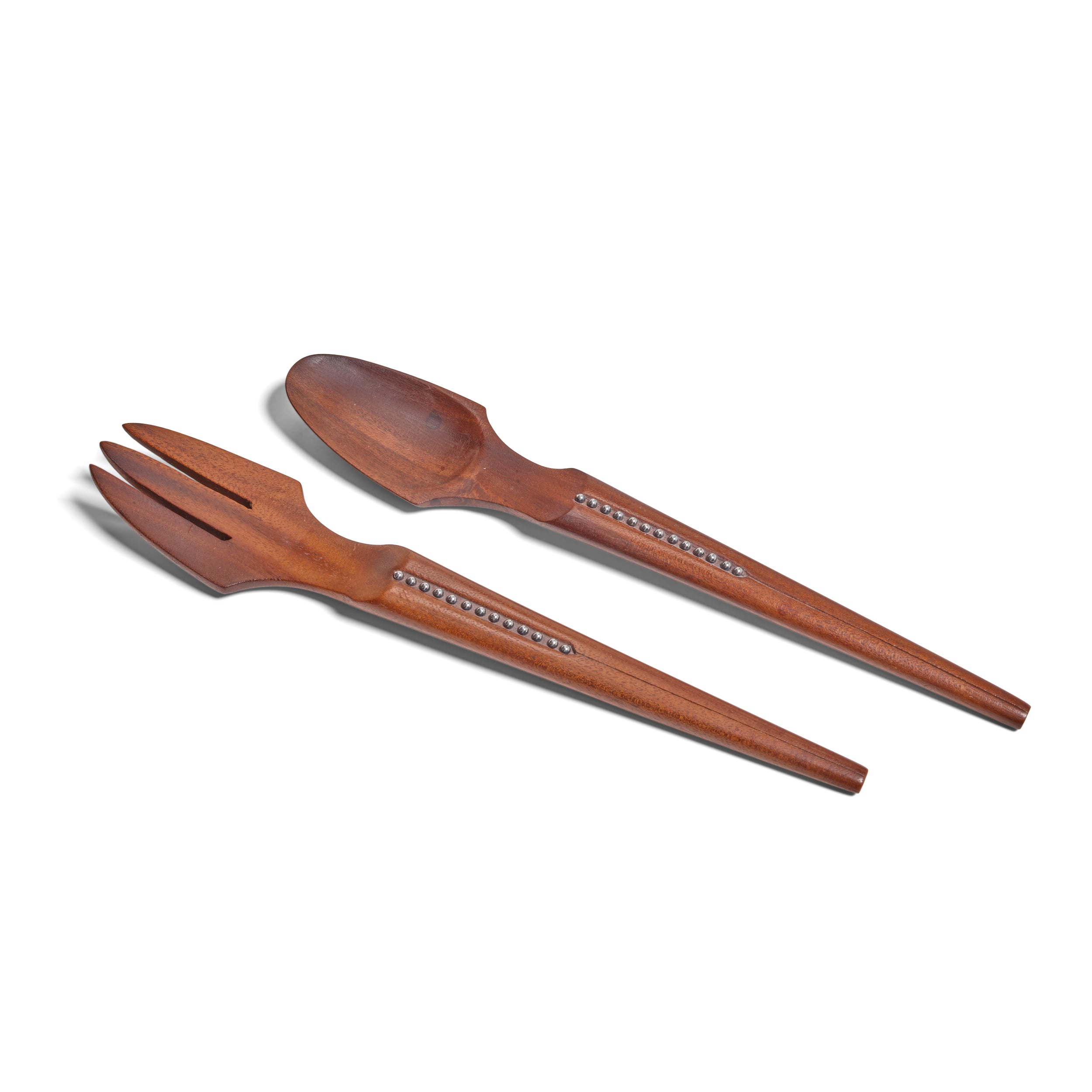
Quiet material contrast defines these rosewood salad servers — a broad-bowled spoon and a two-tined fork, each nearly twelve and a half inches long, the tapering handles inset with a single file of sterling silver beads running flush with the grain. Wood and sterling are the only elements, and the design requires nothing more.
The combination of warm-grained wood with silver was a deliberate strategy in Spratling's workshop. Morrill documents the approach as integral to his design language: the combining of dense organic material with reflective metal, achieved through simplified and slightly tapered geometric form, was a defining characteristic of Las Delicias. When a published inventory recorded Spratling's workshop production for a major 1965 traveling exhibition, salad servers appeared alongside other wood-and-silver pieces, confirming that mixed-material tableware occupied a sustained place in his output rather than a peripheral one.
The Spratling hallmark stamped on each server reflects his documented insistence on marking every piece from the workshop — the mark his means of binding each design to his name and reputation (Morrill, Mexican Silver, 1994). Matched pairs in this condition represent an understated but characteristic expression of his mid-century production.
SPRATLING (ESTABLISHED 1931) Pair of Salad Serversmid-20th centurywood with sterling beads, each with Spratling hallmarklength of each 12 1/4in (32cm)
Bonhams · 2022-10-25
SPRATLING (ESTABLISHED 1931) Pair of Salad Serversmid-20th centurywood with sterling beads, each with Spratling hallmarklength of each 12 1/4in (32cm)
Bonhams (United States)
Museum of Mexican Silver. “Beaded Rosewood Salad Servers.” Catalog no. MoMS-000670. https://museumofmexicansilver.com/pieces/spratling-2680
See something wrong with this record? Suggest a correction and the piece details fill in automatically.
William Spratling
Silver Bar Rosewood Servers
First Design Period: 1931 - 1946
Silver