Saves instantly, no account needed. Already a member? Sign in.
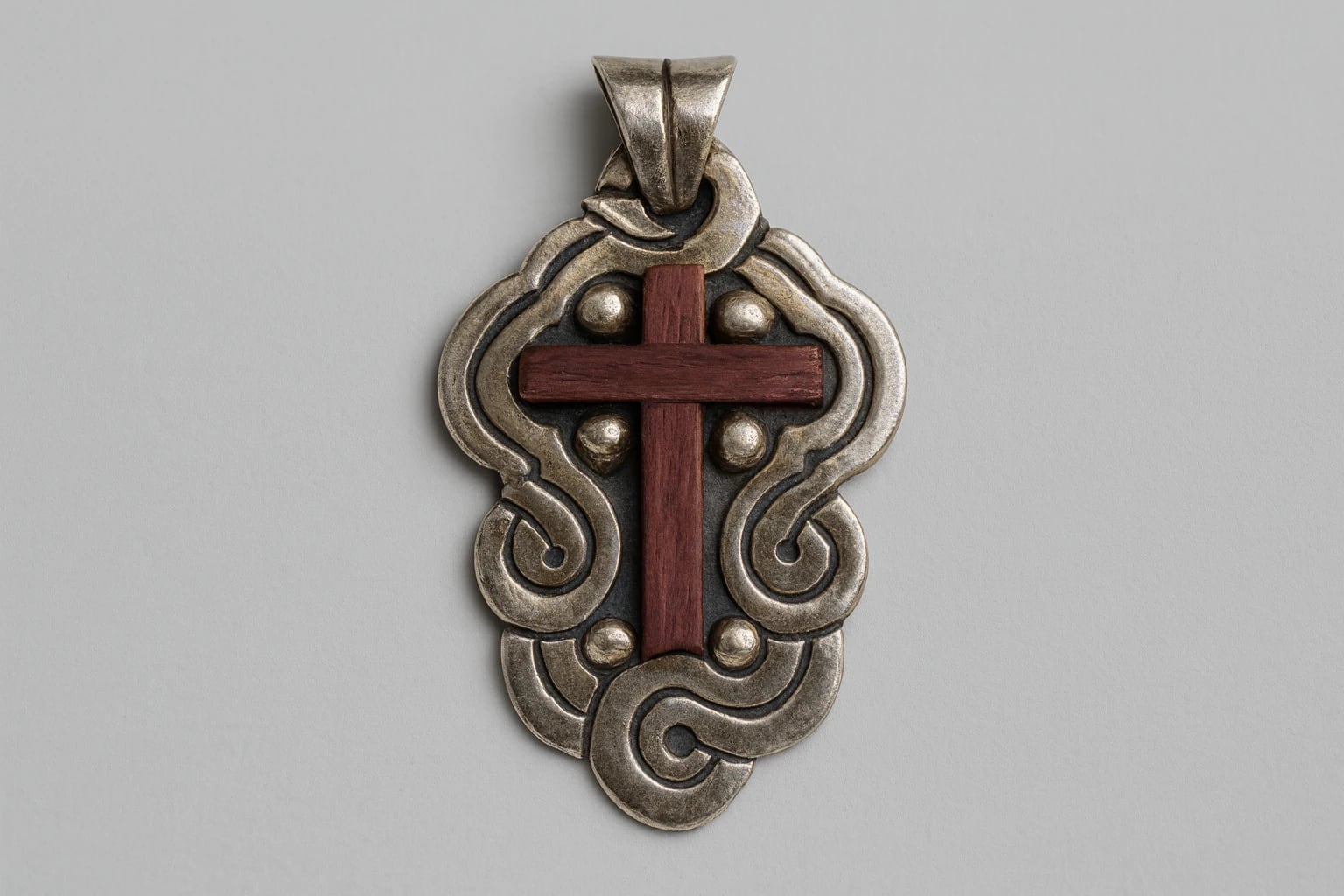
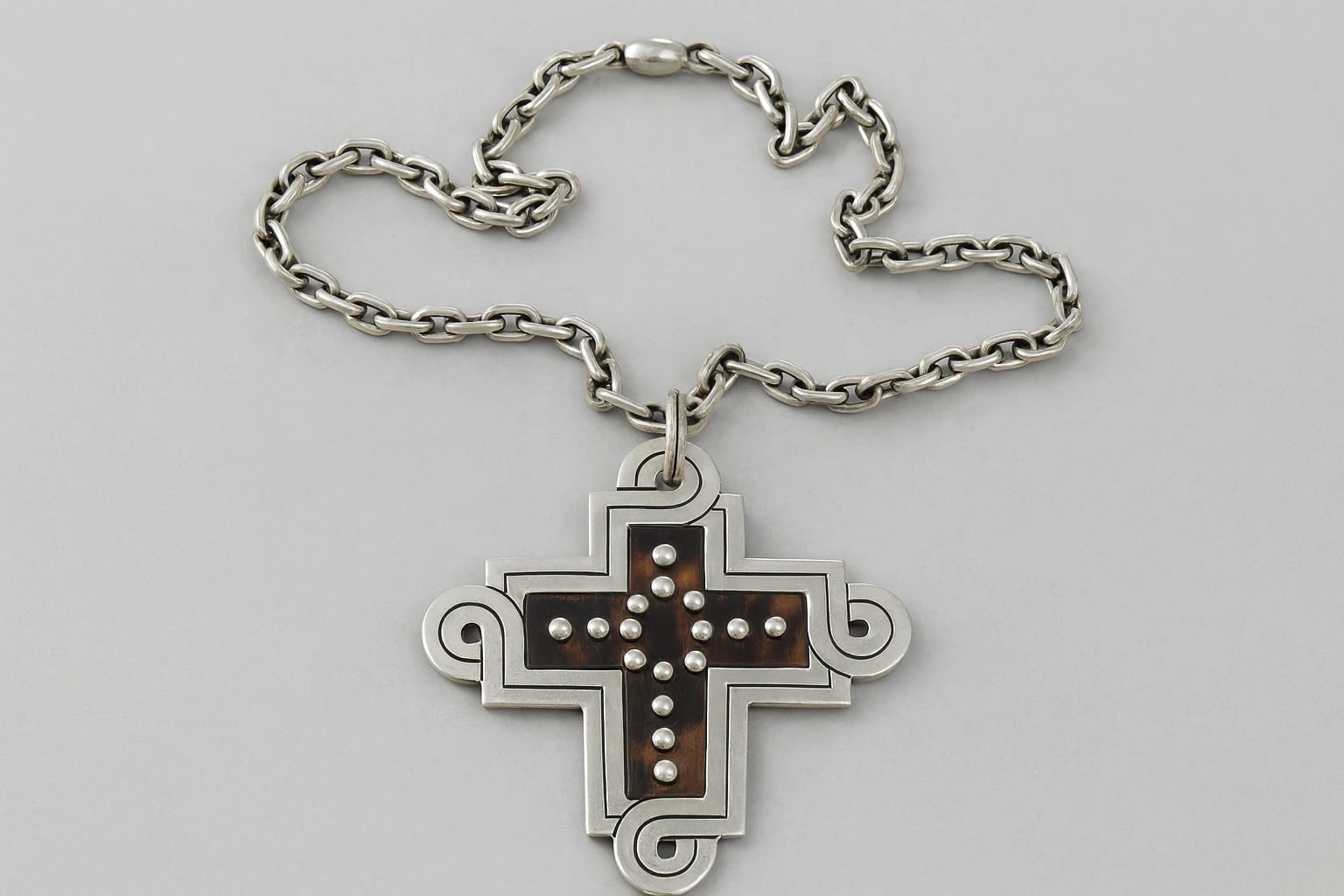
A silver cross set with tortoise shell and dated to roughly 1944 to 1946 sits at the leading edge of a material pairing Spratling would not pursue in earnest until the following decade, when the great majority of his tortoise shell designs were made. The early date is the point: this is one of the first times the workshop brought the warm, mottled shell together with worked silver in a single piece of jewelry.
The construction tells the story of an idea still being figured out. Raised silver rivets stand proud of the surface, echoing the arms of the cross like a row of beads, where Spratling's later tortoise shell pieces set those same rivets flush. It is hung from a chain and clasp of the type the workshop turned out in this period. Spratling marked his silver with a joined "WS," adapted from the brand he used on his horses, and worked in 980 silver, a higher purity than the 0.925 of sterling (Morrill, pp. 39).
The form also reflects an occasional turn toward Mexican religious imagery, a vein Spratling drew on less often than the Pre-Columbian sources that ran through the Las Delicias workshop. The cross is recorded in Mary L. Davis and Greta Pack's Mexican Jewelry and in Phyllis M. Goddard's Spratling Silver: A Field Guide.
The design was later reissued, though without the tortoise shell, which makes an authentic early example with intact shell the one to seek. Condition of the shell and the presence of a period mark are what separate the historically interesting piece from a later restatement of the same idea.
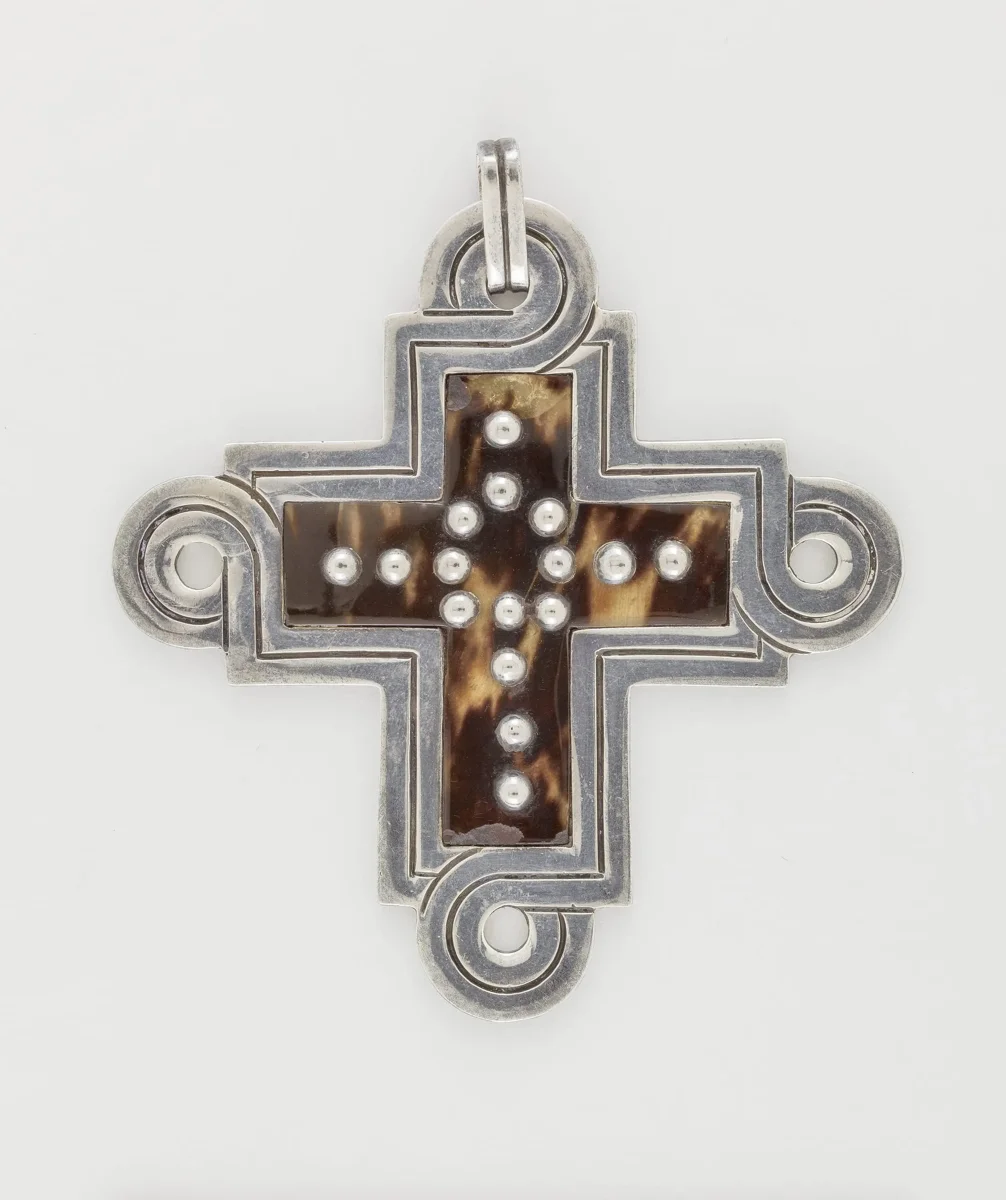
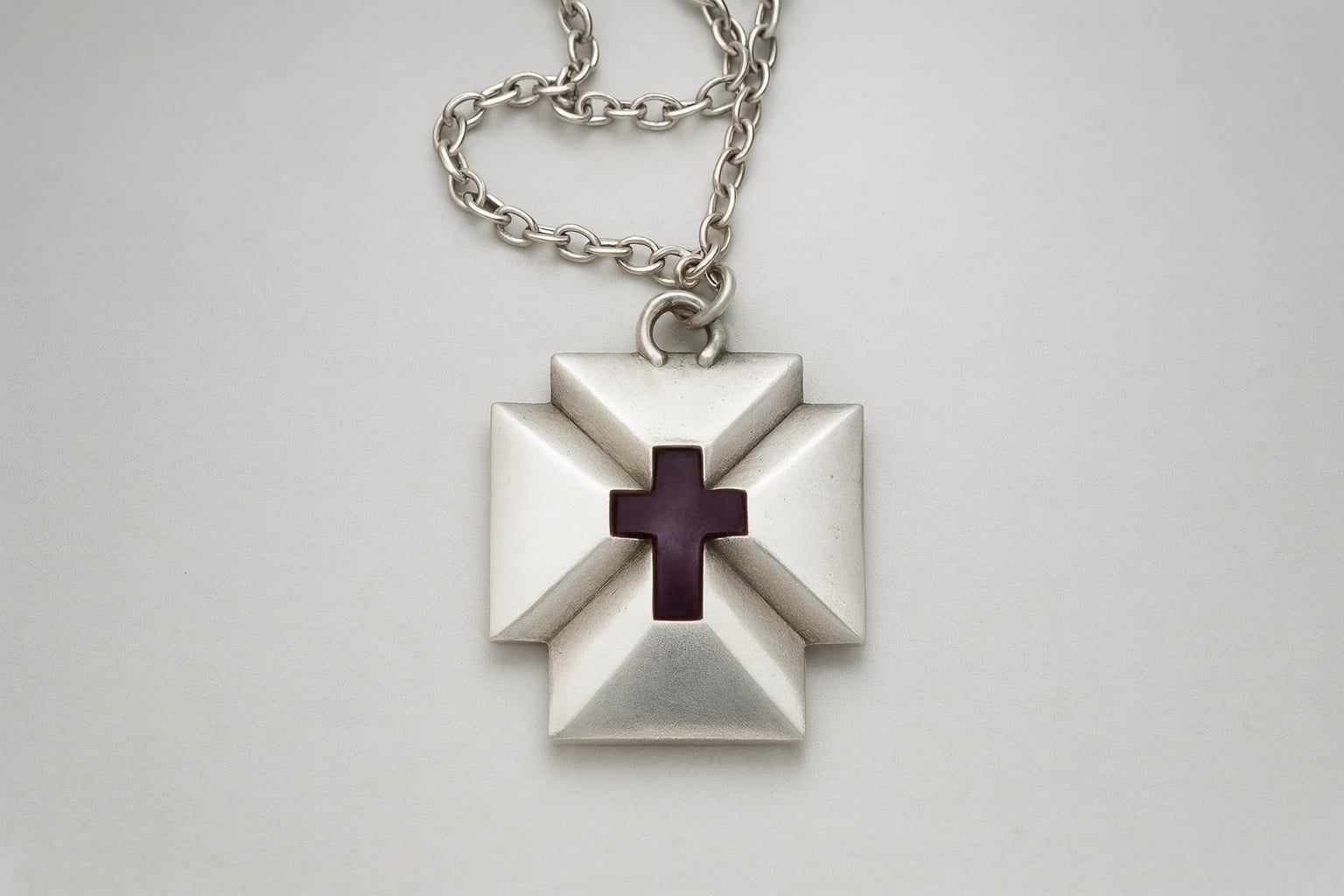
Cross Pendant, circa 1944-1945
Accession M.2014.212.2. Official museum record Photo: Los Angeles County Museum of Art.
Verified against each institution's own collection records. All museum collections
Museum of Mexican Silver. “Early Tortoise Shell Cross.” Catalog no. MoMS-000490. https://museumofmexicansilver.com/pieces/spratling-281
See something wrong with this record? Suggest a correction and the piece details fill in automatically.
William Spratling
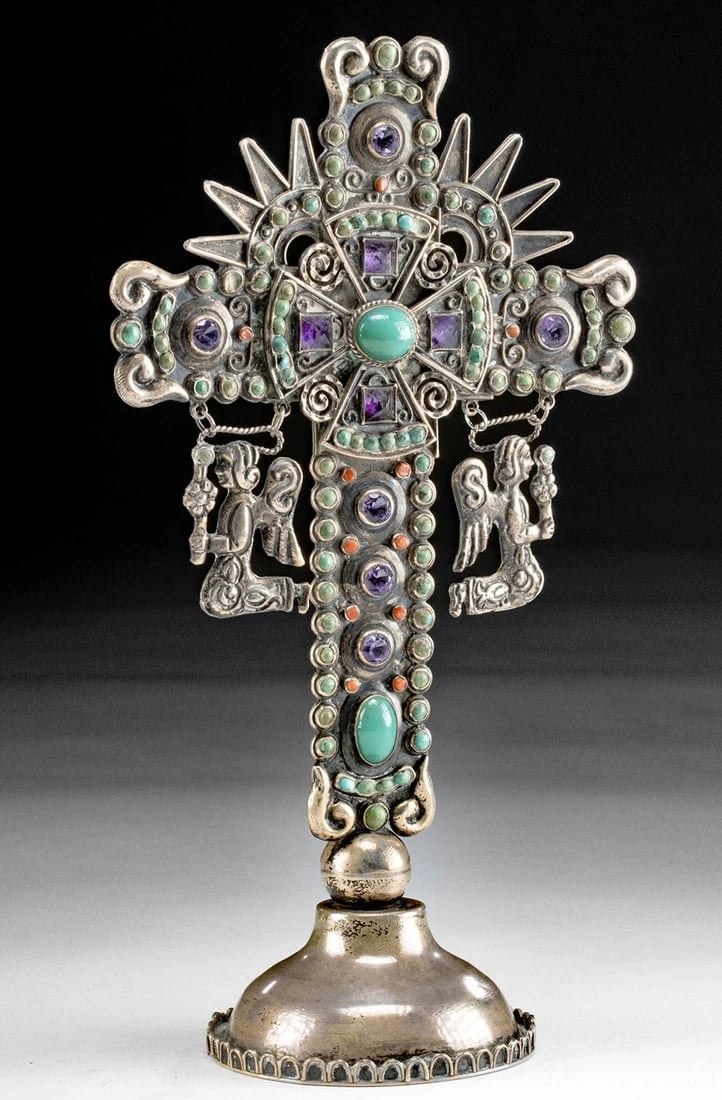
Amethyst Cross Mounted on Silver
First Design Period: 1931 - 1946
Amethyst