Saves instantly, no account needed. Already a member? Sign in.
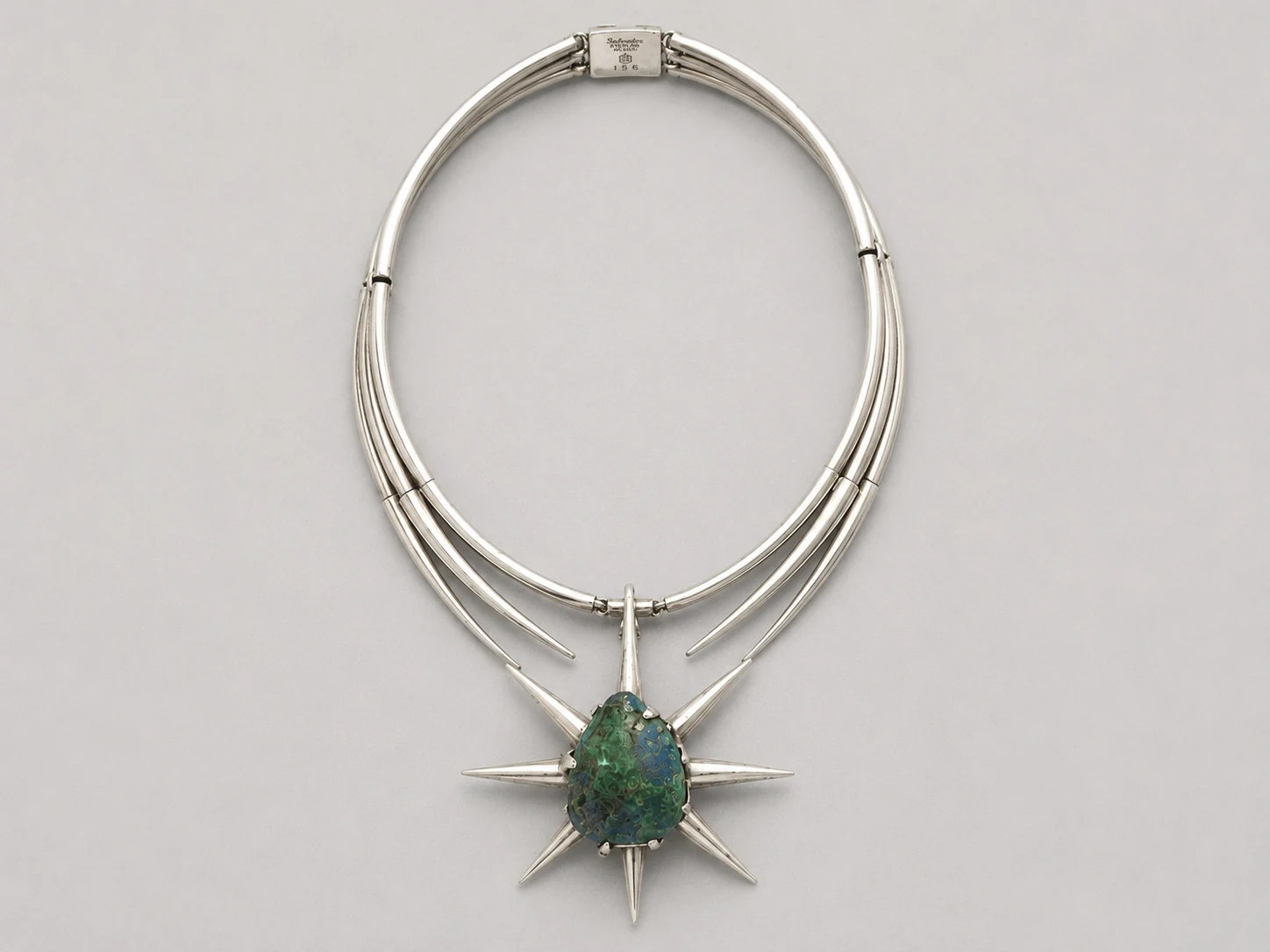
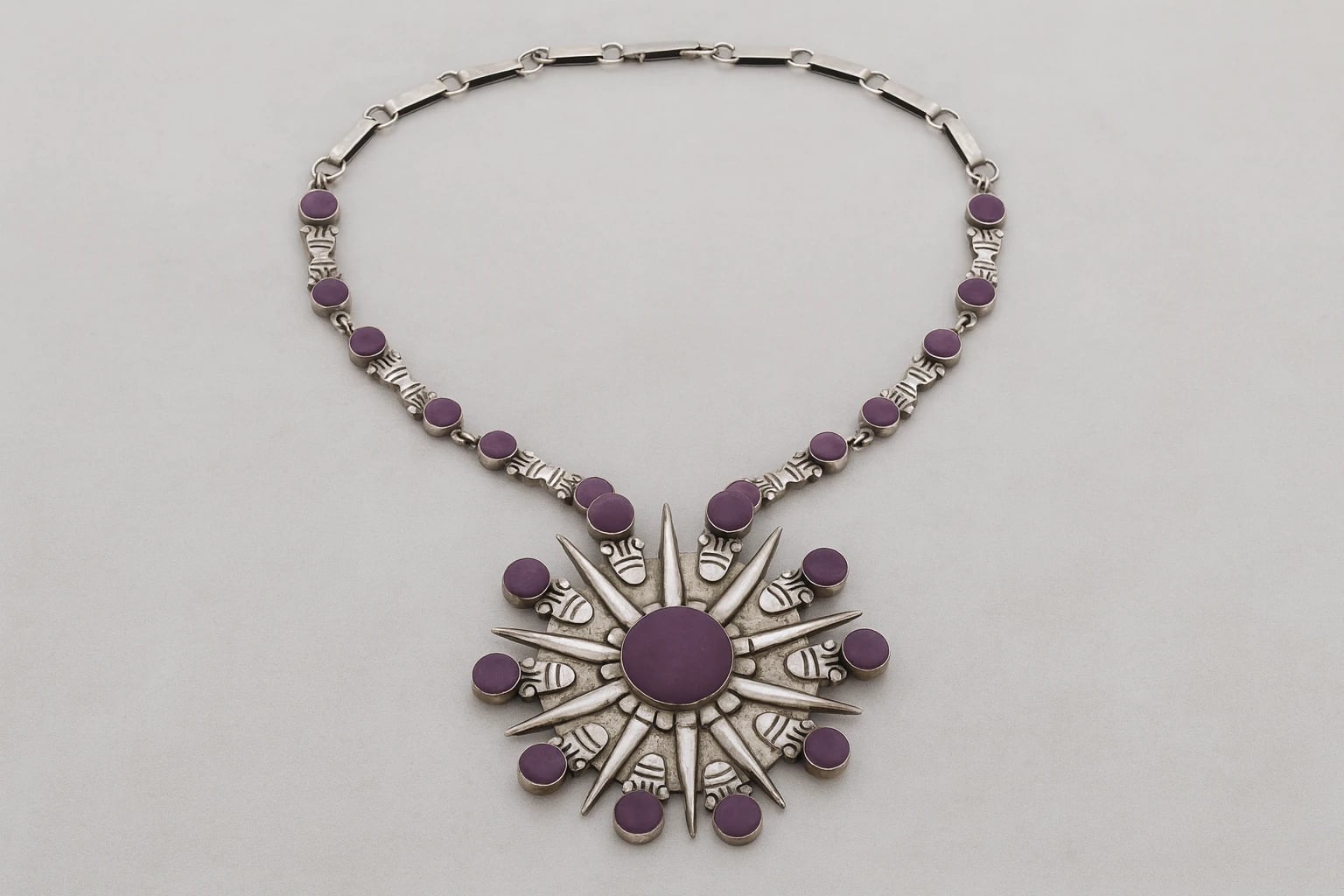
Built around a radiating amethyst sunburst, this necklace carries its central motif outward into the chain itself, so that elements of the pendant design reappear as links rather than stopping at the focal point. Ten small amethysts run through the chain and eleven gather in the pendant, and many of the pendant elements were fitted with pin backings, letting the wearer break the design into separate ornaments.
The chunky cabochon-amethyst necklace is among the Spratling forms that became emblematic of the workshop's output in the 1930s and 1940s, the kind of timeless design Penny Morrill describes encountering in the trade and learning to recognize on sight (Morrill, p. 12). According to Spratling's own catalogs the design was also produced with turquoise in place of the amethyst, and the same motif was carried into a matching bracelet.
Worked in 980 silver and marked with the joined "WS" Spratling adapted from his horse brand (Morrill, p. 39), the piece sits within a documented body of work: it appears in Morrill and Berk's Mexican Silver, in Taylor Littleton's The Color of Silver, and in Goddard's field guide, as well as in the literature on the American School.
That the same idea was offered in two stones and across two forms makes attribution and stone confirmation the central questions for a collector. The amethyst version, recorded across multiple references, is the one this example represents.
Museum of Mexican Silver. “Amethyst Aztec Sunburst Necklace.” Catalog no. MoMS-000333. https://museumofmexicansilver.com/pieces/spratling-282
See something wrong with this record? Suggest a correction and the piece details fill in automatically.
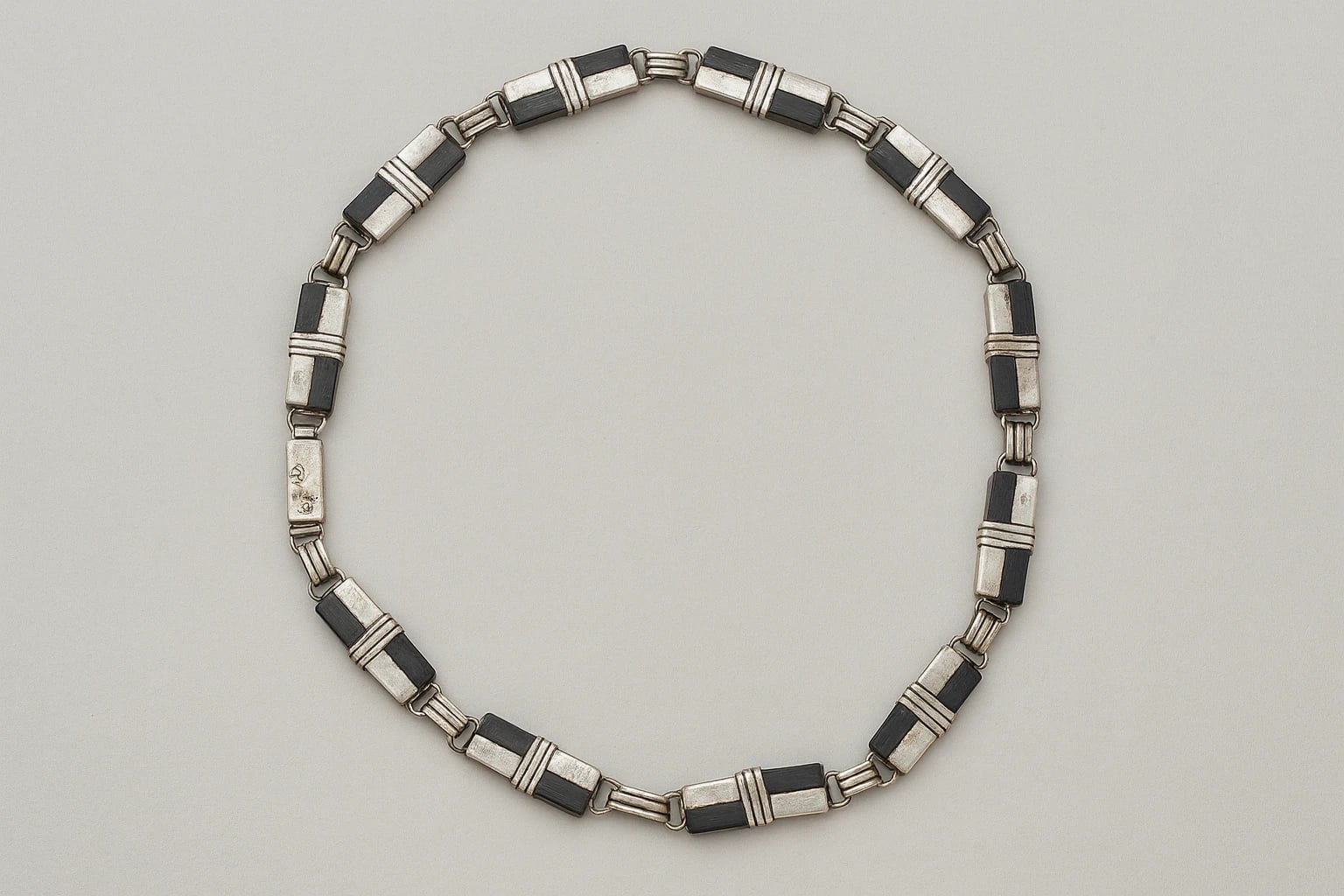
Necklace of Rectangles with Alternating Quarters
Silver