Saves instantly, no account needed. Already a member? Sign in.
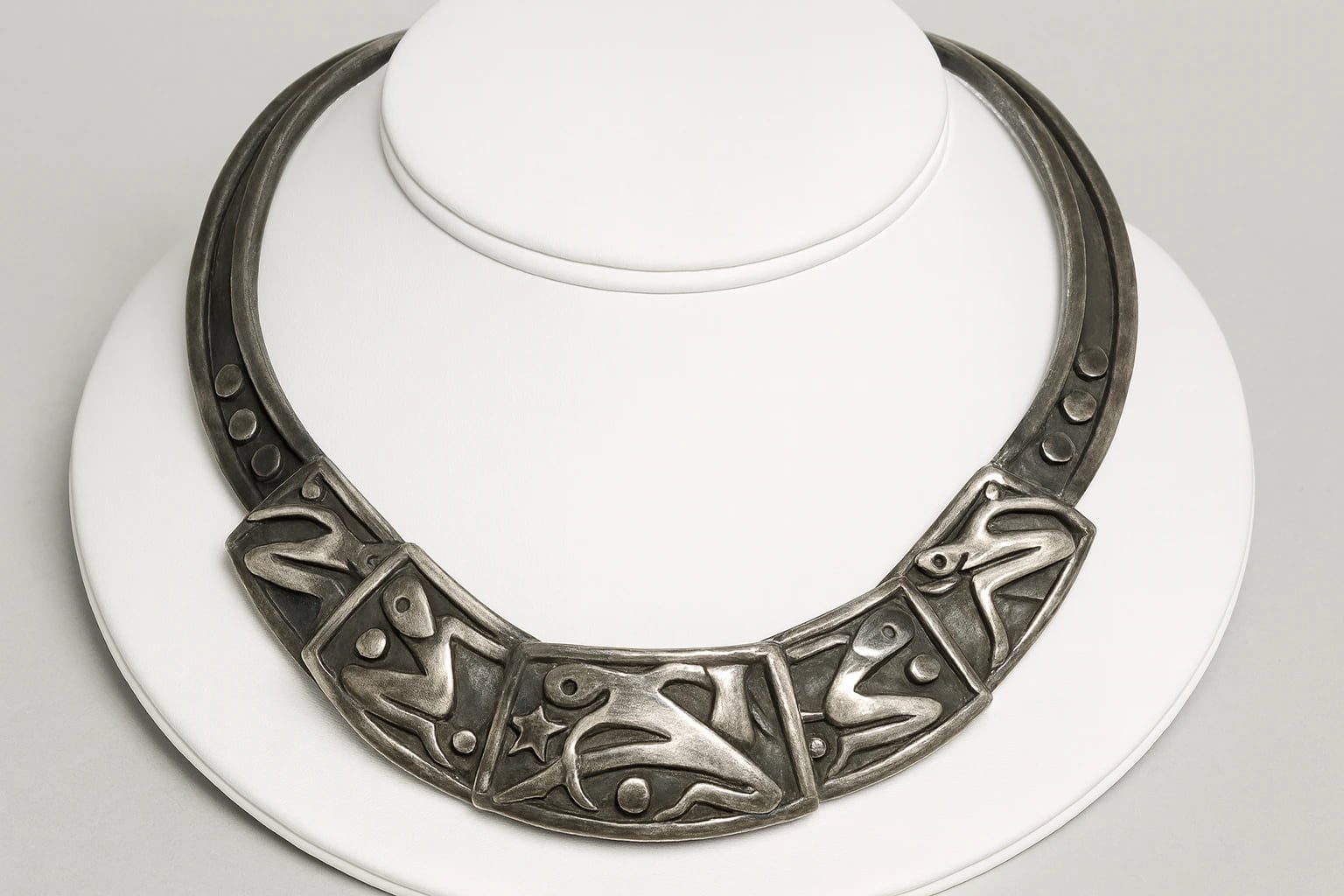
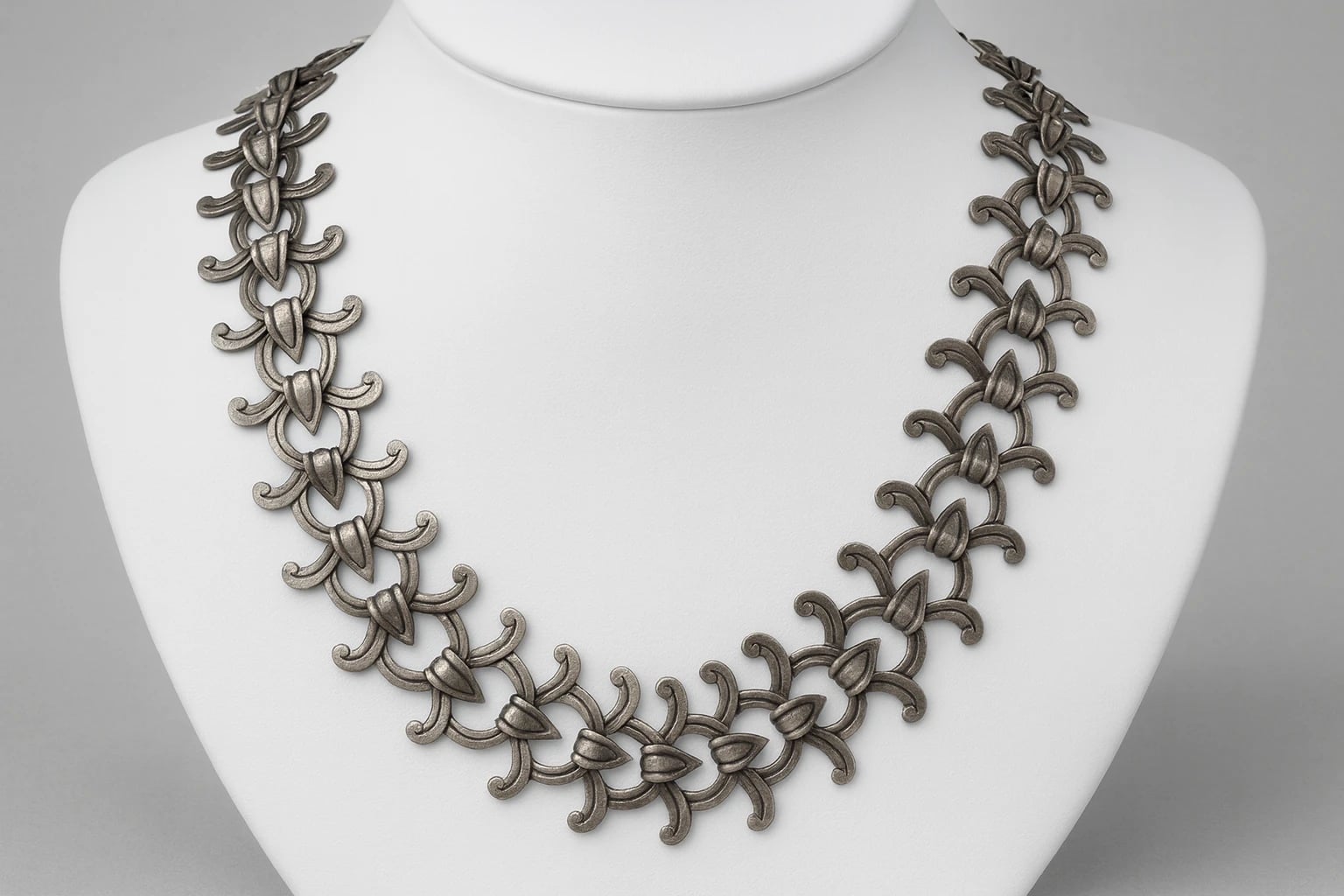
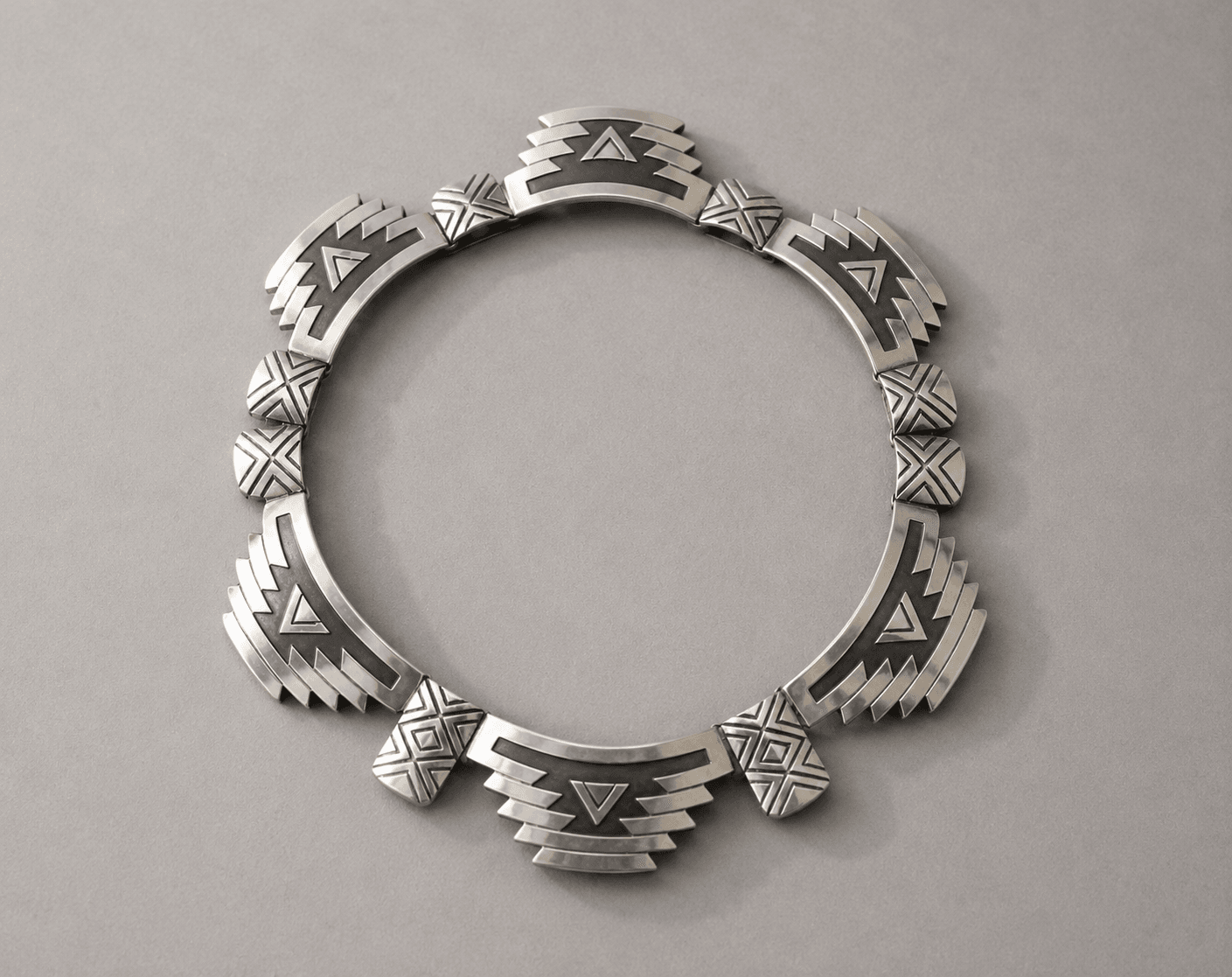
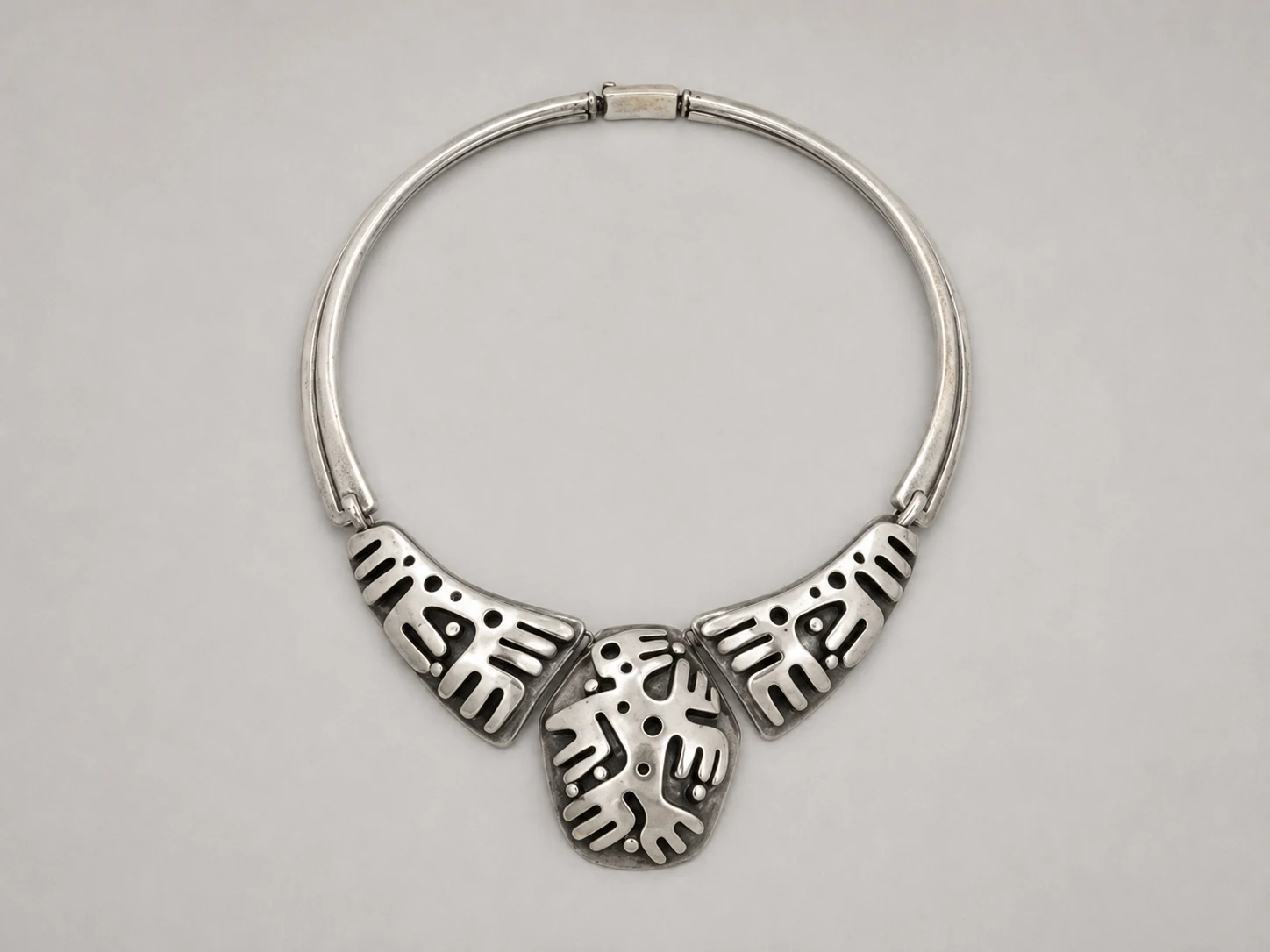
At first glance, the three articulated panels of this necklace resemble fragments of an ancient Mexican glyph. On closer inspection, they reveal themselves as exercises in distinctly modern construction. Thick, pierced overlays rise above darkened silver grounds; domed surfaces catch the light while recessed areas create depth and shadow. Hinged side panels allow the composition to move with the wearer, while the double-wire collar makes its substantial central form appear almost suspended. The result has ceremonial presence, yet remains intimate and wearable.
Design No. 162 distills Salvador Terán's mature visual language. Suggestions of a mask, warrior or ritual figure emerge from the silver and then dissolve into intersecting lines, asymmetrical silhouettes and overlapping planes. Terán drew upon Mexico's ancient visual culture without copying any single archaeological source. He converted that inheritance into structure, rhythm and movement, a particularly sophisticated expression of Mexican modernism.
Terán's career also traces the transmission of ideas that made the Taxco silver renaissance possible. He received his early training at William Spratling's Taller de Las Delicias and in 1939 joined his Castillo cousins in establishing Los Castillo. Terán was responsible for many of that workshop's important early designs, although much of that work appeared under the collective Los Castillo name. In 1952 he left Taxco for Mexico City, established his independent practice and began signing his work simply Salvador. The signature on this necklace therefore represents more than attribution: it marks the emergence of an artist who had spent much of his formative career designing anonymously.
Made after Terán's move to Mexico City, this necklace reveals Taxco's deepest legacy: the creation of independent artists capable of carrying its methods into radically personal careers. Spratling supplied the workshop model; Los Castillo expanded its technical and decorative possibilities; Terán translated that inheritance into a graphic, metropolitan and unmistakably individual form.
Museum of Mexican Silver. “Necklace, Design No. 162.” Catalog no. MoMS-002184. https://museumofmexicansilver.com/pieces/teran-necklace-design-162
See something wrong with this record? Suggest a correction and the piece details fill in automatically.
Salvador Terán
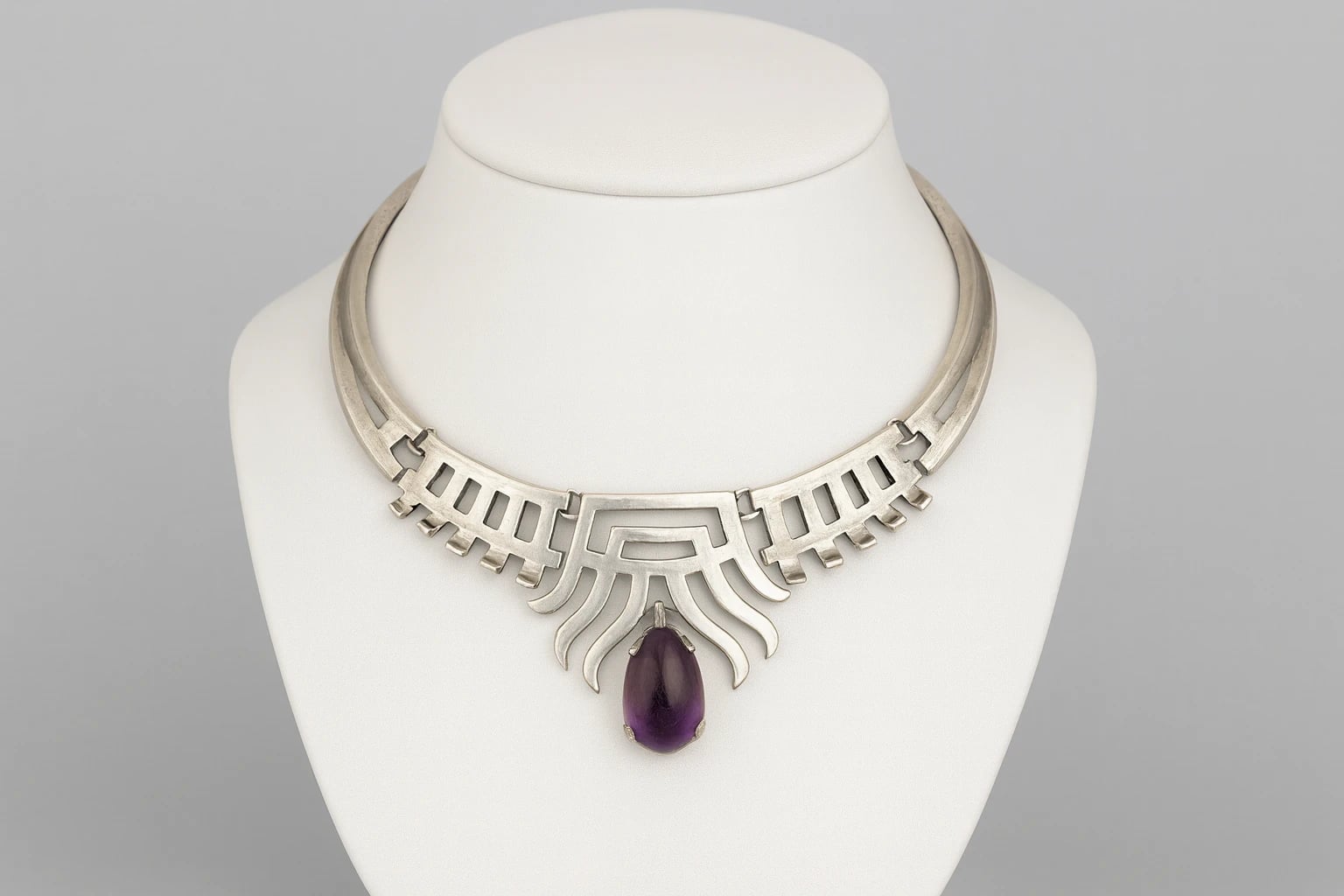
Geometric Collar Necklace with Amethyst Drop
Amethyst