Saves instantly, no account needed. Already a member? Sign in.
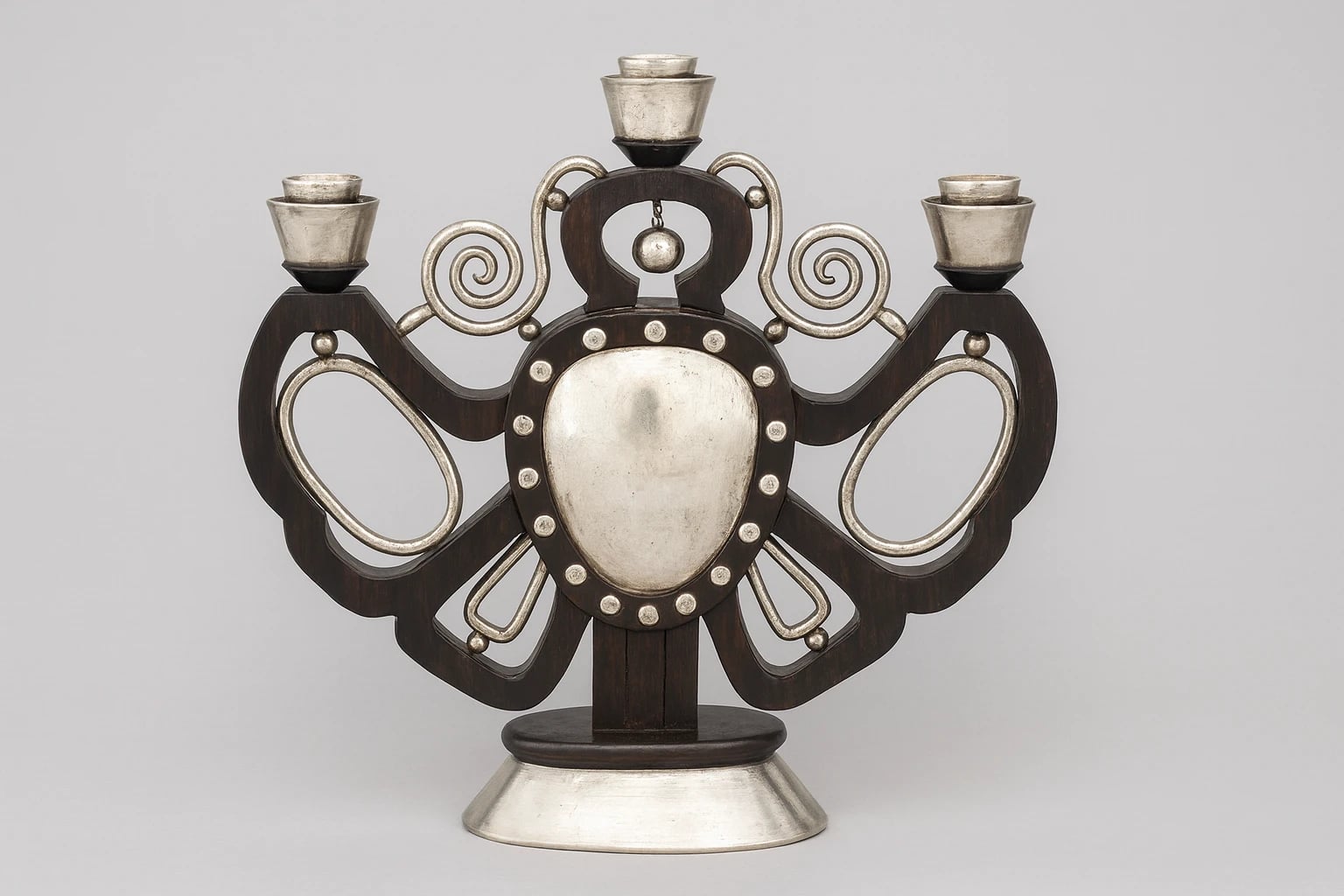
Spratling named this three-light candelabra "Aztec Butterfly," and the design earns the title: ebony butterfly-wing shapes rise from an ebony platform, each fitted with silver inserts, while a silver plaque set on front and back is ringed by silver discs inlaid into the wood. It brings together two of his signature later moves, the abstraction of a Pre-Columbian subject and the inlay of silver discs into dark wood that Morrill identifies as central to his 1950s holloware (Morrill, p. 73).
From the Third Design Period, 1951 to 1967, the candelabra was included in "The World of William Spratling," the museum exhibition organized by John Leeper of the McNay Art Institute that toured the United States in 1965 alongside Pre-Columbian art from Spratling's own collection (Morrill, p. 77). It is recorded in Morrill's Maestros de Plata.
Worked in 980 silver under the joined "WS" mark (Morrill, p. 39), the "Aztec Butterfly" is a named, documented, and exhibited design. Those three things, together with the integrity of the ebony and its silver inlay, define the piece.
Museum of Mexican Silver. “Ornate Ebony and Silver Candelabra.” Catalog no. MoMS-000857. https://museumofmexicansilver.com/pieces/spratling-2907
See something wrong with this record? Suggest a correction and the piece details fill in automatically.
William Spratling
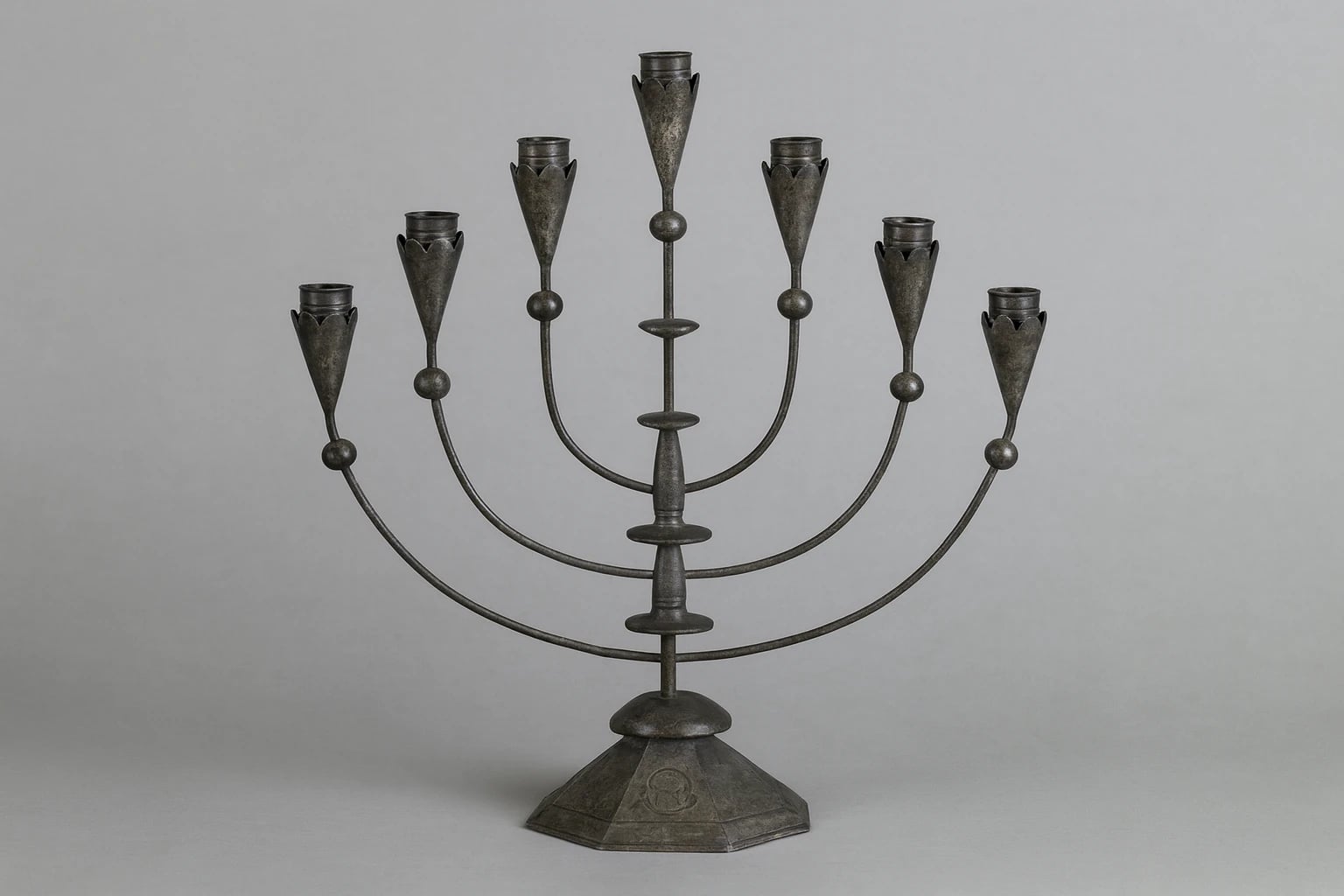
Seven Arm Tin Candelabra
First Design Period: 1931 - 1946
Tin