Saves instantly, no account needed. Already a member? Sign in.
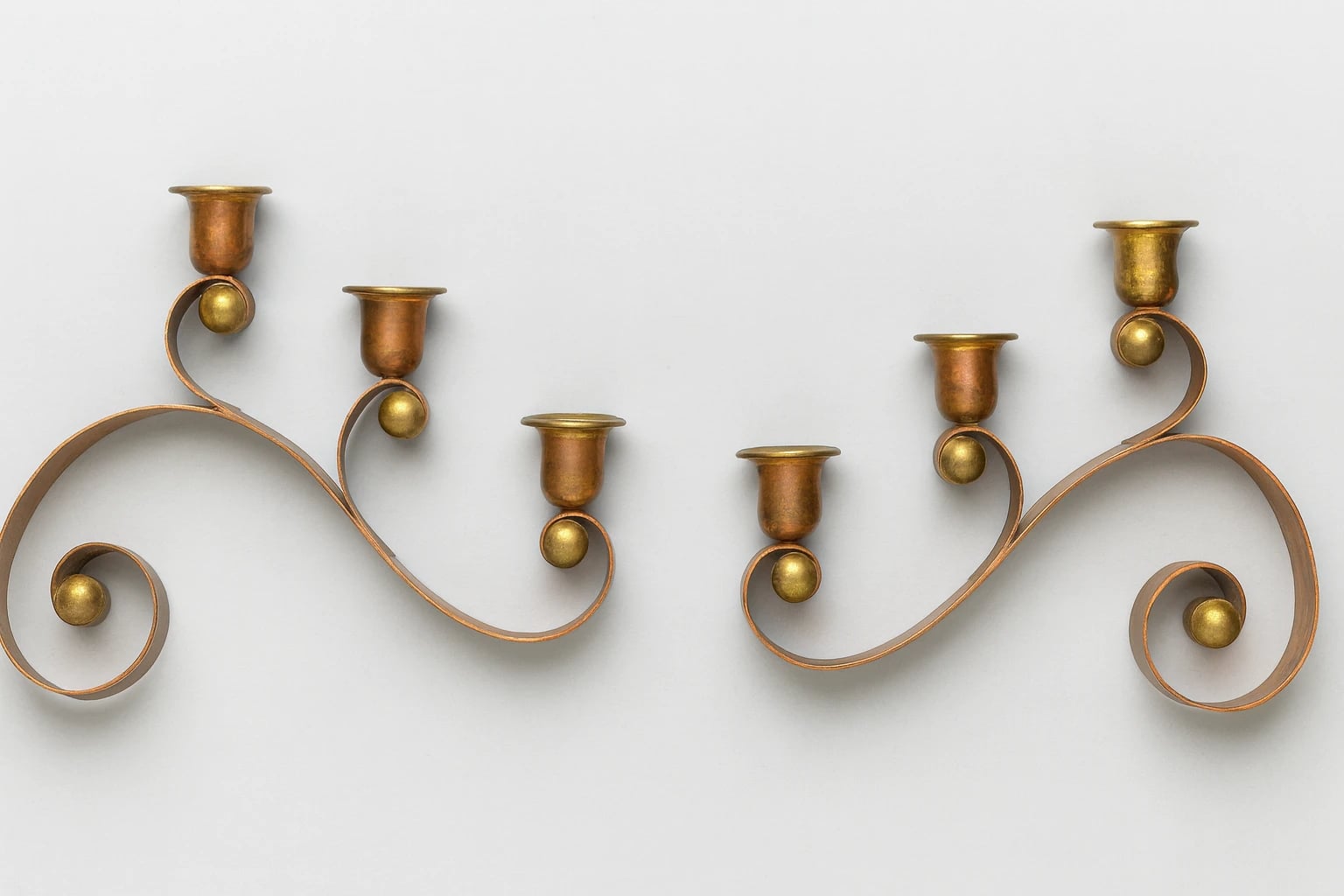
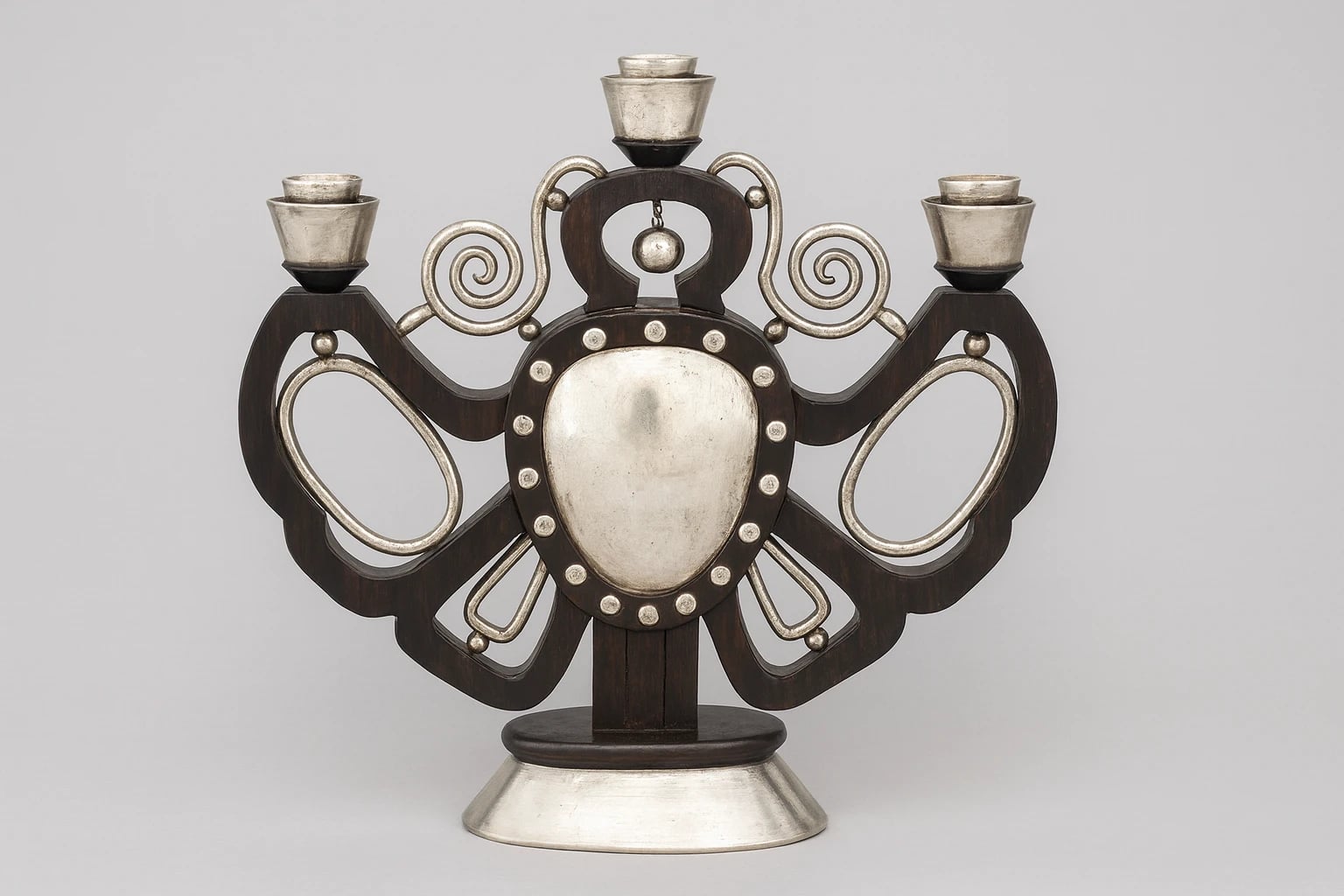
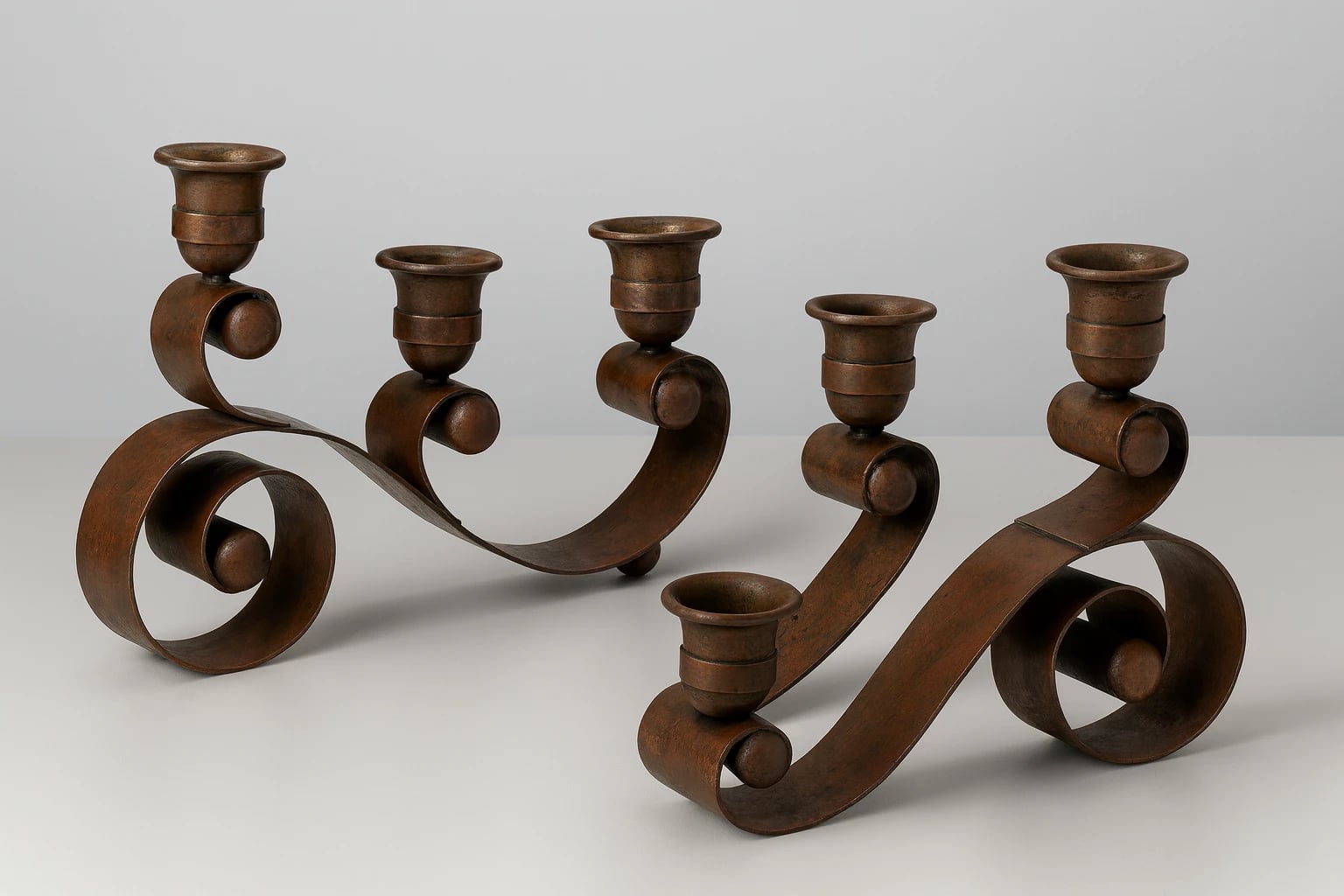
A three-light candelabrum built in copper rather than silver announces the material intelligence that ran through Héctor Aguilar's holloware. The branches rise from a central stem and turn outward to carry the light, and the warm reddish surface of the copper does something silver cannot: it absorbs and softens the flame rather than throwing it back in cold reflection. Aguilar treated copper as a serious medium for household objects, not as an inexpensive substitute, and this candelabrum belongs to a body of work in which the metal's color and weight are integral to the design.
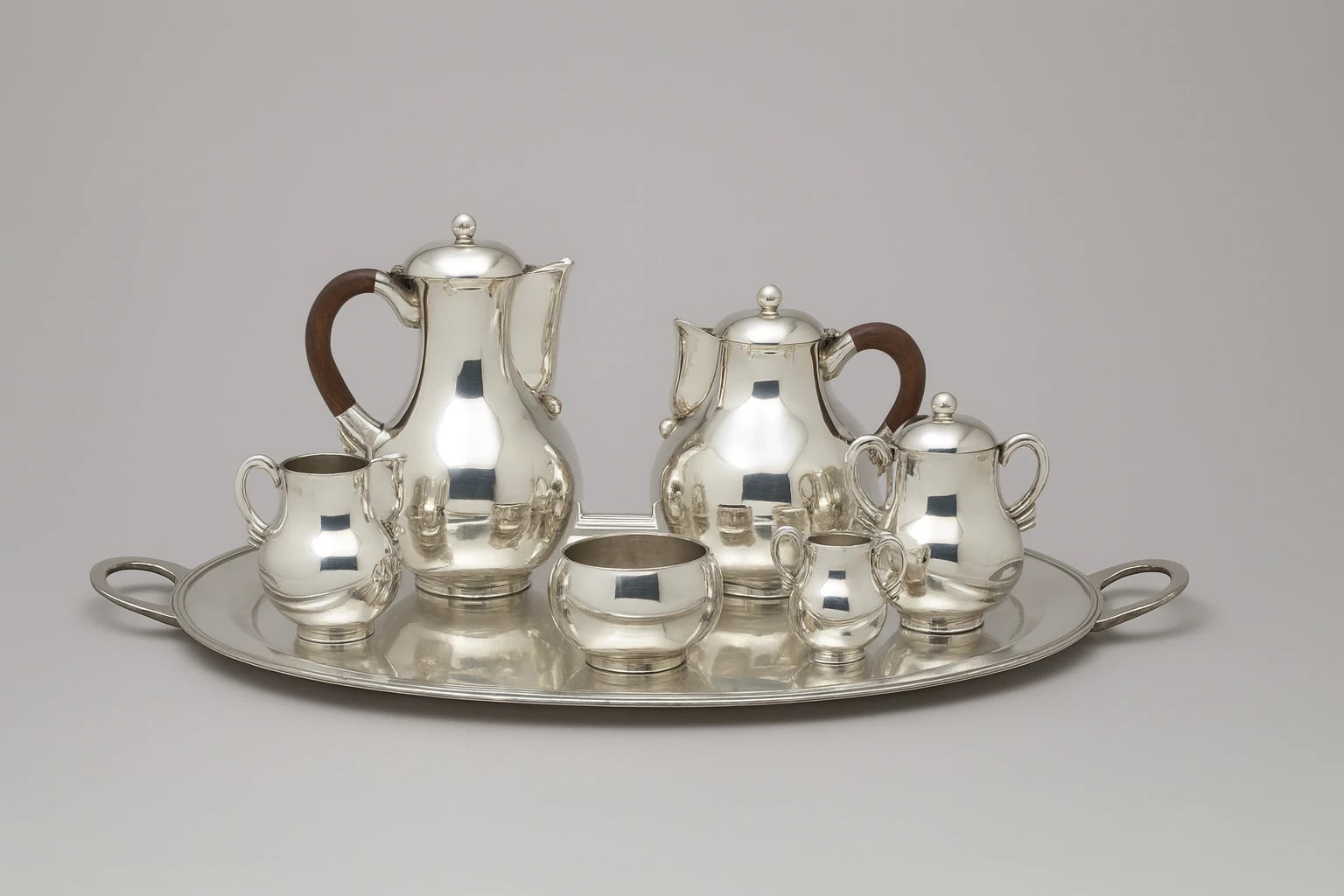
The form depends on the reading of the curves. Each arm sweeps from the base in a continuous line before rising to hold a candle, so the object organizes its mass around a small number of confident gestures rather than applied ornament. Penny Morrill records that in the early years of the Taller Borda, from 1939 to 1942, holloware was handwrought, and that pieces showing the marks of the hammer come from those few years before machine forming arrived in the workshop. Whether an individual candelabrum was raised entirely by hand or formed and then finished by hand depends on the marks it carries. What the design makes clear is a preference for planar surfaces and clean junctures, the same restraint Aguilar brought to his silver pitchers and trays.
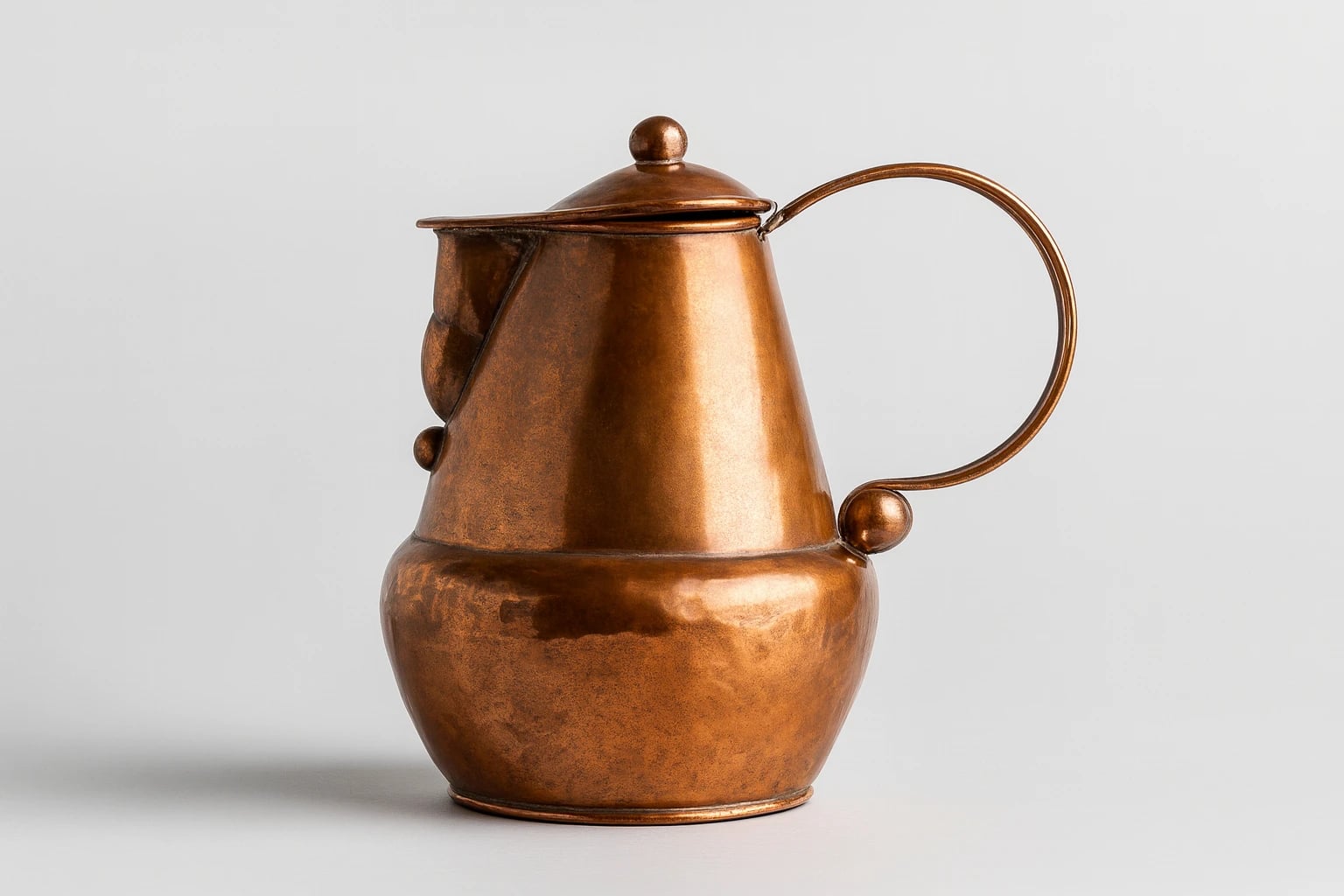
Aguilar founded the Taller Borda in 1939 after serving as William Spratling's workshop manager at Las Delicias, and he persuaded several silversmiths to leave with him. The Borda became one of the few Taxco workshops producing handwrought holloware, and Morrill notes that Aguilar and the designer Valentin Vidaurreta found their fullest expression in objects of this kind. His work in copper and brass, including candelabra and pitchers, developed a distinct character within the renaissance, priced and valued alongside pure silver when it was made in the forties and fifties. The candelabrum sits within that production: a domestic object conceived with the same design authority Aguilar applied to precious metal.
For a collection, the piece documents the breadth of the Taxco workshops beyond jewelry and silver. It shows that a leading atelier treated copper lighting as a designed object worth the same care as its silver holloware, and it preserves the household side of a workshop that operated from 1939 until it closed in 1962. Morrill observes that Aguilar's copper and decorative objects have continued to be sought and used, which reflects the durability of a design that reads as clearly on a table today as it did when the Borda was making it.
Museum of Mexican Silver. “Copper Three Light Candelabra.” Catalog no. MoMS-001379. https://museumofmexicansilver.com/pieces/aguilar-candelabra-copper-three-light
See something wrong with this record? Suggest a correction and the piece details fill in automatically.
Héctor Aguilar
Copper Pitcher
c. 1945
Copper