Saves instantly, no account needed. Already a member? Sign in.
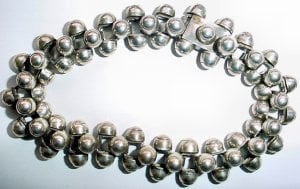
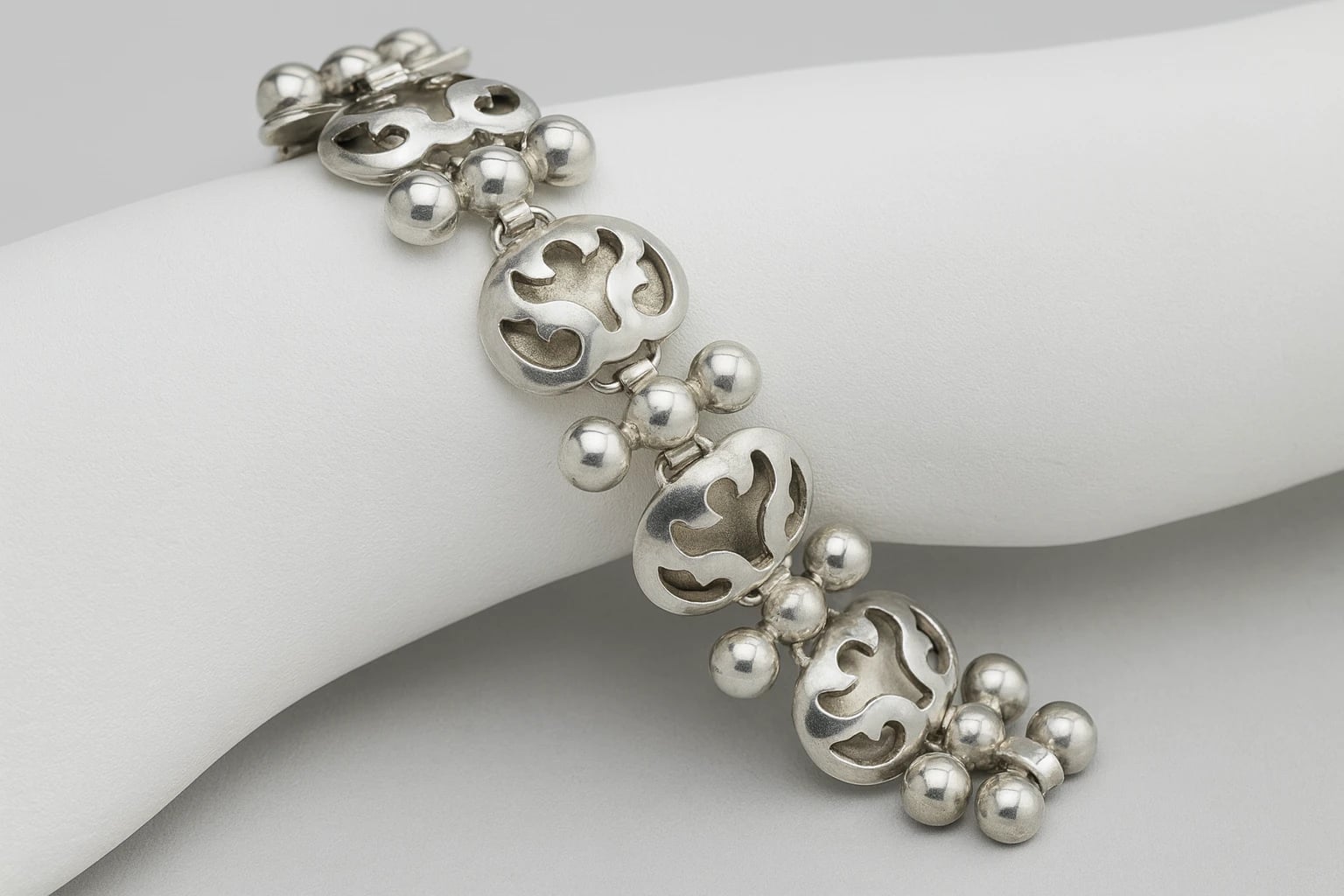
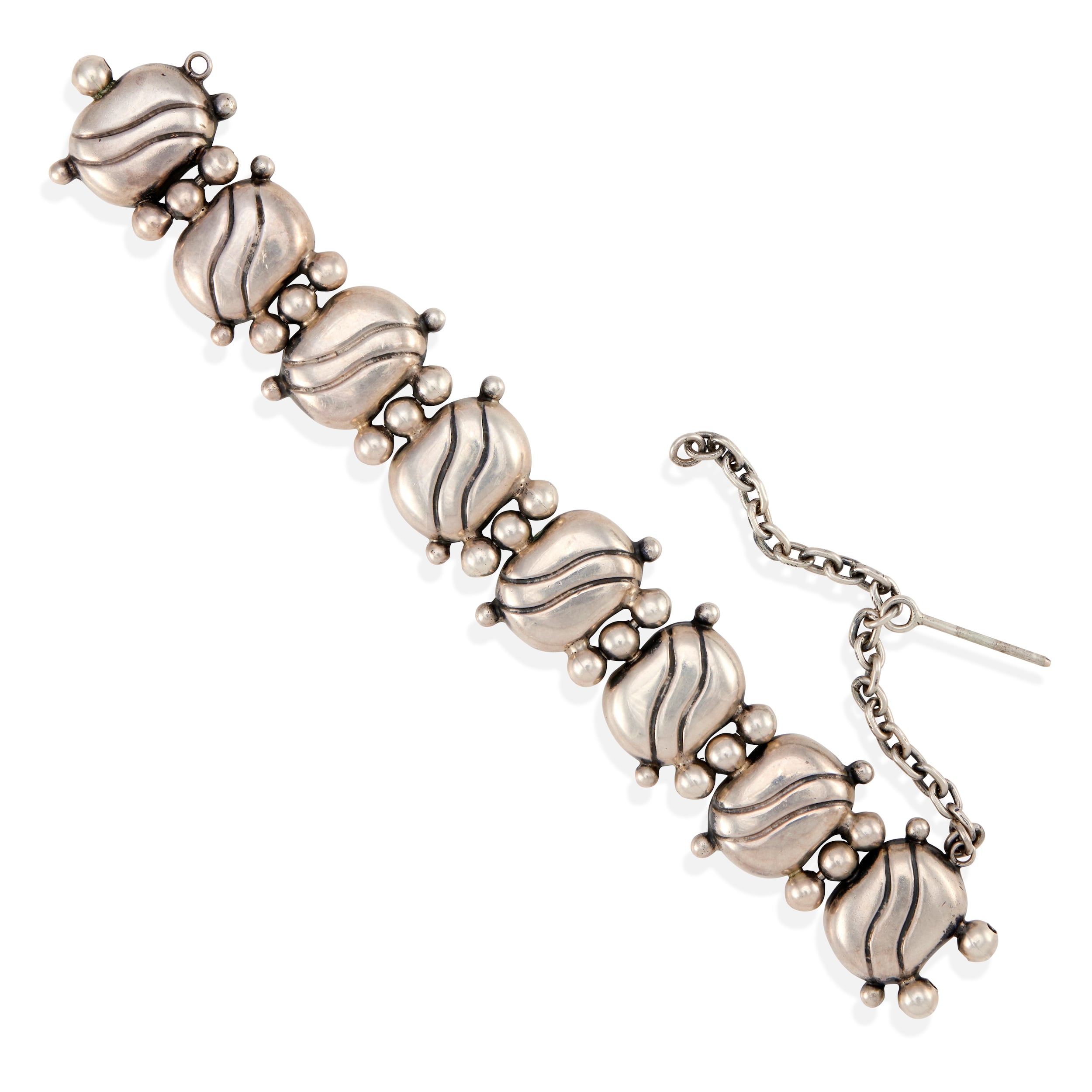
The pillowed oval links of this bracelet assert themselves through a precise interplay of volume and line. Each domed form carries a set of diagonal incised grooves whose oxidized interiors deepen the contrast against the raised silver surface, animating what might otherwise read as simple mass; between each pillow, tight clusters of small silver beads provide rhythmic punctuation that keeps the eye moving along the length of the piece.
Those incised lines are the product of a technique Taxco silversmiths called cincelar — marking the silver with a hammer blow to a cylindrical tool, each cincel leaving its own edge in the metal. Morrill documents this hand-engraving vocabulary in the Spratling workshop's early production, noting the range of marks different cinceles could produce. Here the diagonal strokes run with a consistent tension across the swelling surface of each link, the linearity of the cut emphasizing the sculptural volume it crosses rather than flattening it.
First Design Period pieces from the early 1930s through 1946 are collected for exactly this quality: the directness of form and the legibility of the hand. This example — its bead connectors and engraved domes held in careful equilibrium — captures the workshop's characteristic confidence in letting silver and craft speak without ornamental elaboration.
Museum of Mexican Silver. “Pillow Bracelet.” Catalog no. MoMS-000041. https://museumofmexicansilver.com/pieces/spratling-2957
See something wrong with this record? Suggest a correction and the piece details fill in automatically.
William Spratling
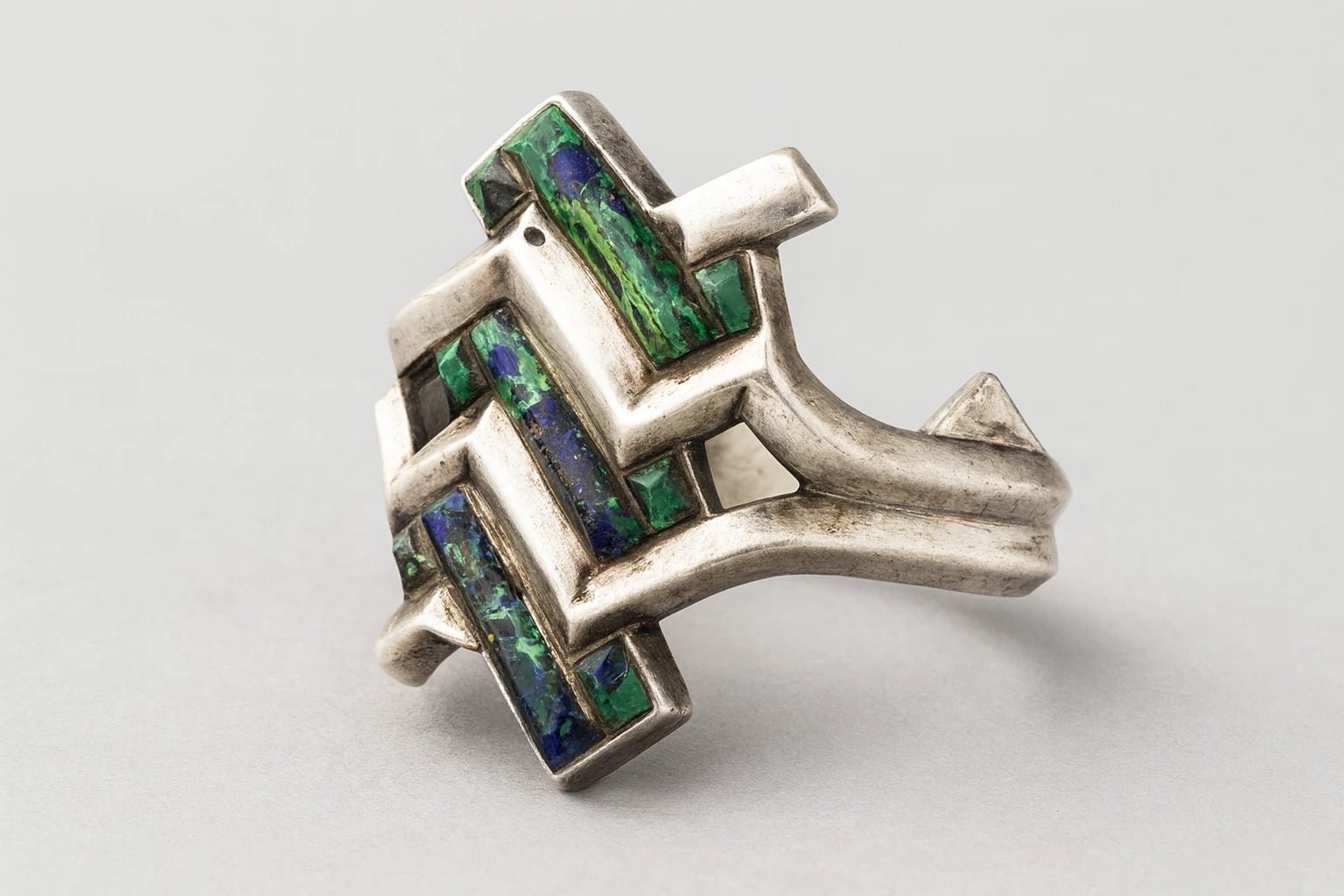
Azur Malachite Cuff
First Design Period: 1931 - 1946
Silver