Saves instantly, no account needed. Already a member? Sign in.
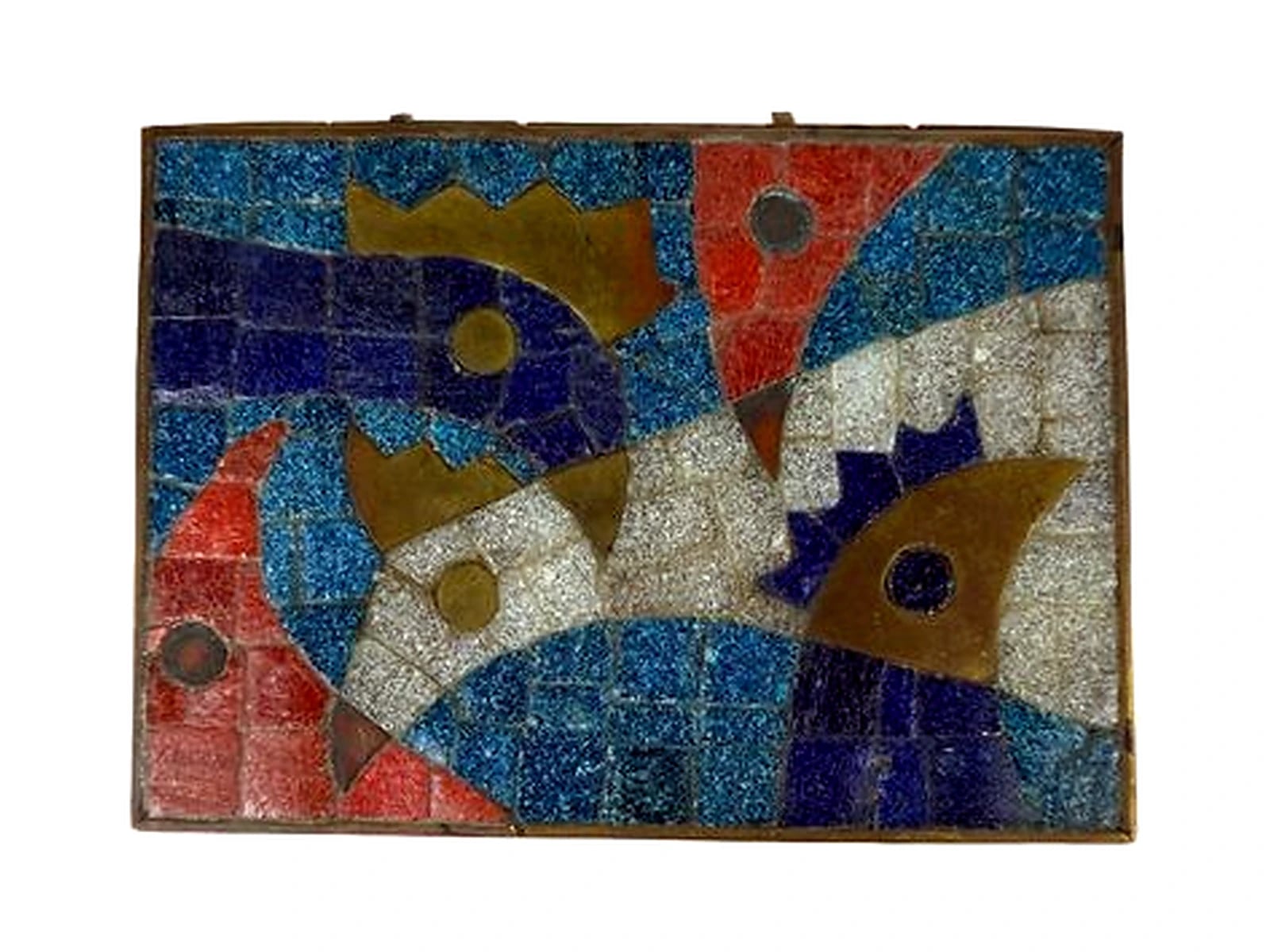
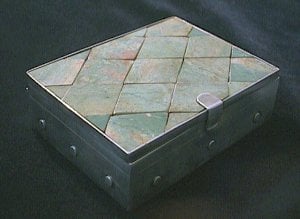
A silver box surfaced with a mosaic of Mexican jade belongs to the most ambitious side of Spratling's holloware, where the precious metal becomes a frame for stone rather than the whole of the object. Nephrite was among the native materials Spratling deliberately favored, and setting it as inlaid mosaic against bands of applied silver discs turns a utilitarian box into a study in surface and color.
The applied discs ringing the base are a recurring device in Spratling's work, a way of articulating form through repetition rather than ornament. By the Third Design Period (1951-1967), his vocabulary had settled into this confident interplay of simple form, worked surface, and inset hardstone.
The decision to lead with stone reflects the broader program Spratling had built in Taxco from the 1930s onward: he drew on Mexico's own materials and on Pre-Columbian and Colonial precedent to make a modern Mexican object, work hand-wrought in his workshop rather than copied from European models (Morrill, p. 39).
The box is recorded in Penny Morrill's Maestros de Plata and in Phyllis Goddard's Spratling Silver field guide, the two standard references for authenticating his work, which places it within the documented corpus collectors track most closely.
Museum of Mexican Silver. “Jade Mosaic Box.” Catalog no. MoMS-000778. https://museumofmexicansilver.com/pieces/spratling-2990
See something wrong with this record? Suggest a correction and the piece details fill in automatically.
William Spratling
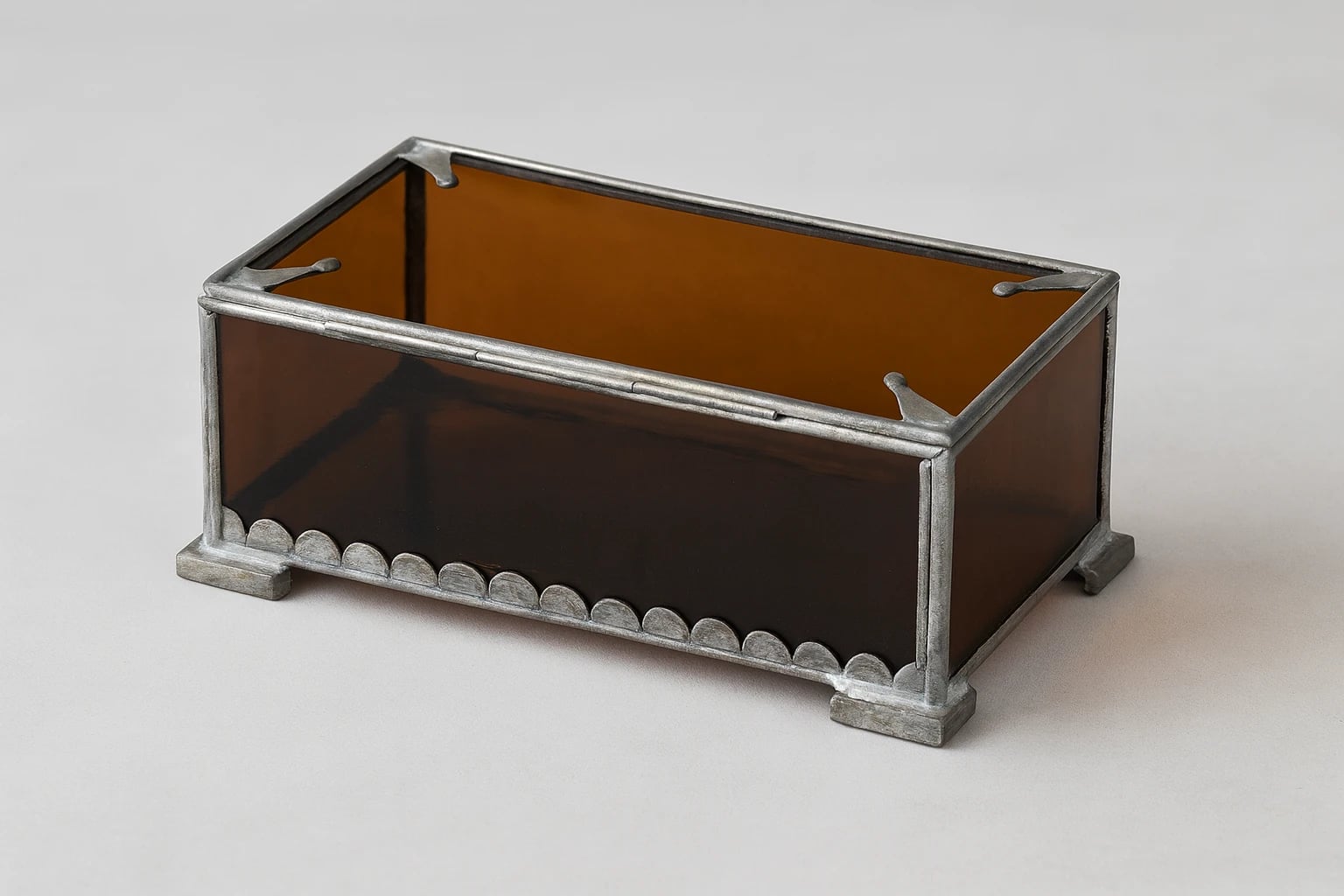
Rectangular Tin Box with Amber Glass
First Design Period: 1931 - 1946
Tin