Saves instantly, no account needed. Already a member? Sign in.
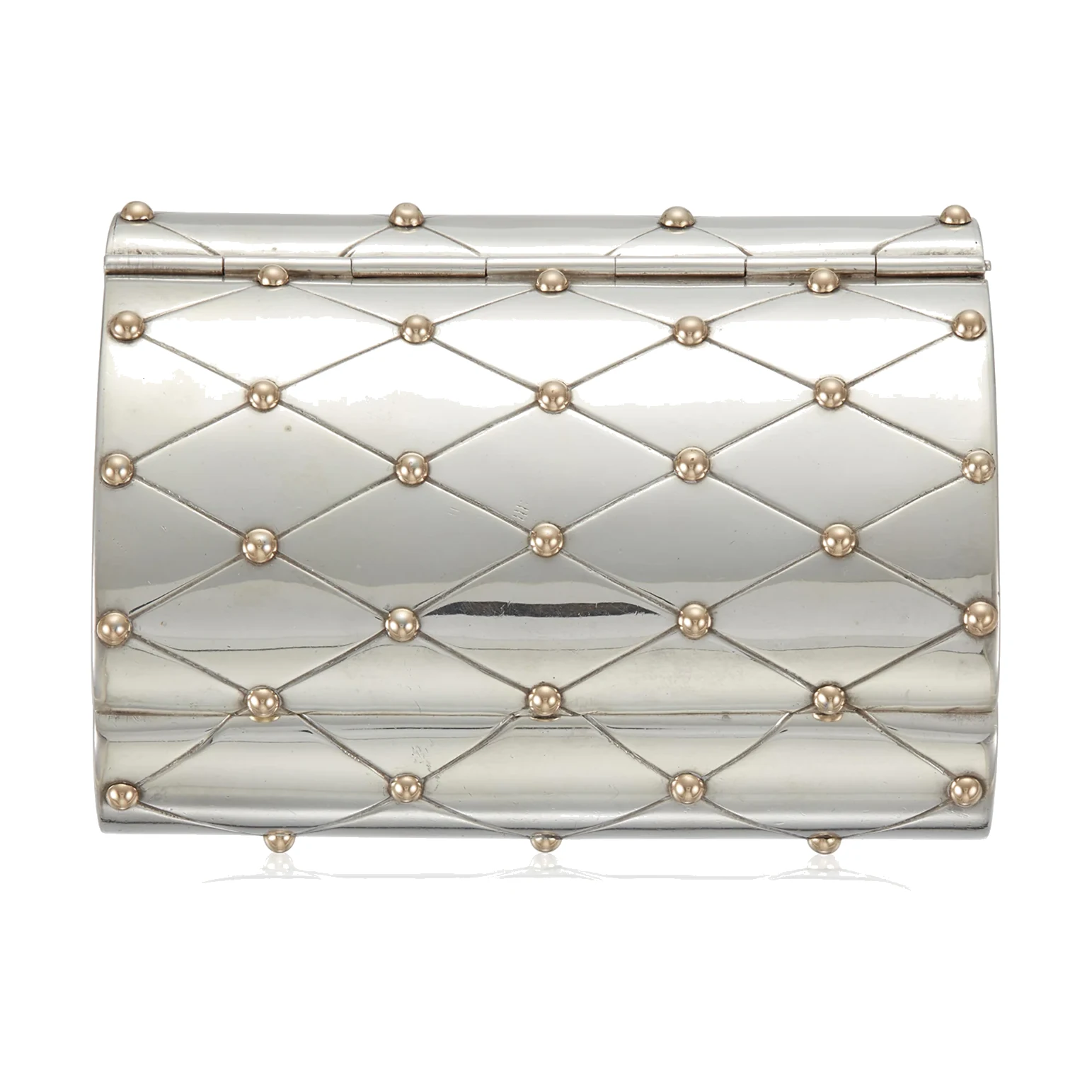
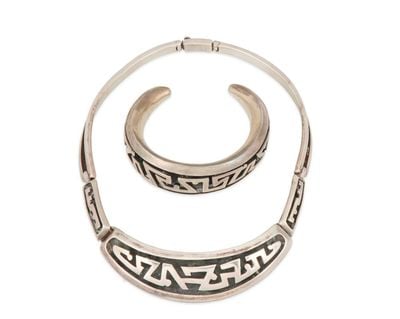
A shadowbox recessed into silver turns jewelry into architecture, and this matched set by Salvador Terán uses that device to control light rather than merely decorate a surface. Each framed cavity sinks below the plane of the metal, so the eye reads depth before it reads ornament. The recess catches shadow at its base and returns brightness at its raised edges, giving a static piece of sterling the layered spatial play that Terán pursued throughout his career. The proposition is simple and rigorous: build the third dimension into flat metal by framing empty space and letting the frame do the work.
That method is continuous with what Salvador Terán is known for. Morrill, in Silver Masters of Mexico, singles out his use of overlapping planes to create the impression of three dimensionality, and the shadowbox is the same idea driven into relief. Where the overlapping-plane brooches layer metal above metal, the shadowbox subtracts, cutting a stepped well so the boundary between frame and field becomes the ornament itself. Conceived and produced as a matching set, the design also depends on repetition. A single cavity is a quiet event, but the same recessed frame carried across a suite establishes a rhythm, each unit answering the others and the shadows reading as a deliberate pattern rather than an accident of surface. The severity of the framing, abstract and geometric, aligns with the abstract interpretations of Mexican cultural motifs that Hougart notes made Terán's designs highly prized.
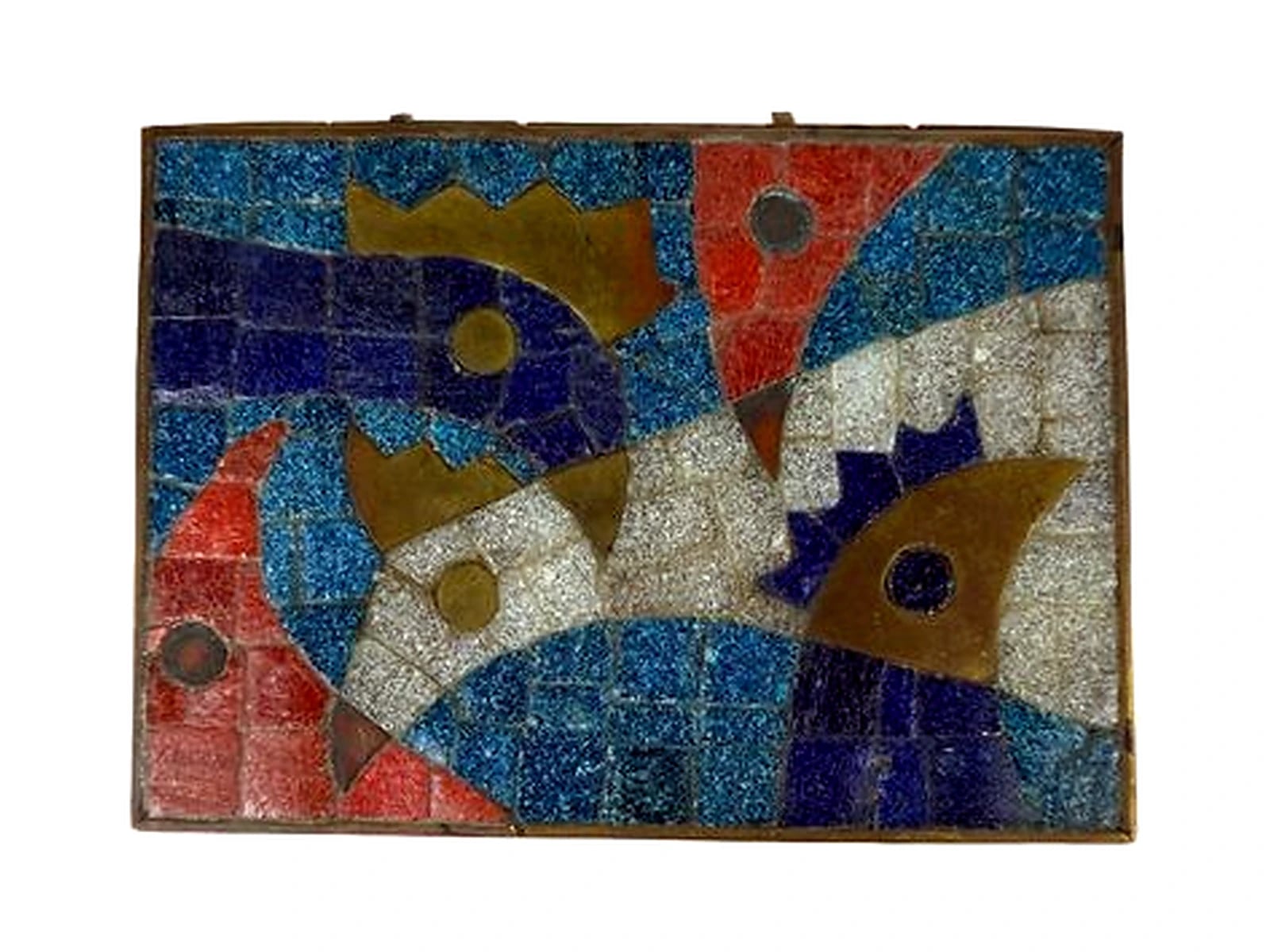
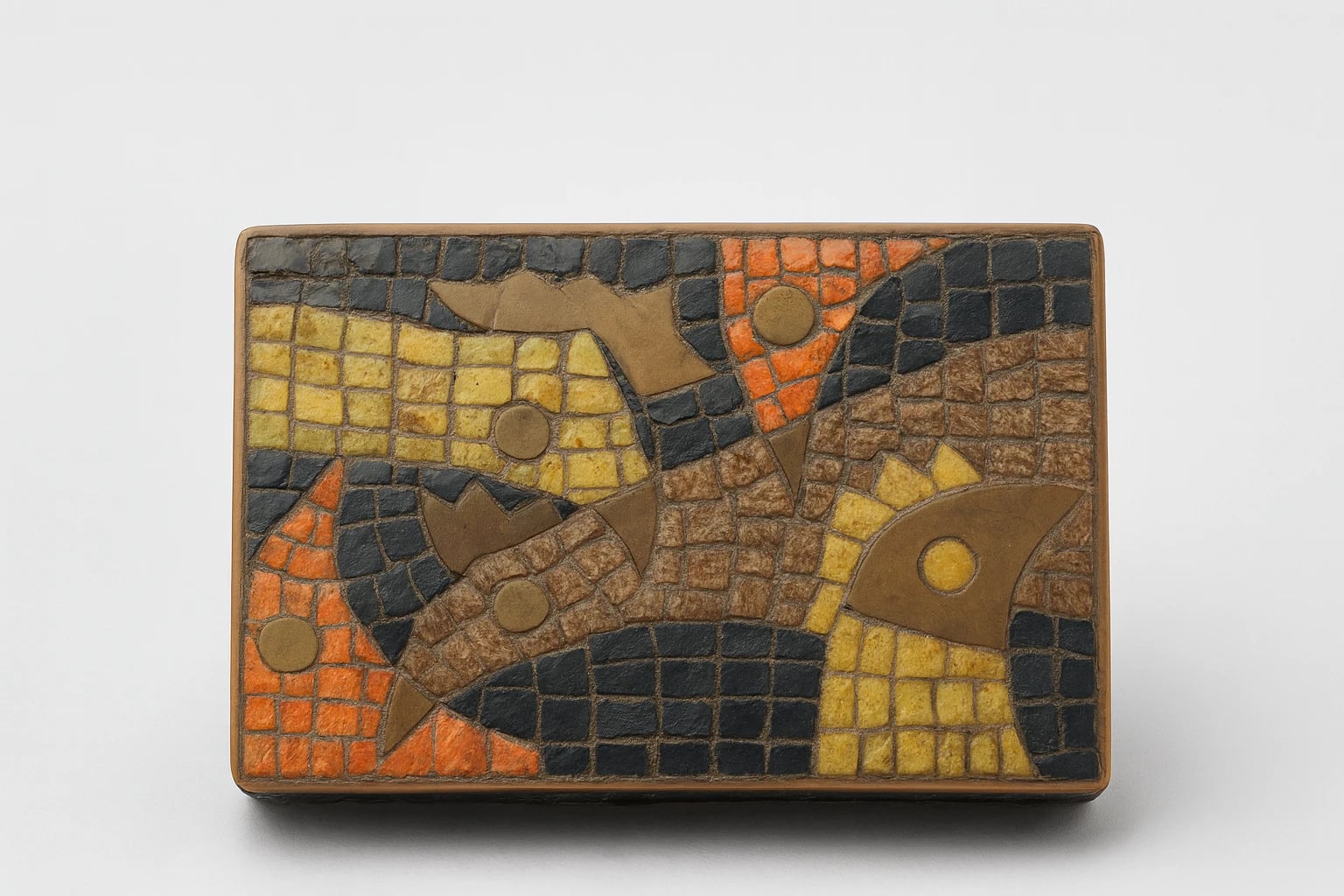
Terán came to this independence deliberately. He left William Spratling's Taller de Las Delicias in 1939 to help found Los Castillo with his cousin Antonio Castillo and the Castillo brothers, and there he was responsible for many of the early designs and for the married-metals and copper work that gave the taller part of its reputation. In 1952 he established his own taller in Mexico City, and it is that later, self-directed practice, roughly 1952 through 1974, that this set belongs to. His documented marks from these years read in script, "Salvador · STERLING · MEXICO," often with an eagle assay stamp and a design number, the system Hougart records across figures T-23 through T-26. That numbered, hallmarked sterling production sits apart from his celebrated glass-mosaic vessels in brass, where color and texture carried the statement. Here the statement is made in silver alone, with cut depth and reflected light standing in for the mosaic's color.
The set also documents a specific moment in the renaissance. When Taxco tourism fell in the early sixties and costs rose, Los Castillo cut half its workforce, and Terán had already positioned himself in Mexico City, closer to a different clientele and freer to pursue his own formal language. A shadowbox suite depends on exactly that independence: the design authority to reduce jewelry to framed voids and the workshop discipline to reproduce the effect consistently across matching pieces. For a collection tracing how Taxco ideas matured beyond Taxco, the set shows one of the school's most inventive designers working in his own idiom, using absence and shadow where others reached for stones or color.
Museum of Mexican Silver. “Silver Shadowbox Jewelry Set.” Catalog no. MoMS-001548. https://museumofmexicansilver.com/pieces/teran-box-silver-shadowbox-jewelry
See something wrong with this record? Suggest a correction and the piece details fill in automatically.
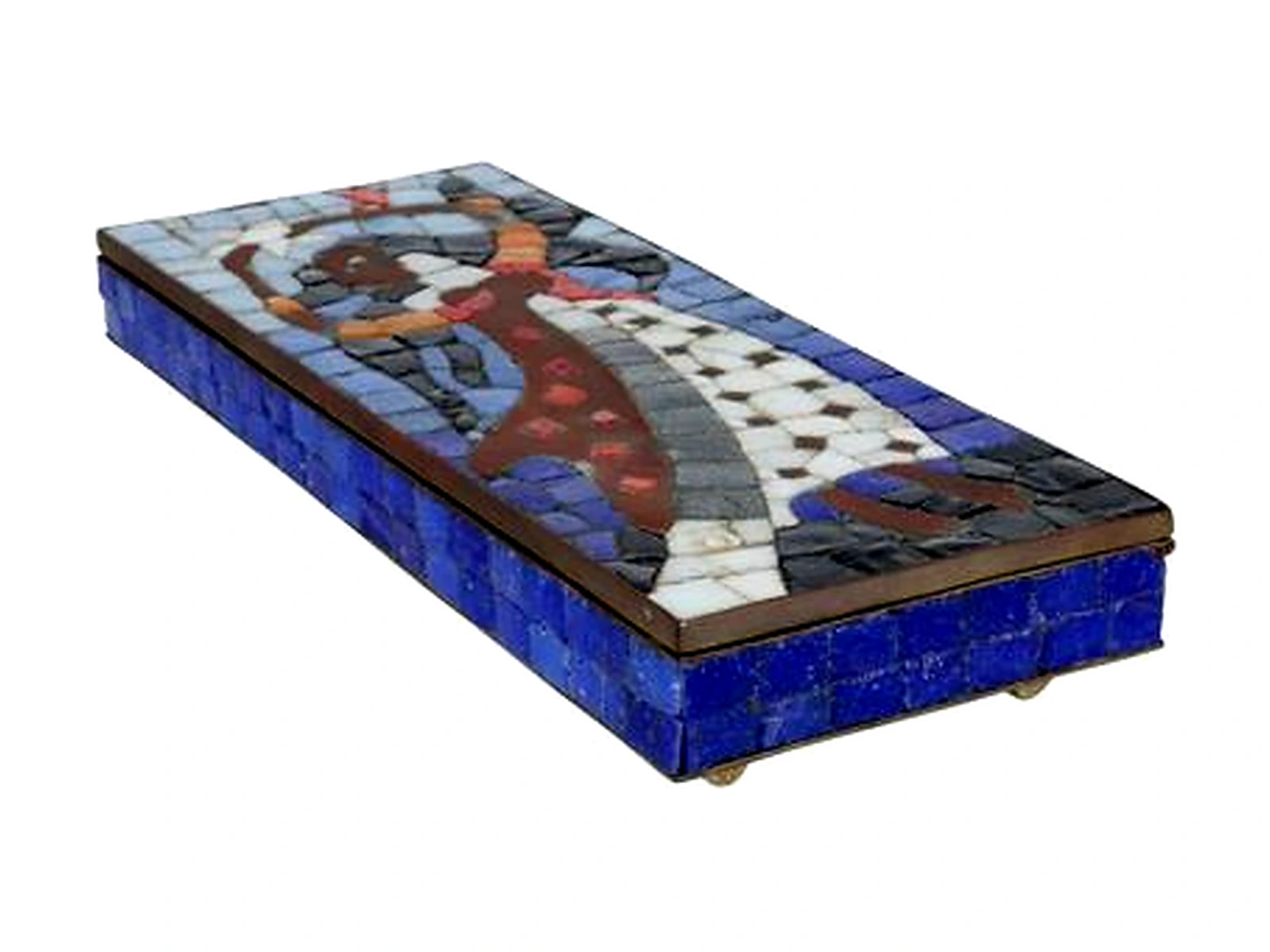
Salvador Terán
Woman with Star Mosaic Brass Box
1952-1974
Brass