Saves instantly, no account needed. Already a member? Sign in.
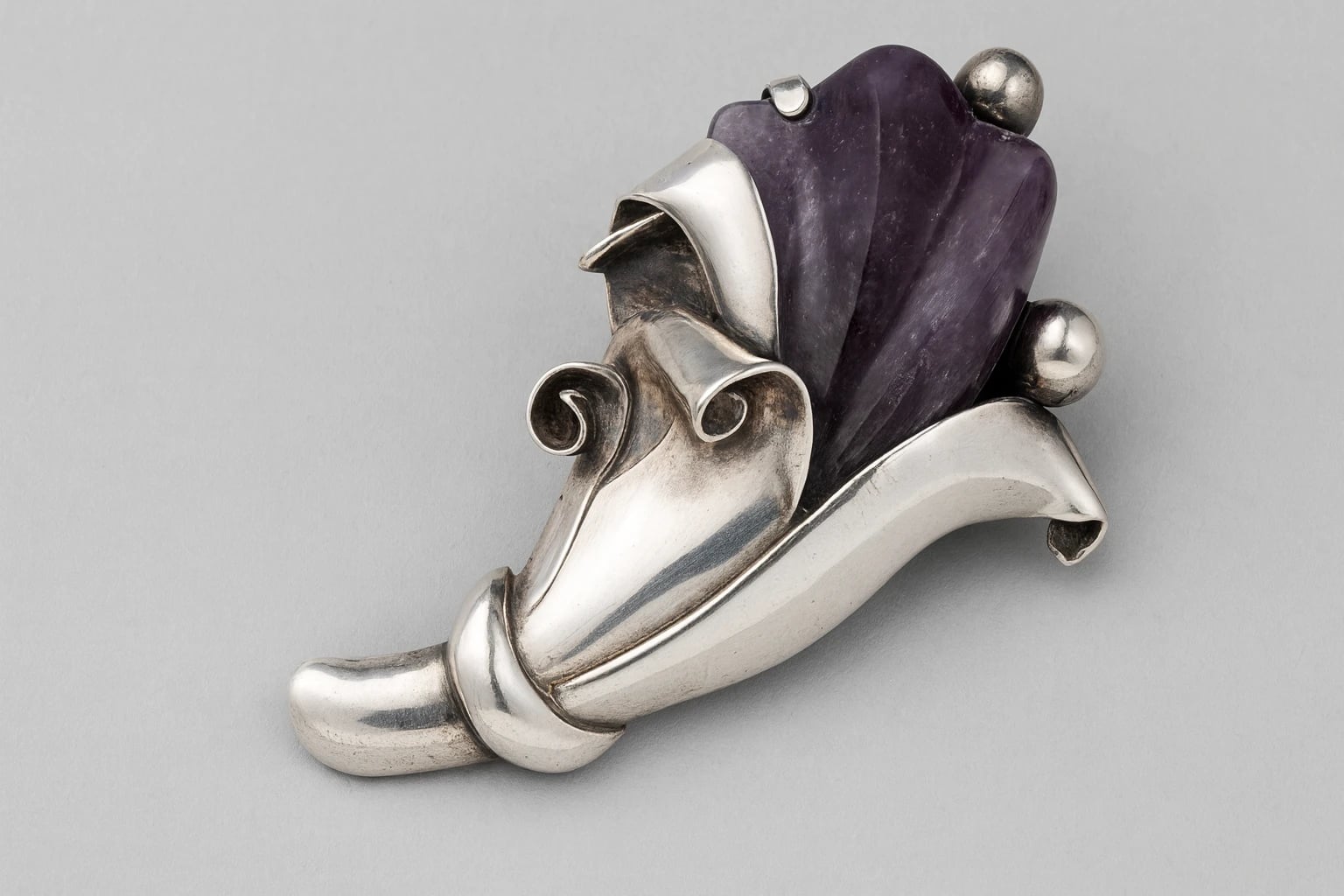
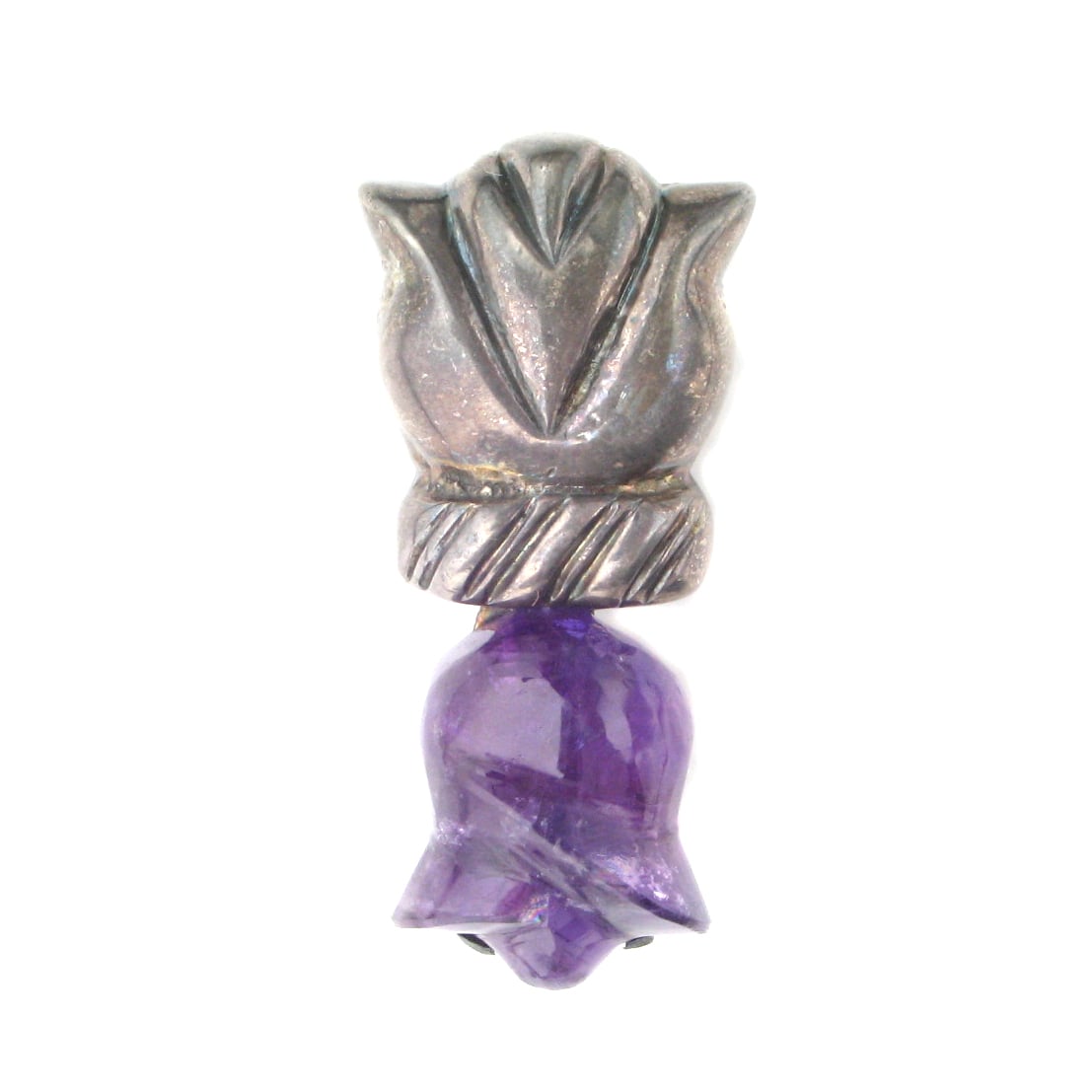
The brooch turns a single botanical motif — the tulip — into a bilateral conversation between materials. One end carries the flower in cast, oxidized sterling, petals modeled in full relief above a braided collar; the other answers in a carved amethyst of matching form, its purple translucence softening the same three-dimensional silhouette. The two elements mirror one another across the fastener, making the piece's organizing idea visible at a glance: the same form, in two substances, held in equilibrium.
Carved amethyst flower forms appear in Spratling's workshop production from the later years of his first design period (1931–1946), a time when botanical subjects rendered with genuine sculptural depth were among the distinctive outputs of the Taller Las Delicias (Morrill, Silver Masters of Mexico, 1996, p. 84). What this example adds to that body of work is the insistence on strict formal symmetry: the amethyst is not set as an accent within a silver mount but carved to echo the tulip's own closed-bud silhouette, giving the stone the same visual authority as the metal.
Here, the mirrored-form logic — the same tulip in silver at one end, in carved stone at the other — makes the piece immediately readable as a compositional statement rather than mere ornament.
Museum of Mexican Silver. “Silver and Amethyst Tulip Brooch.” Catalog no. MoMS-000235. https://museumofmexicansilver.com/pieces/spratling-344
See something wrong with this record? Suggest a correction and the piece details fill in automatically.
William Spratling
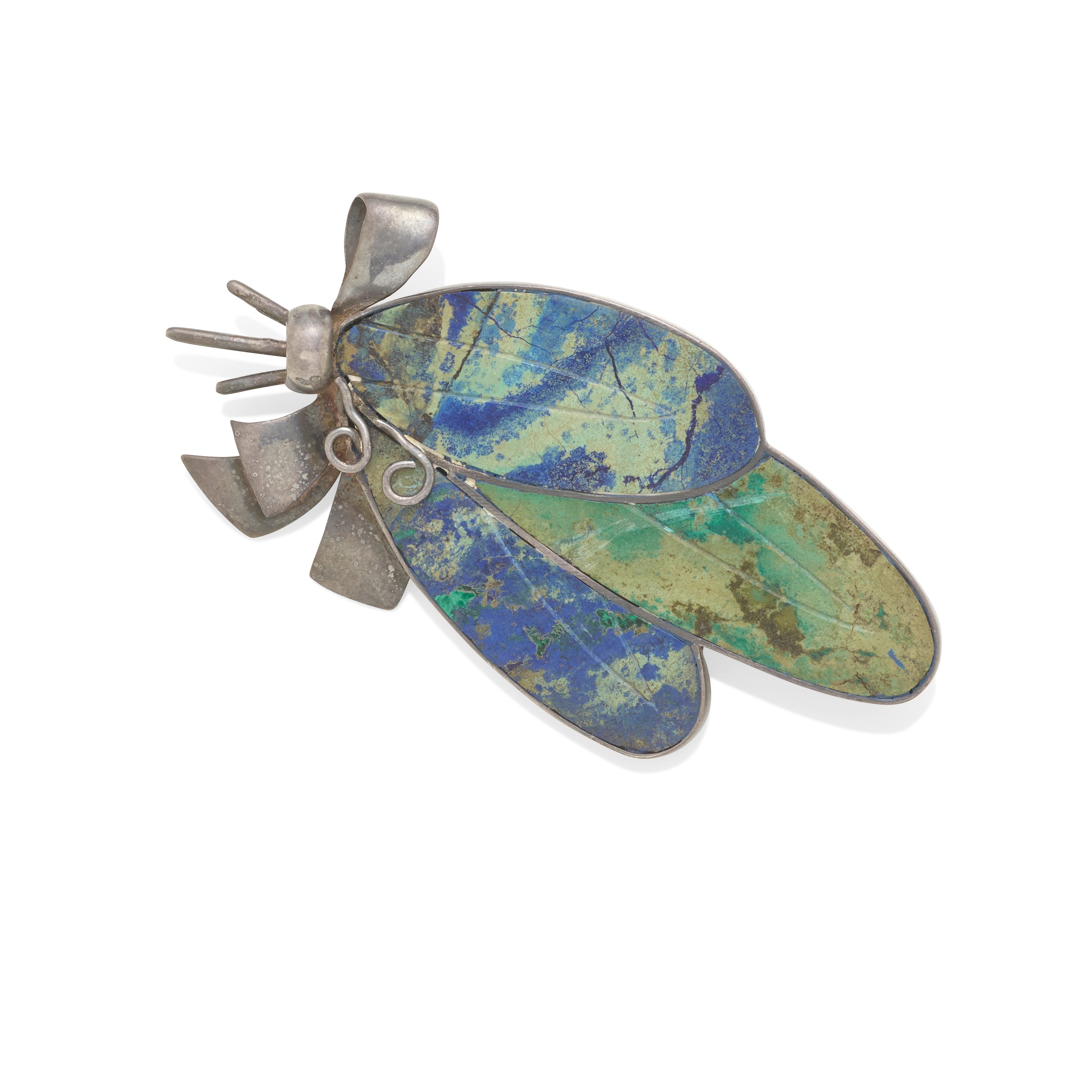
Azur Malachite Leaf Brooch
First Design Period: 1931 - 1946
Azur Malachite