Saves instantly, no account needed. Already a member? Sign in.
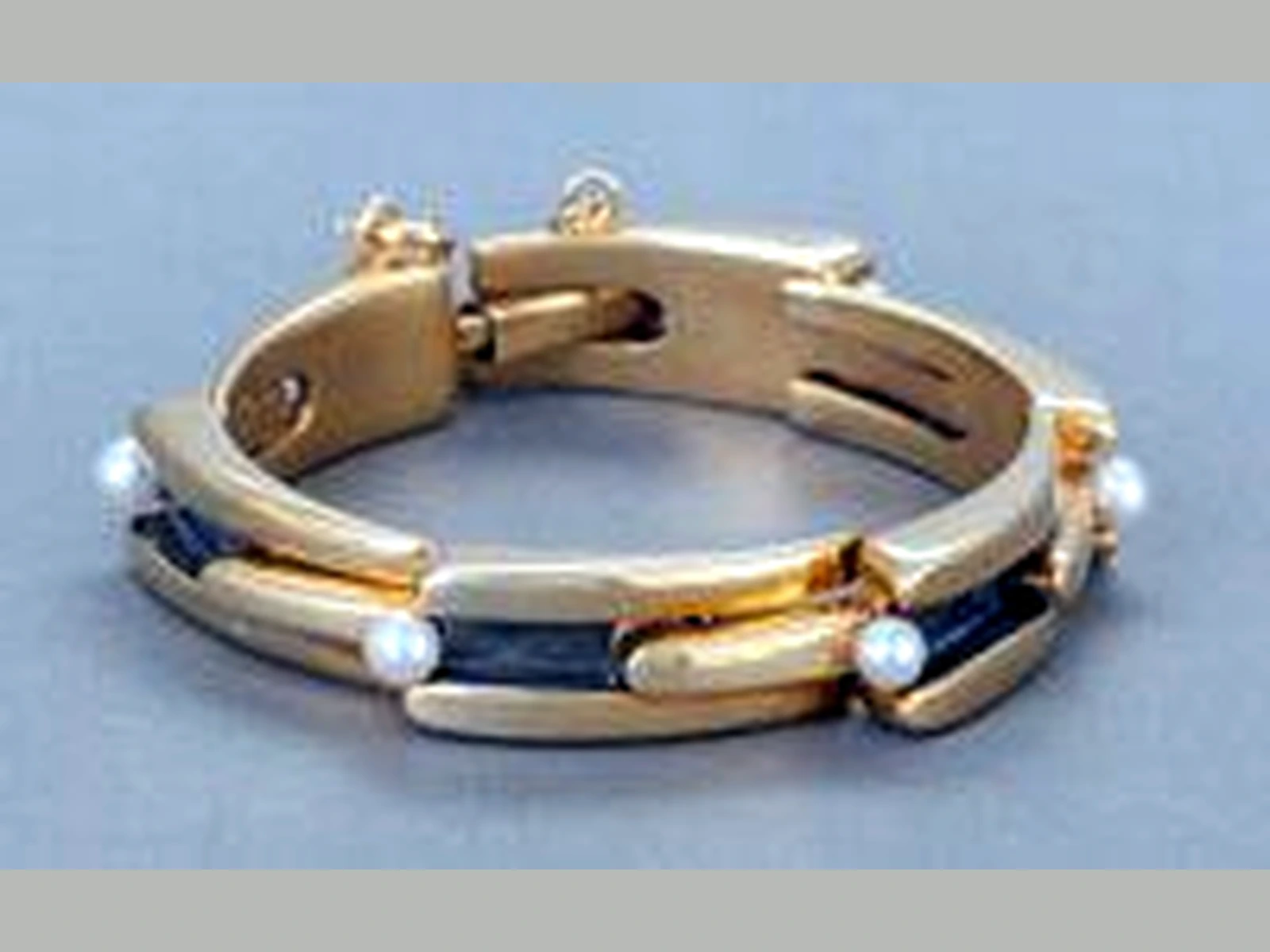
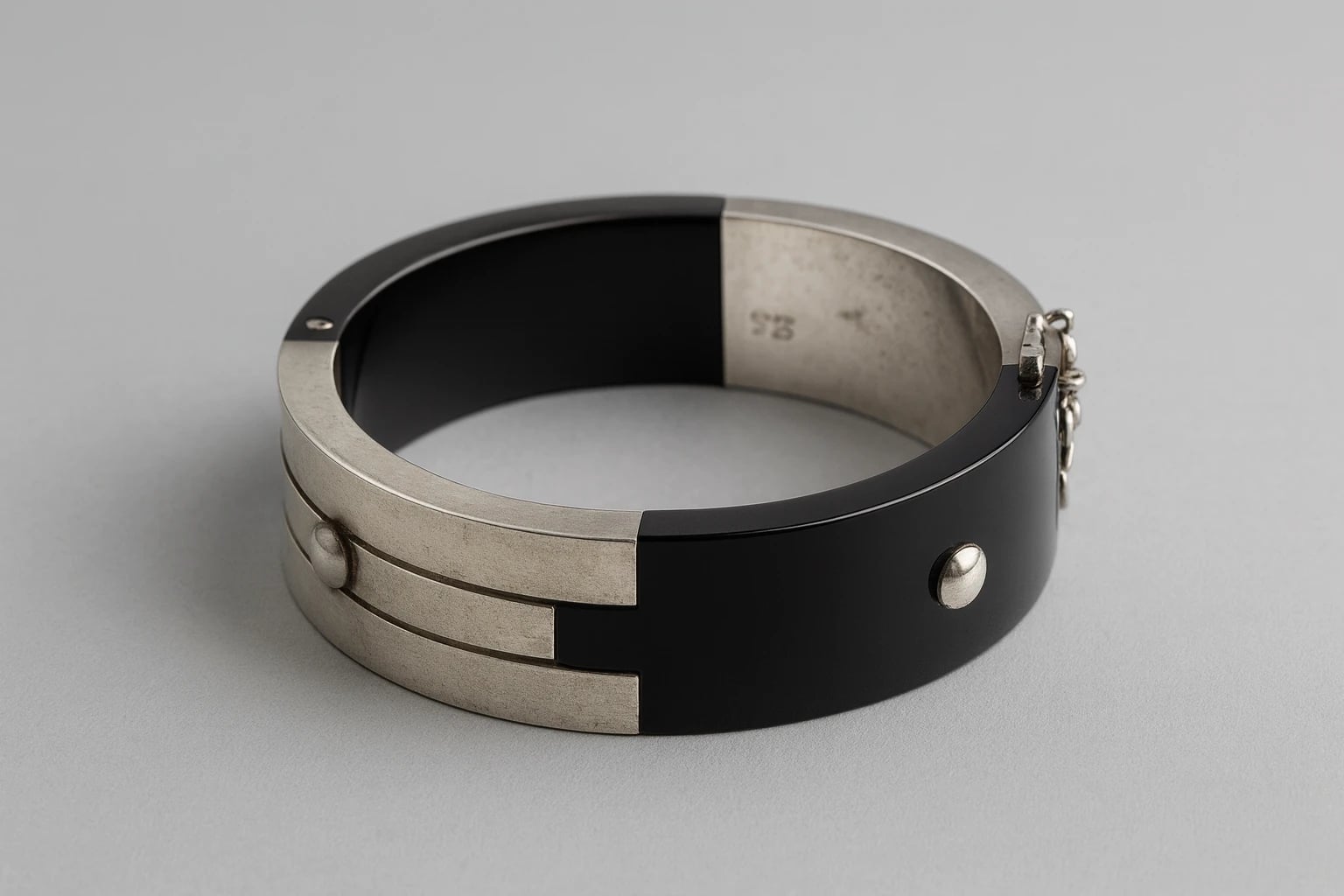
The bracelet turns a simple loop into a study of interval. Silver segments and rosewood segments meet end to end around a rigid bangle, and at each joint a silver ball marks the seam, so the eye reads the circle as a measured beat of light metal, dark wood, light metal, dark wood. Rhythm, not applied ornament, carries the design. The alternation is the whole idea, and it is resolved with the economy that distinguishes William Spratling's strongest production work from more decorative Taxco output.
The pairing of silver with rosewood is the point of interest here, and it does specific work. Rosewood brings a warm, closed-grain opacity that absorbs light exactly where the polished silver throws it back, so the two materials read as opposites in color, temperature, and reflectivity rather than as one framing the other. The silver balls resolve the transitions: without them the butt joints between two dissimilar materials would look abrupt, but the spheres give each seam a deliberate punctuation and a small point of concentrated highlight. Because the form is a round bangle rather than a hinged or articulated band, its logic is continuous, a repeating unit multiplied around a fixed circle, and the wood carries that repetition with a density and hand-feel that silver alone would not give. Spratling's use of native Mexican hardwoods against silver belongs to a recurring interest in his work in setting metal against materials with their own regional character, an interest documented across the field guides to his production, including Phyllis Goddard's Spratling Silver.
The design sits within Spratling's first design period, the years following his founding of the Taller de Las Delicias in 1931, when the workshop was building the production system that made this kind of controlled, repeatable design possible. The bracelet is not a one-off studio experiment but a catalog design, and the museum record places it in the wholesale catalogs of 1944, 1944 to 1945, and December 1945. That narrow catalog window is worth stating precisely: it documents when the design was offered to the trade, and it locates the piece in the wartime years when Taxco silver reached a wide North American market. Spratling worked within a taller system in which he set the design and master smiths executed it, the collaborative structure that Gobi Stromberg and Penny Morrill describe as the engine of Taxco's silver age, allowing the designer to concentrate on form while skilled hands carried it into production. This bracelet reflects that system at work: a clean idea, standardized into segments and spheres, made to be produced in quantity without losing its discipline.
Museum of Mexican Silver. “Rosewood and Silver Bangle.” Catalog no. MoMS-000420. https://museumofmexicansilver.com/pieces/spratling-66
See something wrong with this record? Suggest a correction and the piece details fill in automatically.
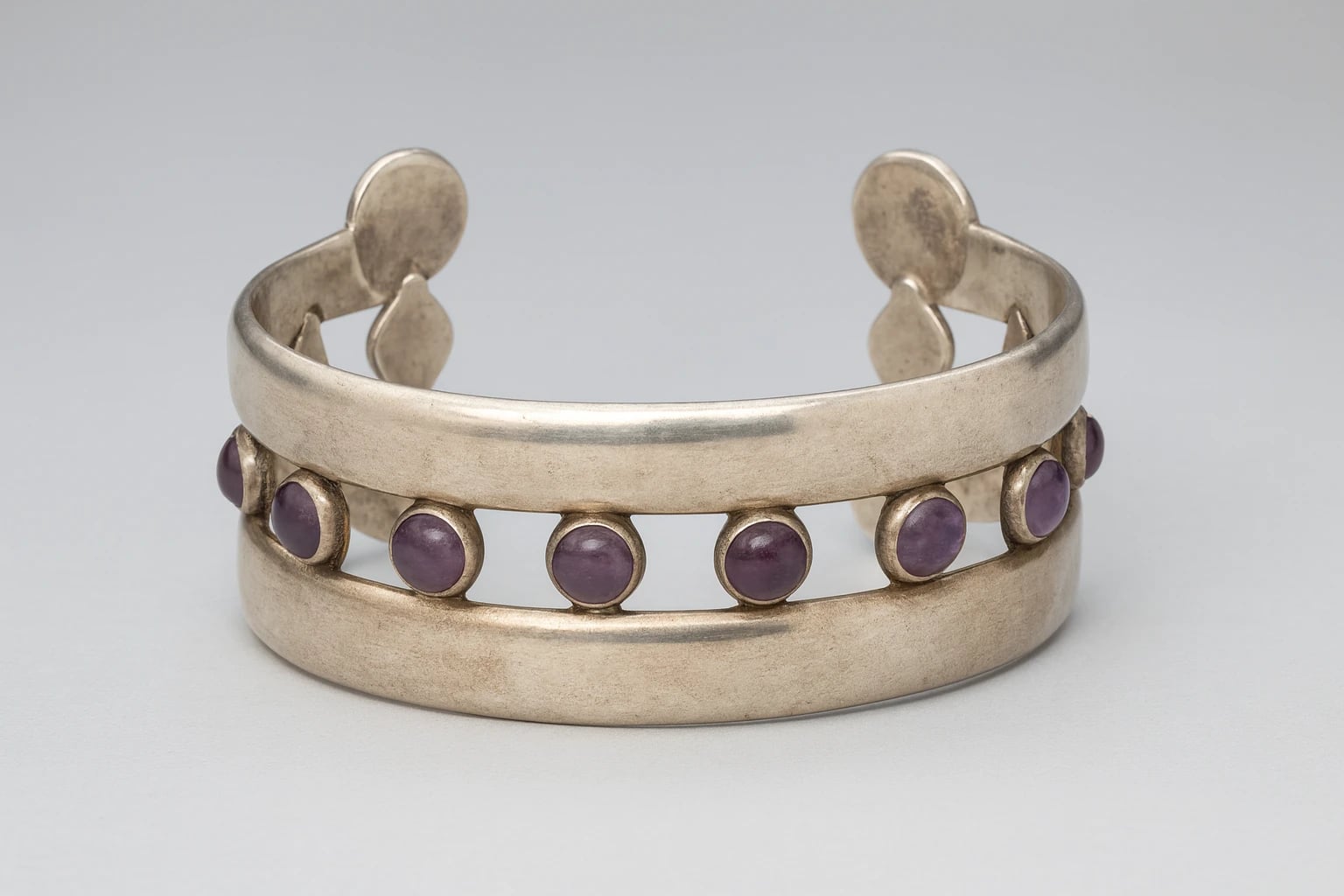
Recorded in Penny Morrill's Maestros de Plata and in Goddard's field guide, the design is a documented part of Spratling's cataloged output rather than an attribution resting on the mark alone. Its value to a collection is as evidence of how Spratling thought about materials in series. Where his silver-and-tortoiseshell or silver-and-amethyst pieces court richer contrast, this bangle shows him working with a humbler pairing and extracting a strict, almost musical order from it. It records a designer treating a mass-market catalog object with the same formal seriousness that Mexican modernism was bringing to painting and architecture in the same decade, and it lets a museum show the Taxco renaissance not only in its showpieces but in the intelligence of its everyday production.
William Spratling
Cholula Bracelet
First Design Period: 1931 - 1946
Silver